Most service business owners are trapped in a cycle of trading hours for dollars, acting as the primary bottleneck in their own growth. They view their firms as a series of manual tasks—consultations, emails, and billable hours—rather than a scalable platform. However, the most successful entrepreneurs in the service sector, like John Morgan of Morgan & Morgan, have shifted their perspective entirely. By applying a digital transformation strategy that mirrors tech giants, Morgan built what he calls the "Google Law Firm." This playbook explains how to move beyond manual labor and utilize service business automation to create a high-margin, tech-driven empire that prints money while you sleep.
The 'Google Law Firm' Concept: Capturing Every Lead


The core philosophy of the "Google Law Firm" is simple yet profound: What if a service business functioned like Google? For most providers, the goal is to find the "perfect" client. For Morgan, the goal was to be everywhere for everyone. Instead of hunting for specific high-value cases and ignoring the rest, the strategy is to capture 100% of the market demand and use technology to sort, process, and monetize every single lead.
In the traditional model, if a lead doesn't fit your niche, it's discarded. In the Google model, no lead is ever wasted. By leveraging massive brand awareness through tools like Google Ads and traditional media, you build a funnel that attracts all inquiries. Once the leads are in the system, business process automation takes over to determine which cases are handled internally and which are referred out. This ensures that the "sizzle" of the brand brings people in, but the "stake" of the technology handles the volume.
To achieve this, you must treat your service business as a marketing and technology company first, and a provider second. This requires a shift from "fishing" for a single meal to building a massive net. Platforms like Stormy AI help modern marketers achieve this same scale with an AI-powered search engine that scans TikTok, Instagram, and YouTube for perfect-fit creators, ensuring that every ad dollar spent on platforms like Meta Ads Manager generates the maximum possible lead flow.
Building vs. Buying: How Litify Transformed a Firm into a Tech Company
One of the biggest hurdles in scaling with technology is the limitation of off-the-shelf software. Morgan realized early on that existing legal software couldn't provide the transparency and automation needed for a national footprint. His solution was to build Litify, a custom platform layered on top of Salesforce. By building on a world-class infrastructure, they gained access to thousands of engineers and a system that could handle virtually unlimited scale.
When you build your own internal tools, you eliminate "information silos." Every partner, paralegal, and assistant sees the same data in real-time. This level of digital transformation strategy allows leadership to spot bottlenecks immediately. For instance, if a specific office is "in the hole" by $14 million, as Morgan once experienced in Atlanta, the data reveals the problem before it becomes terminal. Building your own stack also creates a proprietary asset; Litify eventually reached a $600 million valuation because it solved a problem for the entire industry, not just one firm.
For service businesses today, the lesson is clear: don't settle for software that merely "works." Invest in business process automation that gives you "magic carpets"—the ability to ask, "Can we automate this?" and have the answer be "Yes." Whether you are managing legal cases or using Stormy AI to automate outreach with hyper-personalized emails and manage the entire lifecycle in a creator CRM, the goal is to have a single source of truth for all operations. Stormy is an AI-powered platform for creator discovery, especially for mobile app marketing and UGC campaigns, acting as the technological backbone for modern content scaling.
The Referral Flywheel: Achieving 85-90% Margins

The most misunderstood part of the "Google Law Firm" strategy is the referral marketing system. Most business owners are afraid to refer business away because they fear losing the revenue. However, by referring out specialized cases or work that falls outside your core competency, you can actually increase your margins significantly.
Morgan & Morgan handles thousands of cases internally, but they refer out even more. Because they provide the lead and the technology (Litify) to manage it, they can command significant referral fees. While internal cases might have margins around 30-35%, the referral business operates at 85-90% margins. You have zero overhead, no staff costs, and no trial risk for those specific cases—you simply provide the "fish" and let someone else "cook" it.
This creates a powerful flywheel:
- Step 1: Use aggressive marketing on Apple Search Ads and other platforms to capture all leads.
- Step 2: Use automation to sort leads into "Internal" or "Referral" buckets.
- Step 3: Funnel referral leads to vetted partners through your proprietary software.
- Step 4: Collect high-margin fees while your software tracks every milestone of the case.
This is exactly how high-growth mobile apps scale their user acquisition. They don't try to create every piece of content themselves; they use Stormy AI to vet creators and verify audience quality, creating a referral-like system for content production that keeps margins high and overhead low.
The 'Uber Driver' Model: Vetting High-Performance Partners
To run a successful referral marketing system, you need a network of "Uber drivers"—high-performance partners who are ready to execute. However, Morgan takes this a step further. His partners aren't just random service providers; they are "Mario Andrettis" in their specific niches. By using software like Litify to manage this network, the firm can ensure quality control at a massive scale by leveraging the same marketplace dynamics used by silicon valley giants.
Transparency is the key to this model. If a partner in Des Moines is referred a case, they have a strict window (e.g., 12 hours) to accept or decline it through the system. If they don't act, the lead is automatically passed to the next vetted partner. This service business automation ensures that the "fish" are always fresh and never go to waste. You are effectively building a marketplace where you control the demand and the standards for the supply.
This model relies on the Walter Payton rule: identifying your top performers and giving them the ball when it matters most. In the context of influencer marketing, brands use Stormy AI to find their own "Walter Paytons"—the creators who consistently deliver high ROAS for app install campaigns—and "parachuting" them into new markets to ensure success.
Transparency and Automation: Using Data to Eliminate Bottlenecks


In a manual service business, you often don't know you have a problem until the bank account is empty. In an automated business, the data speaks to you daily. John Morgan credits much of his success to transparency and automation. By tracking "bullets before bombs"—a concept popularized by Jim Collins—he reduces the risk of expansion by testing small marketing spends in new cities before launching massive "bomb" campaigns.
This digital transformation strategy requires tracking every metric, from the cost per lead to the "Friday before trial" settlement numbers. For instance, Morgan found that the biggest payouts often come at specific "pressure points": the Friday before a trial starts, right after jury selection, or during the trial itself. Most lawyers settle early because they need the cash flow, which destroys their margins. Because Morgan has the automated cash flow from a national firm, he can afford to wait for the "big game."
You can apply this same "bullets before bombs" approach to any service or product business. Before committing to a major influencer contract, use Stormy AI to track individual videos and monitor real-time campaign performance. Once you see the "bullets" hitting the target, you can "bring the bombs" with a full-scale app marketing campaign.
The Service Business Automation Playbook
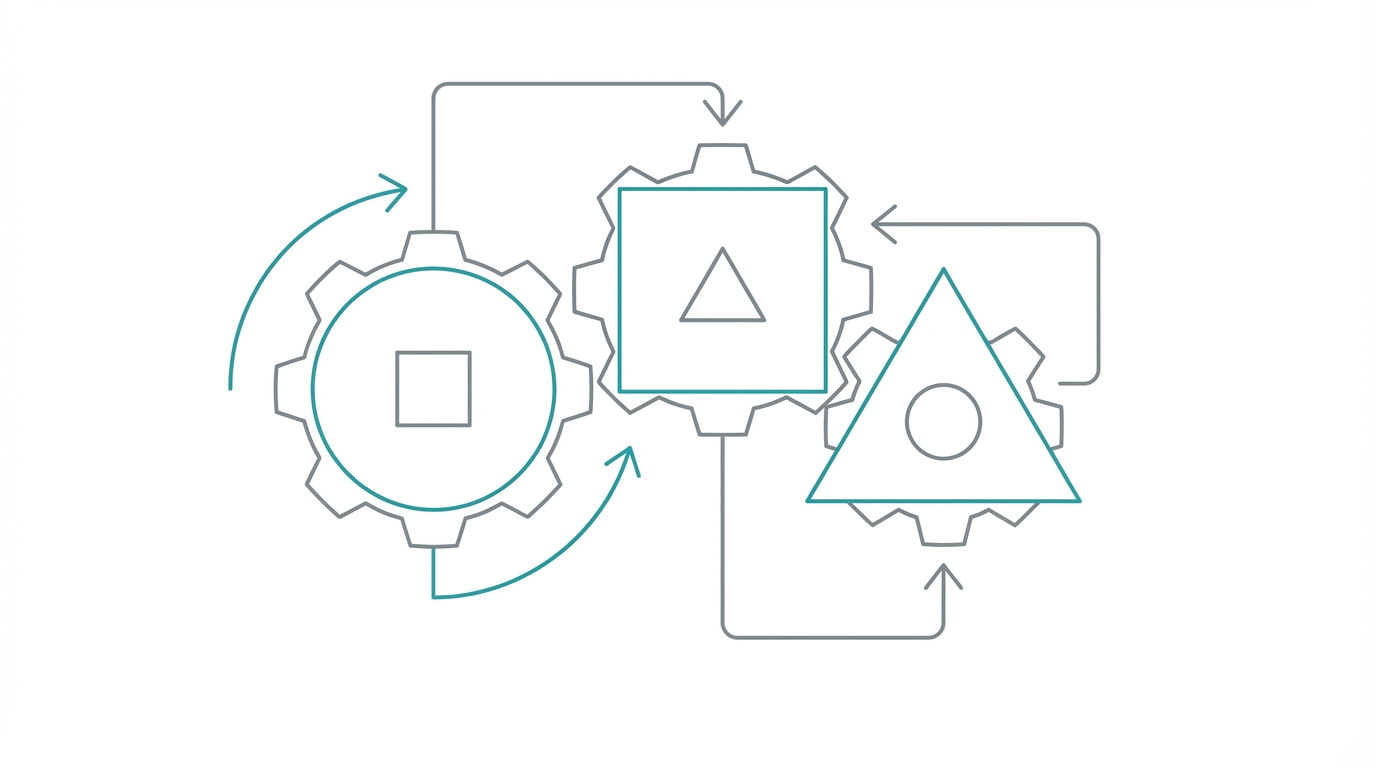
Ready to turn your service business into a scalable machine? Follow these steps to implement the Google Law Firm model.
Step 1: Own the Infrastructure
Stop using disparate tools that don't talk to each other. Whether it's a CRM like Salesforce or a specialized platform like Litify, you need a single source of truth. If you can't see your data in one dashboard, you don't own your business; your business owns you.
Step 2: Capture, Don't Filter
Widen your marketing funnel. Use Google Ads and social media to capture the widest possible audience for your brand. Don't worry about lead quality at the top of the funnel—worry about brand awareness. Let your automation software do the filtering for you.
Step 3: Implement the Referral Flywheel
Identify the work you do that is "low margin" or "high headache." Create a network of high-performance partners to handle these tasks. Charge a referral fee and use your software to track their progress. This allows you to focus your internal "racehorses" on the highest-value work.
Step 4: Practice 'Bullets Before Bombs'
Never enter a new market or launch a new service line with a "bomb." Test the waters with small, automated marketing experiments. In the digital world, this means using Stormy AI to deploy autonomous AI agents that handle discovery and outreach 24/7 before scaling your ad spend on Meta.
Step 5: Demand Transparency
Eliminate the "drunk clowns" in your organization. If a department or partner isn't hitting their KPIs, the data should make it obvious within 24 hours. Automation isn't just about saving time; it's about radical accountability. According to recent reports on Business Insider, businesses that prioritize data transparency grow 2x faster than those that don't.
Conclusion: Building the Greatest Show on Earth
Scaling a service business doesn't mean working harder; it means building a better circus. By adopting the "Google Law Firm" strategy, you transition from a practitioner to a platform owner. You stop hunting cockroaches and start hunting big game. Through service business automation, a robust referral marketing system, and a relentless focus on data transparency, you can create a business that is not only profitable but also incredibly resilient.
Whether you are running a law firm, a home services business, or a mobile app startup, the principles remain the same: love your team, feed your partners, and focus on the high-wire act of scaling. The technology exists to make your "magic carpets" a reality—now you just have to fly them. If you're looking to scale your app's reach with the same efficiency Morgan uses for law, start by leveraging AI-powered tools to discover creators on Stormy AI and watch your own "money printer" come to life.