In 2026, the bottleneck for scaling app revenue is no longer a shortage of engineers—it is the speed of iteration. Growth leads and CMOs are increasingly turning to "vibe coding," a workflow where AI agents translate natural language prompts into functional prototypes. However, choosing the wrong tool for your growth marketing tech stack can lead to technical debt that kills your momentum. With the recent launch of Google Firebase Studio, a free AI-powered prototyping suite, the market has split between the hyper-technical Google ecosystem and the UI-first accessibility of platforms like Lovable.
The 2026 Landscape: The Rise of Agentic Prototyping
The year 2026 marks the maturity of agentic code generation. We have moved past simple autocomplete; today, tools like Google Firebase Studio and Lovable allow growth teams to build entire functional modules—from budgeting trackers to custom CRMs—using nothing but vision and voice. For a growth engine to succeed this year, it must be able to move from a market hypothesis to a live, testable app in under 24 hours.
While the goal is speed, the underlying infrastructure matters. As reported by software experts on the Startup Empire podcast, tools like Lovable have seen explosive growth, hitting an estimated $20 million ARR by providing a seamless, visual-first experience. Meanwhile, Google has countered with a product that trades aesthetic simplicity for raw, unmitigated technical power and deep Google Cloud (GCP) integration.
"The future of growth isn't about writing code; it's about orchestrating agents that can deploy scalable infrastructure while you sleep."
Google Firebase Studio: Technical Depth and the Google Ecosystem
 1:55
1:55Google Firebase Studio is designed for the developer-adjacent growth lead. Unlike consumer-grade builders, it assumes a baseline level of technical literacy. When you open a new workspace, you aren't met with a blank canvas, but with industry-standard templates for React, Next.js, or Flutter. This is AI app building for business at its most robust.
One of its standout features is the integration of Gemini 2.5 Pro. While earlier versions of AI models struggled with complex state management, Gemini 2.5 Pro is specifically tuned for agentic code generation. It handles the "wiring" of the app—connecting databases, managing API keys through Google Secret Manager, and handling authentication—better than almost any other model in the 2026 market.
Lovable vs. Firebase Studio: UI/UX Outputs and Conversion
11:38In a head-to-head comparison, the UI/UX quality is where the two platforms diverge sharply. In recent side-by-side tests, Lovable consistently produced "screenshot-worthy" interfaces with zero manual styling. It utilizes proprietary models that prioritize modern design aesthetics—animations, responsive layouts, and clean typography are the default.
Conversely, Google Firebase Studio often outputs "plain HTML" or basic wireframes that require a designer's touch to become consumer-ready. For a growth lead focused on scaling app revenue 2026, this UI gap is critical. A budgeting app built in Lovable feels like a premium product out of the box; the same app in Firebase Studio feels like a technical demo. However, Firebase allows for more granular control over the codebase, making it easier for a senior engineer to take over once the prototype proves its value.
Visual Intelligence and Prompt Engineering
A common tactic in 2026 is feeding screenshots of high-performing apps from sites like Mobbin directly into the AI. Lovable excels here, often replicating the "vibe" of a Stripe-style landing page with high fidelity. Firebase Studio, while capable of image processing, frequently struggles to translate visual cues into clean CSS, often resulting in "broken" styling loops that require manual intervention.
Cost Analysis: Impact on Your Startup's Burn Rate
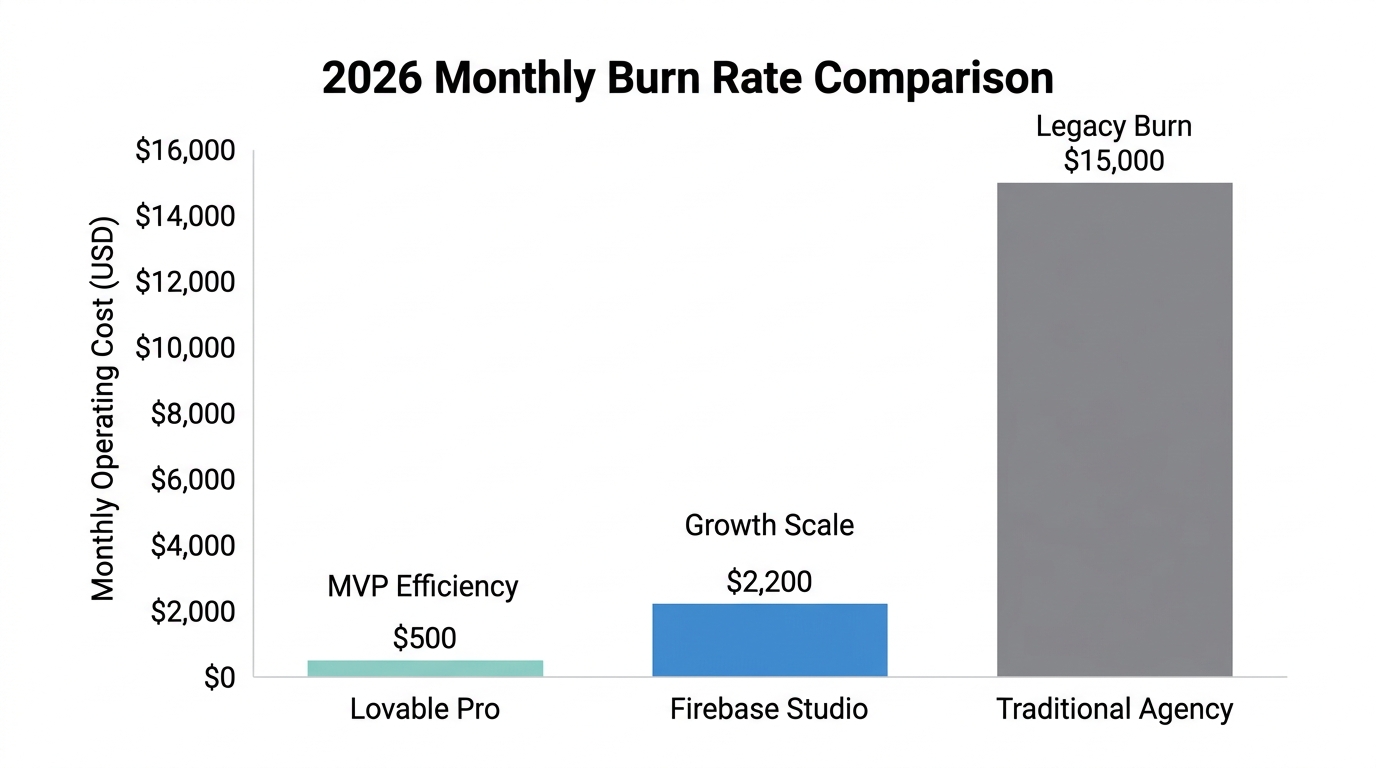
For many startups, the decision comes down to the bottom line. Google Firebase Studio is currently completely free. By leveraging the existing Firebase free tier and providing the IDE at no cost, Google is aggressively undercuting competitors like Lovable and Bolt.
| Feature | Google Firebase Studio | Lovable |
|---|---|---|
| Price | Free (Beta/Preview) | Paid Tiers (Usage-based) |
| Primary Model | Gemini 2.5 Pro | Proprietary / Multi-model |
| Backend | Firebase / Google Cloud | Supabase Integration |
| UI Fidelity | Low (Functional/Plain) | High (Polished/Modern) |
| Technical Barrier | Moderate to High | Low (Natural Language) |
While Lovable’s paid tiers can add up as you scale your growth marketing tech stack, the time saved on front-end development may offset the subscription cost. However, for a team running 50+ micro-experiments a year, the zero-cost entry point of Firebase Studio is a compelling argument for the CFO.
Integration Audit: Building a Data-Heavy Growth Engine
25:15If your growth strategy involves heavy data processing—such as analyzing thousands of creator profiles for an influencer campaign—the backend becomes the bottleneck. This is where Google Firebase Studio wins. Because it is a native part of the Firebase ecosystem, you have one-touch access to:
- Cloud Functions: For running background scripts and AI agents.
- Firestore: A scalable NoSQL database that handles massive traffic spikes.
- Google Analytics: Deeply integrated tracking for conversion optimization.
Lovable uses Supabase for its backend, which is excellent for PostgreSQL enthusiasts, but it lacks the "all-in-one" cohesion of the Google Cloud Platform. For data-heavy marketing apps that need to sync with Google Ads or Meta Ads Manager, the native GCP pipelines in Firebase Studio provide a more robust path to production.
Scaling Your App with Stormy AI
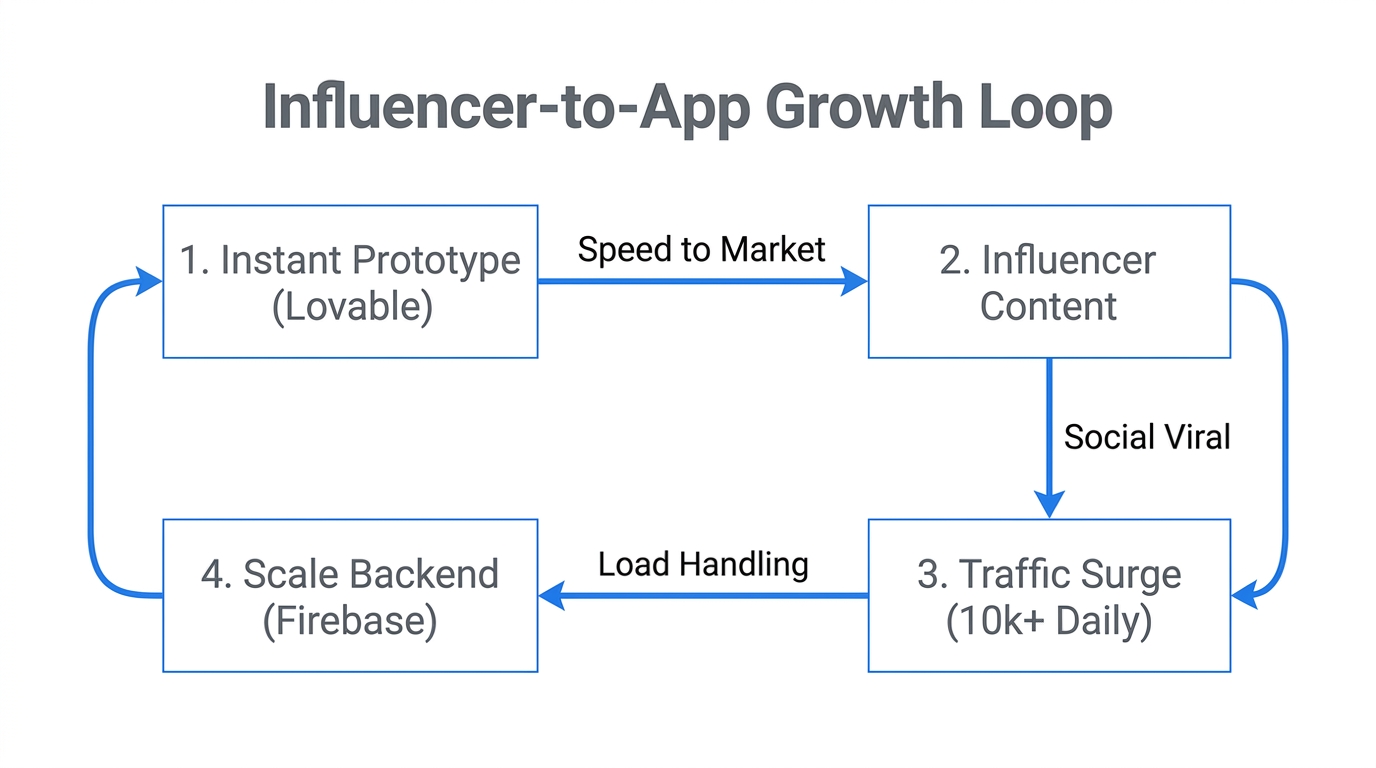
Building the app is only half the battle. Once you have a functional prototype from Firebase Studio or Lovable, you need users. In 2026, the most effective way to scale app installs is through high-velocity influencer marketing and UGC content. This is where a platform like Stormy AI becomes the second half of your growth engine.
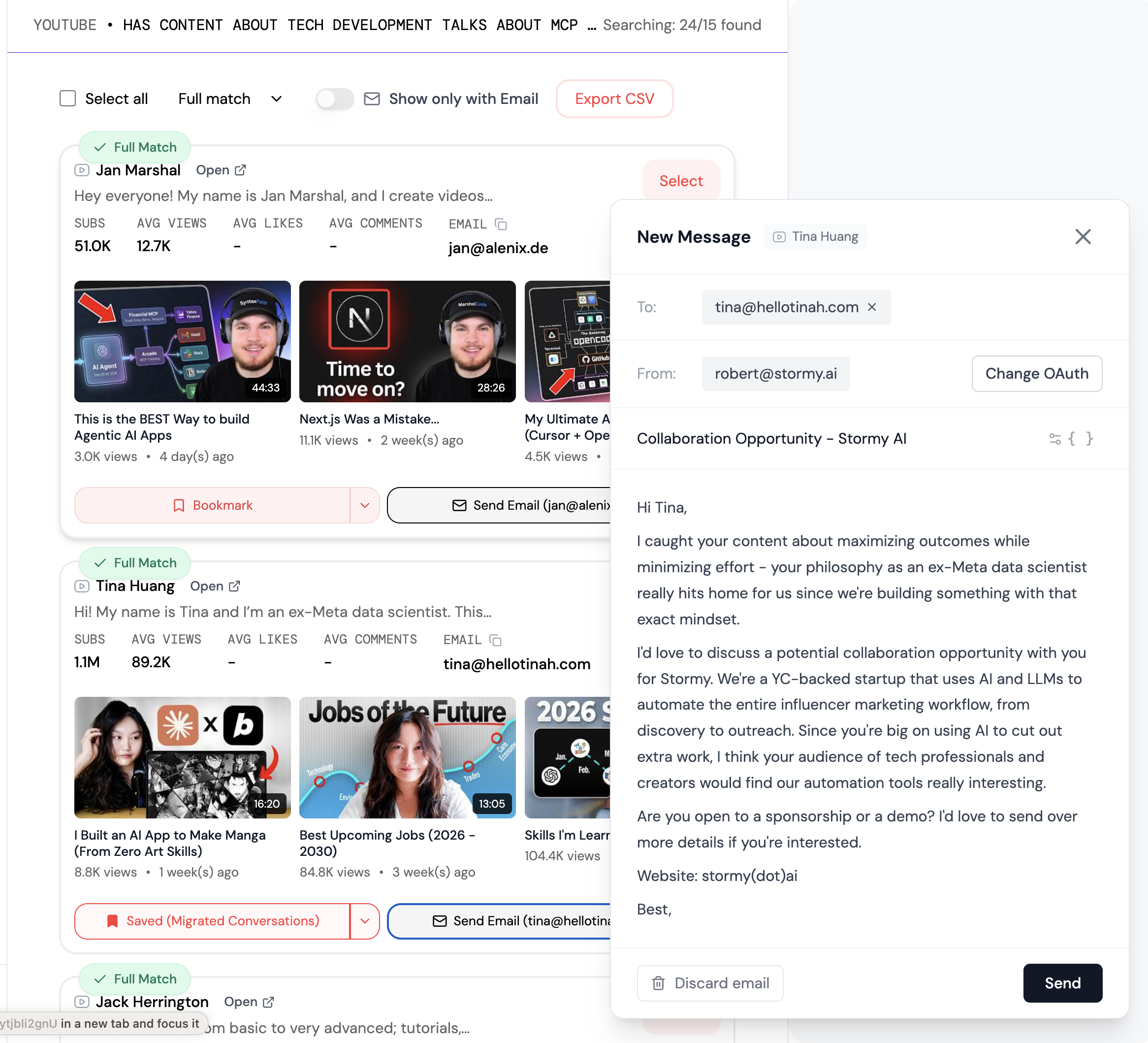
While you use AI to build the product, you use Stormy AI to find the people who will promote it. Stormy allows you to search across TikTok, YouTube, and Instagram using natural language prompts—much like the way you prompt Firebase Studio. You can find "finance creators for a budgeting app prototype" in seconds.

By combining the technical speed of Google Firebase Studio with the outreach automation of Stormy AI, a lean growth team can operate like a 100-person agency. You can deploy a prototype in the morning and have AI-generated outreach emails sent to 500 relevant creators by the afternoon.
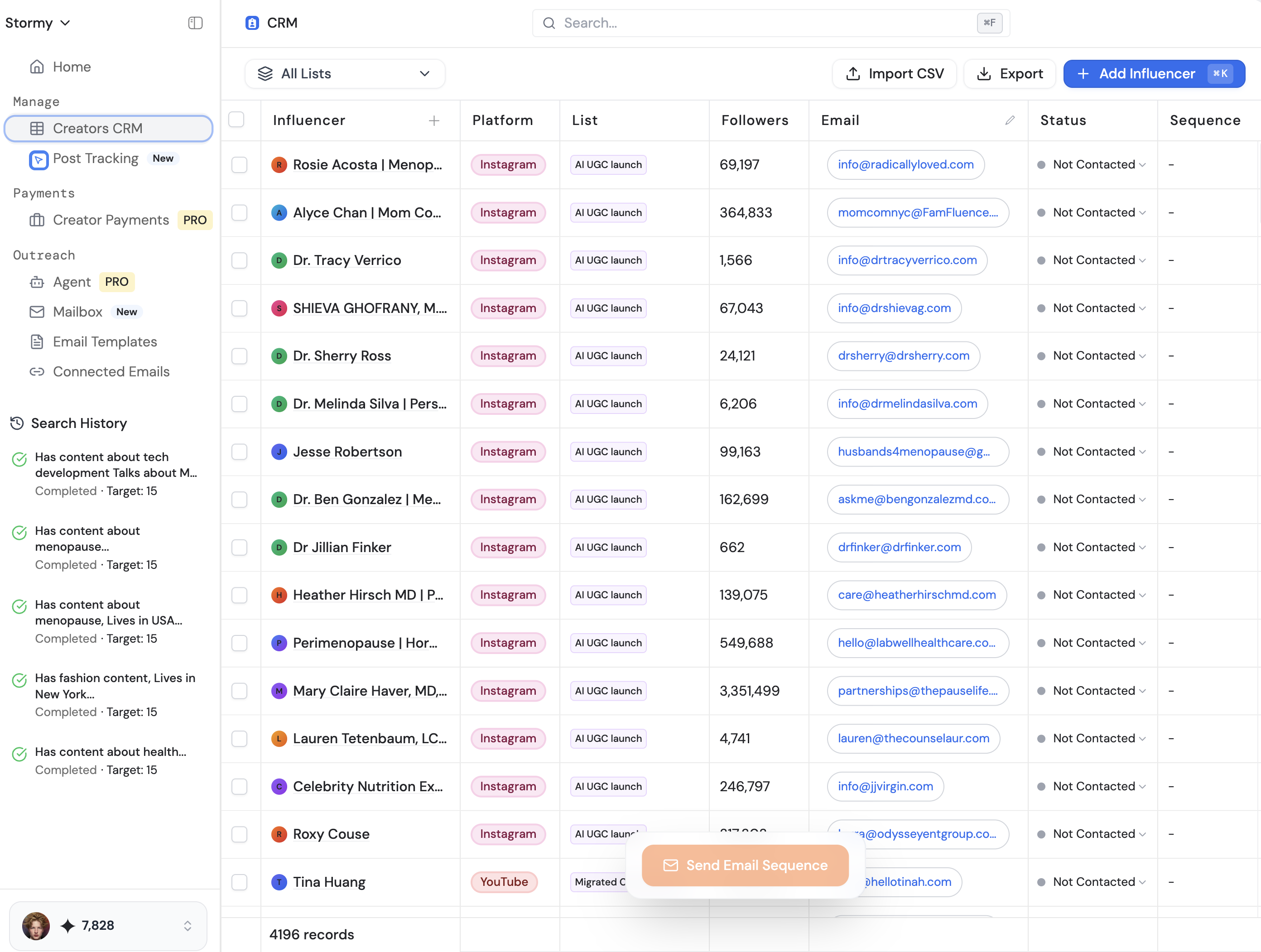
Once you begin your campaigns, managing those relationships is simple with the Stormy AI Creator CRM, which tracks every negotiation and payment just as reliably as Firebase handles your app data.
"The ultimate growth hack in 2026 is the 'AI Sandwich': Build with AI, market with AI, and scale with automated creator partnerships."
The Verdict: How to Choose Your Stack
31:50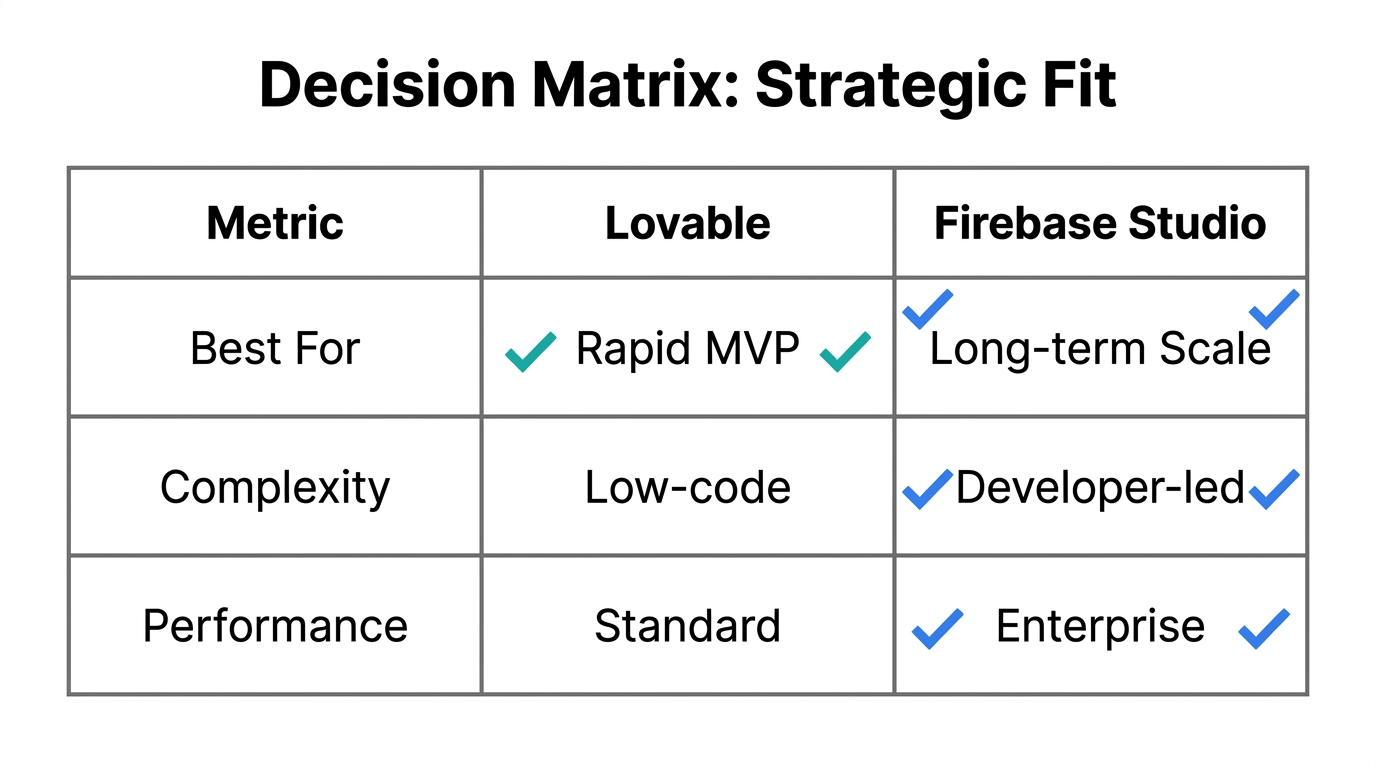
Deciding between Lovable vs. Firebase Studio depends on your team's technical maturity and your immediate goals. If you are a non-technical founder looking to validate a consumer-facing idea with a high-conversion UI, Lovable is the clear winner. Its ability to generate polished, shareable dashboards makes it the superior choice for early-stage social proof.
However, if you are a Growth Lead at a scaling startup with an existing engineering team, Google Firebase Studio is the better long-term play. It offers the technical depth required to move from a prototype to a production-grade app without switching platforms. Its connection to the broader Google Cloud ecosystem ensures that your app can scale from 1,000 to 1,000,000 users without the backend buckling.
Regardless of the tool you choose, the mandate for 2026 is clear: Experiment fast, automate your outreach via Stormy AI, and build a tech stack that allows for continuous, AI-driven evolution.