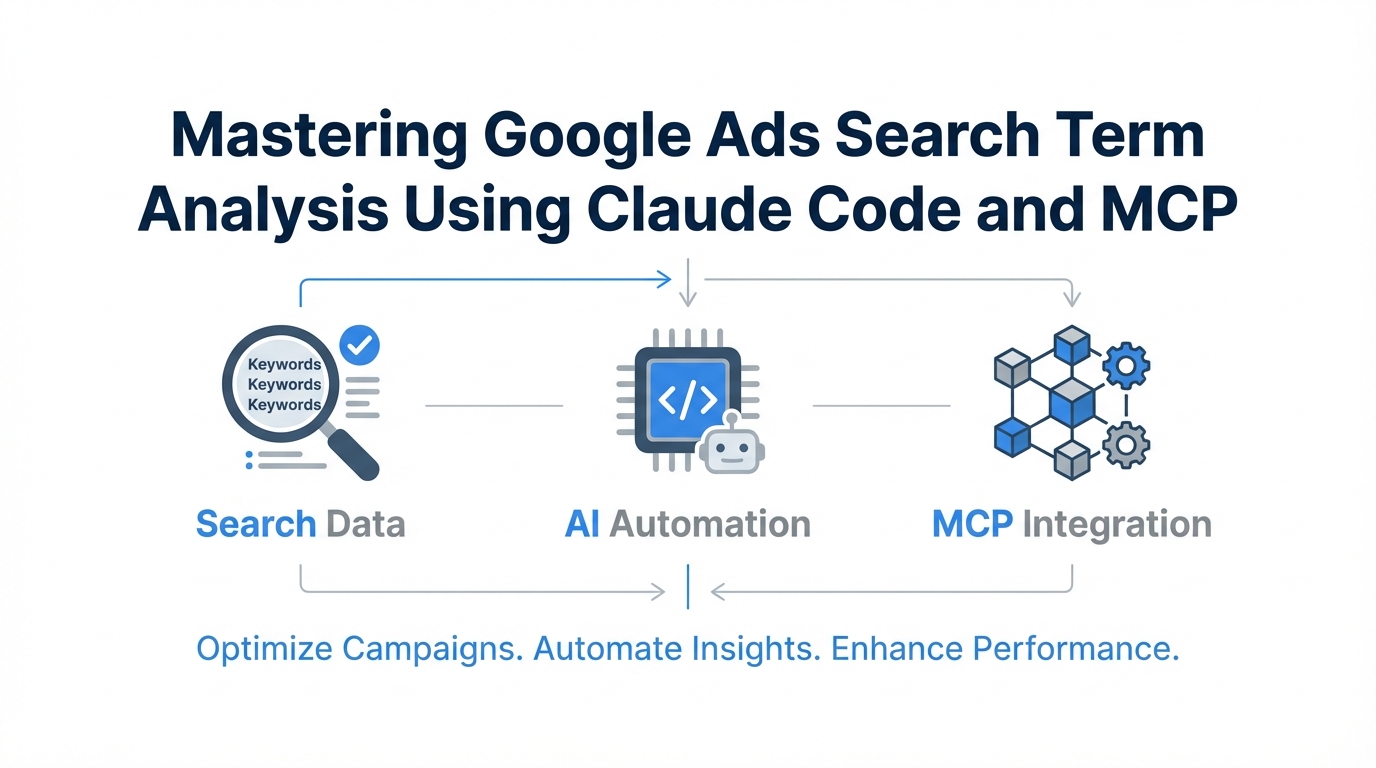
For years, digital marketers have been tethered to the Google Ads interface, manually sifting through thousands of search terms to find the "gold" while filtering out the "garbage." This process is often tedious, involving heavy negative keyword management and complex pivot tables. However, the landscape is shifting with the arrival of AI-driven developer tools like Claude Code and the Model Context Protocol (MCP).
By leveraging Anthropic’s new terminal-based interface, marketers can now analyze vast datasets without ever leaving their command line. This workflow uses MCP to connect Claude directly to local files, Google Ads API exports, or even database environments. Instead of manually categorizing search queries, you can prompt Claude to "Identify all search terms with a conversion rate over 5% that aren't already in my exact match ad groups."
The beauty of this approach lies in its speed. Traditional analysis might take hours in Excel, but with a custom Python script running via an MCP server, Claude can process thousands of rows in seconds. This level of automation allows performance marketers to focus on strategy rather than data entry. Just as search analysis is becoming AI-native, platforms like Stormy AI are streamlining other parts of the growth stack, particularly in helping brands source and vet creators for influencer-led campaigns.
To get started, developers and advanced marketers can explore the open-source MCP repository on GitHub to find or build servers that bridge the gap between their marketing data and LLMs. By combining Git-like workflows with LLM intelligence, the barrier to high-level data science in digital advertising is effectively disappearing. This transition mirrors the broader trend of "AI Agents" moving from simple chat interfaces to autonomous tools that interact with our most important business tools, from Notion to Google Ads.