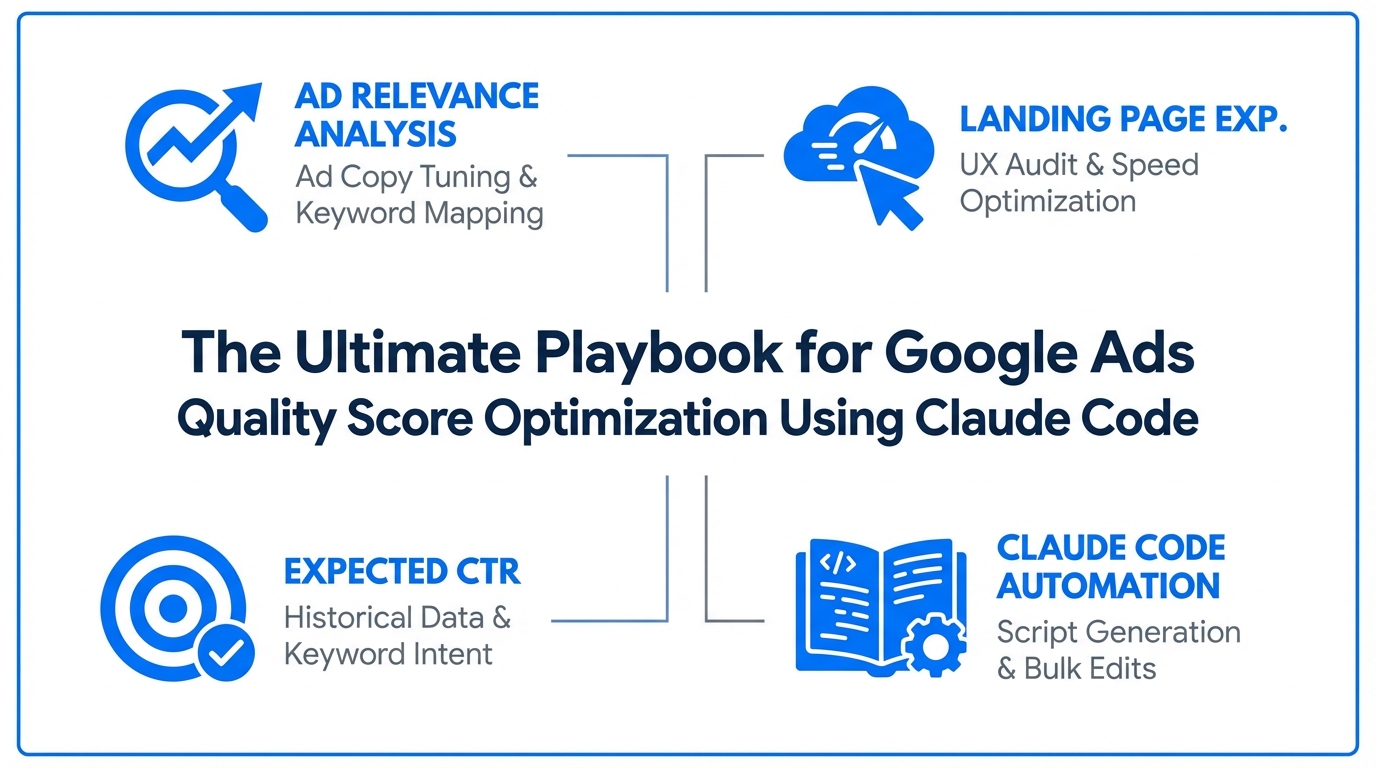
In the high-stakes world of performance marketing, the difference between a profitable campaign and a budget-draining disaster often comes down to a single number: your Quality Score. For years, performance marketers have manually tweaked headlines, reorganized ad groups, and audited landing pages to shave cents off their CPCs. However, the arrival of 2025 has signaled a paradigm shift. We have moved from simple AI assistants to autonomous ai marketing agents that can execute technical workflows directly within your ad accounts. This guide provides a comprehensive ppc automation strategy centered on Claude Code—Anthropic’s terminal-based engineering agent—to automate google ads quality score optimization and reduce cost per click by as much as 33%.
The New Economics of Quality Score in 2025
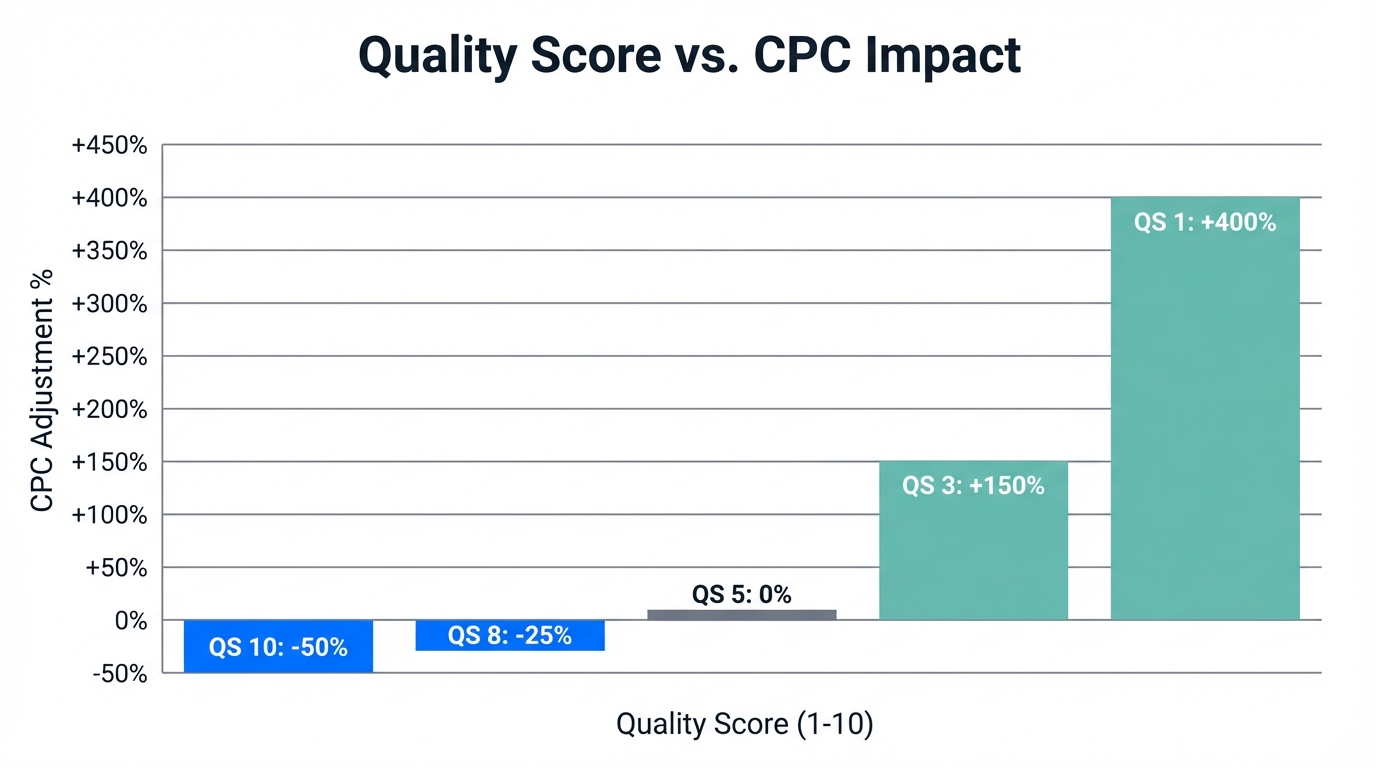
The financial impact of Quality Score (QS) on your bottom line has never been more pronounced. As of early 2026, research suggests that 80–85% of technical marketers are now utilizing AI coding assistants like Claude Code to manage complex API workflows. This isn't just about efficiency; it is about survival in a competitive auction environment.
When you use Google Ads, your Ad Rank is determined by your bid multiplied by your Quality Score. If your QS is low, you are essentially paying a "laziness tax." Conversely, claude code for marketing allows you to optimize the three pillars—Ad Relevance, Expected CTR, and Landing Page Experience—at a scale previously impossible for human teams.
"The industry is moving away from manual Single Keyword Ad Groups toward Intent-Based Ad Groups (IBAGs), built and maintained by AI agents using the Google Ads API."From SKAGs to AI-Managed Intent-Based Ad Groups (IBAGs)
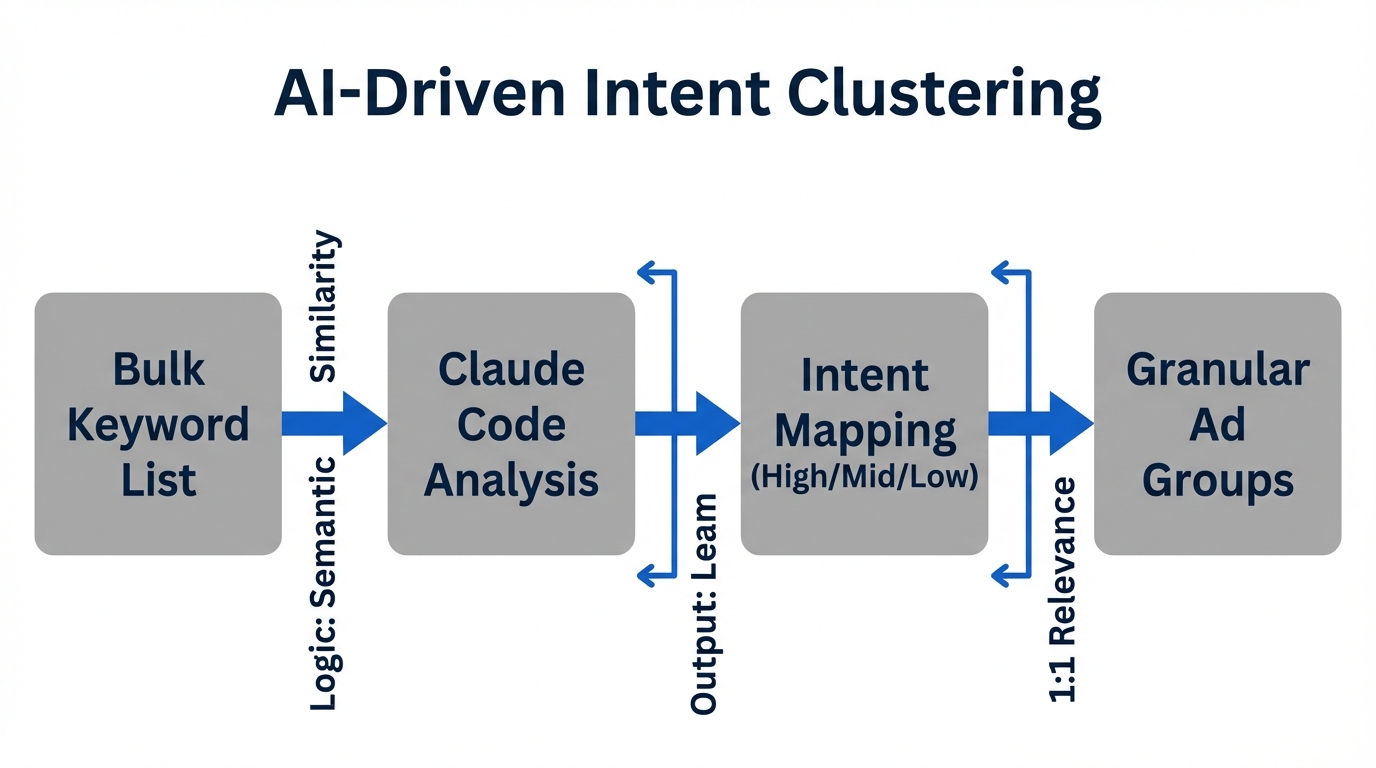
For a long time, the gold standard for google ads quality score optimization was the Single Keyword Ad Group (SKAG). The logic was simple: one keyword, one specific ad, and one specific landing page. While effective, SKAGs are a nightmare to manage at scale. Modern ai marketing agents have ushered in the era of Intent-Based Ad Groups (IBAGs).
Instead of manual categorization, Claude Code can analyze thousands of search terms and group them by semantic intent. By leveraging tools like TrueClicks GAQL.app, you can pull live data into your terminal and have Claude structure your account dynamically. This ppc automation strategy ensures that your ads remain hyper-relevant to the user's journey without requiring 40 hours of manual spreadsheet work per week on platforms like Microsoft Excel.
| Strategy | Manual (SKAGs) | AI-Agentic (IBAGs) |
|---|---|---|
| Setup Time | High (Hours/Days) | Low (Minutes) |
| Scalability | Limited | Unlimited |
| Keyword Mapping | Rigid | Dynamic/Semantic |
| QS Maintenance | Reactive | Proactive/Automated |
Optimizing Ad Relevance with Claude Code Scripts
Ad Relevance measures how closely your ad matches the intent behind a user's search. If Google sees a mismatch, your Quality Score plummets. Using claude code for marketing, you can automate the detection of "Below Average" relevance ratings across your entire account.
By running Claude in your local environment, you can prompt it to: "Analyze my keywords.csv and ads.csv. Generate a Google Ads script to update ad groups where relevance is 'Below Average' with 15 Responsive Search Ad headlines that match the search intent." This level of ppc automation strategy allows you to maintain "Above Average" ratings even in accounts with tens of thousands of keywords. To ensure your creative assets are as compelling as your technical structure, you might use Stormy AI to source UGC creators who can produce authentic video content that resonates with specific search intents, further boosting your relevance scores.
"Moving a QS from 6/10 to 8/10 can reduce Cost-Per-Click by 33%. High-quality ads pay up to 50% less per click."Improving Expected CTR via Predictive A/B Testing
Expected CTR is a prediction of how likely someone is to click your ad. The biggest killer of CTR is negative keyword conflict—where your own exclusions prevent your best ads from showing for the right terms. Claude Code can execute a CLI script to cross-reference your active keywords against your negative keyword lists instantly.
Furthermore, you can use the logic found in tools like Shabba.io to let Claude score how relevant your search terms are to your current copy. If the score is low, Claude can automatically draft new copy variations. This predictive approach ensures your ads are always evolving to meet shifting consumer behavior, which is essential to reduce cost per click over the long term.
Enhancing Landing Page Experience with Playwright MCP
The final pillar of google ads quality score optimization is the Landing Page Experience. Google doesn't just look at keywords; it looks at bounce rates, load times, and mobile usability. This is where Claude Code’s use of the Model Context Protocol (MCP) becomes a game-changer. By installing the Playwright MCP Server, Claude can actually "see" and interact with your landing pages using Playwright.
You can instruct Claude to: "Open my product URL, take a mobile screenshot, and check if the H1 matches the keyword 'high-performance running shoes'. Identify any layout shifts that hurt user experience." This automates the technical audit that usually requires a developer, ensuring your ppc automation strategy covers the entire funnel from click to conversion. For brands scaling their landing pages, managing the influx of creator content used on these pages can be streamlined with a creator CRM like Stormy AI, which helps track which UGC assets are driving the best landing page scores.
The Step-by-Step Playbook for Claude Code Automation
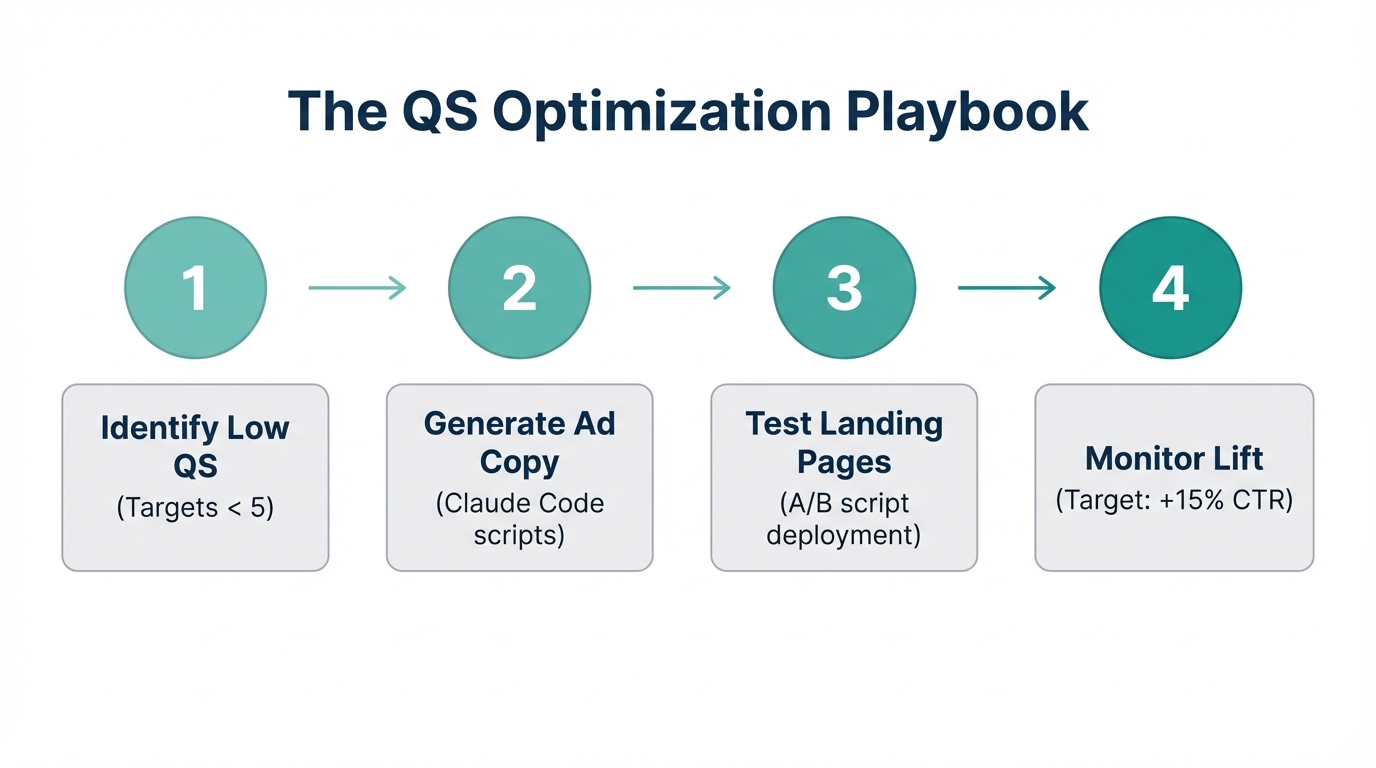
To implement this in your own marketing workflow, follow these sequential steps to move from manual management to agentic execution.
Step 1: Environment Setup
Install Claude Code in your terminal and connect it to your workspace. Ensure you have your Google Ads reports exported as CSVs or connect via the Google Ads MCP Server for direct API access.
Step 2: Enter Plan Mode
Before asking Claude to write code, use "Plan Mode." Ask: "I want to improve the Ad Relevance of keywords with a Quality Score below 5. What is the best logic for a Google Ads script to handle this without overlapping with existing high-performers?" Always plan before you execute to avoid breaking existing account structures.
Step 3: Visual Verification
Use Playwright to run a visual audit of your top-spending keywords. Ensure that the mobile experience is seamless and that the "scent" of the ad carries through to the landing page. Check for Core Web Vitals using Claude’s ability to parse Lighthouse reports.
Step 4: Continuous Monitoring via .claude/rules
Create a .claude/rules file in your directory. This file should contain your brand voice, prohibited words, and account constraints. This ensures that every time Claude generates a new ad or script, it stays within your brand guidelines maintained in tools like Notion. You can find expert marketing prompts to feed Claude in repositories like the Marketing Skills Repository.
Common Pitfalls to Avoid in PPC Automation
While ai marketing agents are incredibly powerful, they are not infallible. Avoid these common mistakes to protect your ad spend:
- Skipping Plan Mode: Jumping straight to execution can lead to scripts that create conflicting ad groups.
- Stateless Workflows: Not using a
CLAUDE.mdor.claude/rulesfile, which leads to Claude "forgetting" your brand voice between sessions. - Ignoring Human Creativity: AI is excellent at structure and syntax, but it often lacks the emotional "hook" that drives high CTR. Use Claude to structure your ads, but always review the final copy for brand resonance.
- Over-Automation: Do not let an AI agent change your bids or budgets without a human-in-the-loop approval process, especially in high-spend accounts.
Conclusion: The Future of PPC is Agentic
Mastering google ads quality score optimization in 2025 requires more than just keyword research; it requires a robust ppc automation strategy. By using Claude Code to automate technical audits, rewrite ads for relevance, and verify landing page experiences, you can significantly reduce cost per click and outperform competitors who are still stuck in manual workflows. The shift toward ai marketing agents is not just a trend—it is the new standard for growth marketing. Start by auditing one low-QS campaign today and watch how agentic execution transforms your ROI.