Performance marketing is undergoing a seismic shift. For over a decade, growth marketers have been tethered to complex dashboards, clicking through endless tabs to adjust bids, update creative, and audit account health. But the era of manual dashboard management is fading. As we move into 2025 and 2026, the transition from "Chat AI"—using AI as a simple writing assistant—to "Action AI" or autonomous execution is the defining trend for the industry. According to the Digital Marketing Institute, 79% of companies have already adopted AI agents, with two-thirds reporting measurable value delivery. For Google Ads practitioners, this evolution is manifesting as Funnel-as-Code: a philosophy where ad accounts are treated like codebases, managed via the command line, and optimized through agentic workflows. By adopting this mindset, teams are seeing a 75% reduction in time spent on campaign analysis and a 10x increase in creative testing volume, as reported by Stormy AI. This playbook will show you how to leverage Claude Code and the Model Context Protocol to automate your Google Ads growth engine.
The Funnel-as-Code Philosophy for Modern Marketing
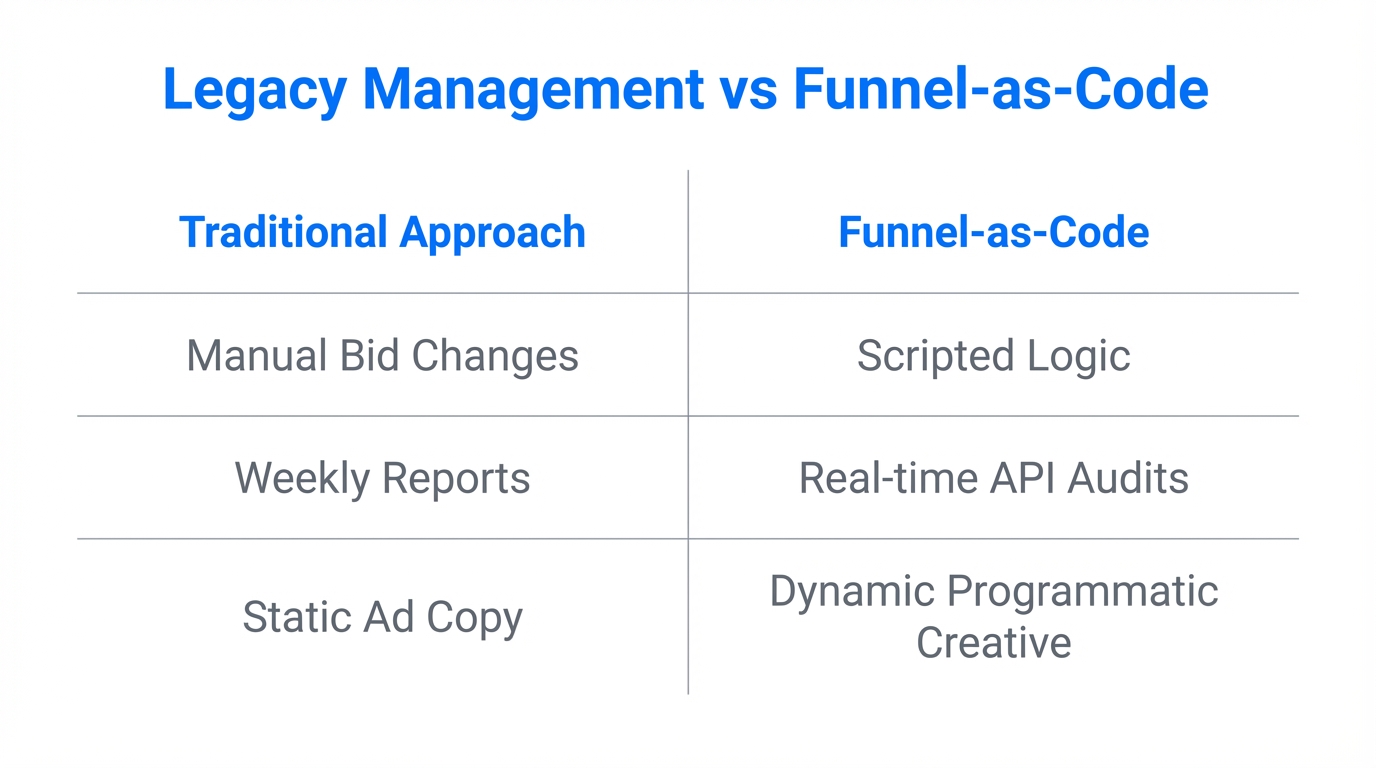
The core premise of Funnel-as-Code is that your marketing infrastructure should be version-controlled, programmatically accessible, and driven by logic rather than manual clicking. In a traditional setup, a marketer might spend hours auditing a Google Ads account to find inefficient spend. In a Funnel-as-Code setup, you use an agent like Claude Code to query the Google Ads API, cross-reference performance with historical data in Google BigQuery, and generate a prioritized list of actions in seconds.
This approach isn't just about speed; it's about accuracy. By treating your funnel as code, you can run automated unit tests on your tracking pixels, programmatic checks on your landing page load speeds, and AI-driven audits on your ad copy relevance. This shift moves the marketer from being a "task doer" to an "architect of systems."
"The era of 'Chat AI' is ending; the era of 'Action AI' has arrived. Marketers are now using the terminal to manage ecosystems in minutes."The Agentic Infrastructure: Claude Code, MCP, and the Ads API
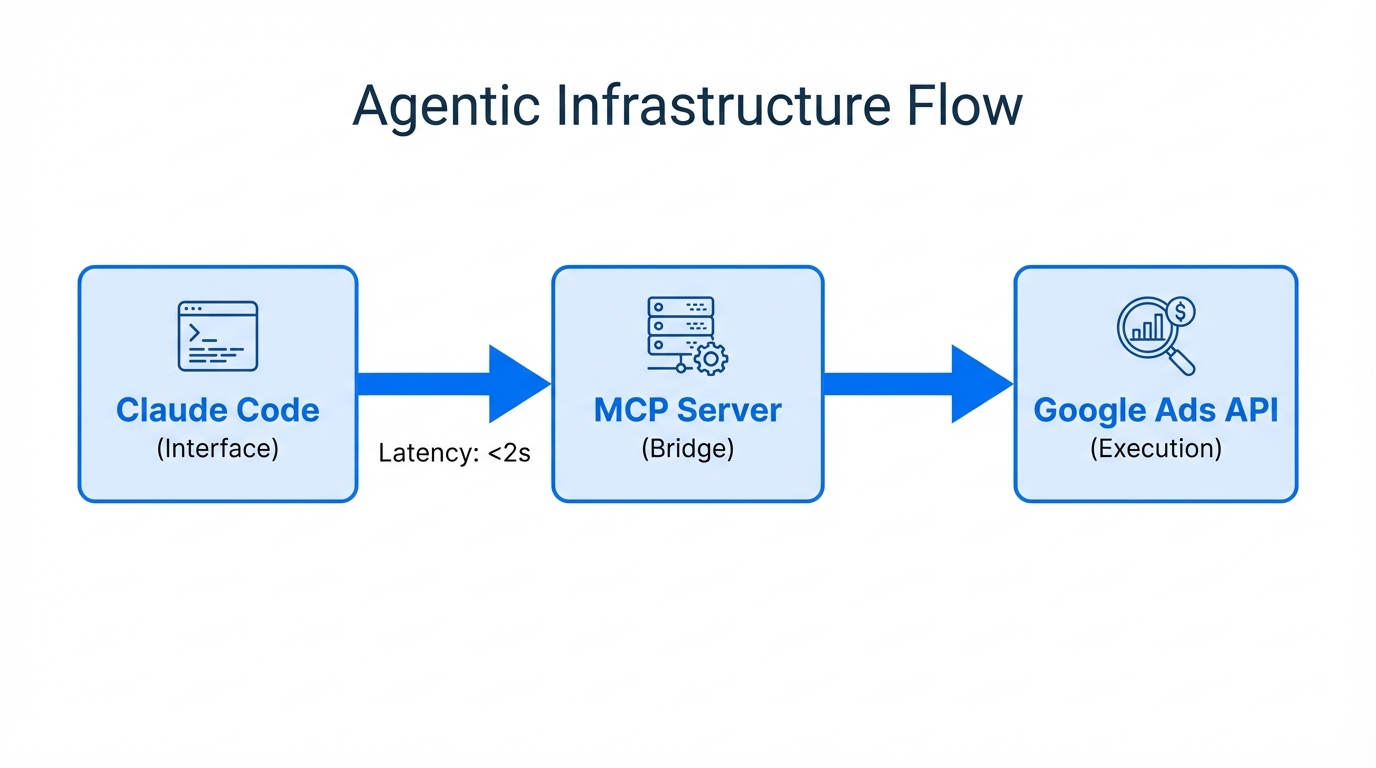
To implement a Funnel-as-Code strategy, you need a technical bridge between your AI and your marketing data. This is where Model Context Protocol (MCP) comes in. MCP acts as the "hands" for Claude, allowing it to query the Google Ads API directly without you needing to export CSVs or manually navigate the UI.
By setting up a dedicated MCP server, such as the Official Google Ads MCP (Experimental) or the GoMarble Google Ads MCP, you give Claude the ability to execute Google Ads Query Language (GAQL) commands. This enables Google Ads automation that is significantly more flexible than the built-in "Auto-Applied Recommendations" which, as noted by Primotech, often prioritize Google's spend over your ROI.
| Feature | Traditional Dashboard | Funnel-as-Code (Claude CLI) |
|---|---|---|
| Audit Speed | 4–8 Hours | < 15 Minutes |
| Creative Testing | Manual Uploads | Programmatic RSA Deployment |
| Data Source | Siloed Ad Data | Unified (CRM + BigQuery + API) |
| Execution | Point-and-Click | Agentic Action Mode |
How to Perform a 190-Point Google Ads Audit in Under Two Hours
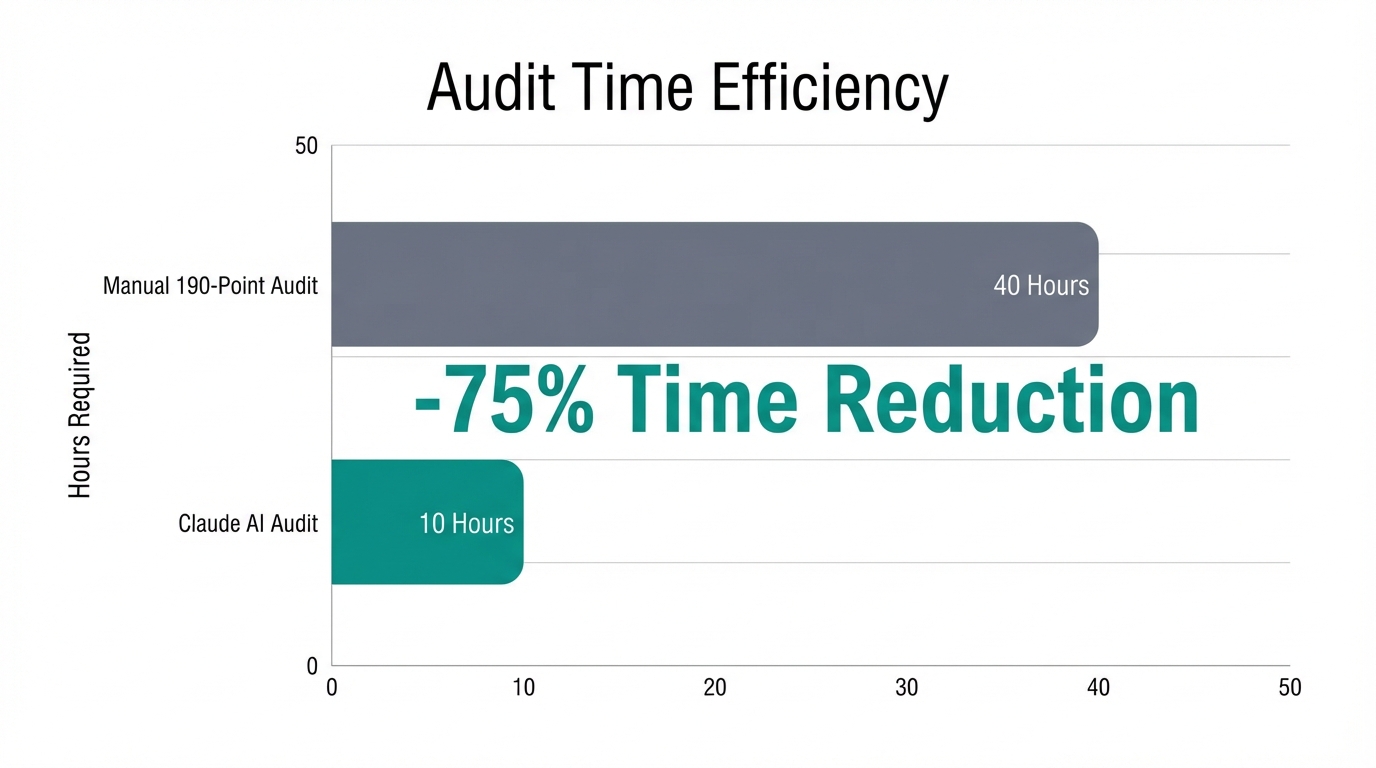
One of the most immediate use cases for Claude Code for marketing is the comprehensive account audit. Instead of checking every campaign manually, you can use the Claude Ads Skill to run 190+ PPC checks across multiple platforms simultaneously. This includes checking for keyword cannibalization, identifying underperforming landing pages, and surfacing "bleeding" campaigns where the CPC has spiked without a corresponding lift in conversions.
To run this audit, you enter "Plan Mode" inside Claude Code. Claude analyzes your account structure via the MCP connection and provides a technical report that highlights specific optimizations. This process reduces a typical 8-hour manual audit to a 2-hour automated sprint, allowing your team to focus on the high-level creative strategy rather than spreadsheet management.
"Actionable insight is the new currency. If your audit takes all day, your competition has already outpaced you twice over."Step-by-Step Playbook: Automated Creative Testing (ACT)
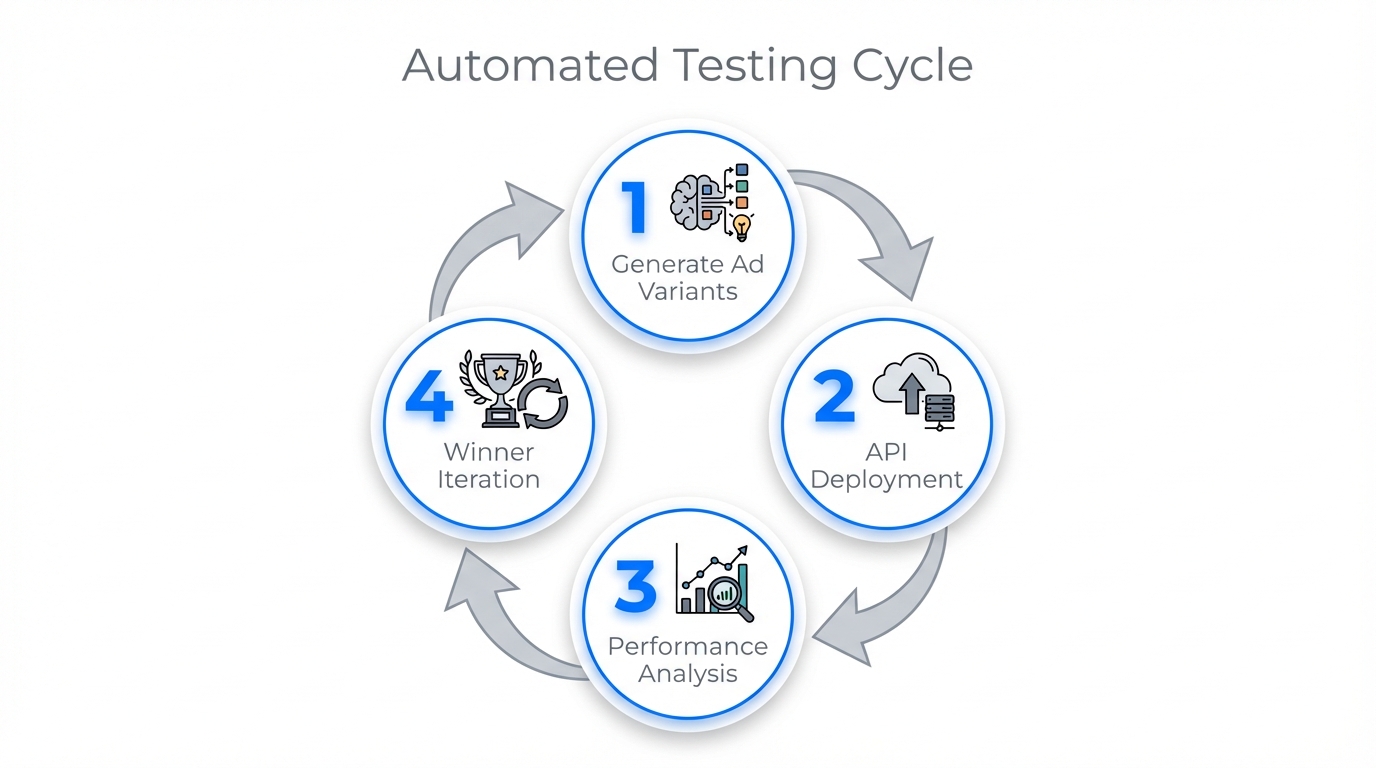
Creative is the single biggest lever in modern performance marketing. Using Claude Code, you can move from testing 5 headlines to testing 50 programmatically. Here is how you set up an agentic AI marketing workflow for creative testing:
Step 1: Analyze Top Performers
Use Claude to query your search term reports and high-performing assets from the last 90 days. You can pipe this data directly from BigQuery into Claude for a deep semantic analysis of what is actually resonating with users.
Step 2: Generate RSA Variations
Claude generates 50 variations of Responsive Search Ad (RSA) headlines and descriptions based on successful patterns. At this stage, you can also leverage specialized tools; for example, platforms like Stormy AI can help source and manage UGC creators to provide the visual assets that your automated system then deploys across TikTok and YouTube campaigns.
Step 3: Programmatic Deployment
Using Make.com or n8n.io as the orchestrator, Claude pushes these new variations to the Google Ads Scripts engine for live deployment. This ensures a constant stream of fresh creative without manual intervention.
Future-Proofing with Answer Engine Optimization (AEO)
As Google integrates AI Overviews into the search experience, performance marketing efficiency now requires your content to be "extractable." This is known as Answer Engine Optimization (AEO). Your ads and the landing pages they lead to must be structured so that LLMs can confidently cite them.
Using the Claude SEO Skill, you can audit your landing page content for "LLM readability." The goal is to track your "AI Visibility" as a primary KPI. As One Click Marketing notes, SEO success in 2026 will hinge on whether your content can be confidently understood and extracted by AI systems, not just keyword matching.
"If an AI cannot read your landing page, it doesn't exist in the future of search."Common Mistakes to Avoid in Funnel-as-Code
While agentic AI marketing offers incredible scale, it is not without risks. Here are the three most common pitfalls to avoid:
- Over-Automation Without Human Review: AI can hallucinate promotions or violate brand safety. Always implement a "Human-in-the-loop" (HITL) gate for final creative approval to prevent brand damage, as warned by LinkNow Media.
- Data Silos: If your AI isn't connected to your bottom-of-funnel CRM data, it will optimize for clicks rather than revenue. Use Vertex AI Agent Engine to unify your data layers.
- Ignoring Negative Keywords: Automated campaigns can scale spend on irrelevant terms quickly. Use Claude to audit your search term reports daily to add negative keywords programmatically.
Conclusion: The CLI-Driven Marketing Era
Transitioning to a Funnel-as-Code approach is no longer a luxury; it is a necessity for maintaining a competitive edge in Google Ads automation. By moving away from manual dashboards and toward agentic CLI tools like Claude Code, growth marketers can focus on high-level strategy and creative experimentation. Whether you are using Stormy AI to find the perfect UGC creator for your next video campaign or using MCP servers to query your Ads API, the goal is the same: build systems that learn and execute while you sleep. Start by installing the Claude Code CLI and running your first account audit today—your CAC will thank you.