The landscape of digital advertising has shifted from a battle of budgets to a battle of algorithms. While Google Ads has spent years pushing its internal automation features, high-performance marketers in 2025 are finding that standard "Smart Bidding" often prioritizes Google's revenue over the advertiser's ROI. To stay competitive, Ad Ops professionals are moving beyond the browser-based UI and into the command line. This transition—from manual adjustments to an agentic "Junior Ad Ops" model—is fueled by Claude Code, Anthropic’s revolutionary agentic CLI tool. By treating ad accounts like software, you can now write, deploy, and audit complex google ads bid management scripts in real-time, moving from a "Chat AI" workflow to an "Action AI" strategy.
The Shift to Agentic Ad Ops: From Chat AI to Action AI
In the previous era of AI, marketers used tools like Claude.ai to brainstorm headlines or summarize reports. In 2025, the paradigm has shifted. We are now in the age of agentic workflows, where AI isn't just a chatbot; it is an operator. Claude Code allows you to interact with your Google Ads account via the command line, performing tasks that used to take hours of manual data export and Excel pivot tables in just seconds. Currently, over 80% of advertisers use some form of automated bidding according to WordStream Benchmarks, but the leaders are those who are layering custom agentic logic on top of Google's native machine learning.
"The transition from 'Chat AI' to 'Action AI' means treating your ad account like a codebase—where optimizations are deployed as code, not just clicked in a dashboard."
The core of this revolution is the Model Context Protocol (MCP). This protocol acts as the bridge, allowing Claude Code to "talk" to live data sources. Instead of downloading a CSV of your search terms, you can now query your account directly through the CLI using tools like GAQL.app. This allows for a claude code automation flow that audits performance and executes changes without a human ever having to open the Google Ads interface.
Why Smart Bidding Overspends and How to Fix It
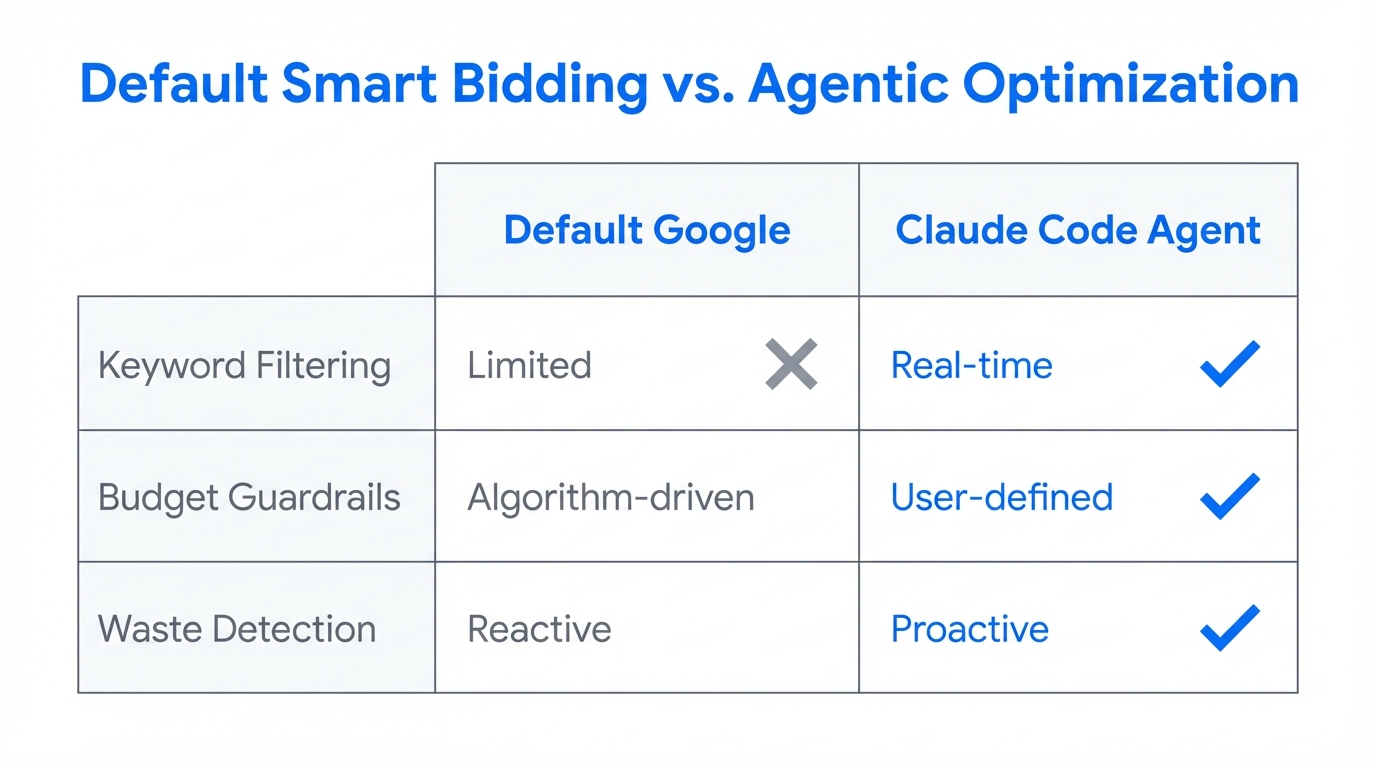
Google’s Smart Bidding is designed to maximize conversions within a set budget, but it lacks the nuance of business-specific context. It often bids aggressively on high-volume terms that have low intent or ignores the "bleeding" spend of broad match keywords that haven't converted in weeks. Experts at Farsiight have noted that "Demand-Led Bidding" is replacing fixed monthly caps, where agents scale spend during peak intent and pull back when CPAs spike.
By using Claude Code as a "check and balance," you can implement safeguards that Google’s native tools won't. For example, while Google might want you to stay in the auction to maintain "Share of Voice," a Claude-driven agent can identify when the auction price has exceeded your target break-even CPA and automatically lower your Max CPC caps to prevent an auction war. This approach can reduce costs by up to 50% by eliminating the wasted spend that human managers often miss during their weekly reviews.
Implementing Automated Negative Keyword Pruning
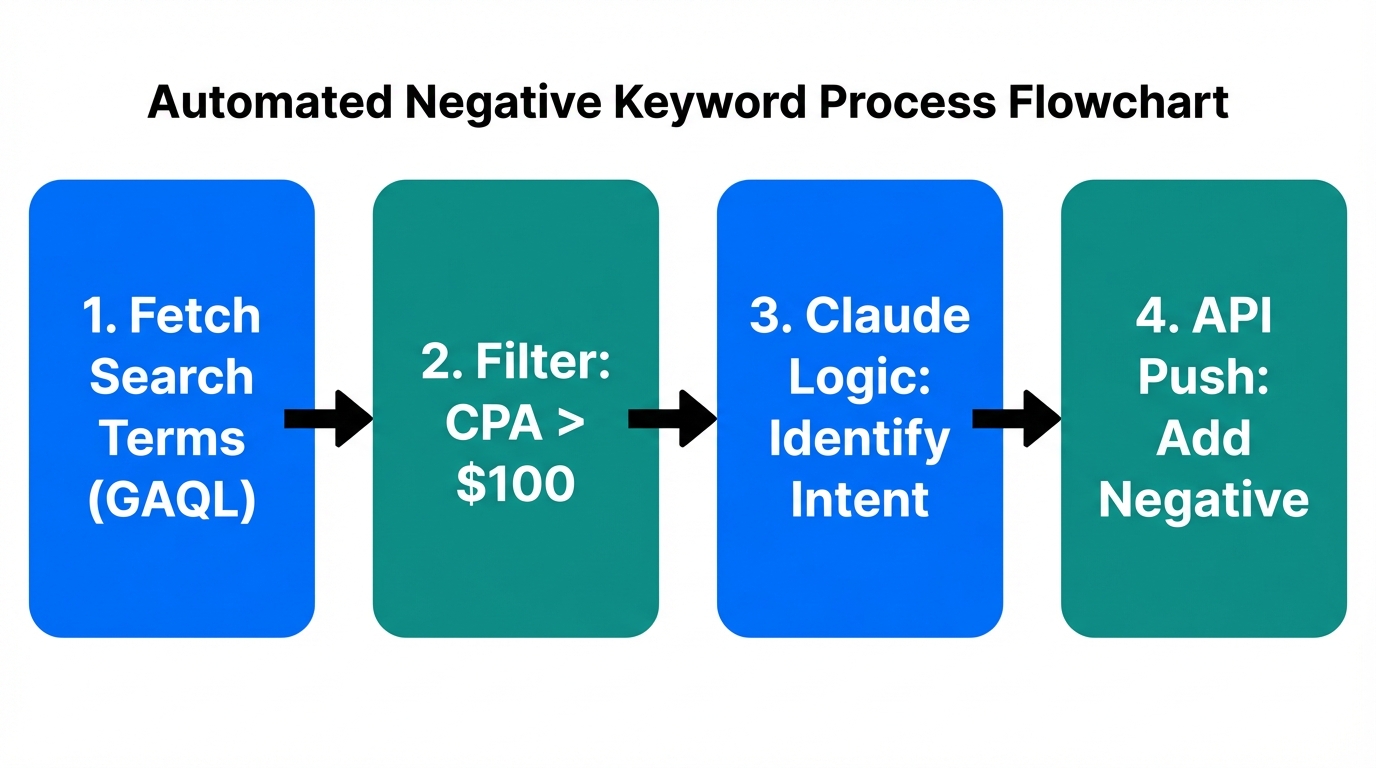
One of the most tedious tasks in ppc automation 2025 is mining search term reports for irrelevant queries. A standard workflow involves looking at hundreds of rows and manually adding negatives. With Claude Code and the TrueClicks Google Ads MCP, you can automate this entire process.
The Negative Pruning Playbook
- Connect the MCP: Initialize Claude Code and connect it to your Google Ads developer token via an MCP server.
- Define the Logic: Instruct Claude to "Find all search terms in the last 30 days that have spent over $50 with 0 conversions."
- Automated Addition: Claude can then generate the
Google Ads Scriptor use the API directly to add these terms to your account-level negative keyword list.
This isn't just about saving time; it's about precision. By using natural language queries to filter search terms, you can catch nuances that traditional filters miss. Organizations using these agentic workflows report a 65% reduction in campaign launch times and a 30% boost in overall efficiency according to research by Stormy AI. This allows your team to focus on high-level strategy while the agent handles the "boilerplate" maintenance of account hygiene.
Refreshing RSA Variations via CLI
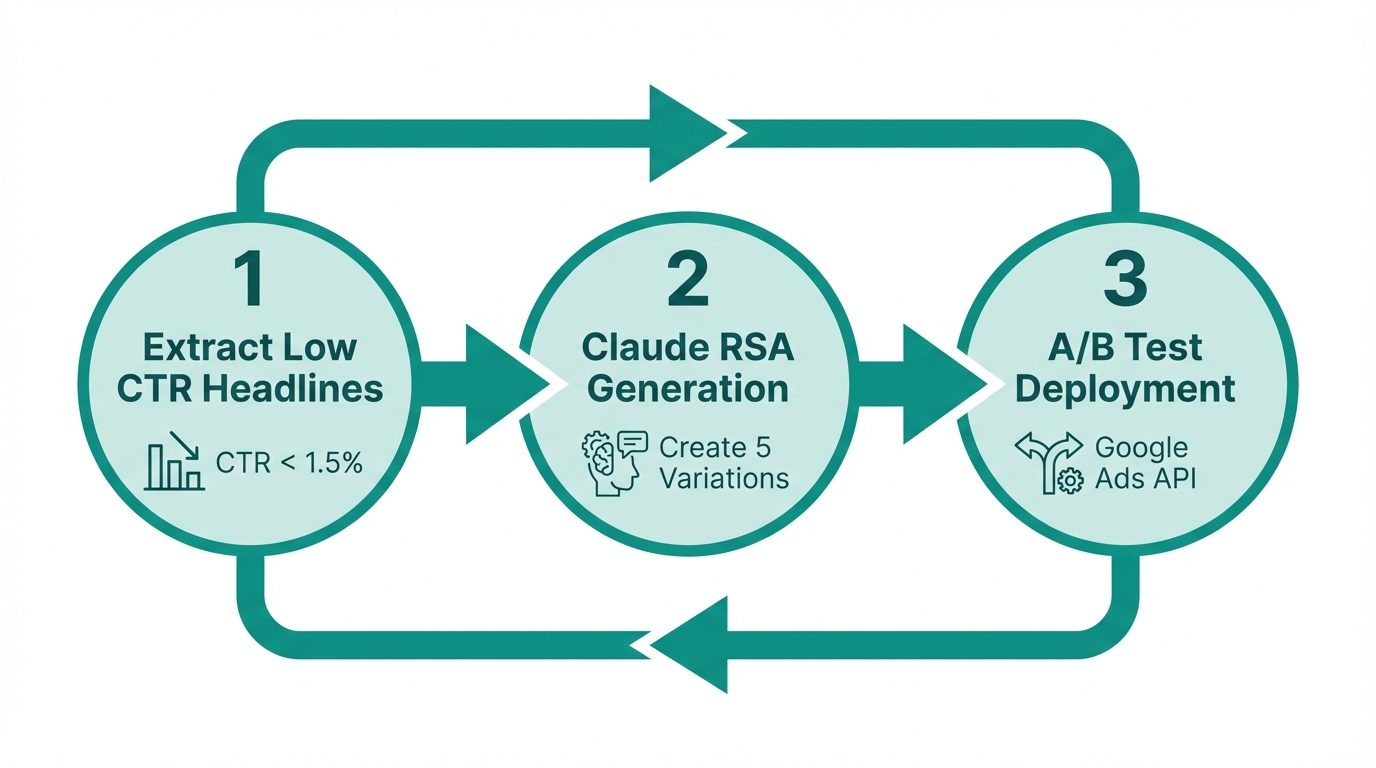
Responsive Search Ads (RSAs) require constant testing to remain effective. However, most managers leave the same 15 headlines running for months. Claude Code can use historical conversion data to suggest and deploy new headline variations that are statistically more likely to perform. Advertisers using AI-based optimization beyond standard bidding report 25% more conversions according to data from Marketing LTB.
| Optimization Method | Speed of Execution | Risk of Overspend | Strategic Control |
|---|---|---|---|
| Manual Bidding | Slow | Low | Highest |
| Google Smart Bidding | Instant | High | Low |
| Agentic (Claude Code) | Fast | Low | High |
To implement this, you can point Claude to a repository of successful ad copy, such as the PPC Marketing Skills Repo, and ask it to generate five new headlines for your "High Intent" ad group based on the last 90 days of top-performing search terms. This ensures your creative is always aligned with actual user behavior rather than guesswork.
Bridging the Gap: GAQL and CData
To make claude code automation truly effective, you need a robust way to feed it data. This is where the Google Ads Query Language (GAQL) comes in. While the Google Ads UI is visual, GAQL is the underlying language of the platform. By using the GAQL.app tool, you can provide Claude with the exact queries it needs to pull performance metrics.
"GAQL is the secret sauce of 2025 PPC. It turns a messy dashboard into a clean data stream that an AI agent can actually understand and act upon."
For those managing multiple accounts or cross-platform budgets, CData MCP Servers offer a way to unify data from Google Ads, LinkedIn, and YouTube. Imagine a scenario where your YouTube ROAS is 20% higher than your search campaigns. A Claude Code script can detect this disparity and propose an instant budget shift to maximize your daily returns. This level of cross-channel agility was previously reserved for massive agencies with custom-built software stacks.
Avoiding Common Pitfalls in AI Bidding
While the potential for gain is high, the "Error Gap" is real. A study in early 2025 found a 20% average error rate in AI-generated PPC advice due to hallucinations of API limits. To protect your budget, follow these safety protocols:
- Set Max CPC Caps: Never let an agent set bids without a hard ceiling. This prevents "auction wars" where costs spiral out of control.
- Don't Ignore Exact Match: As Google pushes Broad Match, many advertisers neglect Exact Match. Research from Search Engine Land warns this is a mistake, as Exact Match remains the highest-converting type for most accounts.
- Respect the Learning Period: AI systems need time to stabilize. Avoid making major budget changes more than once every 7 days.
When you are sourcing creators or managing influencer-driven traffic, platforms like Stormy AI streamline creator sourcing and outreach, providing the high-quality assets your Claude Code-optimized campaigns need to convert. Integrating these creative workflows with your automated bid management creates a holistic performance engine that covers both the "how" and the "what" of your advertising.
Conclusion: The 2025 Automation Playbook
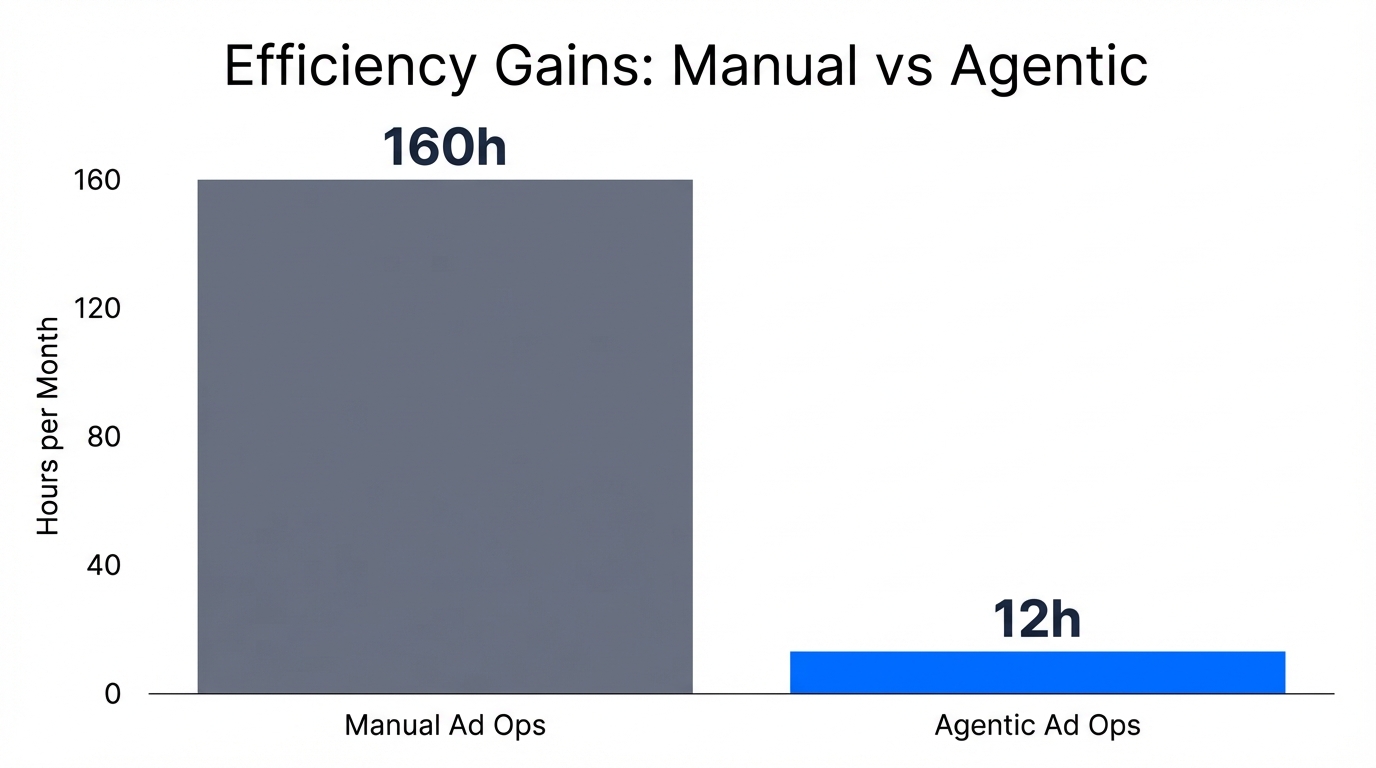
Automating google ads bid management with Claude Code isn't about replacing the human marketer; it's about elevating them to a "Systems Architect" role. By leveraging agentic tools, you can move away from the daily grind of manual adjustments and toward a model of continuous, code-driven optimization. Start small: automate your negative keyword pruning, set up a CPA watchdog with n8n, and use Claude to audit your RSA performance. The competitive advantage in 2025 will belong to those who can iterate faster than the platform's default settings allow.
npm install -g @anthropic-ai/claude-code via npm and begin by querying your account's top-performing keywords. The future of PPC is agentic—don't get left behind in the dashboard.