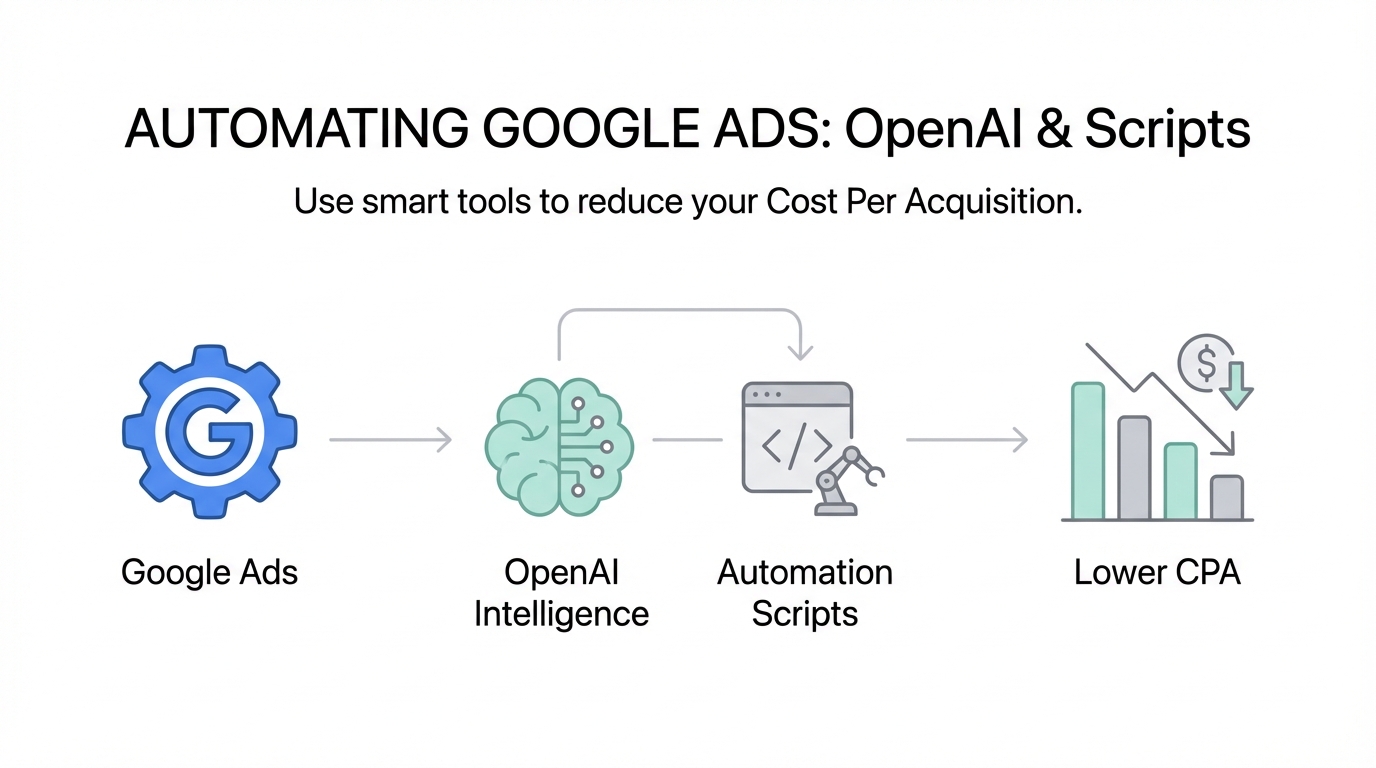
According to recent industry data, AI-influenced digital ad spend is projected to reach $81.6 billion by 2033, growing at a CAGR of 28.4% (Market.us). This isn't just a trend; it's a structural transformation. Marketers using AI report a 45% increase in campaign effectiveness and a 25% faster completion rate for creative tasks (Pixis AI). If you are still manually pausing campaigns based on gut feeling, you are leaving money on the table. This guide will walk you through the technical steps of using OpenAI and multi-model stacks to reduce CPA with AI and reclaim your time.
Prompt Engineering for Google Ads Scripts
One of the most powerful applications of OpenAI's GPT-4o is its ability to generate functional JavaScript for the Google Ads Scripting environment. While legacy tools like Optmyzr offer great pre-built solutions, custom scripts allow you to implement highly specific logic that off-the-shelf software might miss.
To reduce CPA with AI, you must move beyond simple scripts to those that handle complex conditional logic. For example, rather than just pausing a campaign when it hits a spending limit, you can prompt ChatGPT to: "Write a Google Ads script that pauses any campaign where the Target CPA (tCPA) is 50% higher than the daily budget for 3 consecutive days."
When engineering these prompts, specificity is your best friend. You should define the scope (account level vs. campaign level), the timeframe (e.g., LAST_7_DAYS), and the safety triggers (e.g., do not pause if conversions are > 10). This level of technical automation allows you to maintain a "human-in-the-loop" philosophy while letting the machine handle the 24/7 monitoring that no human can match.
"The industry is moving from 'Chat' to 'Action,' where AI agents don't just suggest changes—they execute them across your entire ad stack."
Leveraging GPT-4o for PPC Data Analysis
Raw data is useless without interpretation. AI for PPC data analysis has evolved from simple charts to deep anomaly detection. OpenAI’s GPT-4o, with its 128K token context window, is particularly adept at analyzing large CSVs of ad spend data to find performance outliers that the human eye might miss.
By uploading your Campaign Performance Report directly to OpenAI, you can ask for insights such as: "Compare my top 10% of performing keywords with the bottom 10% and identify patterns in CTR and conversion lag time." This goes far beyond standard Google Ads reporting, allowing you to identify diminishing returns on specific ad groups before they drain your budget.
- Anomaly Detection: Find sudden spikes in CPC that indicate a new competitor has entered the auction.
- Budget Rebalancing: Shift budget from high-CPA campaigns to high-ROAS campaigns automatically based on statistical significance.
- Search Term Mining: Use OpenAI to categorize thousands of search terms into "Intent Buckets" (e.g., Informational vs. Transactional).
Roughly 69.1% of marketers have integrated AI into their strategies, but only a fraction are using it for deep data forensics (IAB Europe). By utilizing OpenAI as a data scientist rather than just a copywriter, you position your brand to scale faster and more sustainably.
The 'Double-Check' Method: OpenAI vs. Claude
While OpenAI is a "superior math and data analyzer," it is not without its flaws. Digital advertising experts have noted that AI can sometimes "hallucinate" numbers when dealing with extremely complex spreadsheets. This is where the multi-model stack comes into play.
The "Double-Check" method involves using OpenAI for the heavy lifting—the calculations and script generation—and then using Claude for the narrative summary and strategic reporting. Claude 3.5 Sonnet is widely considered to be a better "thinking partner" that avoids the robotic fluff common in GPT outputs (Shared Physics). Claude also offers a larger context window (up to 200K+ tokens), making it ideal for full-account audits where you need the AI to "remember" your brand's entire historical performance (Codebrand).
"Using the right tool for the right job: OpenAI for the logic of code, and Claude for the nuance of strategy."
For example, if you are running a large-scale YouTube or TikTok campaign, the creative element is paramount. While you might use scripts to manage the bids, you can use Claude Projects to analyze your best-performing ad copy and generate 50+ new variants that maintain your brand voice. When it comes to finding the right people to film that content, platforms like Stormy AI can help you discover and vet UGC creators who match your brand's aesthetic, ensuring your automated ads have high-quality creative to work with.

Building a No-Code Orchestration Layer
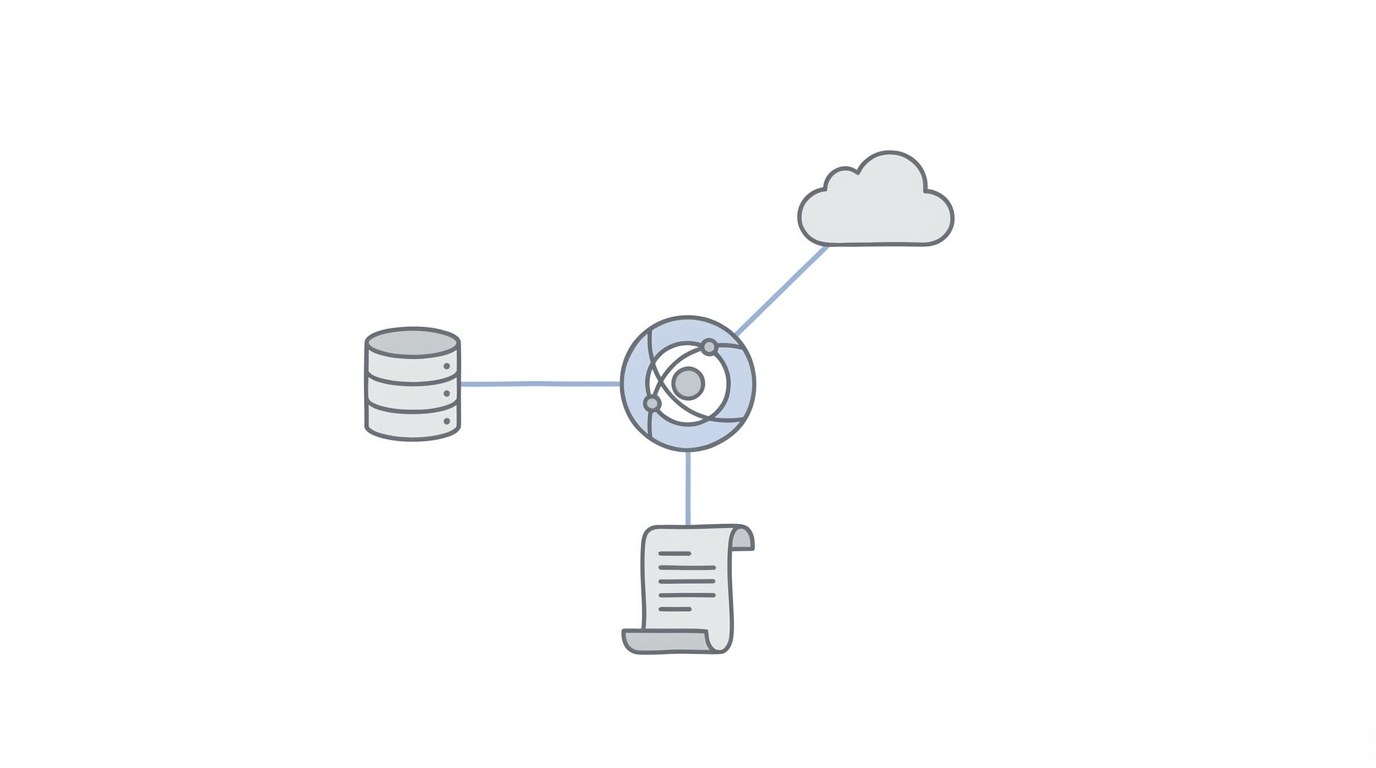
The true power of OpenAI for advertising is unlocked when it is connected to other tools in your marketing stack. You can build a fully automated monitoring system using a no-code orchestration layer like Make.com or Zapier.
The Workflow Pattern:
- Trigger: Make triggers every morning when a new Google Ads report is generated.
- Analysis: The data is sent to OpenAI to identify campaigns where the CPA has increased by more than 20% week-over-week.
- Communication: Make sends a summary of these anomalies to a dedicated Slack channel, providing the PPC manager with an immediate action plan (9x).
This "agentic" approach saves hundreds of hours. For instance, the company TELUS leveraged AI models to build internal tools that saved over 500,000 hours, resulting in $90 million in benefits (Data Studios). Similarly, Brex used AI integration to automate 75% of transaction processing, freeing up their marketing and finance teams to focus on high-level growth strategy (AWS Bedrock).
Common Pitfalls to Avoid in AI Automation
Despite the efficiency gains, a "set-and-forget" mentality is the quickest way to waste your budget. AI lacks cultural context and empathy; over-automation without human oversight often leads to audience fatigue and generic messaging (AdGPT).
One of the most critical errors is premature automated bidding. You should never move to Google's automated bidding strategies (like Target ROAS or Target CPA) before your campaign has achieved at least 30-50 conversions in a 30-day window. If you switch too early, the AI optimizes for "garbage" traffic because it doesn't have enough signal to understand what a high-value customer looks like (Visible Factors).
Furthermore, ensure that your brand voice remains consistent. Using different AI models for different ad groups within the same campaign can create a disjointed experience that confuses potential customers (SizeIM). Stick to the 80/20 rule: let AI handle 80% of the repetitive tasks, but keep 20% of your time focused on the creative "big ideas" and final approvals.
Conclusion: The Future of PPC Management
Lowering your CPA in the age of AI requires a blend of technical scripting, deep data analysis, and strategic orchestration. By implementing OpenAI for advertising and Google Ads automation scripts, you are not just saving time; you are building a resilient, data-driven system that out-competes manual managers. Remember to use the Double-Check method to verify your data, avoid the trap of premature automated bidding, and always keep a human eye on the creative output.
As the barrier to entry for content creation continues to drop, the brands that win will be those that use AI to manage the complexity of distribution while focusing their human energy on authentic creator relationships and high-impact strategy.