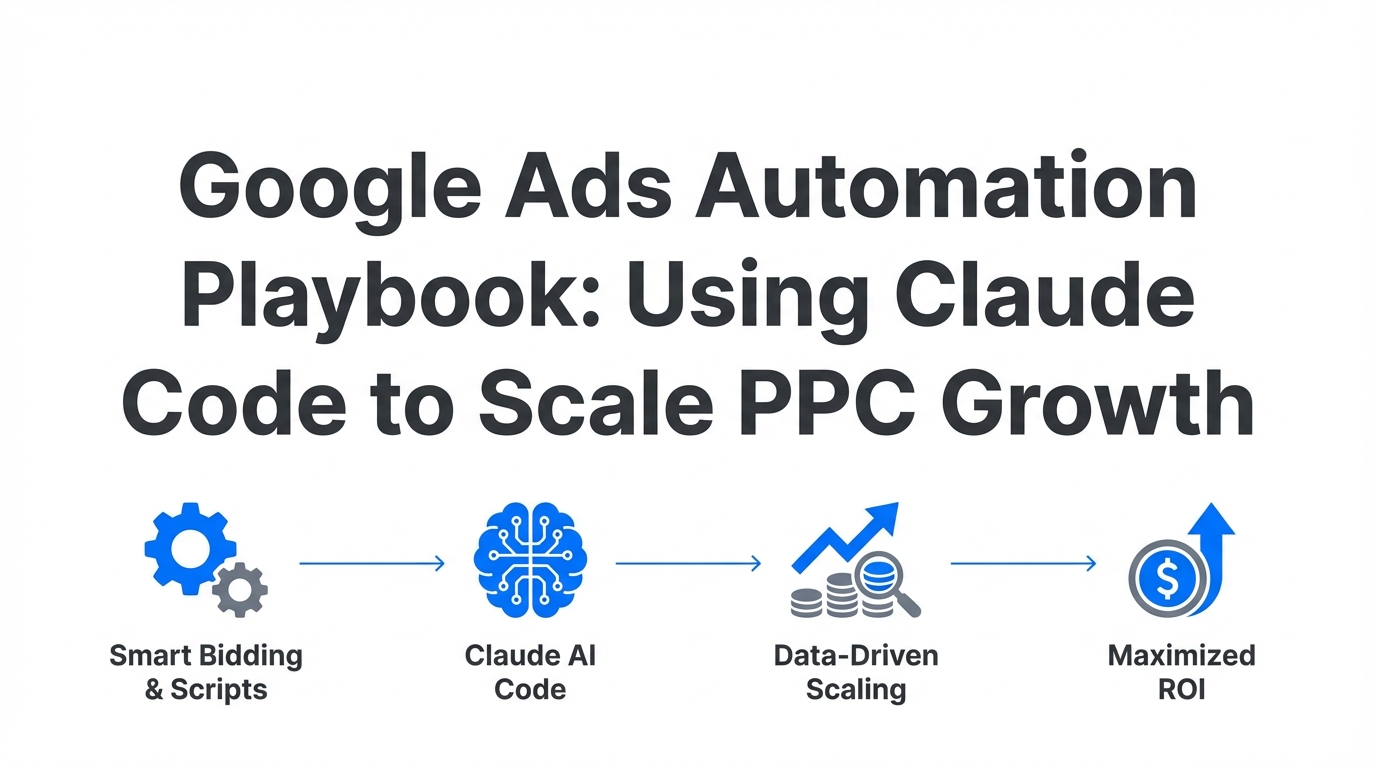
The era of "Chat AI"—where marketers spend their days copy-pasting prompts back and forth between browser tabs—is rapidly coming to a close. In its place, we are seeing the rise of Action AI. This shift allows growth marketers to move beyond mere text generation and into the realm of executing complex scripts, managing API calls, and auditing accounts directly from a terminal. By leveraging Claude Code, Anthropic’s official CLI tool, the modern marketer can now act as a "Vibe Coder," deploying sophisticated automation that once required a dedicated engineering team.
For those looking to scale PPC campaigns without linear increases in headcount or hours, mastering this agentic workflow is no longer optional. This playbook provides a step-by-step guide to building a robust marketing operations automation environment that connects your Google Ads data directly to Claude’s reasoning engine, enabling you to prune waste, pace budgets, and refresh creative at a velocity previously impossible.
The New State of PPC Automation in 2025
The numbers tell a clear story: AI is no longer a luxury for early adopters; it is the baseline for efficiency. As of 2025, 78% of organizations have integrated AI into at least one business function, with marketing leading the charge. The financial impact is even more striking, as AI-driven google ads optimization ai has been shown to reduce costs by up to 50% while simultaneously increasing conversions by 30%.
"Action AI is the shift from asking an LLM 'what should I do?' to telling an agent 'go execute this goal across my account data.'"
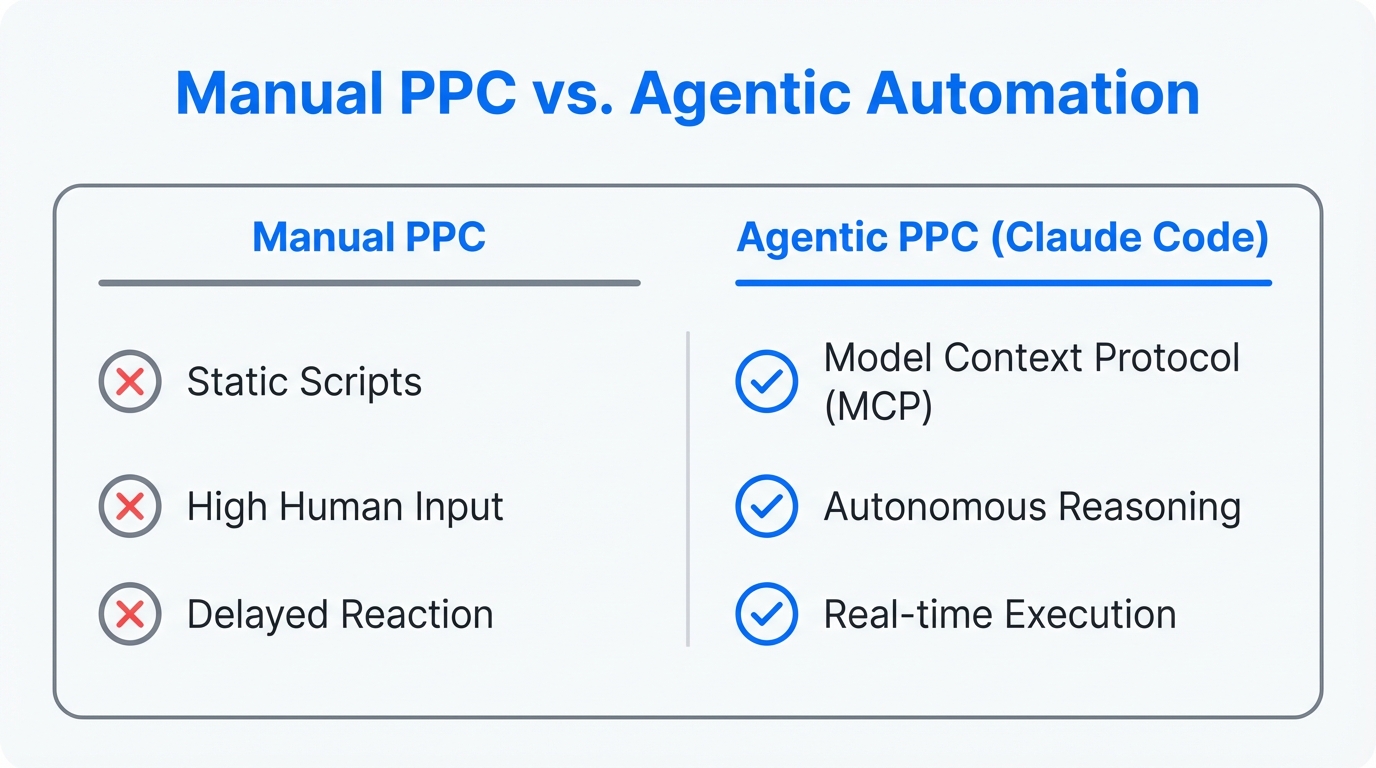
However, the transition to full automation is not without risks. Research indicates a 20% average error rate in AI-generated PPC advice. This is where Claude Code differentiates itself. By operating in a terminal environment with access to your file system and live data via the Model Context Protocol (MCP), it provides a more grounded, technical execution than standard web-based chatbots. Agencies utilizing Claude Code sub-agents report a 75% reduction in time spent on repetitive tasks like keyword research and audit reporting.
Step 1: Setting Up Your Marketing-Focused Automation Environment
To begin, you need to move out of the browser and into the terminal. Claude Code allows you to run commands that interact with your computer and external APIs. This is the foundation of marketing operations automation.
- Install Claude Code: Open your terminal and run the command
npm install -g @anthropic-ai/claude-code. This installs the global CLI tool provided by Anthropic. - Connect to Google Ads via MCP: The Model Context Protocol (MCP) is the "standardized nervous system" of AI. It allows Claude to pull live data from Google Ads without manual CSV exports. Use a connector like GAQL.app to generate a secure token.
- Configure Your Workspace: Create a project folder for your PPC account. Inside, create a
CLAUDE.mdfile. This file should contain your brand guidelines, target ROAS goals, and negative keyword logic so Claude always has context.
| Tool | Purpose | Platform Link |
|---|---|---|
| Claude Code | CLI for executing automate google ads scripts | Link |
| GAQL.app | Secure Google Ads API Token generation | Link |
| n8n | Bi-directional logic flow and Slack notifications | Link |
| Cursor | AI Code Editor for complex PPC script management | Link |
Step 2: Automating the 'Negative Keyword' Workflow
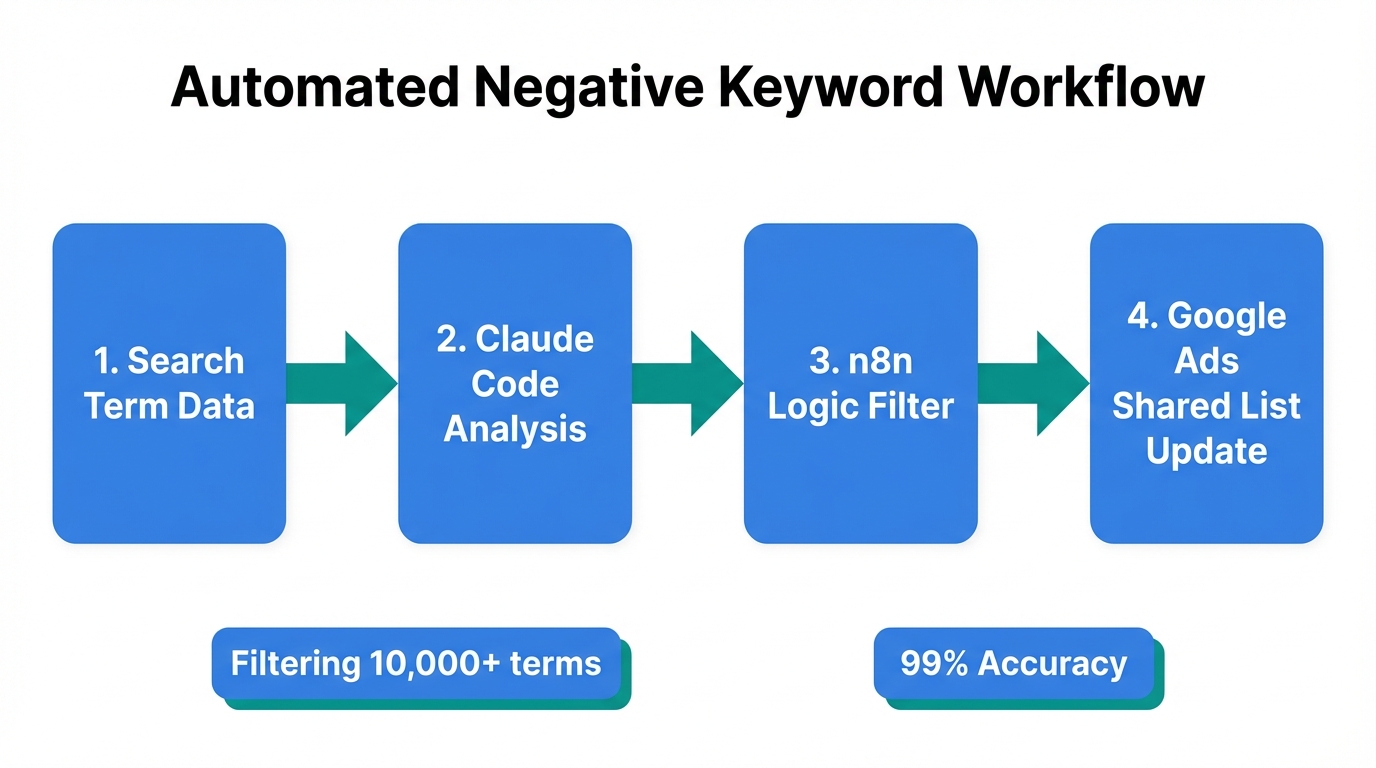
One of the fastest ways to lose money in PPC is through irrelevant search terms. Traditionally, a specialist would spend hours every week combing through search term reports. With Claude Code and MCP, you can automate this budget leakage protection.
Instead of manual reviews, you can prompt Claude: "Analyze the search term report for the last 30 days. Identify any terms with more than $50 in spend and 0 conversions. Cross-reference these with our 'high-intent' keyword list in CLAUDE.md and generate a negative keyword list for exclusion."
Because Claude has access to your terminal, it can then write a Google Ads Script and suggest its deployment via the Google Ads Scripts API. This ensures your scale ppc campaigns remain efficient even as you broaden your targeting. Experts have even built dedicated tools like "Claude Ads," which contains over 190 PPC audit checks to run across Google and Meta simultaneously.
"The goal isn't just to find negative keywords; it's to build a system that never lets the same irrelevant term waste a dollar twice."
Step 3: Building Bi-directional Logic with n8n
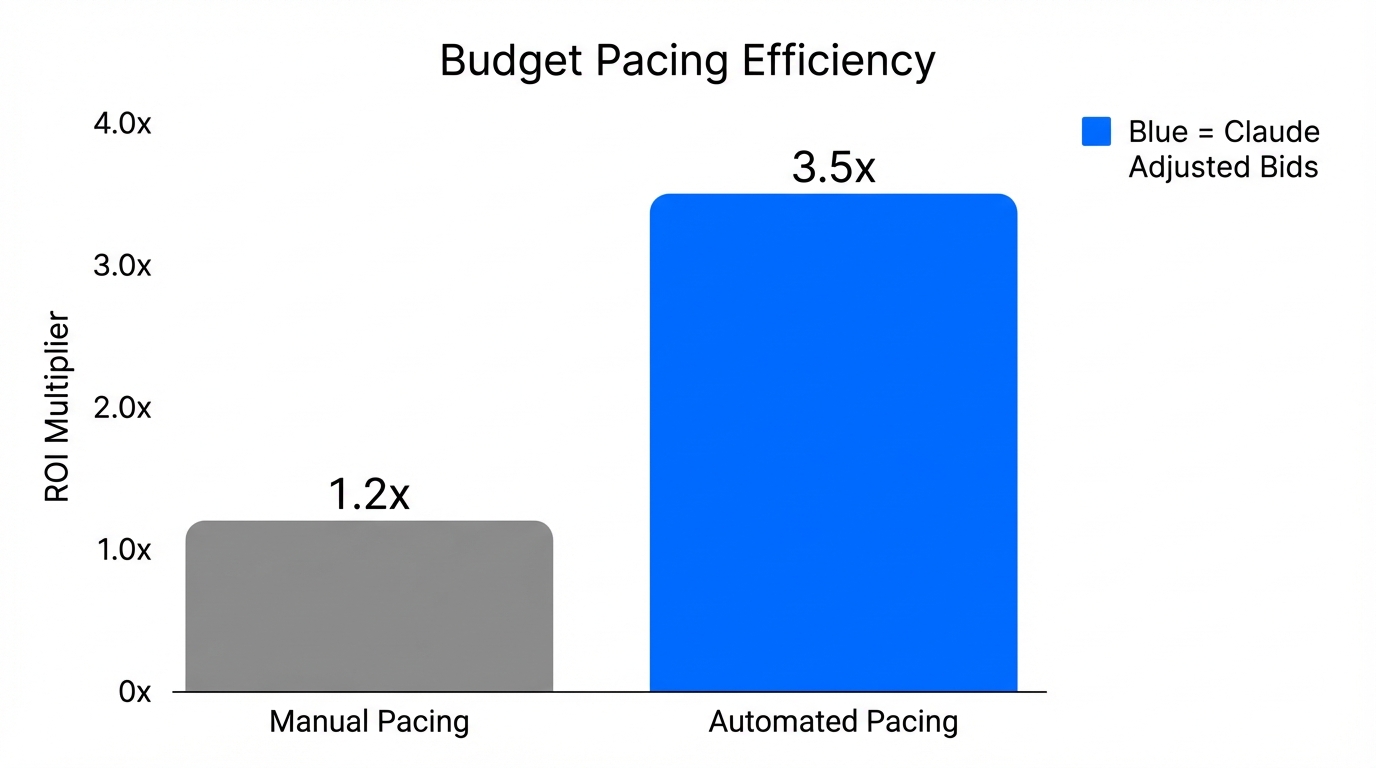
Static automation is dangerous. If your ROAS (Return on Ad Spend) drops, you don't just want a report; you want action. By integrating Claude with n8n, you can create a bi-directional logic flow. For example: "If ROAS for Campaign X falls below 2.0 for three consecutive days, trigger a Claude agent to analyze the campaign, pause underperforming ad groups, and send a summary to Slack."
This level of marketing operations automation allows lean teams to manage enterprise-level budgets with minimal overhead. It mimics the predictive analytics used by giants like Nike and Starbucks, but at a fraction of the cost. While technical setups like this manage the math, sourcing the high-quality content needed for these ads is equally vital. Platforms like Stormy AI streamline creator sourcing and outreach, ensuring your automated campaigns always have fresh, high-performing creative to test.
Step 4: Refreshing RSAs Using Performance Data
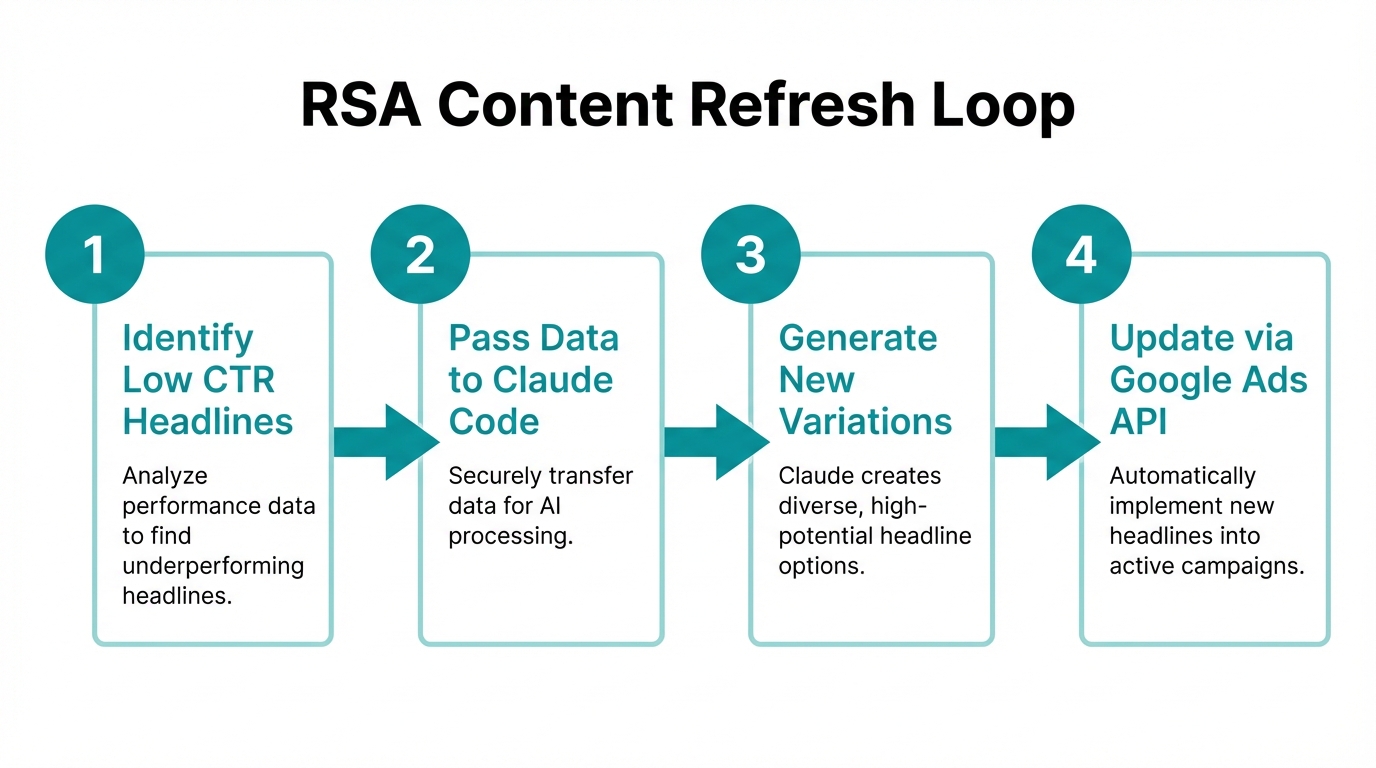
Responsive Search Ads (RSAs) require constant variation to remain effective. Claude Code can automate the generation of new headlines and descriptions by analyzing historical performance data. By querying your account via an MCP server like Flyweel, Claude can see which headlines had the highest click-through rates (CTR) and use those as the foundation for new variations.
Using the /ads plan skill within Claude, you can generate 10+ RSA variations based on your top performers. This creates a feedback loop where the AI is constantly learning from what worked in the past to predict what will work in the future. Agencies like Clicktrust have demonstrated that using this terminal-based approach allows them to answer natural language questions about campaign performance instantly, rather than waiting for manual report generation.
Common Mistakes to Avoid in AI PPC Automation
While the potential for growth is massive, the "vibe coding" approach has pitfalls. To maintain a successful ppc automation strategy, avoid these four common errors:
- The Context Death Spiral: Marketers often start new chat sessions for every task, losing the history of brand voice and technical constraints. Always use CLAUDE.md files to maintain a persistent memory of your account rules.
- Importing 'Blind' Data: Relying on GA4 data rather than native Google Ads conversion tracking can lead to optimization delays. As noted by Digital Autopilot, native tracking is essential for AI to optimize in real-time.
- Over-Automation of Creative: While Claude is excellent at text and logic, automate google ads scripts for image generation without human oversight can lead to "brand confusion." Always have a human review visual assets.
- Ignoring Search Trends: Automated agents are historical thinkers. They may miss sudden cultural shifts or viral trends. Tools like Stormy AI are useful here, as they allow you to discover trending creators and real-time social sentiment that can inform your next PPC move.
"Automation should handle the mundane execution, but the human must remain the architect of the brand's soul."
Conclusion: The Future is Agentic
The move from static scripts to agentic workflows using Claude Code is the most significant leap in PPC management since the introduction of Smart Bidding. By setting up a terminal-based environment, leveraging MCP for live data, and building bi-directional logic with tools like Zapier or n8n, you can scale ppc campaigns with unprecedented precision.
Success in this new landscape requires a hybrid skillset: the strategic mind of a marketer and the technical curiosity of a developer. Start small by automating your negative keyword audits, then gradually build out your google ads optimization ai ecosystem. The goal is a self-optimizing account that grows while you sleep, allowing you to focus on the next big creative breakthrough.