The landscape of digital advertising has shifted from simply writing catchy copy to orchestrating complex, autonomous systems. In 2025, the competitive edge for performance marketers lies not in manual tweaks, but in Action AI—where artificial intelligence moves beyond conversation and into execution. By combining the terminal-based power of Claude Code with the workflow versatility of n8n, advertisers can now perform an exhaustive google ads audit that would previously take a senior strategist weeks to complete. This playbook outlines how to build an agentic infrastructure that identifies budget leakage, optimizes responsive search ads, and maintains 24/7 account hygiene without lifting a finger.
The New Standard of PPC Auditing: Why Automation is Non-Negotiable
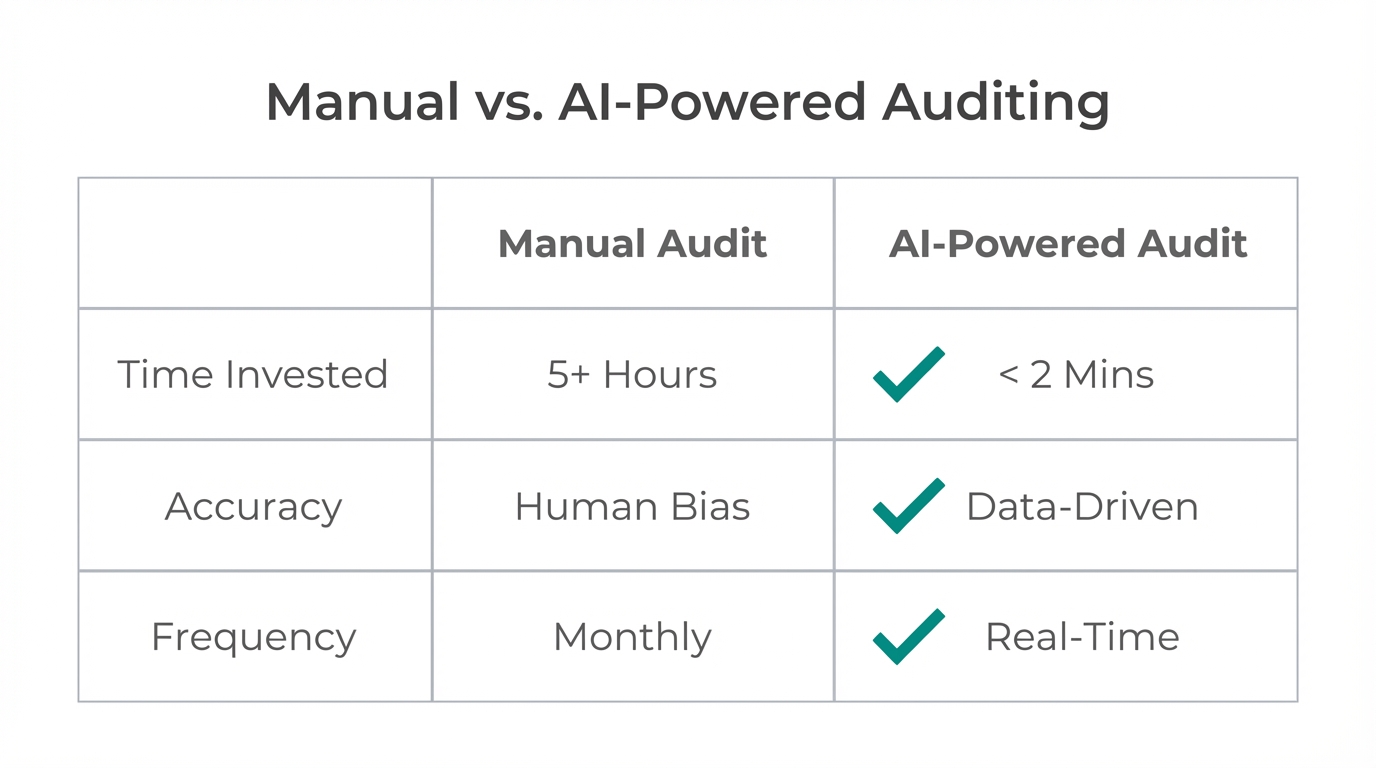
For years, a google ads audit was a manual checklist—a tedious review of keywords, bids, and campaign settings. However, as over 80% of Google Ads advertisers now leverage automated bidding, the volume of data has outpaced human capacity. Today’s top-performing teams are reporting a 75% reduction in time spent on repetitive tasks by adopting Agentic Workflows. This shift isn't just about speed; it's about performance. Advertisers using AI-driven optimization have seen an average 25% increase in conversions because their agents catch micro-inefficiencies that human eyes simply miss.
The Modern PPC Tech Stack: Tools You Need
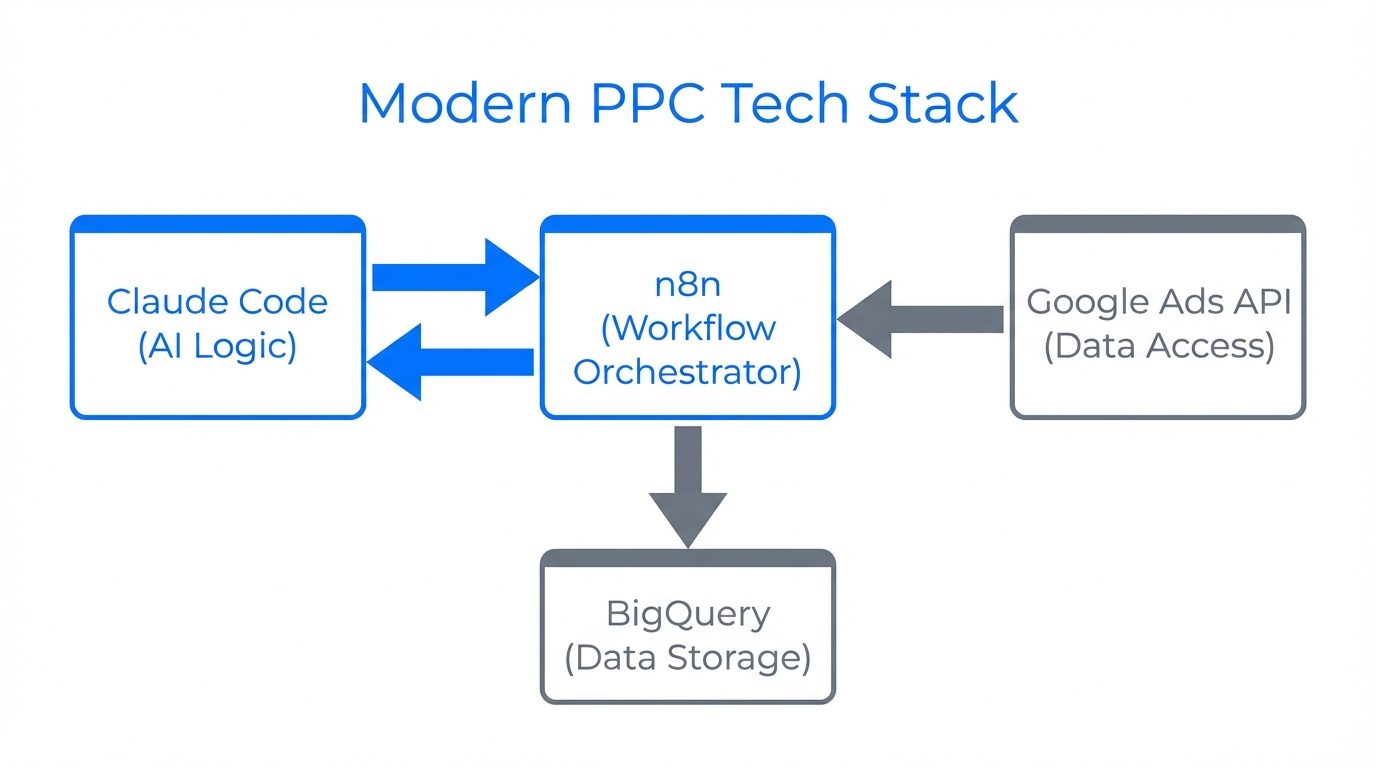
To run an automated 190-point audit, you need a specific set of ppc automation tools that can bridge the gap between AI reasoning and API execution. Forget standard chatbots; we are building an agentic bridge. Below are the core components of a high-performance automation stack.
| Tool | Primary Function | Why It Matters |
|---|---|---|
| Claude Code | Terminal AI Agent | Can execute scripts, read files, and manage the Google Ads API via the command line. |
| n8n.io | Workflow Orchestrator | The logic engine that handles deterministic tasks like data fetching and alerting. |
| Model Context Protocol (MCP) | Universal Adapter | Allows Claude to "see" and talk directly to your data through standardized servers. |
| GAQL.app | Query Generator | Generates secure Google Ads Query Language tokens for AI access. |
Step 1: Building the Agentic Infrastructure
Before you can automate your audit, you must establish a secure connection between your AI and your advertising data. This starts with the Model Context Protocol (MCP). By installing an MCP server such as google-ads-mcp, you give Claude read/write access to your campaign performance. This is the foundation of claude code automation.
Simultaneously, you must configure your n8n workflow examples to handle the heavy lifting of API calls. Using the Google Ads Node in n8n, you can authenticate via OAuth2 and your Developer Token. This creates a two-way street: n8n fetches the raw performance data, and Claude Code analyzes it for strategic insights. This combination ensures that your automated ad account audit is both data-driven and strategically sound.
"The era of 'Chat AI' is over. We are moving toward 'Action AI' where agents don't just suggest optimizations—they execute them directly within your command line environment."Step 2: Executing the 190-Point Automated Audit
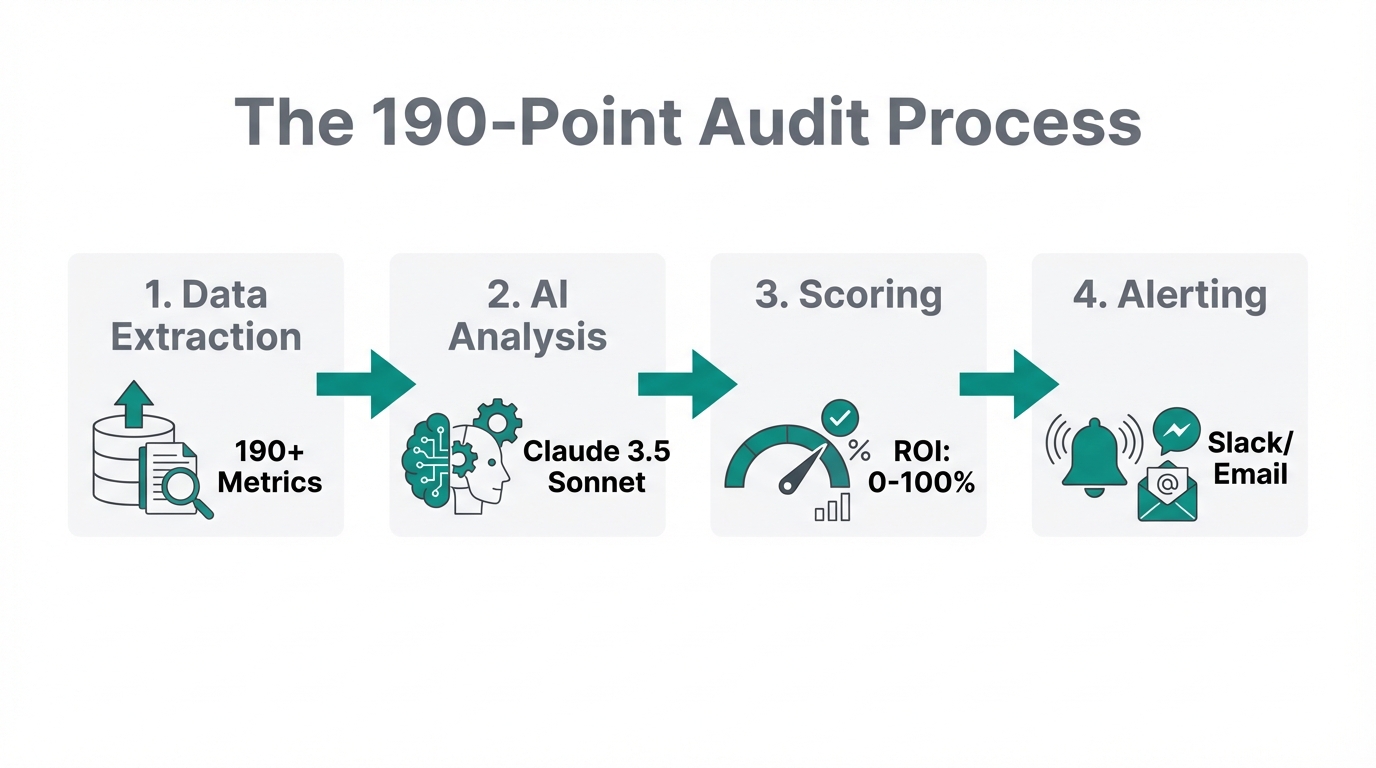
Once your infrastructure is live, you can trigger your 190-point audit. This process isn't just a broad scan; it's a deep dive into six critical categories: account structure, keyword hygiene, bidding efficiency, extension coverage, creative quality, and technical tracking. To start, instruct Claude Code to run a specific query: "Analyze my account for campaigns with CTR < 1% and spend > $500 in the last 30 days. Identify negative keyword opportunities."
To make these insights actionable, use the Claude Ads Audit Skill to export these findings directly to a structured Google Sheet. This allows you to review suggestions before they are implemented. Common areas where the AI finds immediate waste include overlapping keywords, low-quality search terms that trigger high-cost clicks, and ad groups with only one active Responsive Search Ad (RSA). By automating this, a freelancer can save 3 hours per week or more on manual reporting tasks.
Step 3: Responsive Search Ad (RSA) Optimization
Auditing isn't just about finding waste; it's about maximizing creative performance. Claude code automation allows you to move beyond generic ad copy toward what experts call "Vibe Marketing"—emotional resonance backed by data. You can create a custom slash command in Claude Code (e.g., /rsa) that pulls your top-performing headlines from the last 90 days and generates 15 new variations tailored to current seasonal trends.
This level of creative agility is essential as platforms like TikTok and Instagram have changed user expectations. If you find your ad creative is lagging, platforms like Stormy AI can help you source and manage UGC creators at scale to fuel your campaigns with fresh, high-performing content. Combining high-quality UGC with AI-optimized ad copy creates a powerful growth engine that most competitors aren't using yet.
Step 4: Protecting Ad Spend with Uptime Monitoring
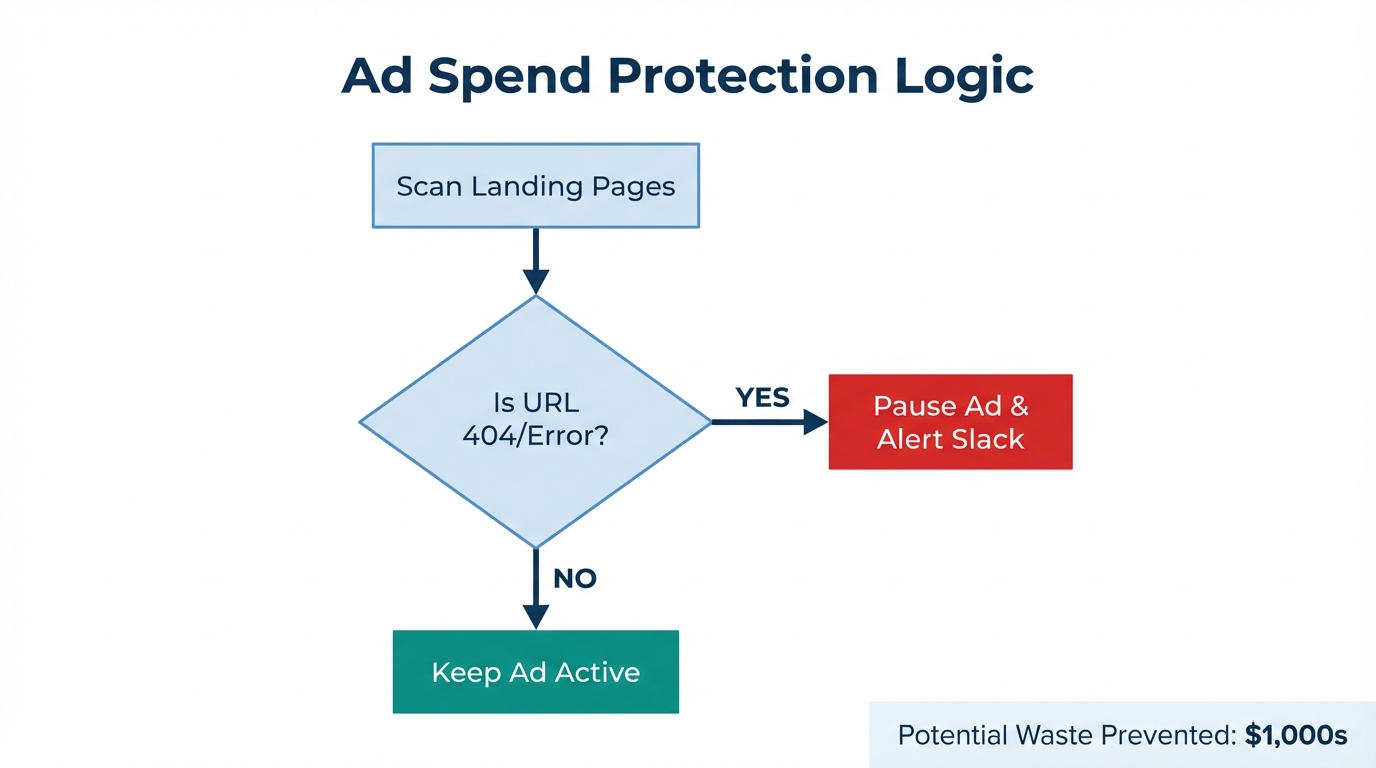
One of the most common ways to burn budget is sending paid traffic to broken or slow landing pages. A comprehensive google ads audit must include technical performance monitoring. You can design an n8n workflow that performs the following steps every hour: 1) Fetch all active Landing Page URLs via the Google Ads API, 2) Run a status code check to ensure the page is live, and 3) Execute a PageSpeed Insights check.
If a page returns a 404 error or a performance score below 50, the n8n workflow can automatically pause the campaign and alert your team on Slack. This proactive approach ensures that your PPC budget is never wasted on poor user experiences. This is a prime example of how ppc automation tools act as a 24/7 security guard for your marketing capital.
"Automating a bad strategy only makes you fail faster. Ensure your manual workflows are profitable before scaling them with AI agents."Avoiding Common Pitfalls: The 'Automating Chaos' Trap
While the power of an automated ad account audit is immense, it comes with risks. The most frequent mistake is "Automating Chaos"—building complex workflows for campaigns that haven't been manually validated. Strategy should always remain a human-led role, as industry experts at Marketing Fello emphasize the need for a Human-in-the-Loop (HITL) approach. AI should be your delegator, but you are the architect.
Additionally, keep an eye on API quotas. Running hourly checks on massive accounts can hit Google Ads API rate limits quickly. To solve this, utilize n8n's Batch nodes to throttle requests and avoid getting blocked. Finally, always use Claude Code’s "Plan Mode" before letting the agent edit any ad scripts. Skipping the validation step is a recipe for erratic performance and unvetted changes.
Conclusion: The Future of the AI-Powered Marketer
Running a 190-point google ads audit using Claude Code and n8n is no longer a futuristic concept—it is a current necessity for competitive performance marketing. By building an agentic infrastructure, automating deep-dive audits, and monitoring technical performance, you can eliminate waste and drive higher ROAS. As the industry moves toward privacy-first automation and first-party data syncing, tools like Claude and Stormy AI will be the primary weapons in a marketer's arsenal. Start small, validate your logic, and let your AI agents handle the heavy lifting while you focus on high-level strategy and creative direction.