By the start of 2026, the landscape of digital advertising has shifted from simple automation to full-scale Agentic AI. We are no longer just setting bid floors; we are deploying autonomous systems capable of analyzing, recommending, and executing complex campaign tasks. For businesses aiming for high ROAS marketing, the Google Ads AI Agent has become the definitive tool for scaling without linear increases in headcount or budget.
According to recent data from Google, over 80% of advertisers now utilize some form of AI-powered bidding. However, the true winners are those moving beyond basic automation. Advertisers who leverage the full conversational and agentic capabilities of the platform are 63% more likely to publish campaigns with "Excellent" Ad Strength, which translates directly to a 12% average increase in conversions.
Saving 10+ Hours a Week with Agentic PPC
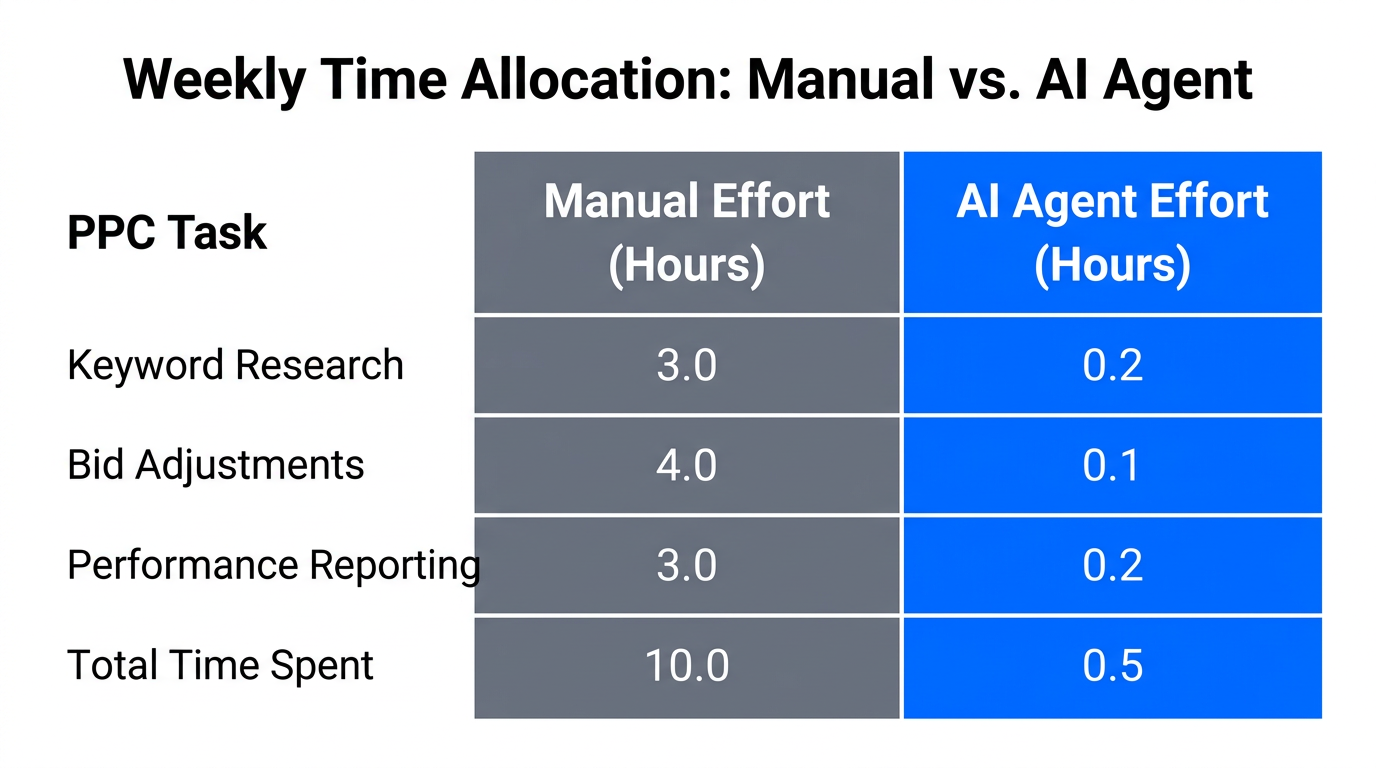
The primary benefit of a google ads ai agent for small business is the massive gain in operational efficiency. In 2026, manual bid adjustments and tedious reporting are relics of the past. Current statistics show that automated ad management 2026 saves the average marketer at least 10 hours per week. This time is reclaimed from "grunt work" and reinvested into high-level strategy and creative development.
For example, Google's Ads Advisor now functions as an in-product agent that can troubleshoot policy issues and suggest budget reallocations in real-time. Instead of digging through help documents, you simply converse with the agent to resolve account bottlenecks. This is a core component of modern ppc efficiency tools that allow lean teams to manage multi-million dollar spends with surgical precision.
"AI optimizes for what it can see—clicks and conversions—but it doesn't know your profit margins. Humans must provide the business context that AI lacks."
The Learning Phase: Why 30-50 Conversions is the Magic Number
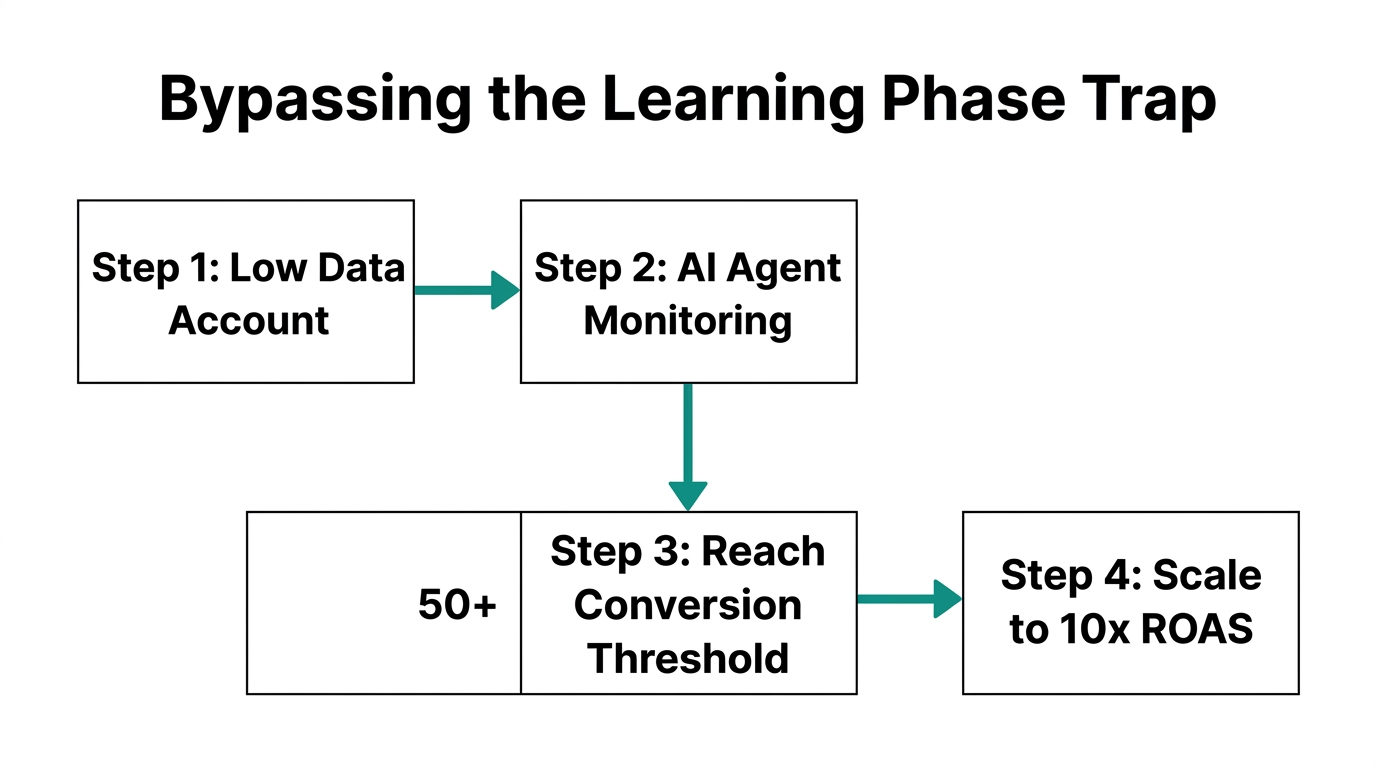
A common mistake in automated ad management 2026 is spreading a budget too thin across too many campaigns. AI agents require a specific volume of data to "learn" and stabilize. If your campaign isn't hitting the threshold of 30 to 50 conversions per month, the agent will likely fail to optimize correctly, leading to erratic performance and wasted spend.
| Campaign Maturity | Data Volume Needs | Recommended Action |
|---|---|---|
| Learning Phase | 0-15 Conversions | Do not touch! Let the AI collect baseline data. |
| Optimization Phase | 15-30 Conversions | Adjust creative assets; monitor search term reports. |
| Stabilized Phase | 30-50+ Conversions | Scale budget by 10-20% weekly for high ROAS marketing. |
To reach this threshold faster, experts at Blue Flame Thinking suggest unifying data feeds rather than segmenting them. By consolidating your traffic, you provide the AI agent with the "raw material" it needs to find winning combinations of audiences and creatives. This strategy was instrumental for brands like KEH Camera, which saw a 76.3% boost in sales by unifying their data feeds with Performance Max.
Case Study: Doubling Leads with Zero Budget Increase
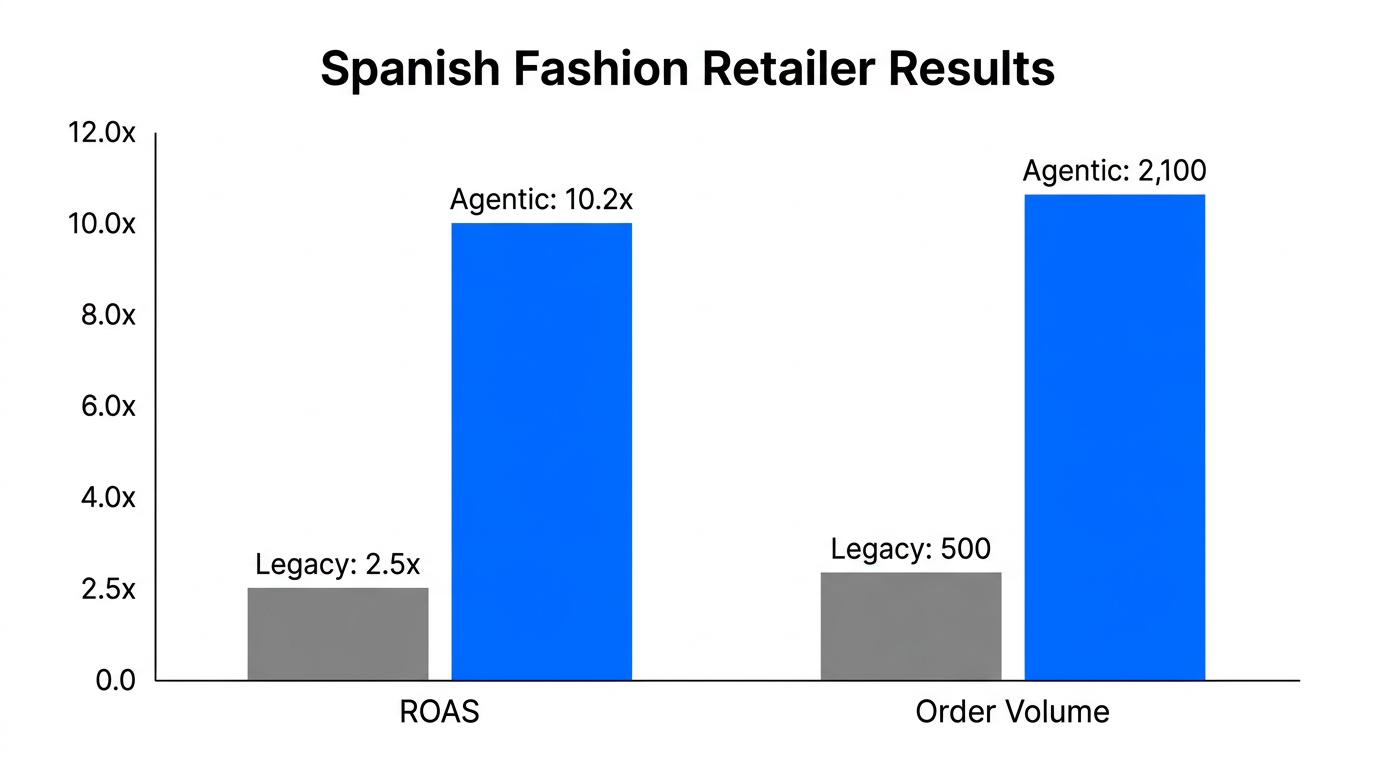
One of the most compelling examples of google ads ai agent roi comes from a Spanish fashion retailer. By deploying AI Max Search—a 100% AI-powered search tool—they were able to double their qualified leads in just two weeks without increasing their daily spend. The agent identified high-intent visual searches (now totaling 20 billion per month on Google Lens) that manual keyword targeting would have missed.
This success highlights why high roas marketing in 2026 relies on intent-matching rather than simple keyword-matching. The agent analyzed first-party data to find "lookalike" audiences with a higher probability of conversion. This transition from static ads to interactive, intent-based targeting is why Google reported a 26% increase in conversions per dollar for Demand Gen campaigns last year.
"The Spanish fashion retailer case study proves that AI isn't about spending more; it's about spending smarter through real-time intent analysis."
The Agentic Stack: Integrating Adsroid and Groas.ai
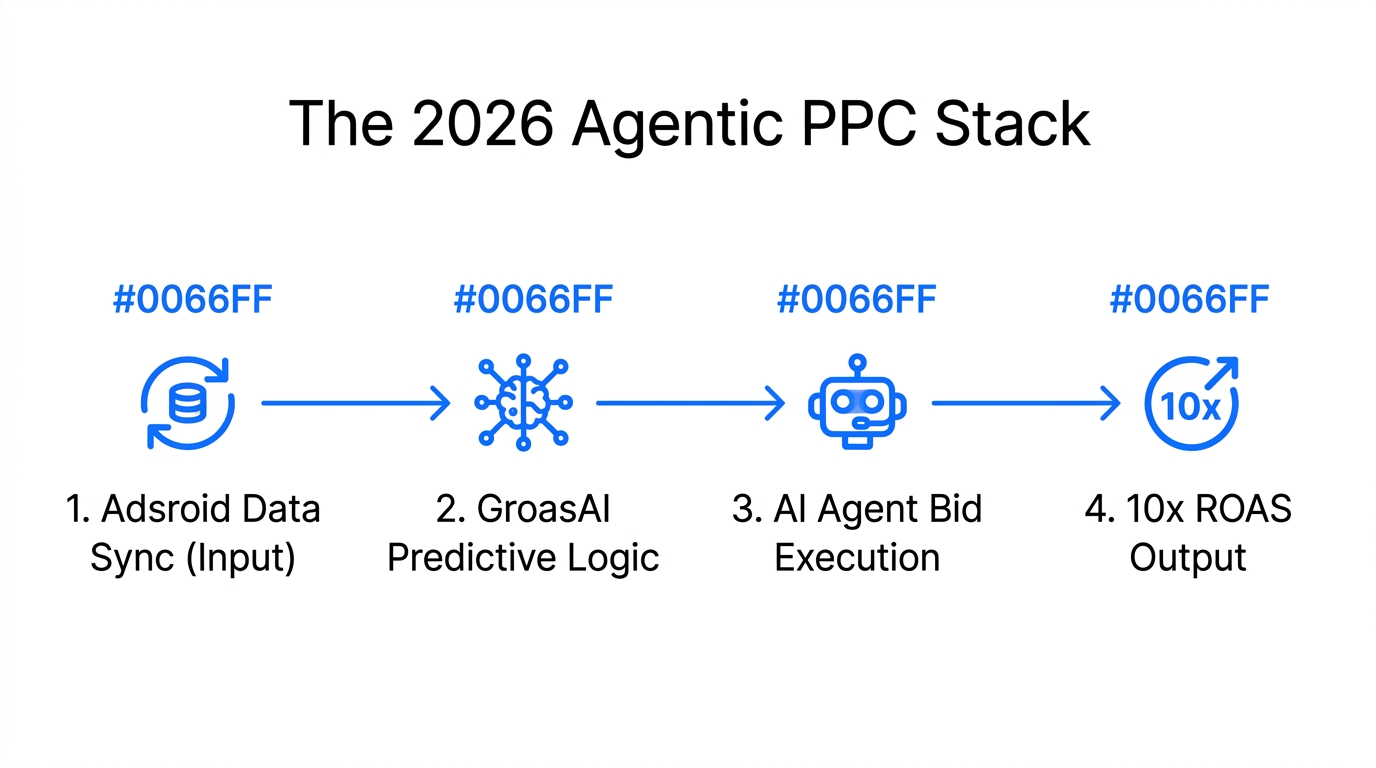
While Google's native agent is powerful, top-tier marketers use a stack of ppc efficiency tools to gain a competitive edge. Tools like Adsroid provide a conversational layer that explains *why* the AI chose certain bids, moving us toward a "Glass Box" approach to advertising. Meanwhile, Groas.ai specializes in cross-channel intent analysis, ensuring that the signals your Google Ads AI Agent receives are clean and high-intent.
To fuel these agents, you need a constant stream of high-quality assets. In the era of UGC-led growth, platforms like Stormy AI are essential for sourcing the raw content that AI agents use to build Asset Groups. By discovering the right influencers to create authentic content, you provide the google ads ai agent roi engine with the 20 images and 5 videos it needs to find the winning creative combination.
Why 'Set it and Forget it' is a Trap: The Weekly Audit
Despite the autonomy of the google ads ai agent for small business, total abdication is dangerous. AI can drift into low-intent search terms or encounter policy "hallucinations." A weekly auditing framework is mandatory to maintain high roas marketing. You must ensure that your Google Tag Manager and Enhanced Conversions are configured perfectly. If the tracking is broken, the AI will optimize for the wrong signals, destroying your margins.
The 20-Minute Weekly Audit Checklist:
- Check Ad Strength: Ensure no assets have fallen to "Poor" status. Update with new UGC from Stormy AI if needed.
- Review Negative Keywords: Scrub the search term report for irrelevant "scam" or competitor queries the AI might be chasing.
- Conversion Lag Analysis: Use Search Engine Journal’s recommended methods to account for attribution delay.
- Budget Health: Ensure the campaign isn't "Limited by Budget," which restricts the AI agent's ability to explore new profitable pockets.
Conclusion: The Future of Automated Growth
The transition to Agentic AI in Google Ads is not just a trend; it is the new standard for automated ad management 2026. By delegating the manual bid adjustments to a google ads ai agent roi specialist and focusing your human energy on creative strategy and high-level data hygiene, 10x ROAS becomes a repeatable reality rather than a lucky break.
Start by identifying your conversion thresholds. If you aren't hitting 30 conversions a month, consolidate your campaigns. Use ppc efficiency tools like Adsroid for transparency, and feed the machine with authentic content discovered via Stormy AI. In the age of the agent, the advertiser who provides the best data and the most compelling creative wins.