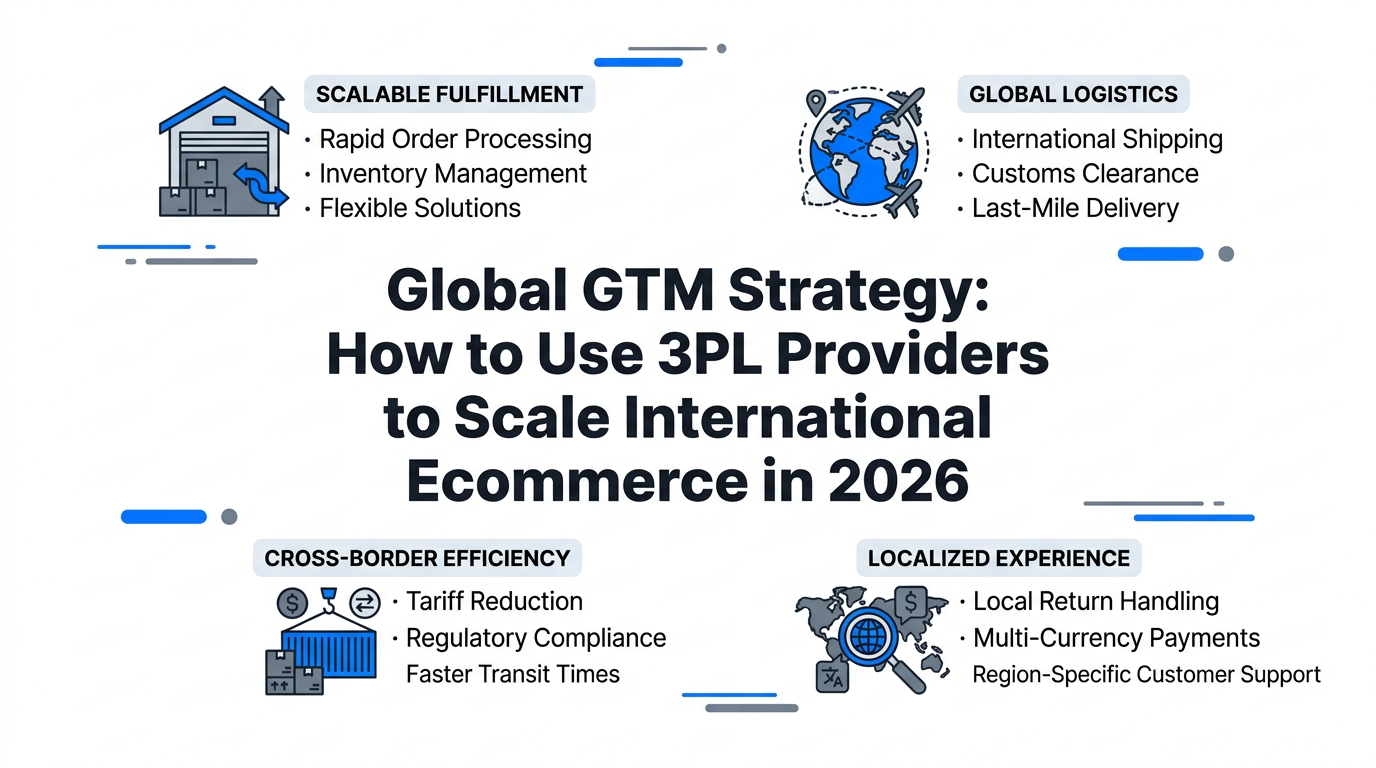
In 2026, the barrier to international trade is no longer distance—it is complexity. As the global third-party logistics (3PL) market surges toward a staggering $3.62 trillion by 2034, with a current 2026 valuation exceeding $1.4 trillion, the ability to launch into new territories without opening local offices has become a competitive requirement. For modern ecommerce brands, a global GTM (Go-to-Market) strategy is no longer about shipping packages across an ocean; it is about localized presence, hyper-speed fulfillment, and the agility to pivot warehouses in the face of shifting geopolitics.
Navigating the UK and EU Markets: Localized D2C Compliance
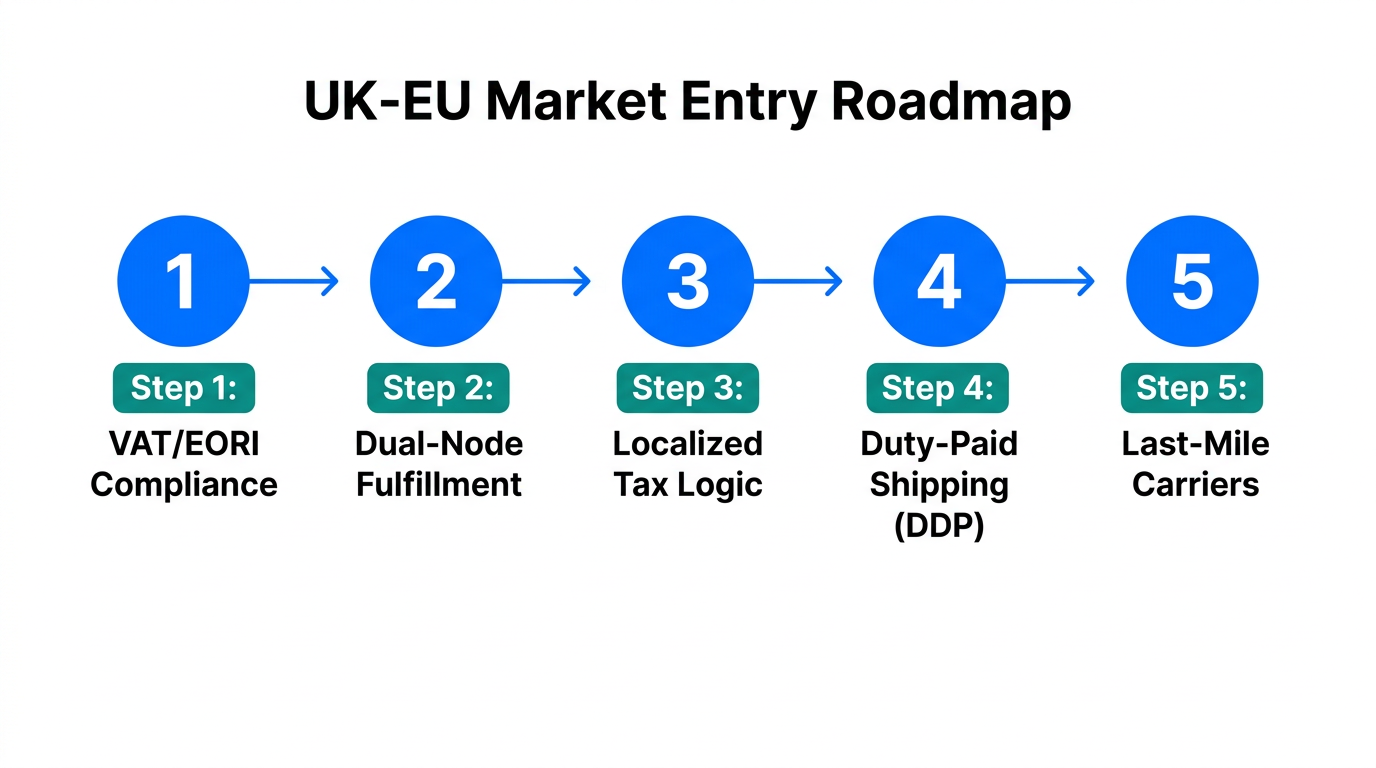
Entering the UK and European Union markets post-Brexit requires more than just a VAT number; it requires a fulfillment strategy that mimics a local brand. Consumers in these regions now expect parcel delivery within 4.2 days, a 40% improvement from the 2020 average of 6.6 days. To meet this, brands are shifting from a "one big warehouse" model to multi-node networks that place inventory within the customs borders of their target audience.
Establishing a compliant D2C operation involves partnering with 3PLs that offer integrated Duty and Tax (DDP) solutions at checkout. This ensures the customer isn't hit with surprise fees upon delivery—a leading cause of cart abandonment. High-tier 3PLs like ShipBob have pioneered this by offering local warehouses in the UK and EU, allowing brands to avoid cross-border friction. By using localized partners, brands can achieve an order accuracy rate of 99.5% while significantly reducing the carbon footprint associated with long-haul shipping.
"Localized fulfillment isn't just about speed; it's about building trust in a market where consumers value sustainability and transparency as much as price."Automating Reverse Logistics: Recovering 15% of Lost Revenue
International returns are the silent killer of global expansion. Historically, shipping a returned item back to the home country was often more expensive than the item itself. However, in 2026, reverse logistics automation has turned this liability into an asset. By setting up automated "inspect and restock" portals, brands can recover 10-15% of lost international revenue.
Modern 3PLs now provide dedicated return portals where customers can print local labels. Instead of the product traveling back across the Atlantic, the 3PL inspects the item at a regional hub and, if it meets quality standards, immediately returns it to the "active" inventory pool for the next local customer. Platforms like Red Stag Fulfillment emphasize that this "circular" logistics model is essential for high-value or bulky goods. Automating the return-to-restock cycle ensures that your capital isn't sitting in a shipping container for six weeks.
Case Study: DOG Copenhagen’s UK Expansion
The premium pet brand DOG Copenhagen serves as a masterclass in logistics agility. Faced with the challenge of serving a demanding UK audience without the overhead of a local headquarters, they integrated with a specialized 3PL to establish a localized D2C presence.
By leveraging a 3PL partner's tech stack, they achieved next-day delivery in the UK market. This transition allowed them to compete directly with local incumbents on service speed while maintaining their centralized design and marketing operations in Denmark. Their success was rooted in choosing a partner with an Open API platform that could "talk" to their existing Shopify and ERP systems, ensuring real-time inventory visibility across borders.
The 4PL Advantage: Managing Multiple Global Relationships
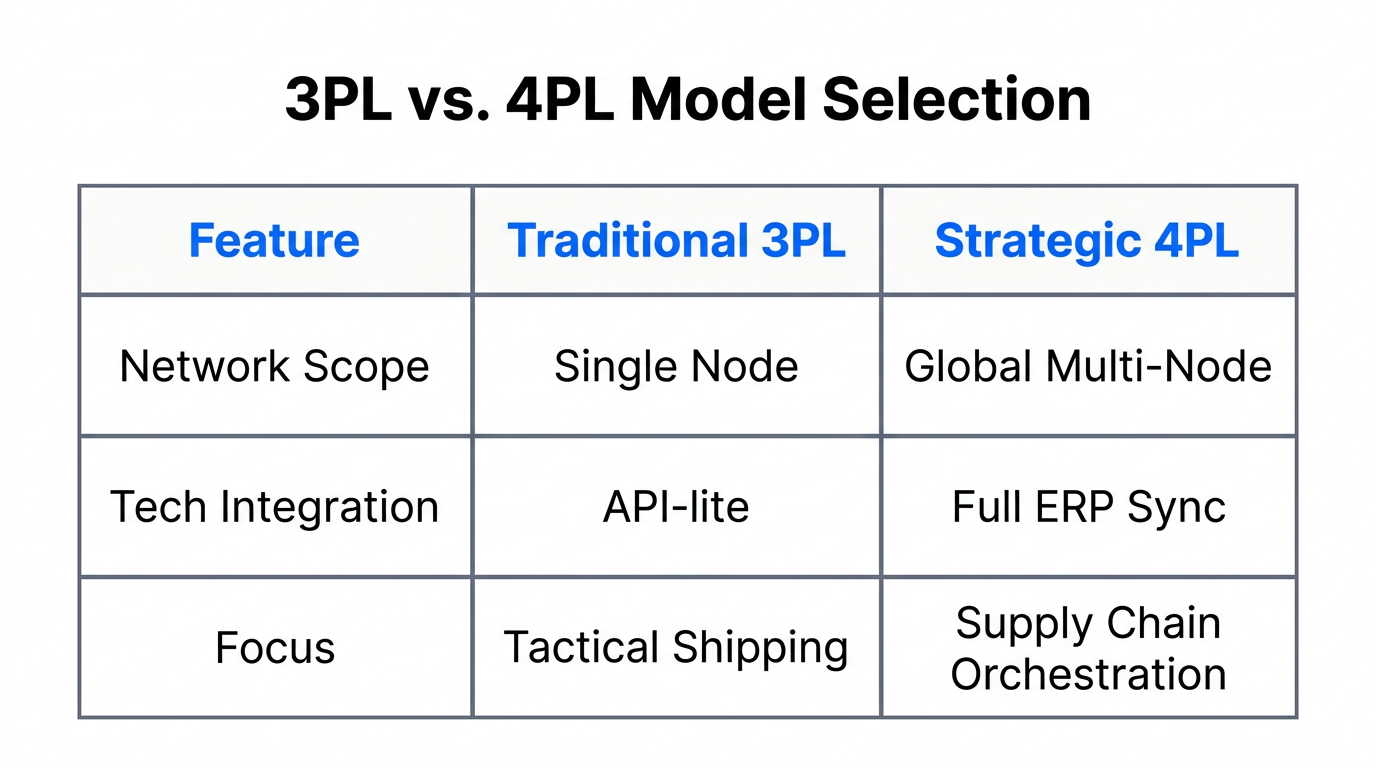
As brands expand into five or six countries simultaneously, managing individual 3PL relationships becomes a full-time job. This is where the Lead Logistics Provider (4PL) comes in. While a 3PL handles the physical storage and shipping, a 4PL acts as the strategic architect, managing multiple 3PLs on the brand's behalf.
| Feature | 3PL (Third-Party Logistics) | 4PL (Fourth-Party Logistics) |
|---|---|---|
| Focus | Execution: Picking, packing, and shipping. | Strategy: Supply chain optimization and management. |
| Technology | Warehouse Management Systems (WMS). | Control Tower: Integrated visibility across multiple 3PLs. |
| Scalability | Best for single-region or simple multi-node. | Best for complex, global multi-region expansion. |
| Relationship | Transactional and task-oriented. | Strategic growth partnership. |
Hiring a 4PL provider like Inbound Logistics specialists allows a brand to maintain a single point of contact while their inventory is spread across a dozen global hubs. This model is particularly effective for brands that rely on AI-driven predictive logistics to pre-position stock before seasonal spikes. In 2026, AI accounts for 38.5% of the logistics technology market, and 4PLs are the primary drivers of this implementation.
"A 4PL doesn't just move your boxes; they manage the logic that decides which box moves where, and when."Logistics Agility: Pivoting During Geopolitical Shifts
The 2026 landscape is marked by rapid shifts in trade agreements and tariffs. Logistics agility—the ability to move inventory between international warehouses quickly—is now more valuable than the lowest per-unit picking fee. Experts at Gartner suggest that brands should never be locked into a single warehouse location.
Using a 3PL network with a wide geographic footprint allows brands to pivot their supply chain in real-time. If a new tariff is introduced on goods coming from a specific region, an agile brand can shift their fulfillment focus to a different hub within 60 days. This level of flexibility requires contractual exit strategies (ideally 60–90 days) and full ownership of fulfillment data, ensuring you aren't held hostage by a single provider's limitations.
The Final Piece: Integrating Content with Logistics
Once your global 3PL strategy is in place and your inventory is sitting in regional hubs, the challenge shifts to local demand generation. Scaling into the UK or EU isn't just about shipping; it's about speaking to the local culture. This is where UGC (User-Generated Content) and influencer marketing become the engine of your GTM strategy.
To build a localized brand presence, ecommerce companies are increasingly using AI-powered tools like Stormy AI to discover and vet creators in their new target markets. By finding influencers who already resonate with the local demographic, brands can create hyper-personalized outreach campaigns that drive traffic to their newly localized 3PL-backed storefronts. Whether you are looking for fitness creators in London or skincare enthusiasts in Berlin, platforms like Stormy AI streamline the creator discovery and management process, ensuring your marketing is as agile as your logistics.
The 2026 GTM Playbook
Scaling international ecommerce in 2026 requires a three-pronged approach: localized fulfillment to meet speed expectations, automated reverse logistics to protect margins, and strategic agility to navigate a changing world. By moving away from transactional vendor relationships and toward strategic 3PL or 4PL partnerships, brands can achieve 16% increases in in-region fulfillment and significantly higher customer lifetime value.
As you plan your expansion, prioritize partners with Open APIs, transparent tiered pricing, and a proven track record of handling high-tech integrations. The goal is to build a supply chain that isn't just a cost center, but a growth engine that allows your brand to feel local, everywhere.