In the rapidly evolving landscape of 2026, app discovery is no longer a simple game of matching high-volume search terms. We have entered the era of Intent-Based Semantic Optimization, where Apple’s latest algorithm shifts and the rise of Generative AI search (like Apple’s Ask Play, powered by Apple Intelligence) have redefined what it means to be visible. Today, search remains the undisputed king of growth, driving 70% of all App Store discovery and approximately 65% of all installs. However, the brands winning the global stage aren't just translating their apps—they are hyper-localizing them. This is the Global Growth Playbook for super geo-localization.
The Rise of Super Geo-Localization in 2026
Standard localization is dead. In the past, developers would simply translate their English metadata into Spanish, French, or Japanese and call it a day. Super geo-localization goes several layers deeper by targeting regional slang, local dialects, and specific cultural search patterns that automated translation tools often miss. The goal is to move beyond linguistic accuracy and achieve cultural resonance.
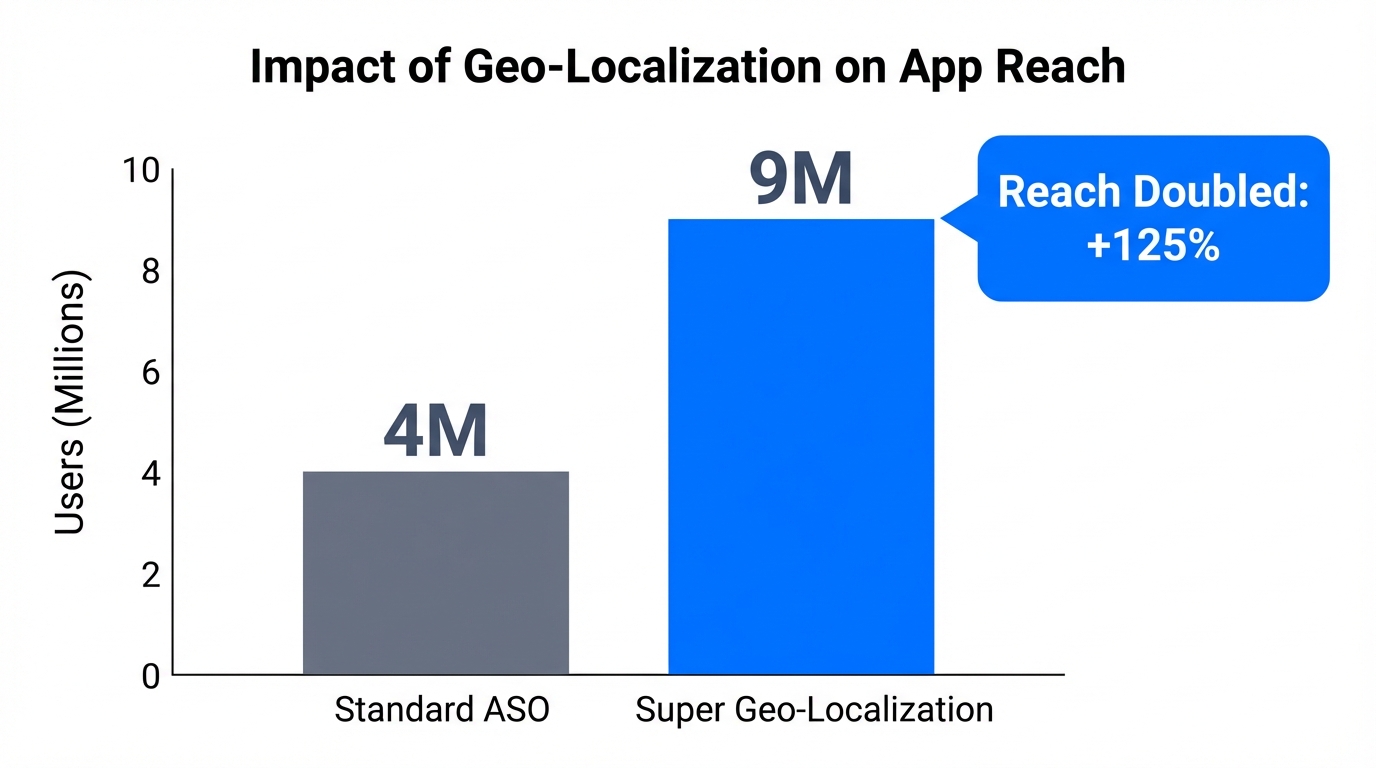
With the Apple App Store seeing over 800 million weekly visitors, and 85% of those users downloading at least one app per session, the stakes are immense. If you aren't capturing the specific way a user in Mexico City searches for a "budgeting tool" compared to a user in Madrid, you are leaving half of your potential indexed keyword capacity on the table. By leveraging super geo-localization, brands are now seeing their organic visibility increase by up to 100% in secondary markets like LATAM, where mobile app revenue continues to break records.
Using MobileAction Keyword Matrices for Global Discovery
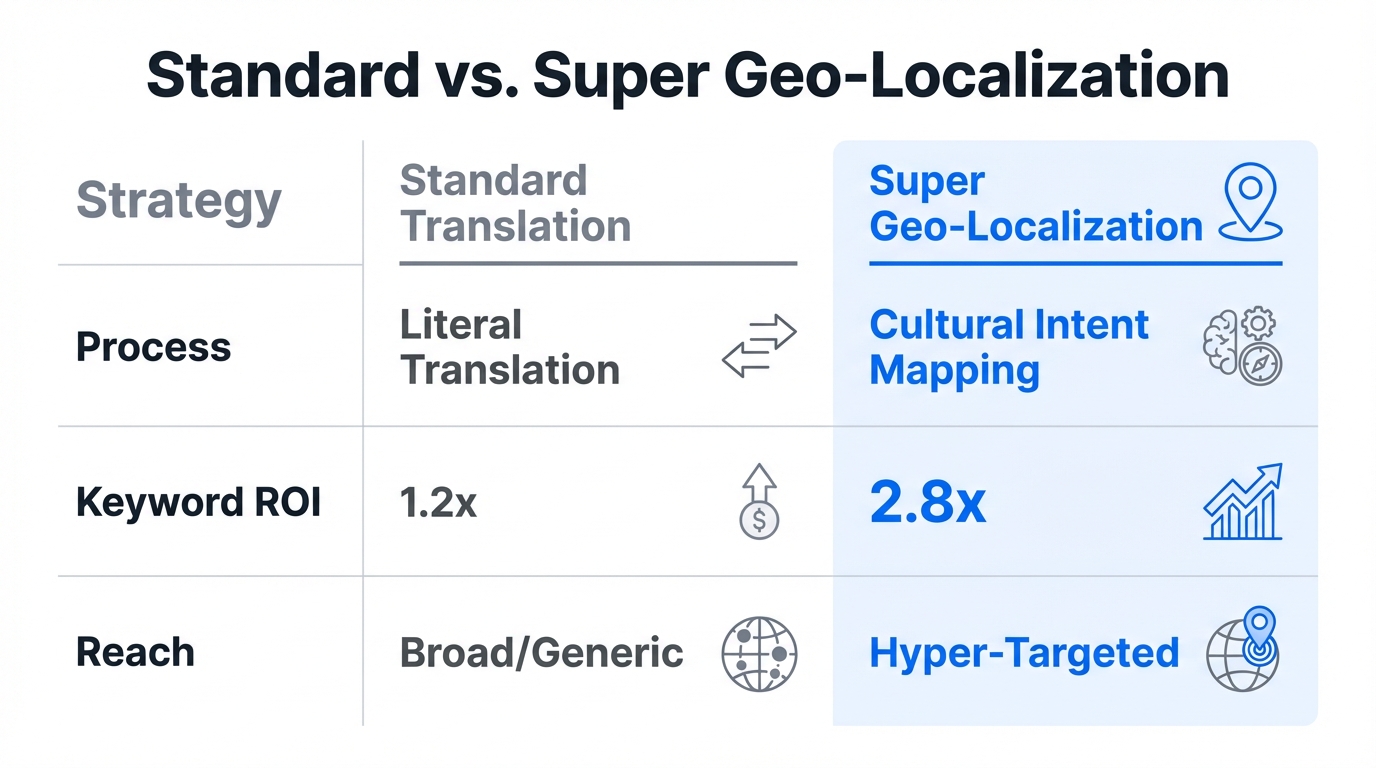
To execute a super geo-localization strategy at scale, you need data that reflects regional nuances. MobileAction keyword research has become a staple for growth teams because of its specialized keyword matrices and global automation features. These tools allow marketers to identify "Semantic Gaps"—terms that competitors in a specific region are missing but local users are actively searching for.
"Moving from keyword matching to cultural intent is the single biggest growth lever for international app expansion in 2026."
For example, while a standard ASO tool might suggest the term "Finance" for a global campaign, specialized tools like ASOMobile or MobileAction might reveal that in specific APAC territories, users search for "digital red envelope" or "pocket money manager." By identifying these niche cultural markers, you can populate your 100-character keyword field with terms that actually convert.
| Feature Focus | Best Tooling for 2026 | Core Value Proposition |
|---|---|---|
| Global Localization | MobileAction | Automated keyword matrices and regional intent mapping. |
| Market Intelligence | AppTweak | AI-driven synergy between organic search and Apple Search Ads. |
| Competitive Trends | Sensor Tower | Enterprise-level data on global consumer trends and ad intelligence. |
Case Study: Spotify’s Mood-Based Localization
Spotify remains the gold standard for international ASO strategy. They don't just translate playlist titles; they adapt their entire keyword strategy to match the emotional state and cultural habits of the region. As highlighted in Spotify Newsroom updates, search terms in the United States might revolve around "Party Music" or "Workout Mix." However, in LATAM markets, Spotify prioritizes terms like "Fiesta" or "Asado," which carry distinct cultural weight and search intent.
This approach taps into what experts at the Nielsen Norman Group call Experience Optimization (AXO). By matching the metadata to the user's cultural context, Spotify maintains incredibly high conversion rates. According to data from Adapty, apps that align their value proposition with specific user intent see a significant lift in CVR, with some utilities reaching as high as 40.6%.
Step-by-Step Guide: Doubling Keyword Capacity
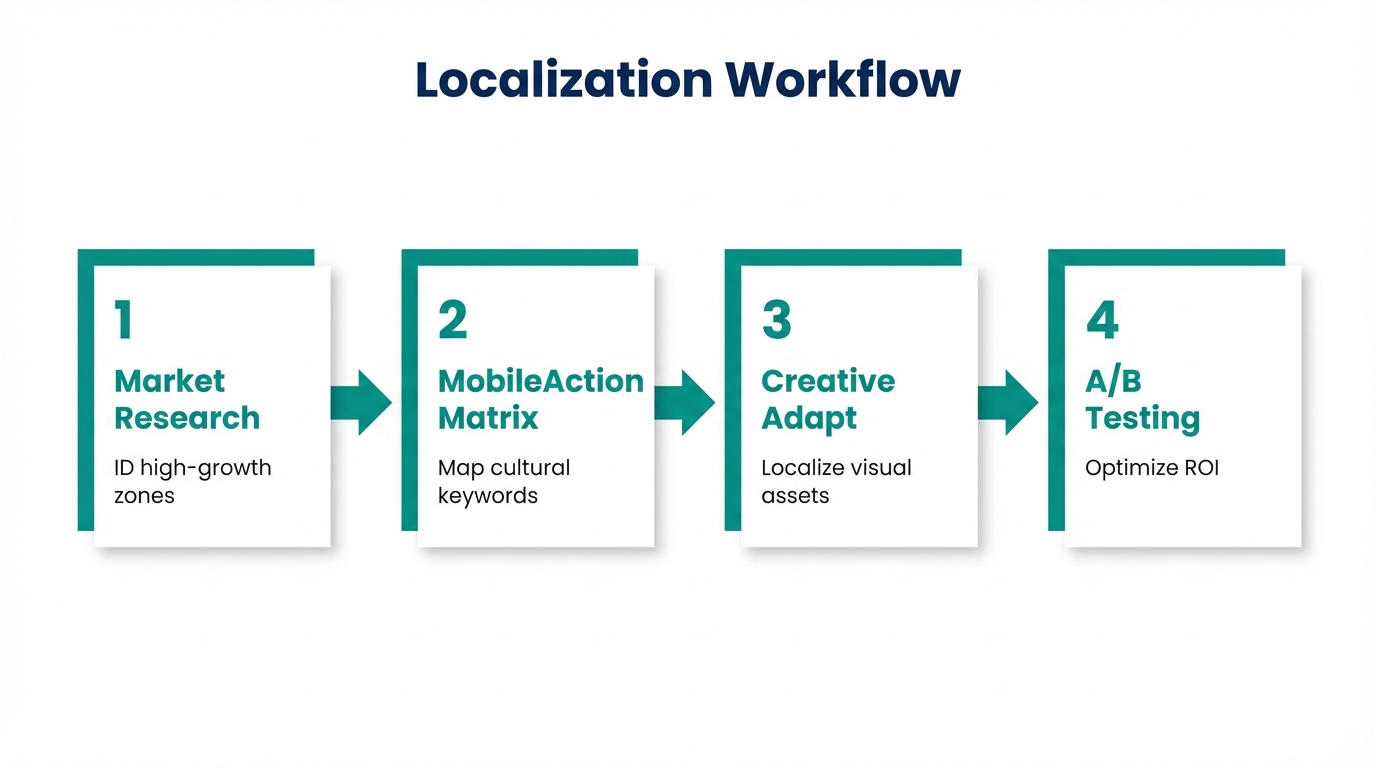
If you are looking to expand into competitive markets like Brazil, Japan, or South Korea, follow this clear playbook to maximize your international ASO strategy:
Step 1: Identify Intent Clusters
Stop looking for single keywords. Use tools like AppRadar to group terms into clusters based on user needs. For a fitness app, instead of "Workout," target clusters like "postpartum yoga at home" or "30-day belly fat challenge for men."
Step 2: Scrape User Reviews for Slang
Use Natural Language Processing (NLP) tools or platforms like AppFollow to analyze user reviews in your target language. Look for the specific words users use to describe your app. If Japanese users call your game "Kawaii" rather than "Cute," that is a keyword you must index.
Step 3: Map Keywords to Custom Product Pages (CPPs)
Apple now allows up to 70 Custom Product Pages. Assign specific localized keywords to unique CPPs. A user searching for "barbecue music" in Argentina should see a different screenshot set than someone searching for "chill lo-fi" in London. This mapping, manageable via Apple Developer tools, has been shown to provide an 8.6% average lift in conversion.
Measuring Success: Difficulty and Authority Benchmarks
You cannot win on volume alone. In 2026, success is measured by your ability to rank for terms where your app has Authority. If your app has a low number of downloads or poor ratings, targeting a keyword with a "Difficulty Score" above 80 is a recipe for failure. Successful growth marketers update their metadata every 3–5 weeks to stay aligned with fluctuating trends, often using attribution platforms like AppsFlyer or Zoomd.
When scaling these localized efforts, it's often helpful to pair your ASO strategy with authentic local voices. Tools like Stormy AI can help source and manage UGC creators in specific regions, ensuring that the content your users see after they click your localized keywords feels just as authentic as the search terms themselves. Using an AI-powered platform to find creators who speak the local dialect can bridge the gap between discovery and trust.
"The 'Victory Moment' prompt is the secret to 2026 rankings: Ask for a review immediately after a user achieves a goal, and ask them what feature they loved to naturally generate keyword-rich reviews."
The Future of Global App Growth
The transition from translation to super geo-localization is the defining trend for the coming years. By moving beyond head terms and embracing the cultural nuances of regional search, you can effectively double your app's reach without increasing your ad spend. Remember that consistency is key; the most successful apps on the market today treat their metadata as a living document, constantly refined by data from platforms like Data.ai and regional feedback loops.
Ready to dominate the global charts? Start by auditing your current localized metadata for "translation traps" and begin building your first Intent Clusters today. For teams looking to automate the discovery and outreach to local influencers who can support these localized launches, discover creators on Stormy to streamline your international expansion.