As we navigate the hyper-competitive mobile landscape of 2026, the traditional playbook for international growth has been fundamentally rewritten. It is no longer enough to simply "translate" your app into five languages and hope for the best. With over 3,500 new apps hitting the stores every single day, standing out in global markets requires a transition from simple translation to deep culturalization of your app store keyword ranking strategy. If you aren't adapting your metadata to the semantic nuances of local users, you aren't just losing traffic—you’re invisible.
Today, approximately 70% of all app installs originate directly from an app store search. This makes search the single most important organic growth lever for developers in 2026. However, search behavior is not universal. A user in London searches differently than one in New York, even though they speak the same language. This article provides a distribution-focused playbook on how to scale your app store keyword ranking by moving beyond the dictionary and into the cultural psyche of your global audience.
Why Simple Translation Fails: The Soccer vs. Football Dilemma
The most common mistake brands make when expanding into new territories is relying on direct lexical translation. In 2026, algorithms have evolved from exact-match search to semantic, intent-based discovery. This means the Apple App Store and Google Play now prioritize the *intent* behind a search rather than just the characters typed. When you translate keywords literally, you often miss the specific terms locals actually use to find solutions.
Take the classic example of sports terminology. A fitness app targeting "soccer" fans in the United States will see zero traction in the United Kingdom or Australia if they don't pivot to "football." Similarly, a "vacation planner" in the US should be a "holiday maker" in the UK. According to data from ConsultMyApp, failing to implement region-specific terms can result in a massive disconnect between your metadata and local search volume.
"Translation is a language task; culturalization is a growth strategy. If you aren't speaking the dialect of the user's intent, you aren't ranking."Culturalization involves researching local slang, regional preferences, and even different keyboard behaviors. For instance, in many Asian markets, users tend to search using feature-driven terms rather than brand names. If your app localization strategy doesn't account for these shifts, you are effectively ceding your market share to local competitors who understand the nuances of regional search intent.
The 30% Visibility Lift: Data-Backed Results of Culturalization
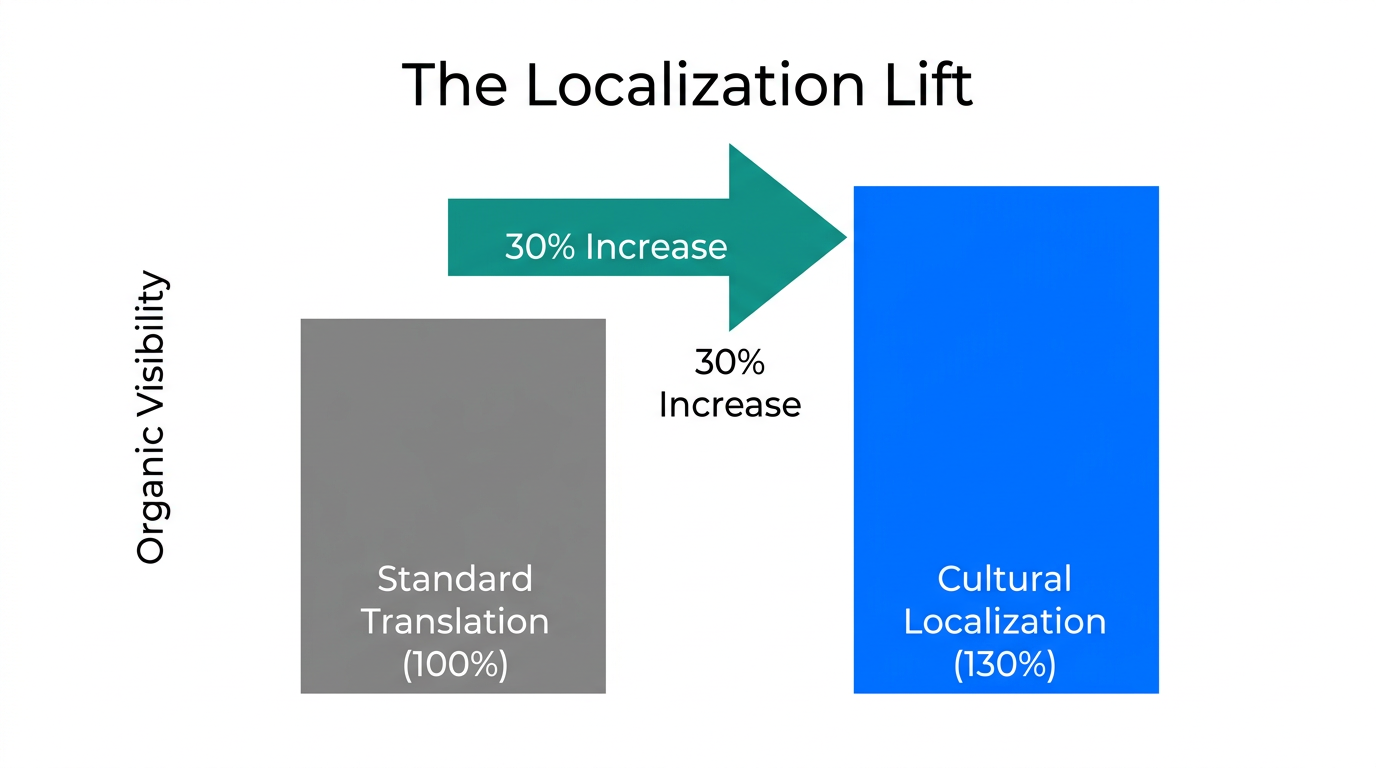
Why go through the effort of culturalizing your metadata? The data for 2026 is clear: apps that move beyond generic localization see a 30% to 50% increase in visibility within the first three months of implementation. This isn't just a marginal gain; it's the difference between a successful launch and a quiet failure. Real-world case studies, such as Kiwi.com, show that moving primary keywords to the title and localizing for 10+ specific markets can lead to a 31% surge in organic downloads.
This visibility lift occurs because the algorithm recognizes the high relevancy score of your app for local queries. In 2026, both Apple and Google have integrated advanced NLP (Natural Language Processing) to determine if an app truly serves the local user's needs. When your title, subtitle, and description align perfectly with local vernacular, your conversion rate (CVR) spikes. Higher CVR tells the store that your app is a "quality match," which in turn boosts your ranking for even more competitive terms.
| Optimization Level | Typical Visibility Increase | Primary Focus |
|---|---|---|
| Standard Translation | 5-10% | Direct dictionary matches |
| Culturalized Localization | 30-50% | Regional slang & intent |
| Hyper-Local (City-Level) | 60%+ | Specific regional events/trends |
Beyond keywords, culturalization extends to your visual assets. Apple's 2026 algorithm now uses **Optical Character Recognition (OCR)** to "read" the text inside your screenshots. If your screenshots feature localized text that matches your culturalized keywords, you gain a secondary indexing boost that generic apps simply cannot match. This is a critical component of global ASO 2026 that most developers still overlook using design tools like Canva or Figma.
Ranking Factors: Apple App Store vs. Google Play in 2026
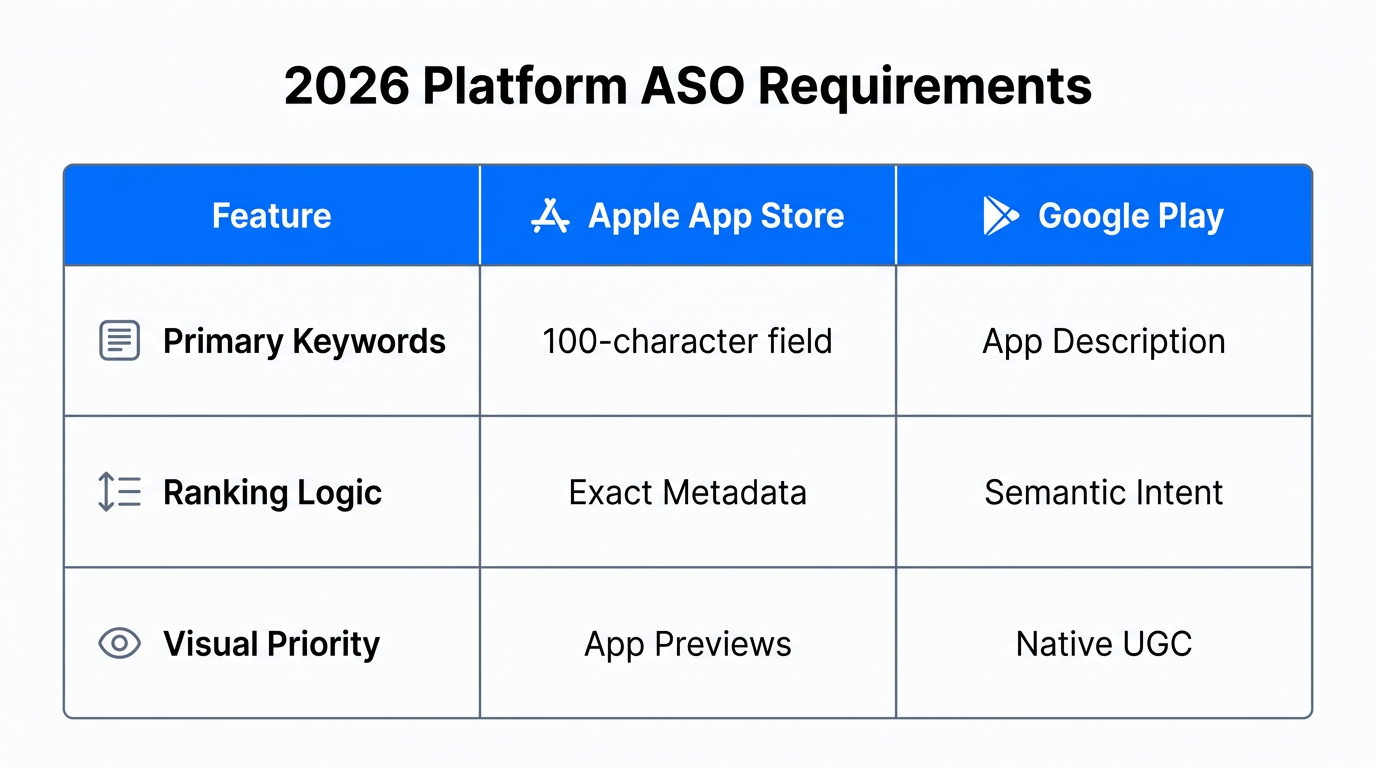
While the goal of visibility is the same, the mechanics of app store keyword ranking differ significantly between the two major platforms. Understanding these nuances is vital for international mobile growth.
Apple App Store (iOS): Lexical Combinations
On iOS, space is at a premium. You have a 30-character title, a 30-character subtitle, and a hidden 100-character keyword field. Apple’s algorithm is combinatorial; it mixes and matches words from these fields to rank you for long-tail phrases. In 2026, you do not need to repeat keywords across these fields. If "Fitness" is in your title, don't put it in your keyword field—you are wasting space that could be used for a regional synonym like "Workout" or "Training."
Google Play Store (Android): Semantic NLP
Google Play operates more like traditional web SEO. There is no hidden keyword field. Instead, Google relies on the keyword density within your 4,000-character long description. In 2026, the sweet spot is a 2-3% keyword density. Going above 5% will trigger a "keyword stuffing" penalty, tanking your rankings instantly. Google also weighs Android Vitals heavily; if your app has a crash rate above 1.09%, no amount of localization will save your rankings.
"In the 2026 Play Store, your 'Android Vitals' are just as important as your 'Keywords.' Performance is the ultimate ranking signal for Google."Seasonality and Keyword Rotation: Timing Your Global Push
Static metadata is a relic of the past. To maintain high app store keyword ranking throughout the year, you must implement a strategy of seasonal keyword rotation. Global markets have different holidays, awareness days, and peak seasons that influence search behavior. For example, Headspace famously boosted its visibility by 40% simply by updating metadata to target "World Mental Health Day."
In 2026, you should rotate your metadata to reflect:
- Local Holidays: Lunar New Year in China, Diwali in India, or Carnival in Brazil.
- Cultural Events: The World Cup, the Olympics, or even major regional music festivals.
- Seasonal Intent: "New Year's Resolutions" in January or "Summer Body" in June.
Using tools like Appfigures, you can track when specific keywords start trending in different countries and swap your secondary keywords to capture that rising tide. This dynamic approach keeps your app relevant and signal to the stores that the app is actively maintained.
Targeting Long-Tail Niche Keywords in Emerging Markets
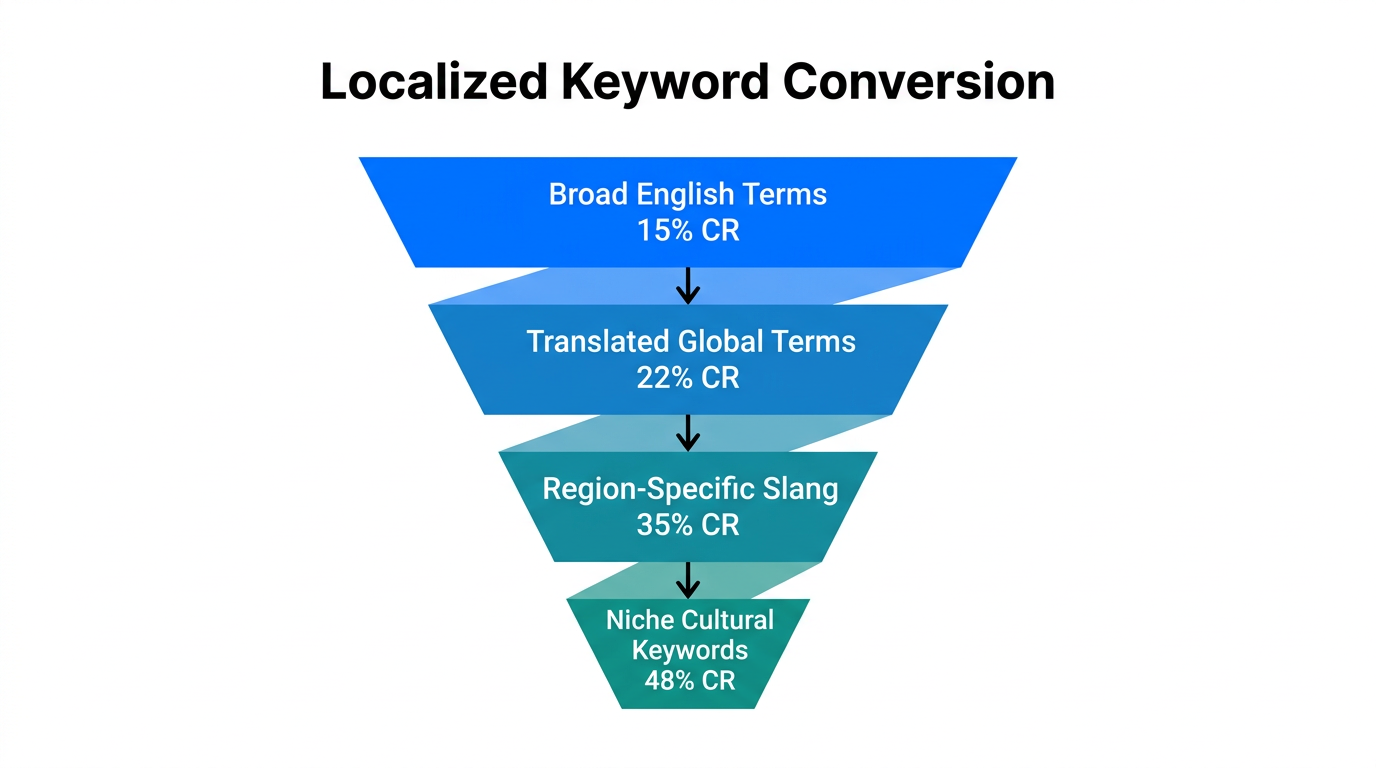
For many developers, the US and Western European markets are saturated. The cost of ranking for a broad term like "Fitness" or "Finance" is astronomical. The winning strategy for international mobile growth in 2026 is targeting long-tail niche keywords in emerging markets like Brazil, Indonesia, and Nigeria.
Instead of competing for "Money Tracker," a fintech app might target "crypto tax tracker for freelancers" in a specific emerging market. These terms have lower search volume but significantly higher conversion rates (CVR) because they match a specific user pain point. As documented by ASOlytics, niche targeting allows new apps to bypass the dominance of established giants and build a loyal user base in less competitive waters.
Leveraging UGC for Local Trust and ASO
One often overlooked aspect of global ASO 2026 is the impact of user sentiment and social proof. Both Apple and Google now prioritize apps with high sentiment scores in their AI-driven search assistants (like "Ask Play"). To win in a new market, you need local reviews and localized content that builds trust.
This is where Stormy AI becomes an essential part of your growth stack. When expanding to a new country, you can use Stormy AI to discover local UGC creators who can produce authentic content in the local dialect. By featuring this user-generated content in your App Store Custom Product Pages (CPPs) and social ad campaigns, you drive high-intent traffic to your listing. This surge in high-quality, localized traffic signals to the App Store algorithm that your app is trending in that specific region, further boosting your organic app store keyword ranking.
"The synergy between local UGC and ASO is the secret weapon of 2026. Creators build the trust; keywords build the bridge."Common Mistakes to Avoid in Global ASO
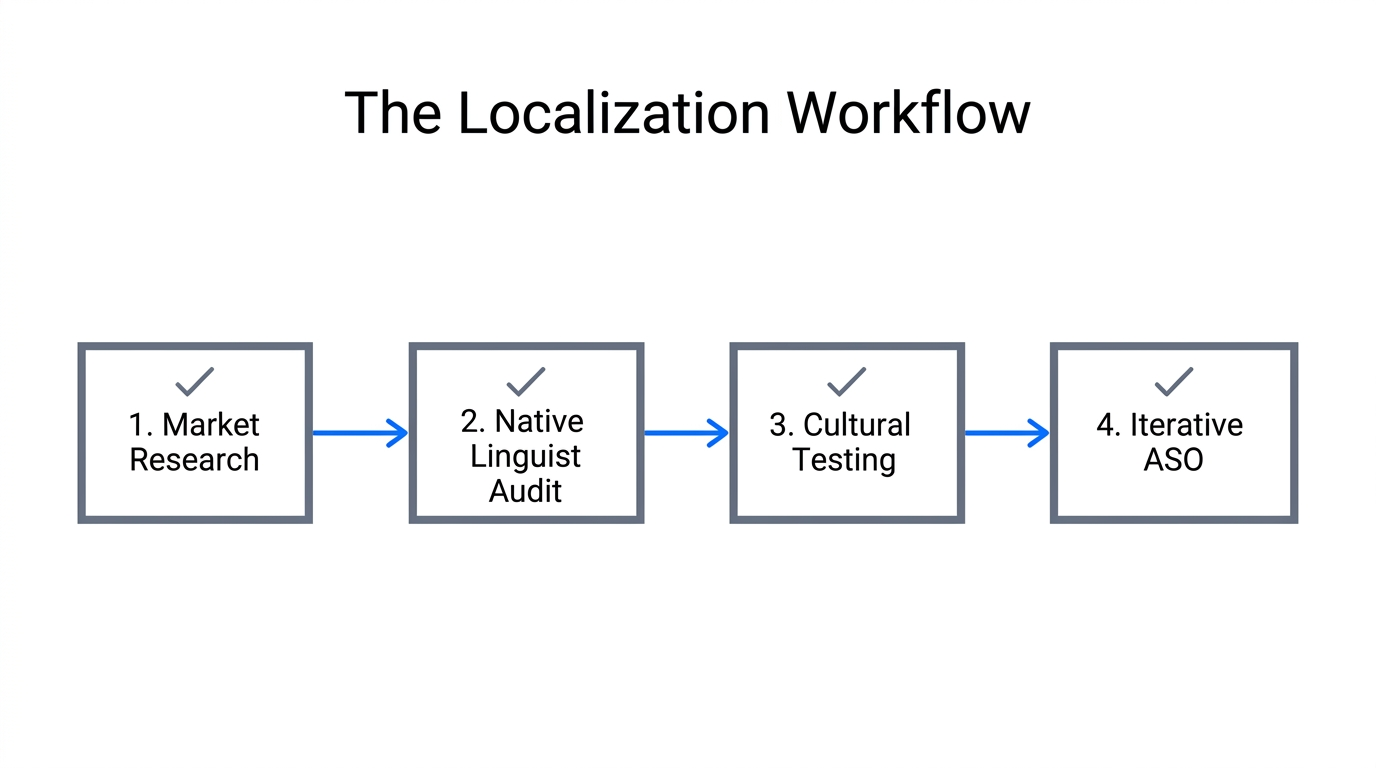
Even with a solid strategy, it's easy to fall into traps that can derail your international expansion. Based on research from Adjust and other attribution leaders, here are the top pitfalls for 2026:
- Repeating Keywords: On iOS, duplicating a word in the Title and Subtitle does not increase its weight. It's a waste of 30 characters.
- Ignoring Android Vitals: On Google Play, poor technical performance (crashes/ANRs) will suppress your rankings regardless of how good your keywords are.
- Set-it-and-forget-it: ASO is not a one-time task. If you aren't updating your metadata every 4-6 weeks to account for seasonality, you are losing ground to more active competitors.
- Neglecting Reviews: Search algorithms now extract keywords from user reviews. If your reviews are in English but you are targeting Spain, you lose semantic relevance. Encourage local users to leave reviews in their native language.
Conclusion: Building a Culturalized Growth Engine
Scaling an app globally in 2026 is no longer a matter of language—it's a matter of relevancy and cultural alignment. By moving from simple translation to a strategy focused on "culturalization," you can unlock a 30% visibility lift and capture high-intent users in emerging markets. Remember to respect the platform-specific rules of Apple and Google, leverage long-tail niche keywords, and keep your metadata dynamic through seasonal rotation.
To truly dominate a local market, pair your ASO efforts with local influence. Use Stormy AI to find and manage the creators who will give your app the local voice it needs to rank. The brands that win in 2026 aren't just the ones with the best code; they're the ones that speak the local language of search intent most fluently. Start your culturalization journey today by auditing your top 5 international markets and identifying where your app store keyword ranking is lost in translation.