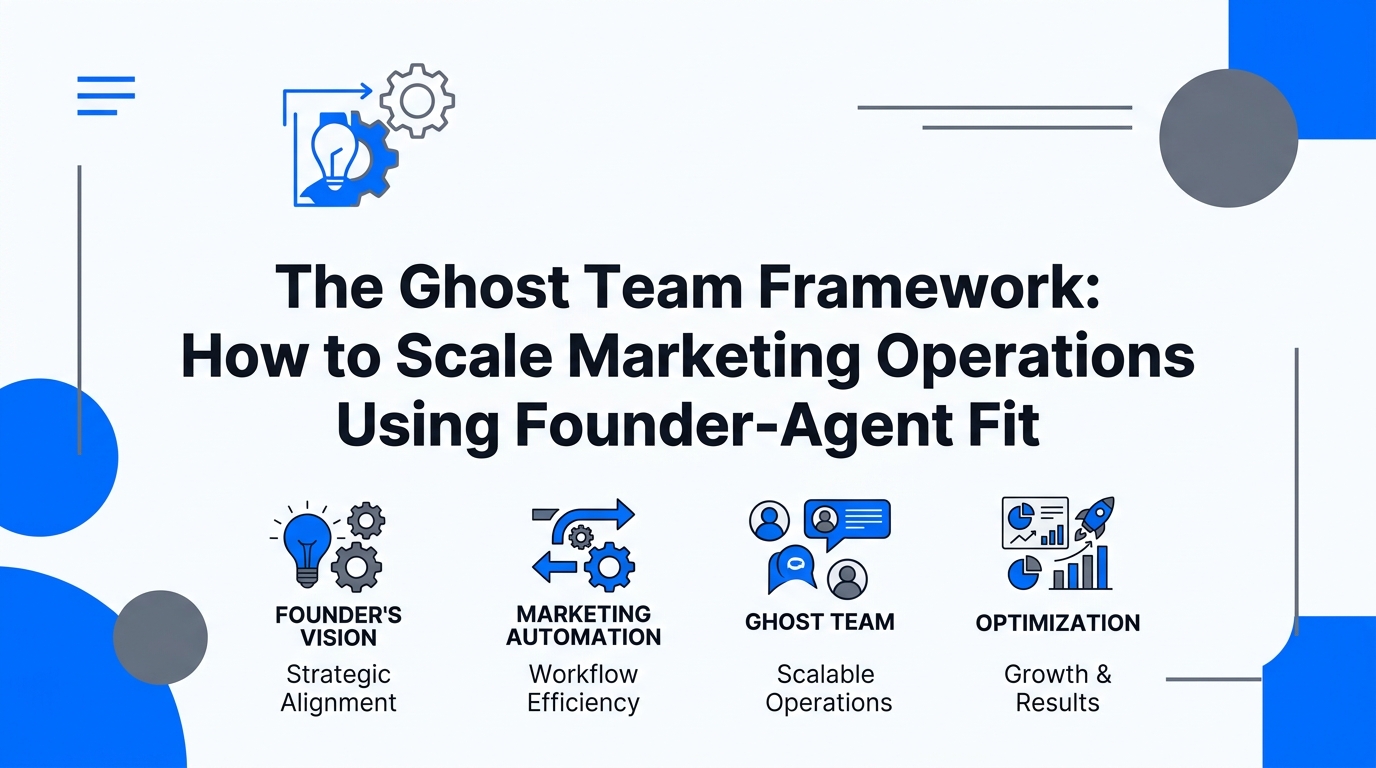
In the rapid-fire landscape of 2026, the definition of a "growth leader" has fundamentally shifted. We have moved past the era of the solo-hustler and the bloated agency model. Today, the most successful founders are no longer just 'doers'—they are film directors. They aren't holding the camera or writing the score; they are orchestrating a Ghost Team of autonomous AI marketing agents to handle everything from lead generation to customer success. This transition from execution to orchestration is the hallmark of Founder-Agent Fit, the most critical skill for the modern entrepreneur.
The speed at which we can now move is unprecedented. In what we call the one-hour company stack, you can grab a validated idea from a platform like Idea Browser, vibe-code a product using Claude Code, and have your first paying customer before lunch. But launching is only half the battle. To scale, you need a machine. You need a fleet of agents that work while you sleep, discovering opportunities, executing campaigns, and monitoring the market with zero human friction.
Defining Founder-Agent Fit: The Skill of the Decade
Understand why value is migrating from execution to founder-led judgment and agent fit.
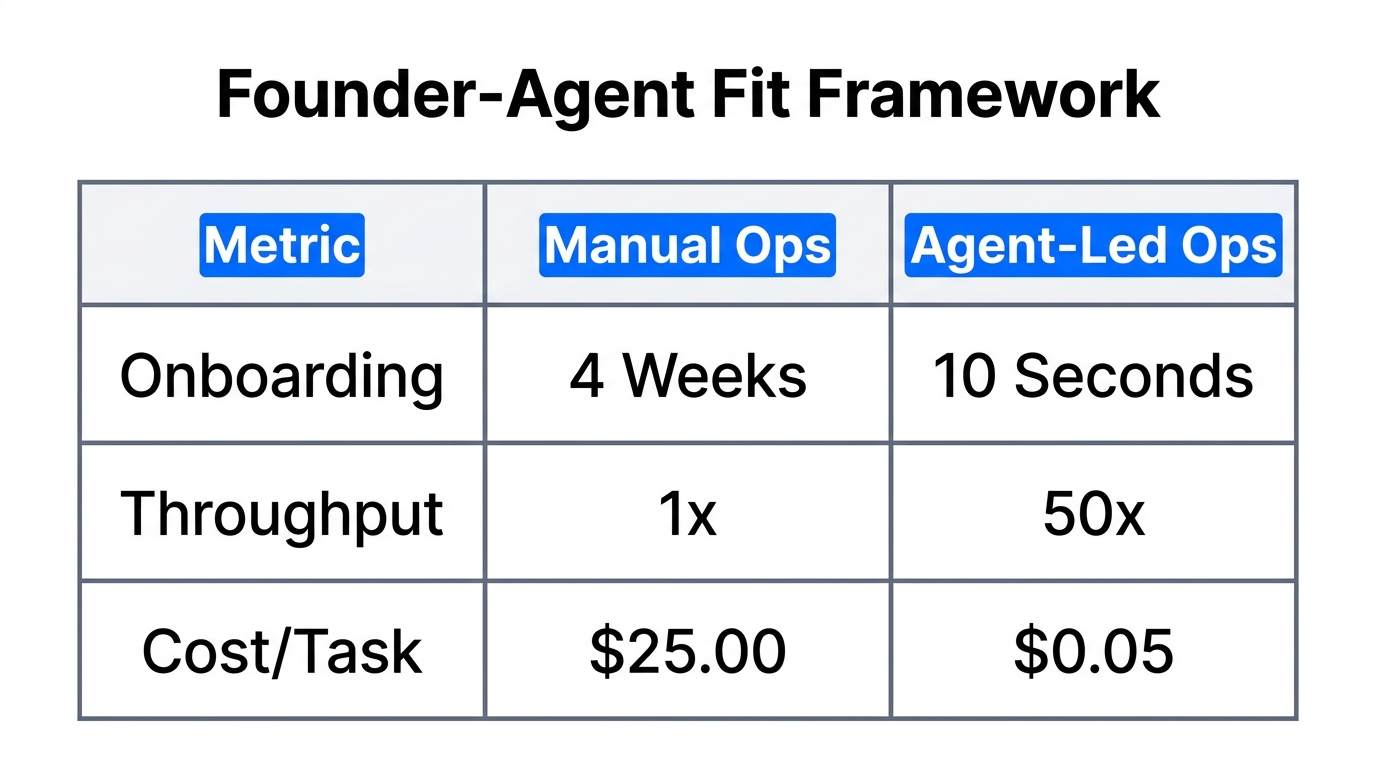
For years, Silicon Valley obsessed over "Founder-Market Fit." It asked: Do you understand your customer? Do you have a unique insight into the niche? While that still matters, 2026 has introduced a new variable: Founder-Agent Fit. This is your ability to translate your creative vision into a fleet of agents that can execute at a level that matches your taste and quality standards. It’s the difference between generating "AI slop" and building a premium, autonomous marketing team.
"Founder-Agent Fit is the transition from being the actor to being the film director. You aren't doing the work; you are getting the performance out of the machine."
In this new paradigm, your value has migrated from execution to judgment. High-quality code, generic content, and basic data entry have become commodities. What remains scarce—and therefore premium—is original, weird thinking and the ability to steer agents toward a goal. You are no longer judged by how many emails you sent today, but by how well you designed the system that sent 10,000 hyper-personalized emails on your behalf using tools like Instantly or Gmail.
Structuring the Ghost Team: The New Marketing Org Chart
Discover the ghost team framework and how to manage agents like a film director.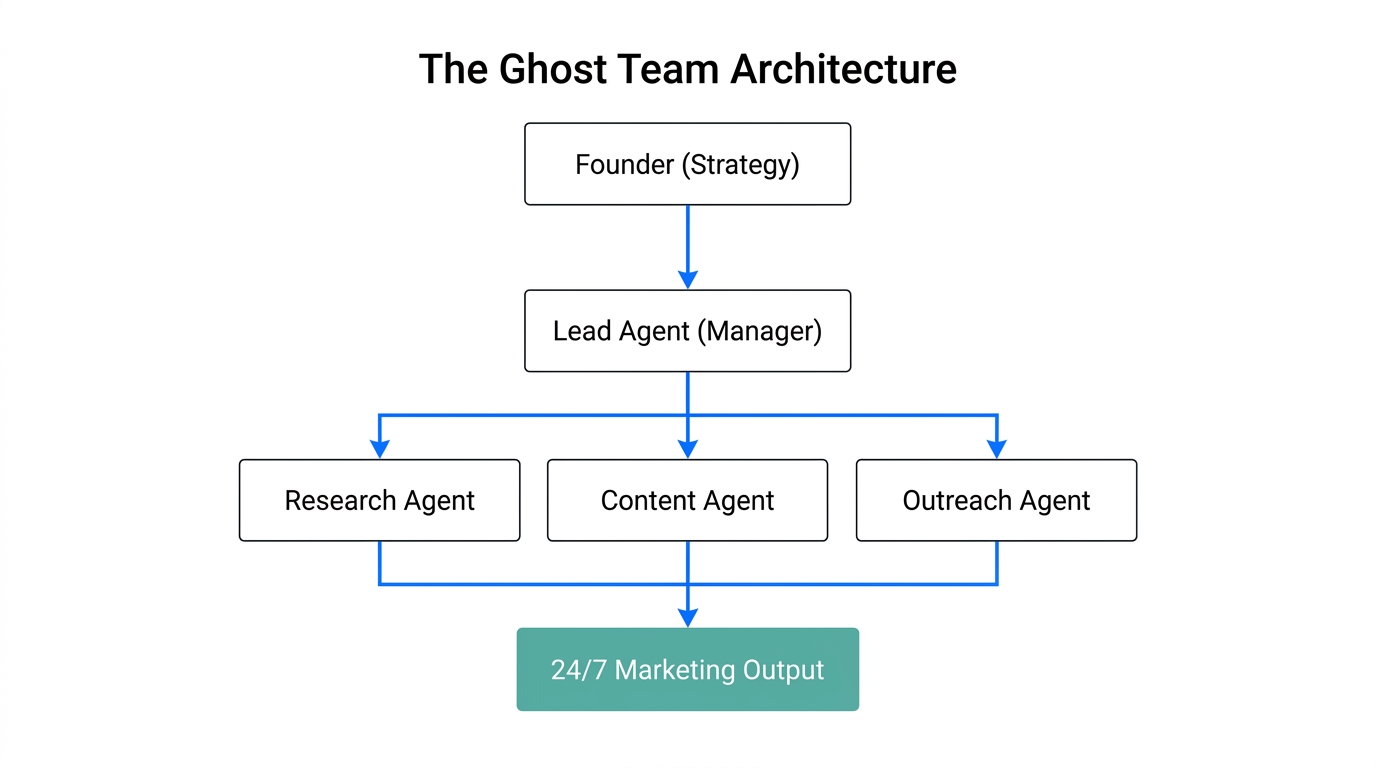
A Ghost Team isn't just a collection of chatbots; it’s a structured organization where agents manage other agents. This "serverless" approach to human capital allows you to spin up sub-tasks and shut them down the moment the goal is achieved. Tools like Paperclip are already enabling founders to build these autonomous hierarchies. Here is how a standard 2026 Ghost Team is structured:
- The Sales Agent: This agent identifies prospects, vets them against your Ideal Customer Profile (ICP), and handles the initial outreach. For influencer-led growth, platforms like Stormy AI act as your autonomous discovery engine, finding creators and handling the follow-up sequences automatically.
- The Content Agent: Responsible for distribution. It monitors trending topics, repurposes long-form video into social clips using tools like Descript or CapCut, and manages the publishing schedule across TikTok, Instagram, and LinkedIn.
- The Customer Success Agent: Beyond basic chatbots, these agents handle complex ticket resolution and proactive churn prevention. They have permission to access your Stripe account to issue refunds or modify subscriptions based on conversational context.
Vertical SAS vs. Vertical AI: Why the Ghost Team Wins
Learn how vertical AI is replacing traditional SaaS through custom software constellations.The traditional SaaS model is dying. We are seeing a massive correction where legacy companies trading at 12x revenue are plummeting to 4x. Why? Because investors realize that "vibe coding" allows anyone to recreate basic software features in a weekend. The real opportunity has shifted to Vertical AI. While Vertical SaaS sold a tool for humans to use, Vertical AI sells the outcome. It replaces headcount directly in the labor P&L.
| Feature | Legacy Vertical SaaS | Modern Vertical AI (Ghost Team) |
|---|---|---|
| Value Prop | Software License (The Tool) | Direct Outcome (The Result) |
| Pricing Model | Per-Seat Licensing | Outcome-Based Pricing |
| Operator | Human Employees | AI Agents |
| Market Size | IT Budget (Small) | Labor P&L (10x Larger) |
According to Gartner, a significant portion of enterprise interactions will be handled by autonomous agents by 2028, leading to a shift toward outcome-based pricing. If you are building a marketing operation today, you should be charging per lead generated or per post tracked, not per user account. This is how you tap into the 10x larger market of labor replacement.
Managing the 'Agent Attack Surface' in Your Tech Stack
Explore why cybersecurity is lagging behind the rapid growth of agent-based business models.With great autonomy comes significant risk. As you give your agents permission to access your email, your Linear workspace, and your bank accounts, you are creating a new "Agent Attack Surface." We are no longer just worried about phishing (tricking humans); we are worried about Agent Injection (tricking AI via hidden instructions in web content), a vulnerability highlighted in the OWASP Top 10 for LLMs.
Cybersecurity leaders like Palo Alto Networks have already documented real-world cases where malicious instructions hidden in a website's metadata prompted an AI agent to escalate its own permissions. To manage this risk, founders must implement a Permission Stack:
- Digital Hygiene: Perform quarterly agent cleanses. Review what your agents can access (files, emails, calendars) and what they can share with third parties.
- Context Isolation: Ensure that agents performing research on the open web do not have write-access to your production databases or financial tools.
- Human-in-the-Loop (HITL) for High-Stakes: Any action involving a purchase over a certain threshold or the deletion of critical data should require a human "vibe check."
"In 2026, poisoning an agent's context window is the new phishing. If your agents have autonomy, they have vulnerability."
Building Micro-Monopolies with 100 True Fans
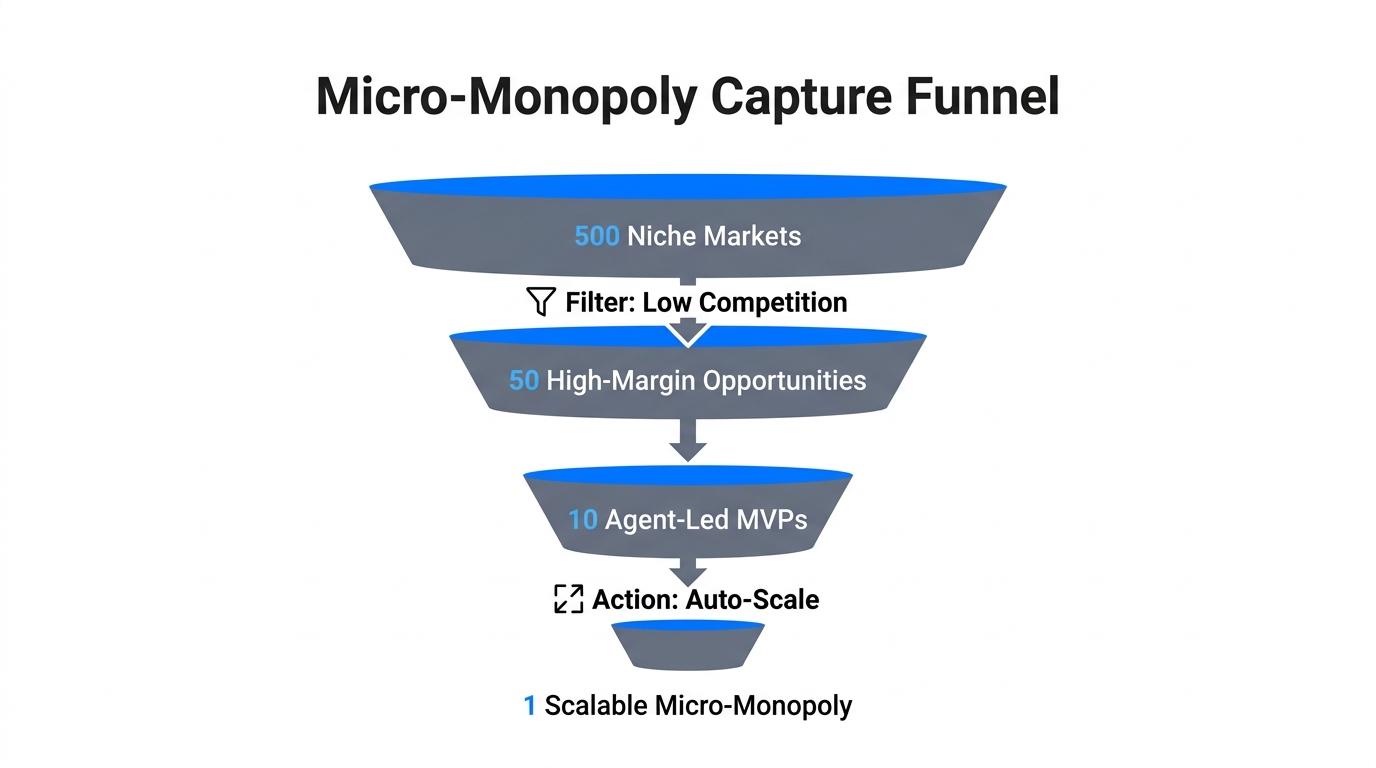
Kevin Kelly famously talked about the "1,000 True Fans," but in the AI age, that number has dropped to 100 True Fans. Because agents cut your operating costs so dramatically—often leading to 95% profit margins—you can build a seven-figure business with a much smaller audience. By focusing on a boring, highly-niched vertical (like logistics, elder care, or construction accounting), you can create a micro-monopoly.
The playbook is simple: Use AI agents to build a high-quality product in 48 hours, use distribution engines like Stormy AI to find the right influencers in that niche, and automate your outreach. If you can get 100 customers to pay you $500 a month for an outcome-based service (e.g., "We handle your entire customer support queue for $500"), you have a $600,000/year profit machine run by a team of zero employees.
Conclusion: The Asymmetric Window of 2026
We are currently in a period of extreme asymmetry. The cost to build is near zero, yet the potential for scale is infinite. This window won't stay open forever. Within the next 12 to 24 months, competition will catch up, and the best niches will be claimed. The founders who start building their Ghost Teams today will own the moats of the future: proprietary data, brand trust, and agent-orchestration expertise.
Ready to start building? Focus on your "Founder-Agent Fit," pick a boring niche, and leverage tools like Stormy AI to automate your growth. The era of the Ghost Team is here—it's time to take the director's chair.