Mastering GEO and Fractal Marketing: Distribution Strategies with Gumloop in 2026
Discover how Generative Engine Optimization (GEO) and fractal marketing models are redefining distribution in 2026. Learn to build Gumloop workflows for AI-driven growth.
In 2026, the traditional marketing funnel hasn't just evolved; it has been entirely dismantled. We have moved beyond the era of static SEO into a world governed by Generative Engine Optimization (GEO) and adaptive distribution models. If your strategy still relies on linear buyer journeys, you are already falling behind. The modern growth stack is no longer about finding the right keywords; it is about orchestrating autonomous agents that live, breathe, and adapt within a fractal ecosystem.
As we navigate this landscape, tools like Gumloop have become the central nervous system for marketing teams, enabling a transition from human-managed campaigns to agent-managed distribution. According to industry data from Averi, over 90% of marketing organizations now use AI agents in their stack, marking the definitive end of the 'Copilot' era. We are now in the age of the 'Agentic' marketer.
What is GEO? Optimizing for the Citation Age
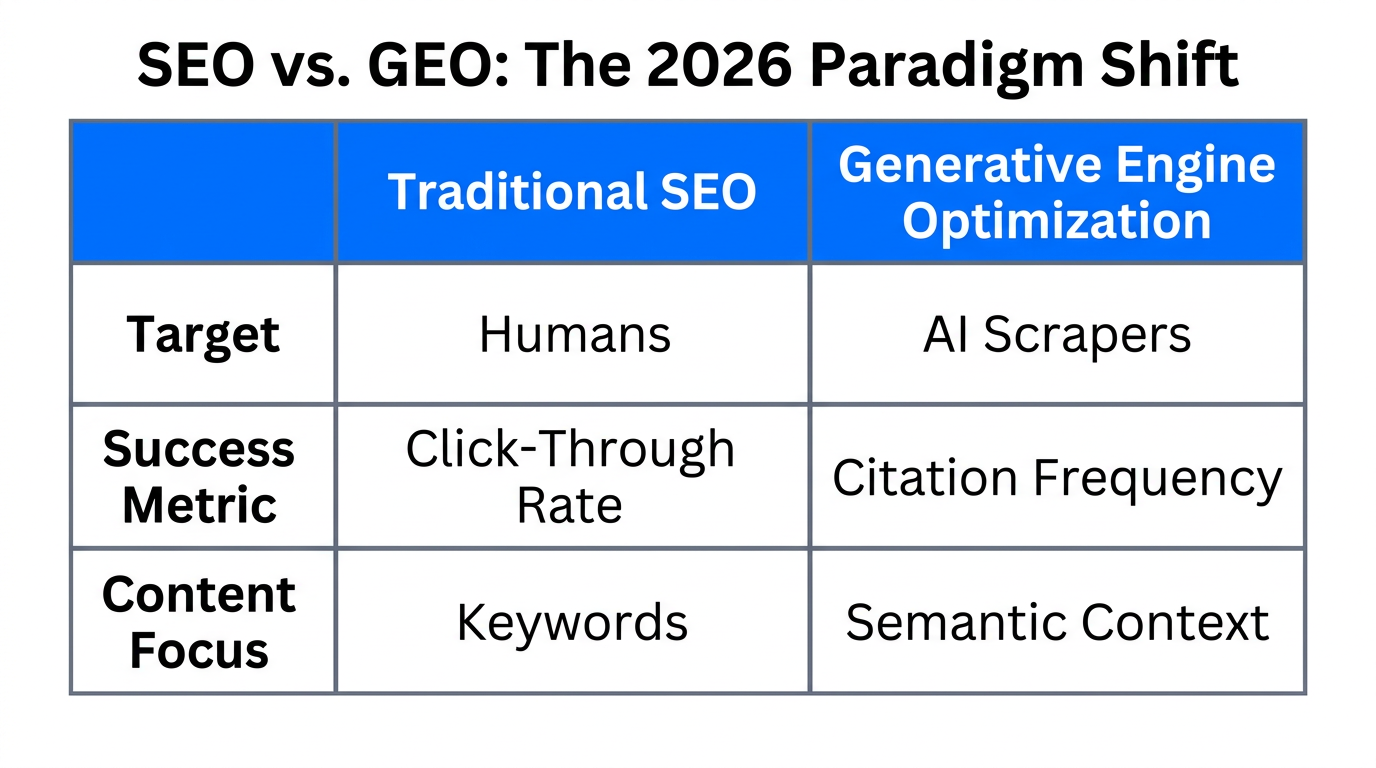
For decades, SEO was about ranking #1 on a Google search results page. In 2026, the game has shifted to Generative Engine Optimization (GEO). The goal is no longer just traffic; it is becoming the primary citation in AI search engines like Perplexity, Gemini, and SearchGPT. When a user asks an AI for a recommendation, your brand needs to be the source that the engine quotes and links to.
Experts at NoimosAI suggest that GEO requires a fundamental shift in how we structure data. AI scrapers don't just look for keywords; they look for contextual authority and verifiable facts. To win in this environment, your content must be optimized for Answer Engine Optimization (AEO), providing structured, high-signal data that agents can easily ingest and summarize.
"The primary goal of GEO is not just to be seen, but to be cited. In 2026, a single citation in a SearchGPT result is worth more than a thousand organic clicks from 2024."
To achieve this, marketers are using Multi-Agent Systems (MAS) to pre-vet content for AI digestibility. These agents act as 'simulated scrapers,' identifying gaps in your content that might prevent an AI engine from identifying your brand as an authority. This is a critical component of any modern GEO marketing strategy.
The Fractal Model vs. The Linear Funnel
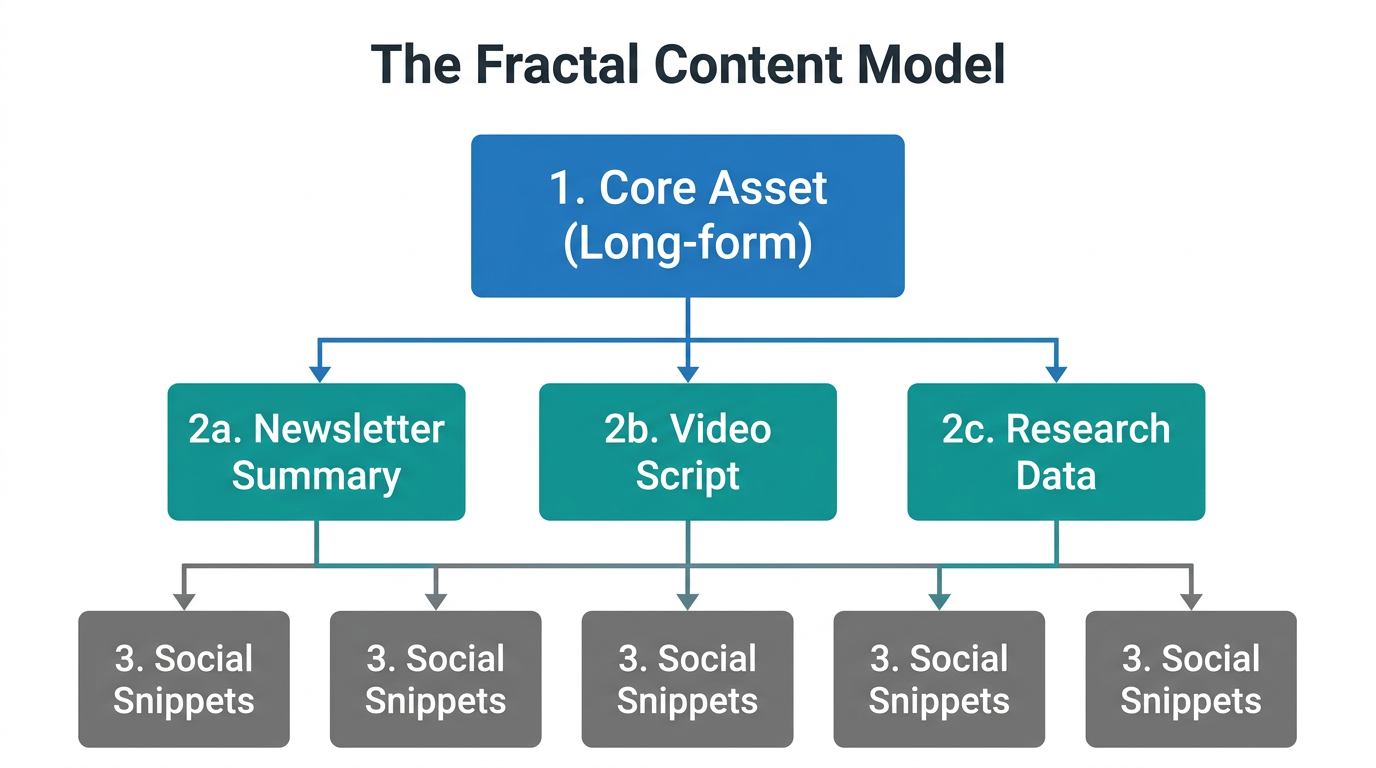
The traditional linear funnel—Awareness, Consideration, Conversion—is dead. In its place is the Fractal Marketing Model. As reported by The Media Online, industry leaders now view the customer journey as an adaptive ecosystem. Instead of a straight line, it is a series of loops where AI-driven agents predict when a user will 'loop back' into the journey based on real-time intent signals.
In a fractal model, content is modular. A single piece of research is atomized into hundreds of different formats, each optimized for a specific node in the ecosystem. This isn't just repurposing; it's agentic distribution. Agents analyze the viewer's psychological profile and adjust tone, visuals, and format in real-time. This is what HubSpot refers to as 'Living Brands'—assets that self-adjust to maximize resonance.
| Feature | Traditional Funnel (Legacy) | Fractal AI Model (2026) |
|---|---|---|
| Structure | Static/Linear | Dynamic/Looping |
| Speed | 2-6 Week Cycles | Real-time Autopilot |
| Logic | Static IF-THEN | Agentic Reasoning |
| Targeting | Demographic Personas | Real-time Intent Signals |
This shift has profound implications for ROI. Companies using these adaptive ecosystems report a 68% increase in lead volume compared to traditional methods, according to research from Amra & Elma. By moving away from a 'one-size-fits-all' funnel, brands are capturing value at every possible micro-touchpoint.
Architecting 'Trigger-Transform-Transport' with Gumloop
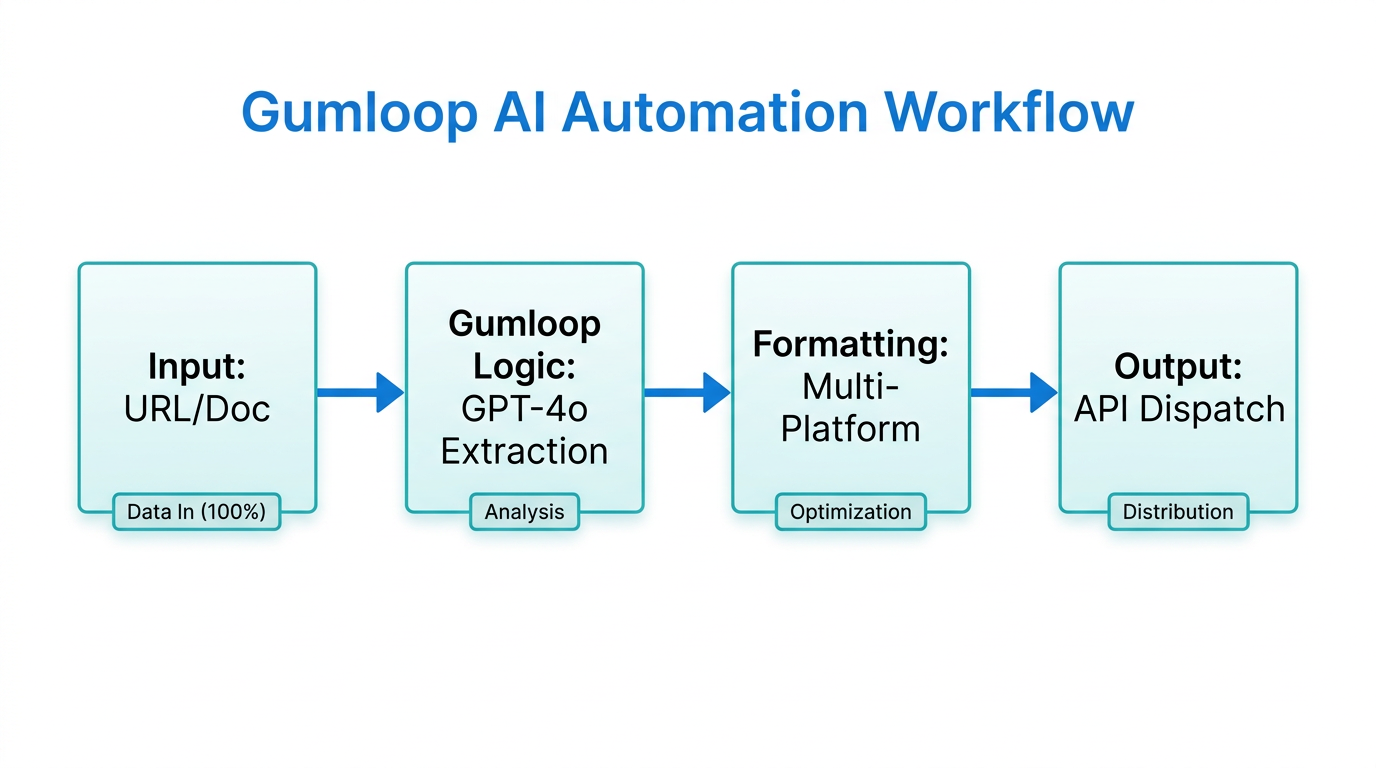
How do you actually build this? The answer lies in Gumloop workflows. In 2026, practitioners use a 'Trigger-Transform-Transport' architecture to maintain high-velocity distribution. Gumloop serves as the orchestration layer, allowing you to chain together multiple AI models (like GPT-4o and Claude 3.7) to perform complex tasks without human intervention.
Step 1: The Trigger (Lead & Signal Discovery)
The workflow begins with a trigger. This could be a new LinkedIn post from a target account, a change in a competitor's pricing, or a surge in specific search queries. AI-native teams use tools like Marketer Milk to monitor these signals. Once a trigger is detected, Gumloop kicks off the sequence.
Step 2: The Transform (Modular Content Creation)
This is where the 'fractal' nature of the content comes to life. Gumloop nodes can take a single signal and transform it into a full content package. For instance, an agent can scrape a prospect's latest post, summarize it, and then use eesel AI to generate a custom eBook or guide specifically for that prospect. This ensures every piece of outreach is hyper-personalized, which has been shown to increase email open rates to nearly 40% per data from Primal.
Step 3: The Transport (Multi-Channel Outreach)
Finally, the content must be delivered. Gumloop can automatically feed these personalized assets into outreach platforms like Instantly.ai or Enginy. This entire process happens in minutes, not days. This high-velocity distribution is why AI-native teams report a 5x increase in content production speed, as noted by AnyRoad.
Building Topical Authority for AI Scrapers
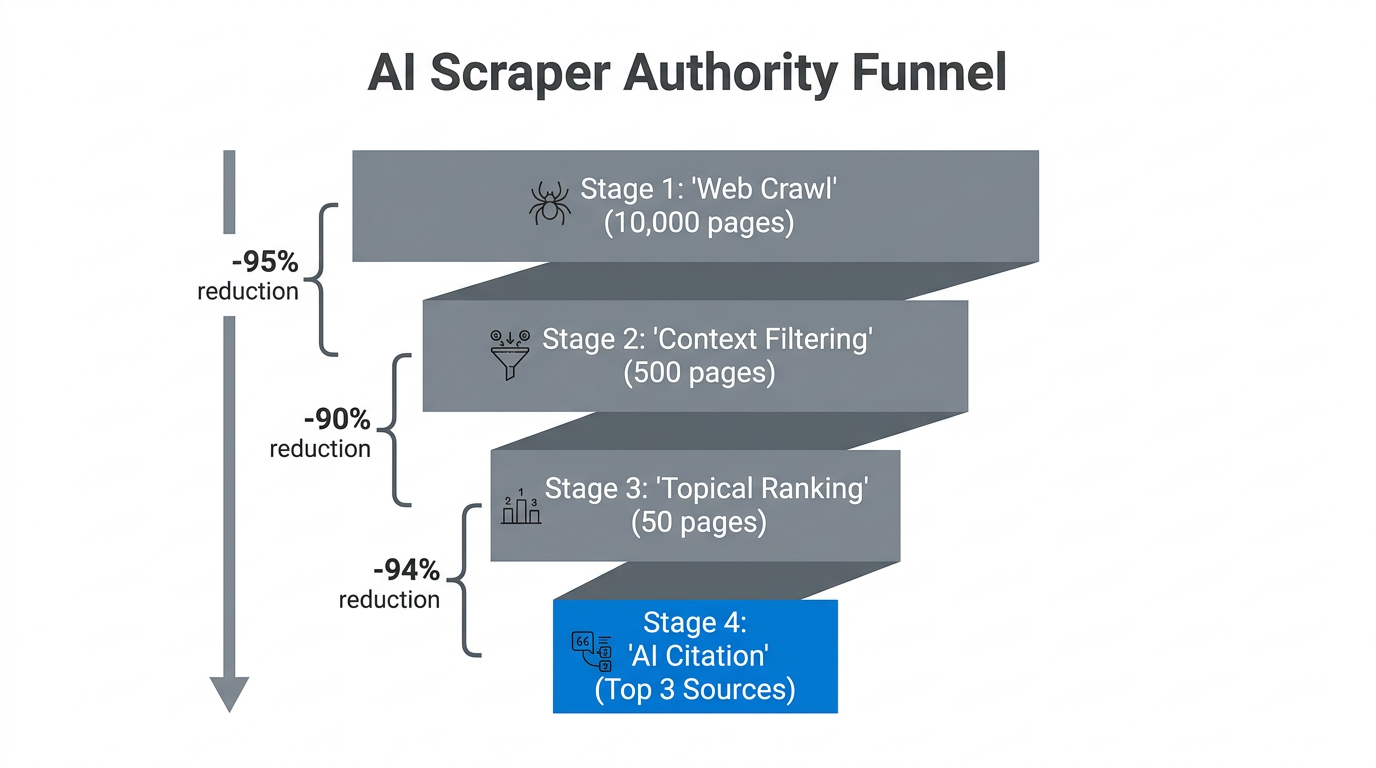
To thrive in Generative Engine Optimization 2026, you must satisfy the 'hunger' of AI scrapers. Search engines no longer index pages; they map topics. To build Topical Authority, you need to create 'Topic Maps' that cluster your content into deeply interconnected subtopics. According to StoryChief, this is the only way to satisfy modern Google and AI search requirements.
For example, if you are an AI marketing consultant, you shouldn't just write about 'AI funnels.' You need to cluster content around specific 'Jobs-to-be-Done' queries, such as 'AI lead scoring workflows' or 'competitor analysis agents.' These high-intent keywords, while lower in volume, often result in 10-50x higher conversion rates, as found by Averis Digital.
"Topic Maps are the skeletal structure of your GEO strategy. Without them, your content is just 'slop' that AI engines will ignore."
To populate these fractal loops with authentic content, many brands are turning to user-generated content (UGC). This is where Stormy AI becomes invaluable. By using AI-powered search and discovery, brands can instantly find and vet creators who provide the raw, human material that AI agents then 'transform' and 'transport' across the fractal ecosystem. This ensures that even in an automated world, the brand's 'emotional hook' remains authentic.
The 2026 Distribution Playbook: Human-in-the-Loop
Despite the massive efficiency gains—with AI SDRs costing as little as $39 per lead compared to $262 for humans, according to Leads at Scale—there is a catch. Purely automated 'slop' can erode brand trust. Human-in-the-loop (HITL) editing is the final, essential step in the 2026 distribution playbook.
- Strategy Agent: Briefs the distribution plan based on real-time market data.
- Creative Agent: Generates the modular assets (video scripts, blog posts, social snippets).
- Human Editor: Reviews for 'cultural nuance' and emotional storytelling.
- Distribution Agent: Orchestrates the rollout across the fractal loops via Gumloop.
This balance is what allowed brands like Absolut to see a 36% revenue uplift per visit by identifying high-intent leads during events using AI-experiential data, as documented by AnyRoad. They didn't just automate; they used AI to enhance human-to-human connection.
Conclusion: The Future of Distribution
The transition to GEO and fractal marketing is not a choice; it is a requirement for survival in 2026. By leveraging Gumloop workflows and multi-agent systems, brands can create a distribution engine that is faster, cheaper, and more adaptive than anything possible in the legacy era. However, the winners will be those who remember that AI is a multiplier of quality, not a replacement for it. Focus on building topical authority, mastering generative engine optimization, and maintaining that critical human touch to ensure your brand remains the primary citation in the age of AI.