GEO 2026: Optimizing Product Visuals for AI Search with Claid.ai and Photoroom
Learn how Generative Engine Optimization (GEO) in 2026 uses Claid.ai and Photoroom to create machine-readable product visuals that win in AI-driven search.
In 2026, the digital storefront has undergone a fundamental transformation. We are no longer just optimizing for human eyes or legacy search algorithms; we are optimizing for AI Shopping Assistants. Whether it is Amazon’s Rufus, Google’s AI Overviews, or Perplexity’s shopping engine, the way products are discovered has shifted from keyword matching to visual verification. This new frontier is known as Generative Engine Optimization (GEO), and at its core lies the ability to produce high-consistency, machine-readable visual data at scale.
What is GEO? Why AI Search Assistants Prioritize Visual Metadata
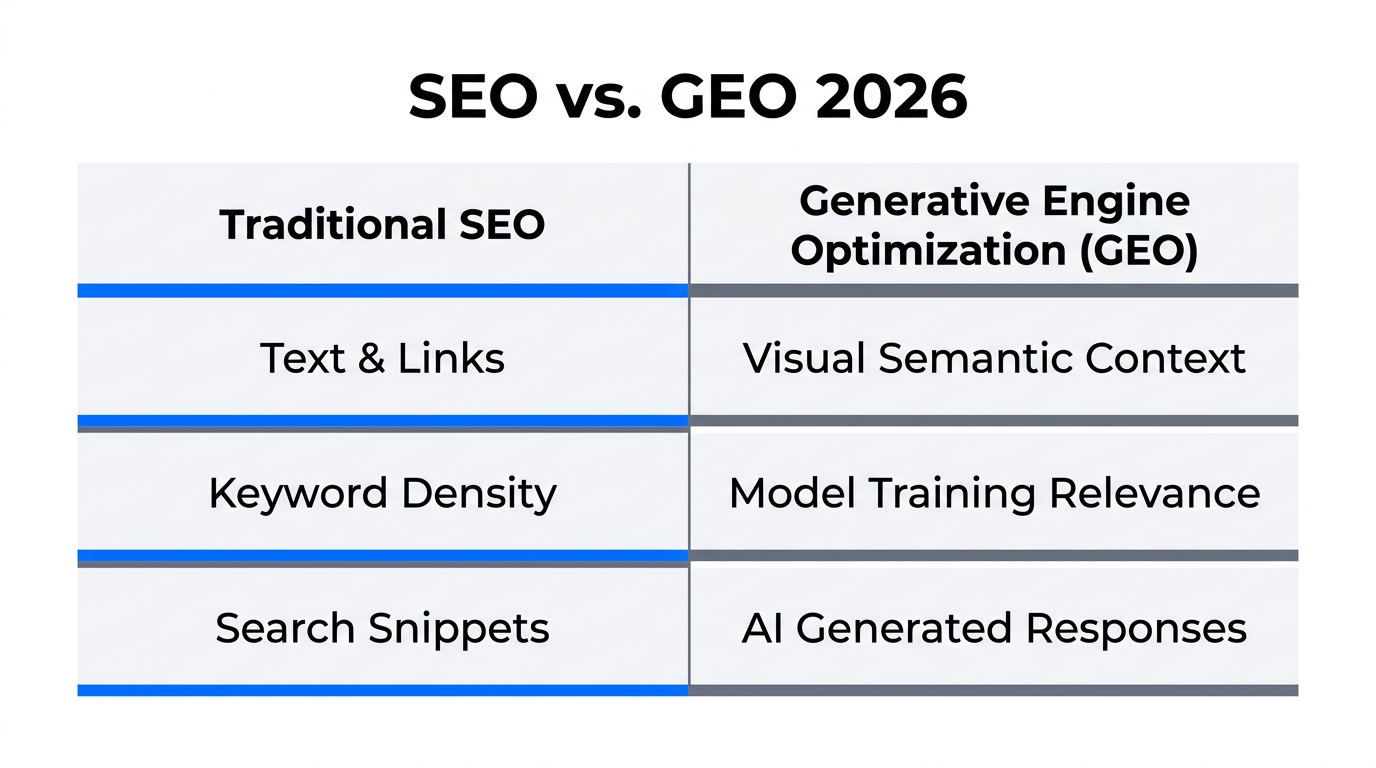
Generative Engine Optimization (GEO) is the practice of structuring content specifically to be featured by generative AI models. In the context of eCommerce, this means your product images are no longer just aesthetic assets—they are functional data points. AI agents like Rufus or ChatGPT don't just 'see' an image; they analyze it to verify product claims. For instance, if a brand claims a jacket is 'waterproof,' an AI agent will cross-reference the text with high-resolution visual evidence, such as the texture of the fabric or the presence of taped seams in multi-angle shots.
According to Gembah, AI search engines favor 'Style Packs' and high-resolution, multi-angle images that allow the AI to accurately represent the product to the end user. If your imagery is inconsistent or low-quality, the AI agent may deem the product 'unreliable' and exclude it from its top recommendations.
"The machine is the new consumer. In 2026, if an AI agent can't 'verify' your product through its visual metadata, your brand effectively doesn't exist in the search results."
Ensuring Visual Consistency: Using Nightjar to Prevent Brand Drift
One of the biggest hurdles in AI-driven marketing is 'visual drift.' When using generative tools like Midjourney to create lifestyle scenes, it is easy to end up with 100 images that look like they were shot by 10 different photographers. This inconsistency confuses both human shoppers and AI algorithms, which prioritize a consistent visual signature for ranking. This is where tools like Nightjar become essential.
Nightjar allows marketing teams to lock in 'Style References'. By establishing a fixed baseline for lighting, shadows, and color temperature, brands can ensure that every AI-generated asset remains on-brand. This prevents the 'uncanny valley' effect that Kelly Heck warns can destroy consumer trust. When your visual data is uniform, AI agents can more easily categorize your brand as a high-quality, authoritative source in its niche.
Technical Requirements for AI-First Search: Claid.ai and UHD Standards
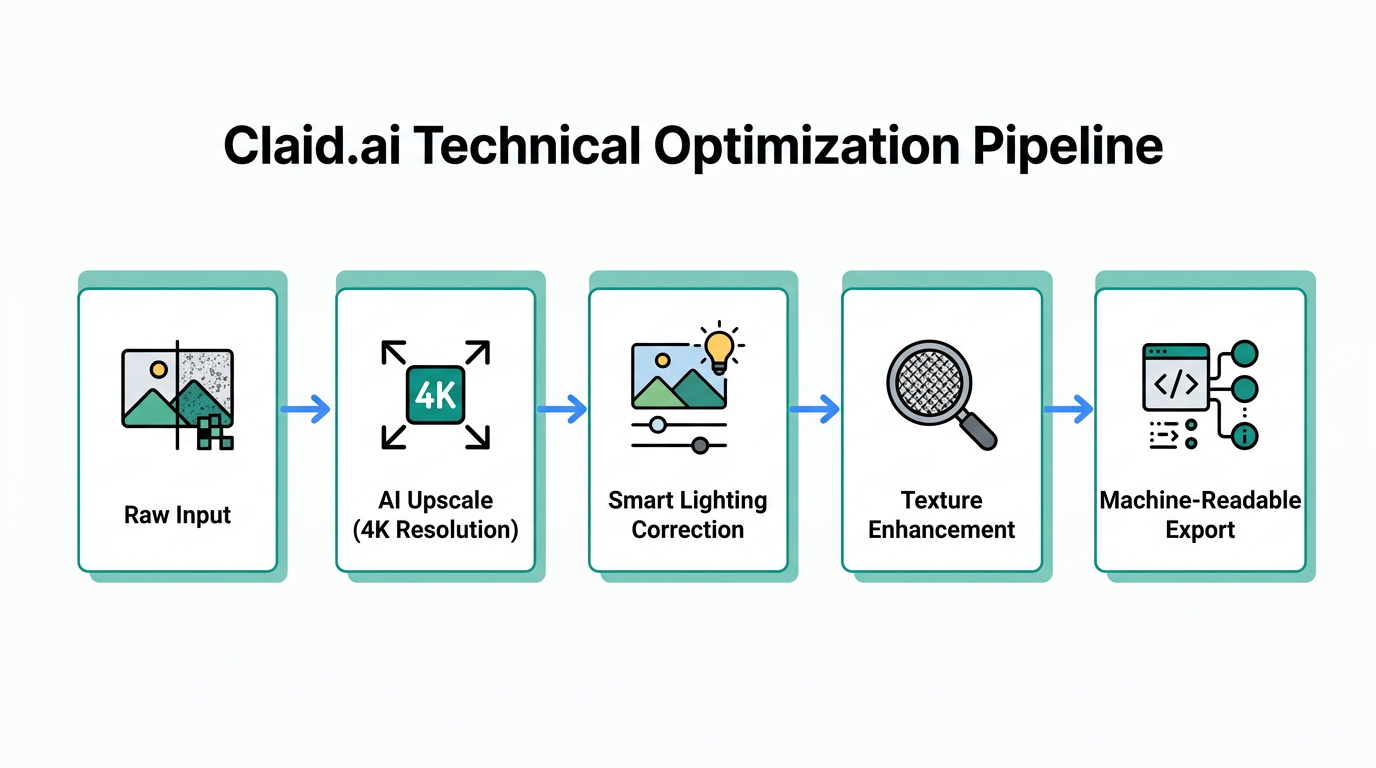
AI search engines have high standards for technical metadata. High-resolution, Ultra-High Definition (UHD) standards are no longer optional. Claid.ai has become the industry standard for API-driven automation that ensures every image in a catalog meets these rigid UHD requirements. Claid.ai’s automation can upscale images to 4K while simultaneously adjusting lighting to meet the specific requirements of platforms like Amazon or Shopify.
| Feature | Photoroom API | Claid.ai API |
|---|---|---|
| Primary Strength | Background Removal & Diffusion | UHD Upscaling & Catalog Automation |
| Latencey | ~2–5 seconds | ~10–15 seconds (HD) |
| Best For | Social Sellers & Quick Edits | Enterprise Scale & GEO Compliance |
By using Claid.ai, brands can automate the production of 6-second 'hero' videos from a single still photo, a trend Giftechies identifies as a major growth driver for 2026. These videos provide the dynamic data that AI agents crave when ranking products in mobile-first environments like TikTok and Instagram Reels.
"AI-generated lifestyle imagery can increase click-through rates (CTR) by 30–50% compared to traditional flat-lay photos." — Source: CodingMantra
The 9-Minute Workflow: Scaling with Photoroom API
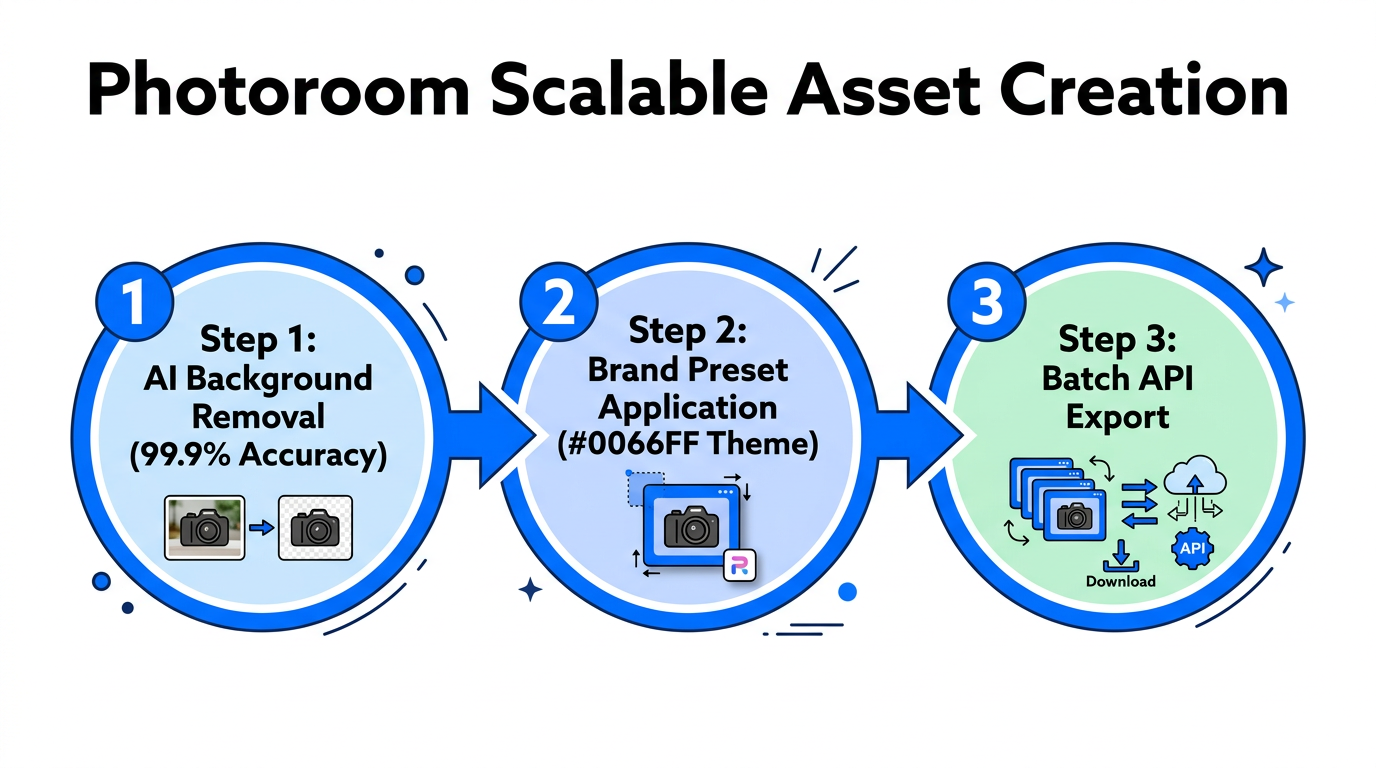
To succeed in the 2026 market, marketing teams must move away from manual editing and toward autonomous content pipelines. The '9-minute' model, popularized by modern AI photography agencies, relies heavily on tools like Photoroom and its robust API capabilities. Photoroom’s Instant Diffusion model is specifically trained on product lighting, reducing the distance between AI-generated and physical photography.
The workflow typically follows these steps:
- Capture: Raw images are captured (often by UGC creators found on platforms like Stormy AI).
- Ingestion: Images are auto-uploaded to a cloud folder like Google Drive.
- Processing: The Photoroom API removes backgrounds and applies a branded lifestyle scene based on a JSON instruction.
- Optimization: Assets are piped through Claid.ai for UHD upscaling.
- Distribution: The final, machine-readable assets are pushed to the storefront.
This automation reduces image production costs by 80-90%, bringing the cost per image down from $50 to as low as $0.05, according to data from Nightjar.
The Machine-Readable Brand: Verifying Claims through AI
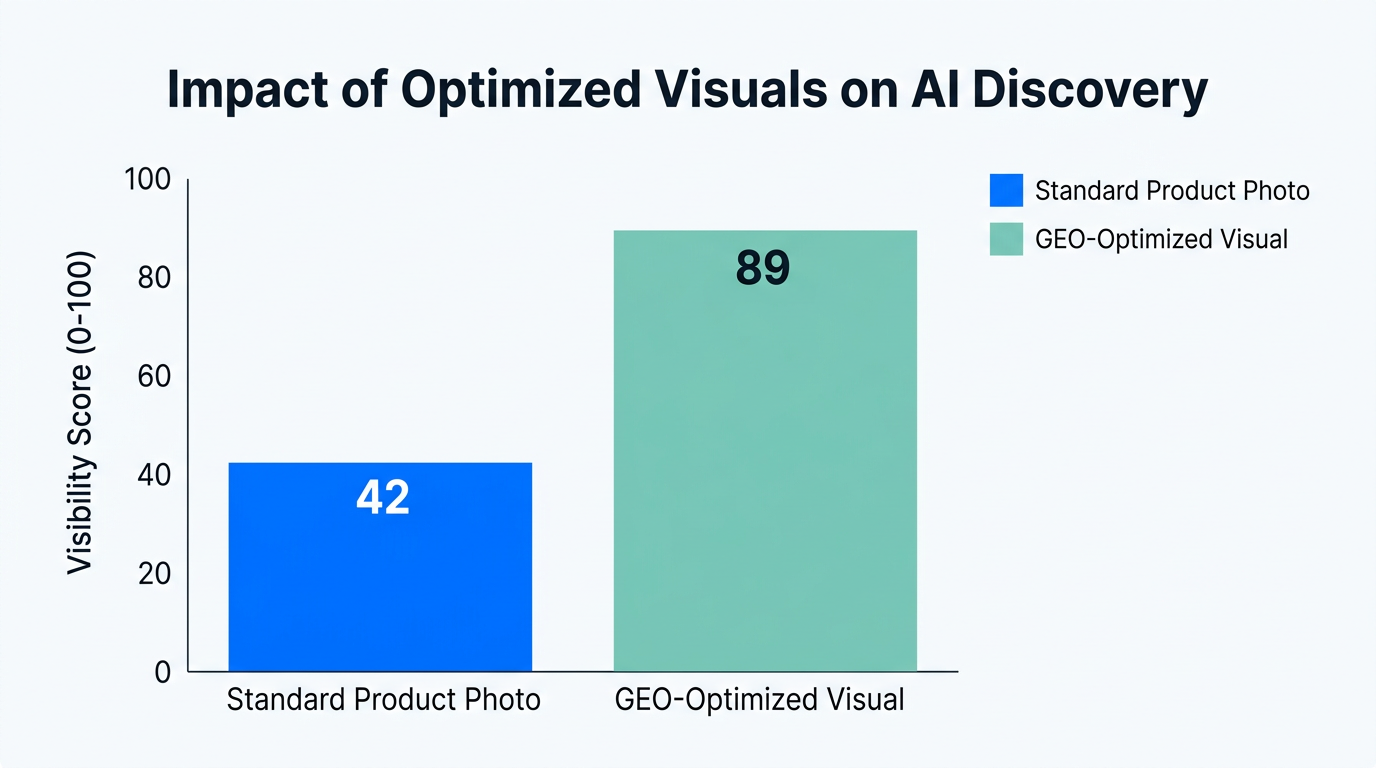
In the GEO era, your brand identity must be 'readable' by both humans and machines. AI search engines use visual consistency to verify that a product is legitimate. If an AI agent detects that a product's visuals vary too wildly or appear 'hallucinated' (a common issue where AI distorts labels), it will downgrade the product's trust score. Brands must use a 'human-in-the-loop' model, as suggested by Shane Schick, to ensure that while AI handles the grunt work, the final output remains authentic.
Furthermore, new specialists like WearView are helping fashion brands generate diverse virtual try-on galleries. This variety provides the 'multi-angle' data that AI agents use to confirm a product's fit and appearance on different body types, further boosting GEO rankings.
"If you’re still doing traditional product photography in 2026 without an AI pipeline, you’re burning money and losing visibility in the only search engines that matter."
Conclusion: The Winning Visual Strategy for 2026
Optimizing for the generative engines of 2026 requires a hybrid approach. High-end 'Hero' shots should still rely on professional photography or high-quality UGC to establish a ground truth. However, scaling those assets into thousands of personalized, seasonal, and platform-specific variations is a task only AI can handle. By integrating Photoroom for bulk editing and Claid.ai for technical UHD optimization, brands can build a machine-readable visual identity that dominates AI search results.
The brands that win this year will be those that view their visual assets as structured data. Start by locking your style references in Nightjar and automating your pipeline to ensure that when an AI shopping assistant looks at your products, it sees exactly what it needs to make a recommendation.