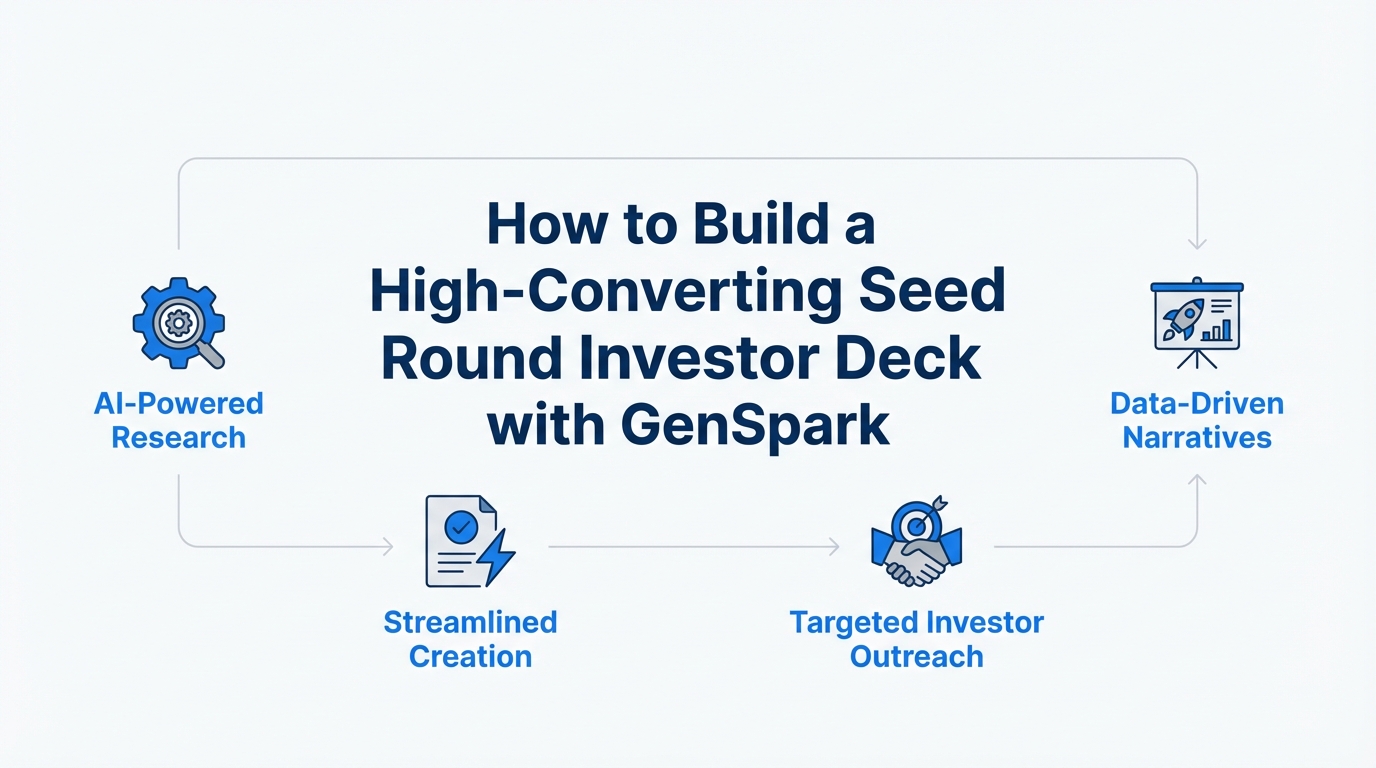
Fundraising is a full-time job that often leaves zero-to-one founders with little energy to actually build their products. The traditional workflow involves weeks of manual market research, wrestling with PowerPoint templates, and chasing down data for the dreaded due diligence phase. However, a new breed of "super agent" platforms is changing the math. GenSpark, an AI-powered agent platform that reportedly reached $36 million in ARR in just 45 days, according to recent industry reports, is becoming a go-to tool for founders who need to move fast. By leveraging specialized AI agents for research, slide generation, and financial modeling, you can compress a month's worth of fundraising preparation into a single afternoon.
How to Prompt GenSpark for Deep Market Research
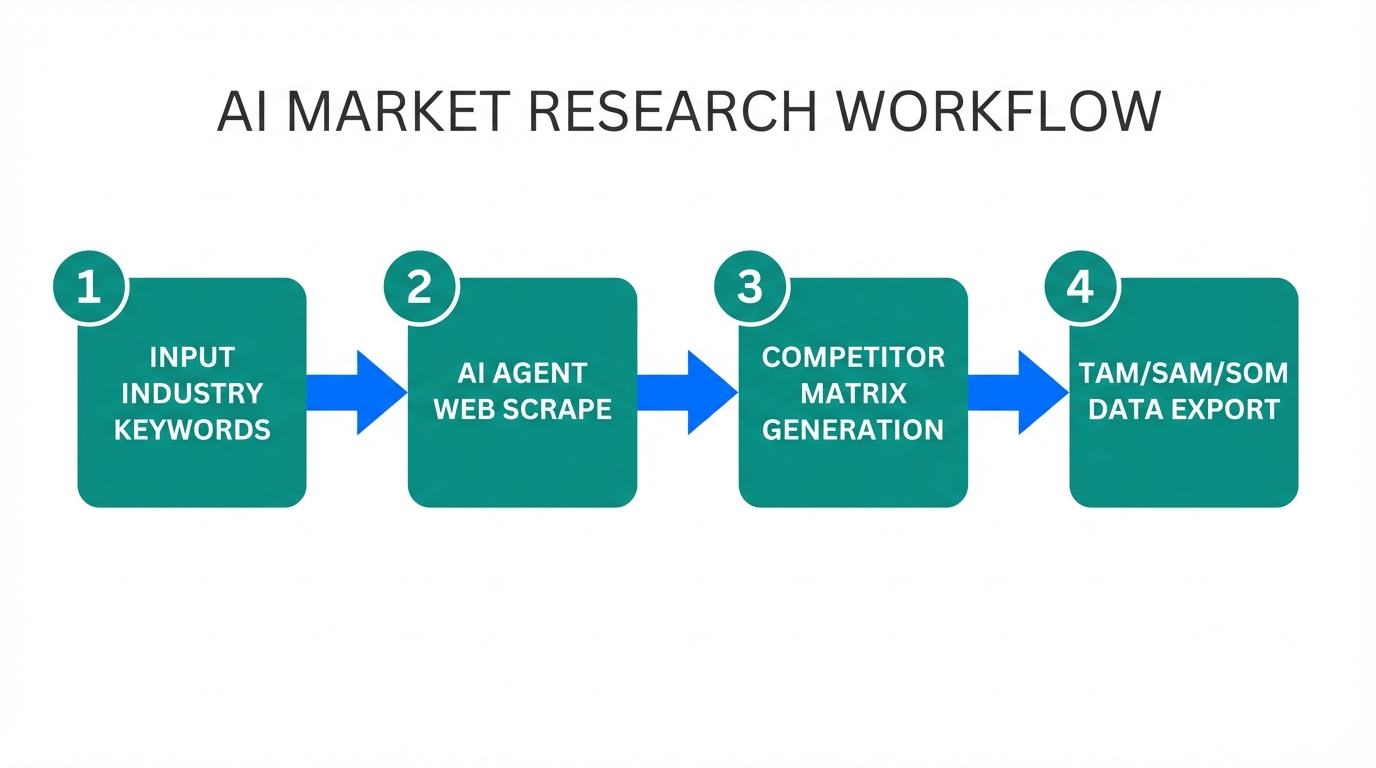
Most AI tools provide surface-level statistics that investors have seen a thousand times. To secure a $2M to $3M seed round, your research needs to uncover the specific psychological pain points of your target audience. Instead of asking for "market size," use GenSpark to dig into the "language of the problem." Research from platforms like Idea Browser shows that the average founder spends 155 hours on validation before they even start building. You can find more about these benchmarks in the Y Combinator Library. Your research should focus on how to reduce that friction.
When prompting GenSpark, try a structure like this: "Research and create detailed customer personas for my target market, including their biggest pain points, where they hang out online, what language they use to describe their problems, and the exact moments they realize they need a solution." This prompt forces the AI to look at community discussions and forums rather than just generic industry reports. For example, if you are building a tool for solopreneurs, GenSpark might identify that they aren't just looking for productivity—they are looking to avoid another failed venture.
"The content quality of GenSpark's research often hits an 8 out of 10, identifying nuances like specific 'emotional triggers' that traditional market research agencies might miss."The Workflow for a 15-Minute Investor Presentation
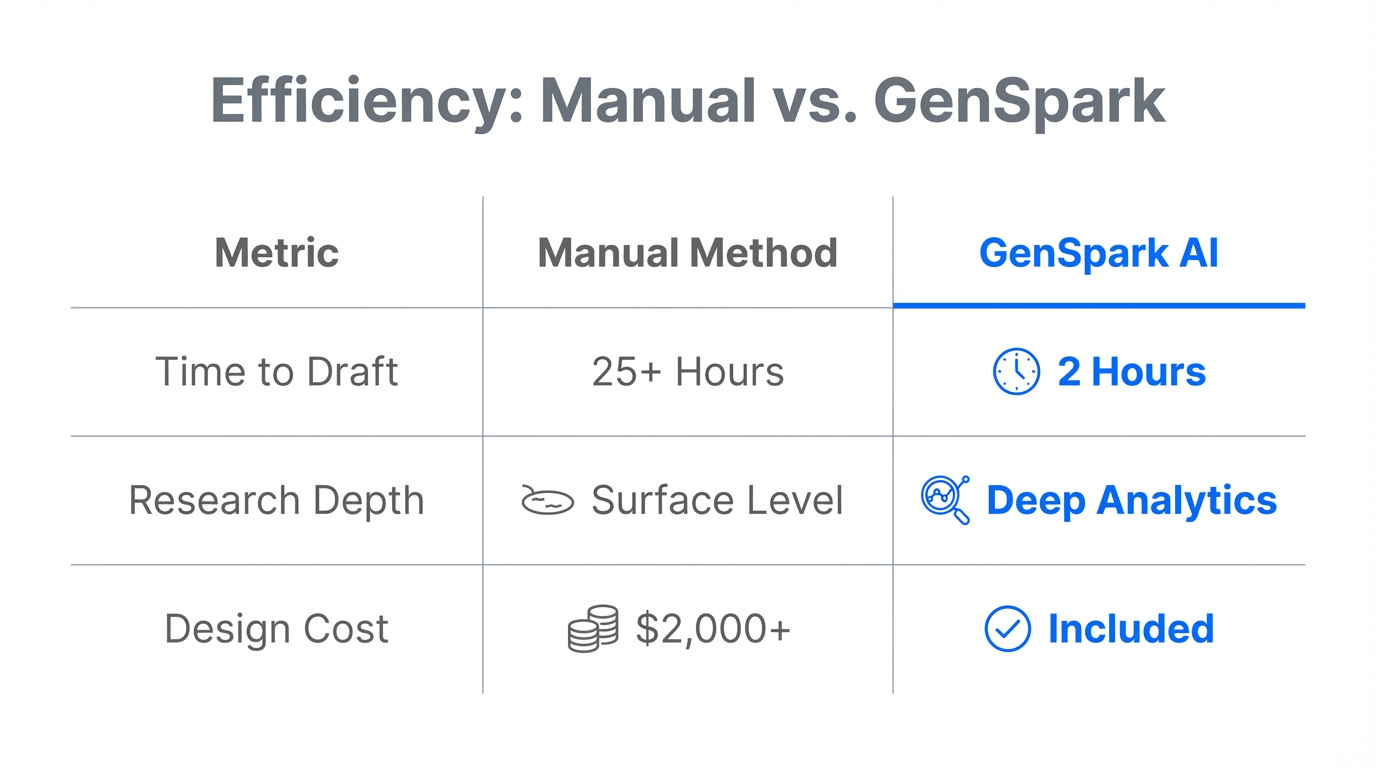
Once your research is solid, it's time to build the actual AI pitch deck generator workflow. GenSpark features a dedicated "AI Slides" agent designed to transform raw data into a narrative. However, there is a catch: the initial design is often underwhelming. Early users describe the default aesthetics as "mid-tier," often scoring a 3 out of 10 on visual appeal while the content itself is top-notch, as noted in various Product Hunt reviews.
Step 1: The Narrative Foundation
Start by providing the AI with your core value proposition. If you are building a startup like Idea Browser, emphasize the "entrepreneurial explosion" and the shift toward data-driven validation. The AI is excellent at structuring the narrative arc: Problem, Solution, Opportunity, and Market Timing, similar to the frameworks suggested by Sequoia Capital.
Step 2: Incorporating Data-Driven Slides
Ask the agent to generate specific slides focused on ROI and growth trends. A high-converting deck must show that you understand your unit economics. You can use Startup Empire resources to benchmark your metrics before feeding them into the agent. This ensures your slides aren't just pretty—they are investable.
| Deck Element | GenSpark Strength | Potential Weakness |
|---|---|---|
| Market Analysis | Deep & Nuanced | Generic Visuals |
| Persona Mapping | Highly Actionable | Text-Heavy Layouts |
| Financial Visuals | Accurate Logic | Basic Charts |
| Design Customization | Iterative Refinement | Requires Manual Tweaking |
Refining Mid-Tier Designs into Professional Grade
The secret to using an AI for seed round fundraising isn't the first prompt—it's the third and fourth. If the design looks dated, you must guide the AI toward a modern aesthetic. A common strategy is to reference your own website's CSS or branding. For instance, you might prompt: "The content is great, but the design is too basic. Redesign this to be clean, fresh, and crisp, using the hex codes and minimalist style found on my landing page."
While tools like Canva or Figma are still better for pixel-perfect control, GenSpark's ability to instantly update text across 15 slides based on a single feedback loop is a massive time-saver. If you find that the AI struggles with text on images, keep the imagery simple and use the AI primarily for the layout and data visualization.
"Don't expect a one-prompt miracle. AI fundraising materials are a 'cocktail' of different outputs refined through iterative feedback loops."Building an Automated Data Room for Due Diligence
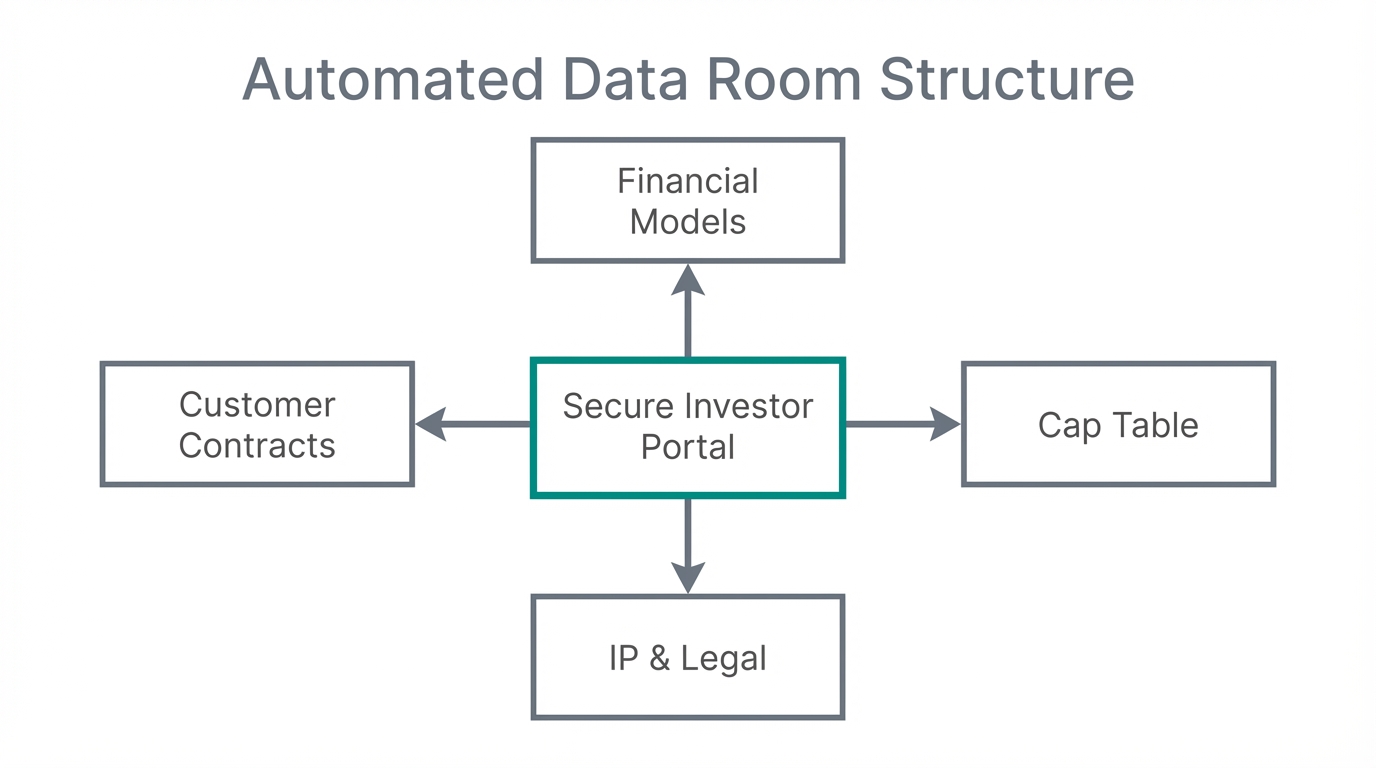
If an investor is impressed by your deck, the next step is the investor data room automation. A data room is a secure repository for your financials, legal documents, and team credentials. Making one manually is tedious, but GenSpark can generate a structured web-app version of this room in minutes. This is particularly useful for seed-stage startups that need to prove they are institutional-grade, as outlined in DocSend's fundraising research.
When building your data room, ensure you include:
- Interactive Product Demos: Use AI to build a single-page HTML demo that walk investors through key features.
- Traction Dashboards: Visualize your growth using data from Meta Ads Manager or TikTok Ads Manager.
- Customer Testimonials: A dedicated page for social proof and case studies.
As you scale your distribution and begin sourcing creators to drive traffic to your startup, platforms like Stormy AI can help you source and manage UGC creators at scale, providing the very traction data you'll need to update your data room monthly.
The Distribution Playbook: Post-Funding Growth
Raising the money is only half the battle; you also need a distribution plan that justifies the investment. GenSpark can map out unconventional growth channels that your competitors haven't discovered yet. For a bootstrap-style founder, this might include LinkedIn carousel templates, Chrome extension store listings, or automated newsletter partnerships via Beehiiv.
For mobile app developers and SaaS founders, integrating UGC (User-Generated Content) into your growth strategy is essential. Using Stormy AI to discover creators allows you to automate the outreach process, ensuring that once your seed round closes, you have an army of influencers ready to promote your product. This level of preparation is what separates a "good" pitch from an irresistible one.
"An investor doesn't just buy your past results; they buy your future distribution plan. Show them the engine, not just the car."The 'Trust Battery' and Platform Ethics
While GenSpark offers incredible productivity gains, founders should remain cautious. Recent user reports suggest that the platform has made cancellation difficult, lacking a clear self-service option in some regions. This impacts what Shopify founder Tobi Lütke calls the "Trust Battery." Before committing sensitive data to any new AI platform, test the free version and monitor how they handle your subscription. Always keep your primary financial models and sensitive legal documents in a secure, known environment like Notion or a dedicated data room solution like DocSend for final delivery.
Conclusion: The Modern Founder's Toolkit
Building a startup fundraising toolkit in 2024 requires a mix of speed and substance. GenSpark provides the speed through its super agents, while your job as a founder is to provide the substance and the final polish. By automating the market research, slide drafting, and data room construction, you can focus on what actually moves the needle: talking to investors and building your product.
Ready to supercharge your growth after the round? Pair your GenSpark research with modern marketing tools. Use Stormy AI to find the influencers who will drive your first 10,000 users, and keep your investor updates automated and data-rich. The 0-to-1 journey is hard, but with the right AI agents in your corner, you're no longer fighting the battle alone.