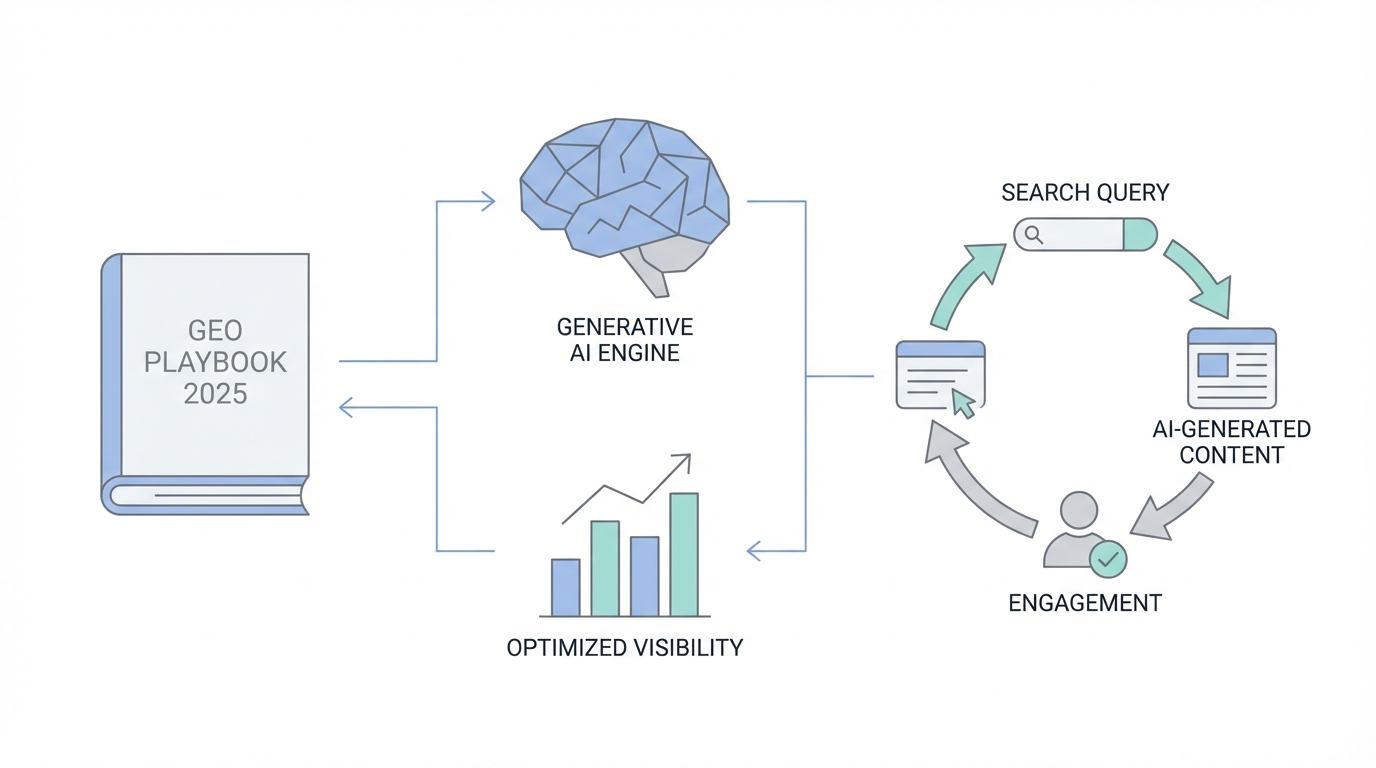
For two decades, the digital marketing world has lived and died by the Google algorithm. We obsessed over keyword density, backlink profiles, and page load speeds to win the favor of a search engine that indexed the web for us. But in 2025, the game has fundamentally shifted. Users are no longer just clicking through blue links; they are asking ChatGPT to build their travel itineraries, asking Perplexity to compare enterprise CRMs, and relying on Google Gemini to summarize complex legal documents. This shift has given birth to a new discipline: Generative Engine Optimization (GEO). If you are not optimizing for how Large Language Models (LLMs) perceive your brand, you are effectively invisible to the most qualified buyers in the modern funnel.
What is Generative Engine Optimization (GEO)?
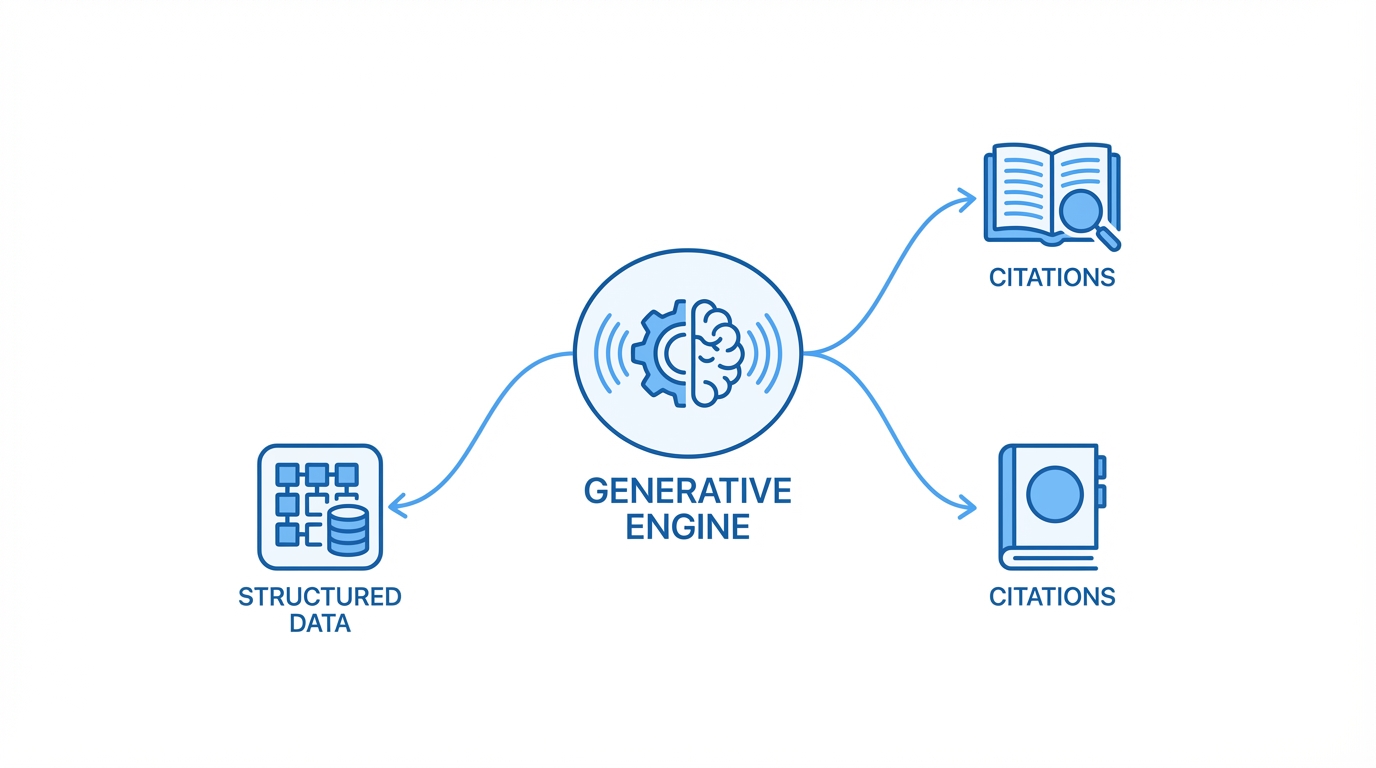
At its core, Generative Engine Optimization (GEO) is the process of influencing the responses generated by AI search engines and LLMs. While traditional SEO focuses on ranking high on a Search Engine Results Page (SERP), GEO focuses on brand surface area and citations within the context windows of AI models. When a user asks an AI a question, the model doesn't just look for a list of links; it synthesizes information from across the web to provide a single, authoritative answer. GEO SEO is about ensuring your brand is the one the AI chooses to summarize, cite, and recommend.
Traditional search is transactional—users look for a specific answer or a specific site. AI search is research-driven. According to industry research on generative engine optimization, while the total volume of searches on Google remains high, the intent of AI searchers is vastly different. These are users who are deep in the research phase, looking for comprehensive comparisons and expert recommendations. They aren't looking for the first result; they are looking for the best result as determined by the aggregate intelligence of the internet. This is why AI search optimization has become the highest-leverage activity for companies with complex products or long sales cycles.
The Mechanics of AI Search: How "Fanning" Works
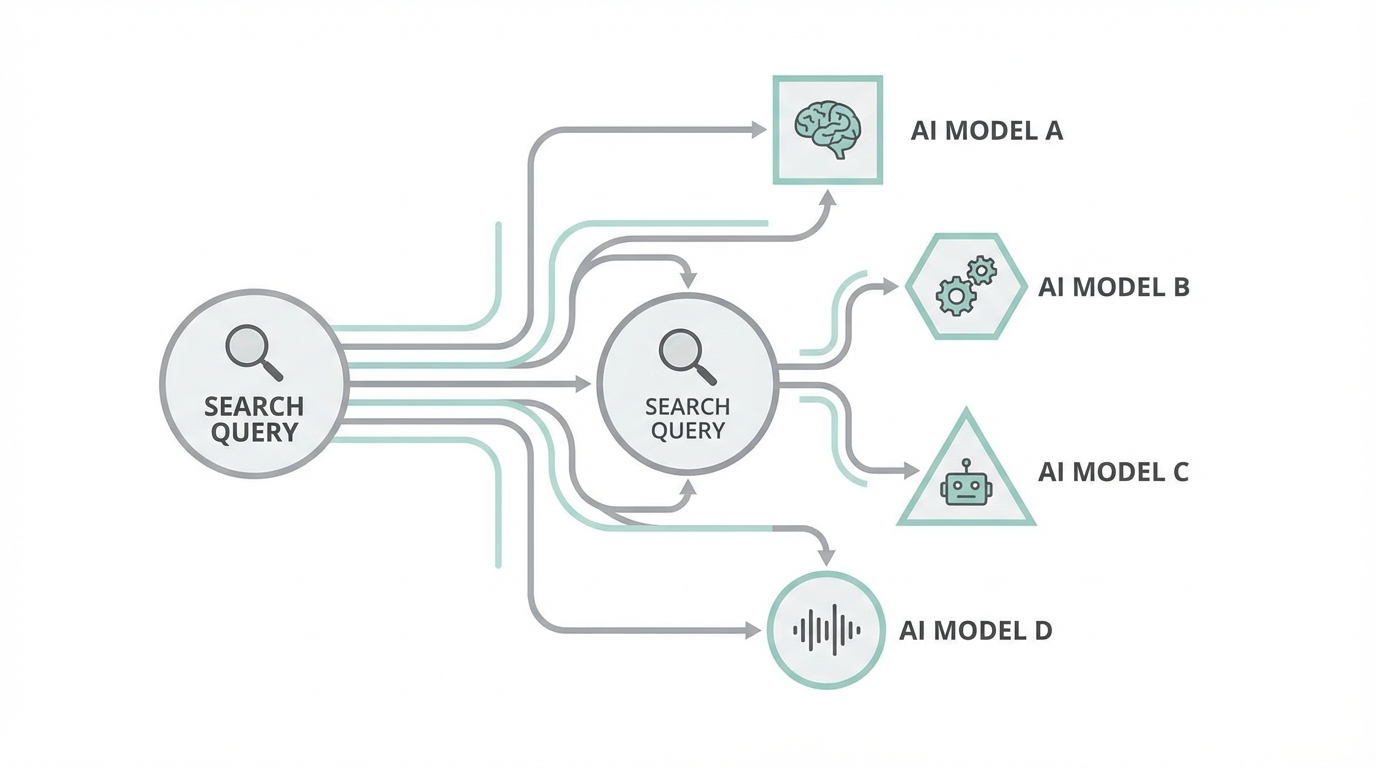
To understand how to win at GEO, you must understand how these models actually process a query. When you type a prompt into an LLM, the system doesn't just search that one phrase. It performs a process often referred to as AI fanning. The engine takes your original query and expands it into dozens, or even hundreds, of derivative, highly descriptive queries. For example, if you search for "best CRM for mobile apps," the AI might generate internal queries like "CRM with best TikTok integration for marketers" or "enterprise CRM pricing for startups with 50+ seats."
You can actually see this happening in real-time if you look at your Google Search Console data. Modern marketers are noticing impressions for ultra-long queries—often 50 characters or more—that no human would ever realistically type. These are "synthetic queries" generated by AI engines. If you drop these queries into a tool like AIornot.com, they often flag as machine-generated. The AI then scrapes the top-ranking results for all these derivative queries, pulls the content into its context window, and synthesizes an answer. To win at GEO, you must be present in the source material that the AI is scraping—specifically the pages ranking in the top three positions of traditional search engines like Bing and Google.
The Conversion Delta: Why GEO Converts at 40%
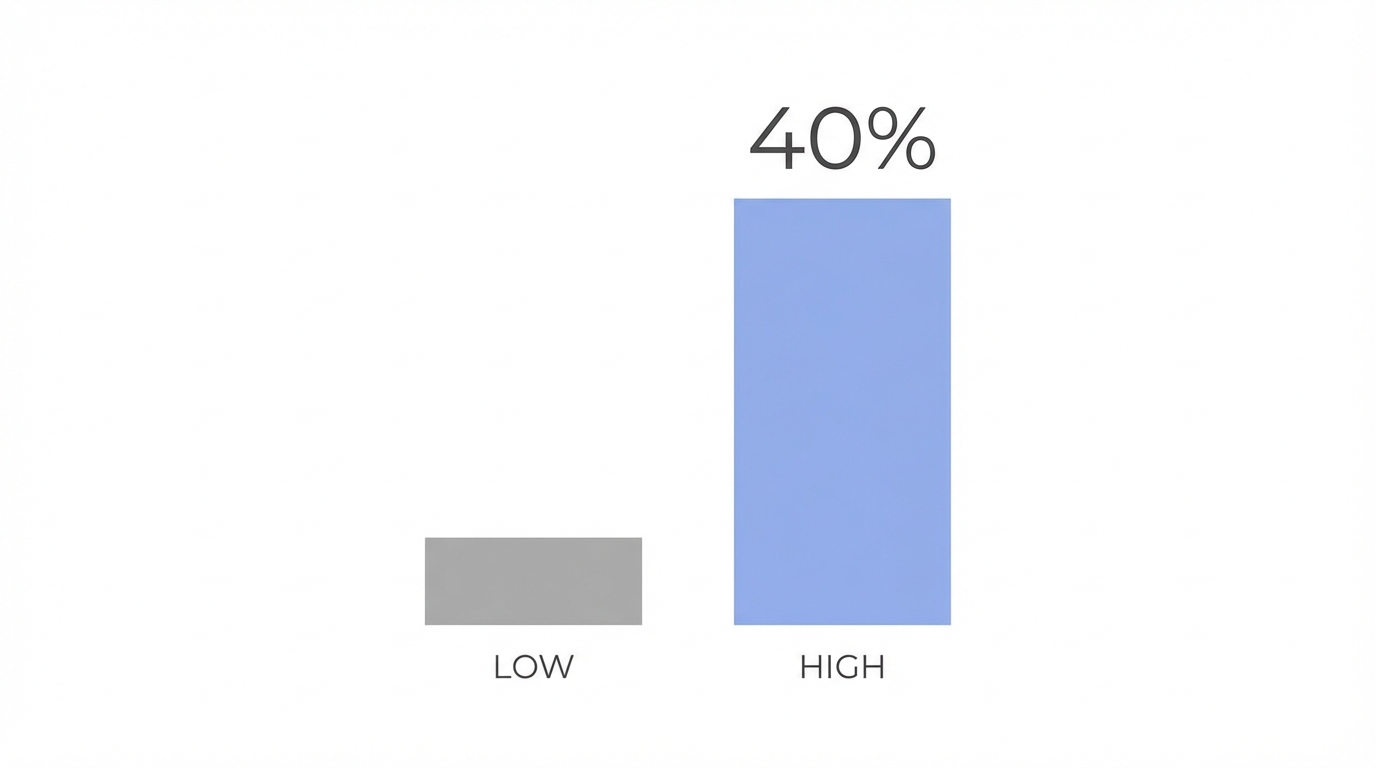
One of the most staggering statistics in the current marketing landscape is the conversion rate of AI-driven traffic. While the average conversion rate for traditional search often hovers around 2%, many businesses are reporting conversion rates of 10% to 40% from users coming through AI referrals. This isn't because the AI is a better salesperson; it’s because the user has already completed the entire buyer journey within the chat interface. By the time they click a link to your site, they have already compared your features, read your reviews, and decided you are the best fit for their specific use case.
This is particularly true for businesses where the purchasing decision time horizon is long. In industries like B2B SaaS, local service businesses (like HVAC or roofing), and high-ticket e-commerce, customers are wary of impulse buys. They use AI as a research tool to bypass the traditional sales call. When an AI recommends your product after a 20-minute research session with a user, that user lands on your site with their credit card practically in hand. They are buyer-ready, having already vetted your brand against the competition through an objective, AI-driven lens.
Who Should Invest in GEO? Identifying the High-Value Profile
Not every business needs to pivot entirely to GEO today. If you sell low-cost impulse items, traditional social media ads on platforms like Meta Ads or TikTok Ads remain effective. However, if your business fits one of the following profiles, ChatGPT search rankings should be your top priority for 2025:
- SaaS & Enterprise Software: When a CTO is committing their entire company to a new CRM or project management tool, they perform exhaustive research. They want to know every edge case, and they are using AI to find them.
- High-Ticket Local Services: Services like roofing, home remodeling, or medical procedures have high stakes. Users use AI to understand the nuances of the service and to find the most reputable local provider.
- Cult-Following E-commerce: For brands like Sunspel or other high-quality niche manufacturers, where the aesthetic and quality levels are paramount, AI acts as a digital personal shopper that helps users discover brands that match their specific taste profile.
The 2025 GEO Playbook: How to Get Ranked

Winning at GEO requires a different set of tactics than traditional SEO. You aren't just building a site; you are building an authority footprint. Here is the step-by-step playbook to dominate AI search results.
Step 1: Map Your AI Source URLs
The first step is identifying which websites the LLMs are currently referencing for your target keywords. You can use tools like PromptWatch or AI SEO trackers to see which URLs are being pulled into the context window for queries related to your product. These trackers send synthetic data to various chats and monitor which sources are cited. You aren't looking for "percent of brand mentions" alone; you are looking for the specific listicles, review sites, and authoritative blogs that the AI treats as the source of truth.
Step 2: Maximize Your Surface Area

Once you have a list of the top 50-100 URLs that AI engines are referencing, your job is to get your brand mentioned on as many of them as possible. This is essentially modern digital PR. If an AI is scraping a "Top 10 CRM" listicle to answer a user's question, and you aren't on that list, you don't exist in that AI's answer. When scaling this kind of outreach, tools like Stormy AI can help you discover and vet the specific creators, niche publishers, and influencers whose content is consistently being indexed by these generative engines.
Step 3: Build Authority Through Citations
AI models prioritize citations and brand mentions. The more often your brand is mentioned alongside specific keywords across high-authority domains, the more the LLM perceives your brand as the "default" answer for those topics. This has a massive knock-on effect: as you secure placements on these top-ranking pages, you are also building traditional backlinks. This increases your domain authority, helping you rank higher on Google Search, which in turn makes it even more likely that AI engines will scrape your site directly.
The Risks of GEO: Why Diversification is Key
While the opportunities in AI search are massive, they come with significant risks. The primary danger is model volatility. When a major update like OpenAI's next model release drops, the underlying search and synthesis algorithms can change overnight. We have seen instances where founders who relied solely on AI referral traffic saw their signups "nuked" after a model update altered how citations were handled. GEO should be a layer in your marketing stack, not the entire stack itself.
You must also be wary of "black hat" GEO tactics. There are services currently offering to write thousands of AI-generated blog posts to flood the web with your brand mentions. This is a short-term play that will likely lead to manual penalties from search engines and filters from LLMs. Instead, focus on quality placements on legitimate, human-vetted sites that already have established trust with both Google and the AI labs at Anthropic or Google DeepMind. Authenticity still matters; the goal is to be the best answer, not just the loudest one.
Conclusion: Moving Toward an AI-First Search Strategy
Generative Engine Optimization is no longer a futuristic concept; it is the current reality of how high-value decisions are made online. By focusing on brand surface area, understanding the AI fanning process, and securing placements on the core source URLs that LLMs trust, you can position your business to capture the most qualified traffic in the market. While traditional SEO isn't dead, it has evolved into a foundational layer for the much larger game of AI search optimization. Start by identifying where the AI is already looking, and make sure your brand is the most prominent answer it finds. The brands that adapt to this shift in 2025 will be the ones that own the next decade of digital growth.