In early 2026, the digital landscape has undergone a tectonic shift. The era of the blue link is fading, replaced by a zero-click search environment where users rarely leave the interface of their AI researcher. For brands, the mission has evolved from simply ranking #1 to becoming the authoritative primary source cited within Google AI Overviews, Perplexity threads, and Claude sessions. This is the world of Generative Engine Optimization (GEO), and the tool of choice for the elite is Claude Code.
The Shift to Generative Engine Optimization (GEO) in 2026

Traditional SEO was about keywords and backlinks; GEO marketing strategy 2026 is about semantic authority and contextual relevance. As of this year, 60% of searches are now zero-click, meaning the AI provides the answer directly without the user ever clicking through to a website. To survive, marketers must ensure their content is not just indexed, but ingested and prioritized by Large Language Models (LLMs) like OpenAI's GPT-5.
"The win is no longer just ranking #1, but being the primary cited source inside AI Overviews and Research Responses."
This transition has given rise to the Agentic Marketing Agency. These firms don't just write copy; they build autonomous distribution engines. According to UncoverAlpha, Anthropic's Claude Code has reached a $2.5 billion annualized run rate by early 2026, largely driven by marketers moving away from simple chatbots toward agentic command-line tools that can refactor entire site architectures for GEO.
Claude Code: The OS for Marketing Engineers
While tools like Cursor are fantastic for manual coding, Claude Code has become the preferred choice for agentic SEO automation due to its ability to handle multi-file reasoning and parallel task execution. Siana Marketing notes that the global AI marketing market has ballooned to $26.99 billion, yet a massive competitive gap remains: while 88% of marketers use AI, only 35% have deployed agentic workflows.
Implementing a Claude Code SEO skill setup allows an agency to automate technical audits that used to take days. For example, AdVenture Media reports that a 12-person team now handles reporting for over 80 clients in just 40 minutes using custom Claude Code pipelines. This efficiency is critical when you are competing for AI search visibility data against thousands of other brands across TikTok and YouTube.
| Feature | Claude Code | Cursor | GitHub Copilot |
|---|---|---|---|
| Philosophy | Autonomous Agent | AI-Native IDE | Inline Assistant |
| Marketing Use | Custom SEO Tools/Pipelines | Website Design/Editing | Ad Script Snippets |
| Context Window | Up to 1M Tokens | Full Repo Indexing | 32k - 128k Tokens |
| Parallel Tasks | High (Multi-Agent) | Low (Single File) | None |
Step-by-Step: Building an 'AI Visibility Tracker'

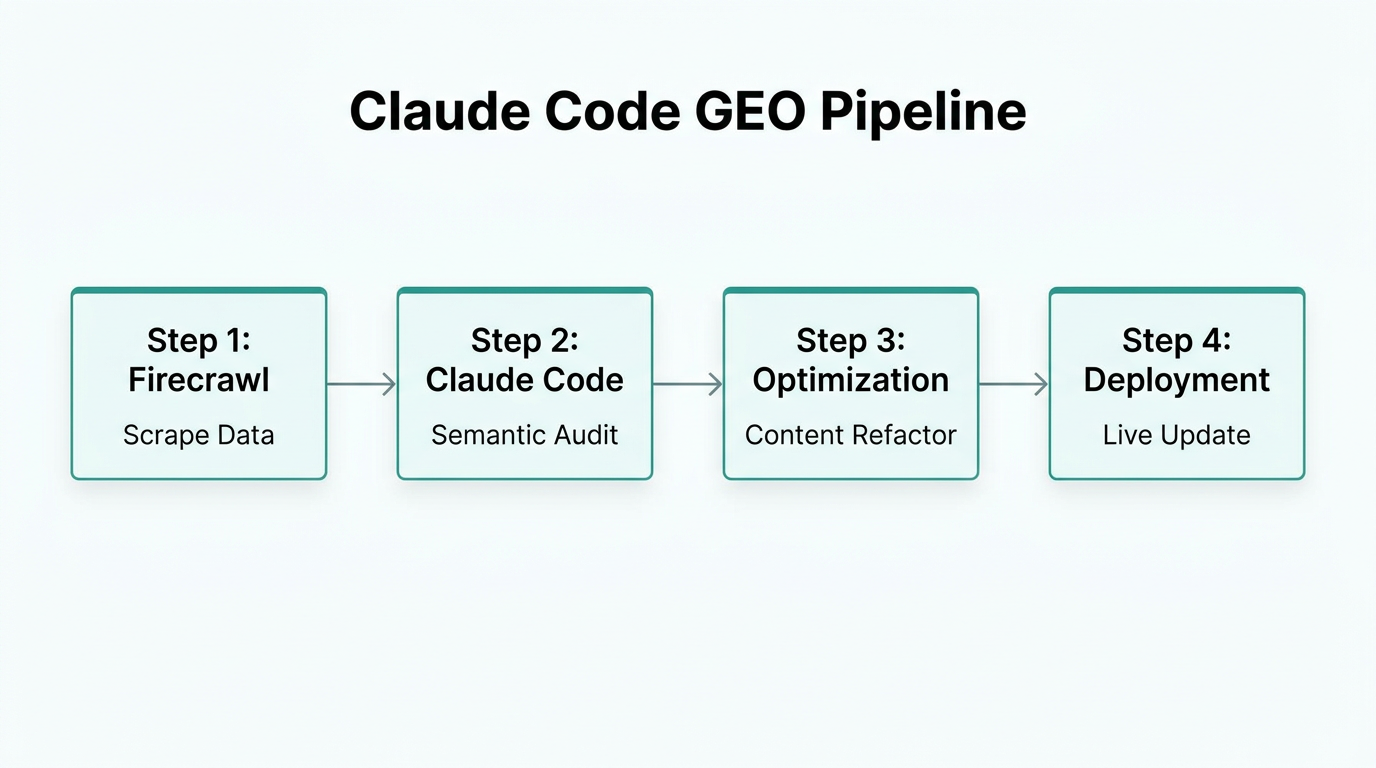
To win at GEO, you must first understand how AI models perceive you. You can build a custom AI Visibility Tracker by combining Claude Code with Firecrawl, which acts as the data layer for scraping competitor sites and AI responses in real-time.
Step 1: Initialize Your Environment
Start by installing the Claude Code CLI. Open your terminal and run: npm install -g @anthropic-ai/claude-code. Once installed via the npm registry, navigate to your marketing repository and initialize your CLAUDE.md memory file. This file acts as the "brain" for your agent, defining your brand voice and technical standards to prevent hallucinations.
Step 2: Connect Firecrawl for Real-Time Scraping
Instruct Claude Code to build a script that uses Firecrawl to crawl Google AI Overviews and Perplexity for your target keywords. This allows you to gather AI search visibility data on which sites are being cited as primary sources for specific semantic clusters.
Step 3: Analyze Semantic Gaps
Once you have the data, use Claude Code to identify why competitors are winning the citation. Is it their data density? Their use of structured schema? Or their primary source citation formatting? Claude can refactor your existing content to match these successful patterns automatically, much like how developers use Notion to organize complex technical documentation.
"Claude Code is for any marketer who needs to build an engine. It's not just for coding; it's for engineering distribution." — Kamil Rextin, 42 Agency
Implementing the Model Context Protocol (MCP)
The biggest breakthrough in 2026 is the Model Context Protocol (MCP). This protocol allows your Claude Code agents to connect directly to live marketing data without manual exports. By bridging Apple Search Ads or Google Search Console data via MCP, you can move from insight to agentic action instantly.
For instance, Warmly AI highlights the importance of the Universal Commerce Protocol (UCP), which enables agents to browse and compare data across platforms. In a GEO context, your agent can see that you are losing visibility for a high-value keyword in Perplexity and immediately re-optimize the target page's internal linking structure to emphasize that semantic cluster.
/plan mode in Claude Code to have the AI map out a 5-step GEO campaign before it executes any changes. This ensures human-in-the-loop safety for critical brand assets.Case Study: 15% SEO Improvement via Agentic Linking

Theory is fine, but results matter. The marketing team at Firecrawl built an "Internal Linking Agent" using Claude Code. This agent scans their entire repository, identifies pages with high AI search visibility potential, and suggests semantic internal links based on current LLM training patterns.
The results were staggering: a 15% improvement in SEO rankings within just three months. They didn't just write more content; they made their existing content more legible to the models that power modern search. By automating this with Claude Code, they replaced manual workflows that previously required a $300/mo SaaS tool with a custom, internal solution that costs pennies in API tokens.
Platforms like Stormy AI are seeing similar trends, where agencies use AI agents to vet creators and then use Claude Code to build custom dashboards that track how those creators' content impacts the brand's overall GEO footprint across social search.
The Future of Distribution is Agentic
As we navigate 2026, the barrier to entry is no longer the ability to write a blog post—it's the ability to build an engine that distributes it. Generative Engine Optimization strategy is the only way to stay visible in an age of zero-click search. By mastering Claude Code, you aren't just an SEO anymore; you are a Marketing Engineer.
To stay ahead, begin by identifying your most important semantic clusters and building your first AI Visibility Tracker. The tools are here, the data is accessible via MCP, and the competitive advantage goes to those who move from "chatting" to "coding" their distribution strategy using advanced automation tools.