In 2026, the SEO landscape has undergone its most radical transformation since the invention of the backlink. We are no longer just optimizing for blue links; we are optimizing for Generative Engines like ChatGPT, Perplexity, and Claude. The "Post-Click" economy is here, characterized by a staggering 61% collapse in organic click-through rates for traditional search results. According to recent data from ZUMO SEO, nearly 70% of Google searches now end without a single click because AI Overviews (AIO) satisfy user intent directly on the page. For GTM leaders, the challenge is clear: if your brand isn't being cited inside the AI's response, you don't exist.
The Science of GEO: The Princeton/Georgia Tech Framework
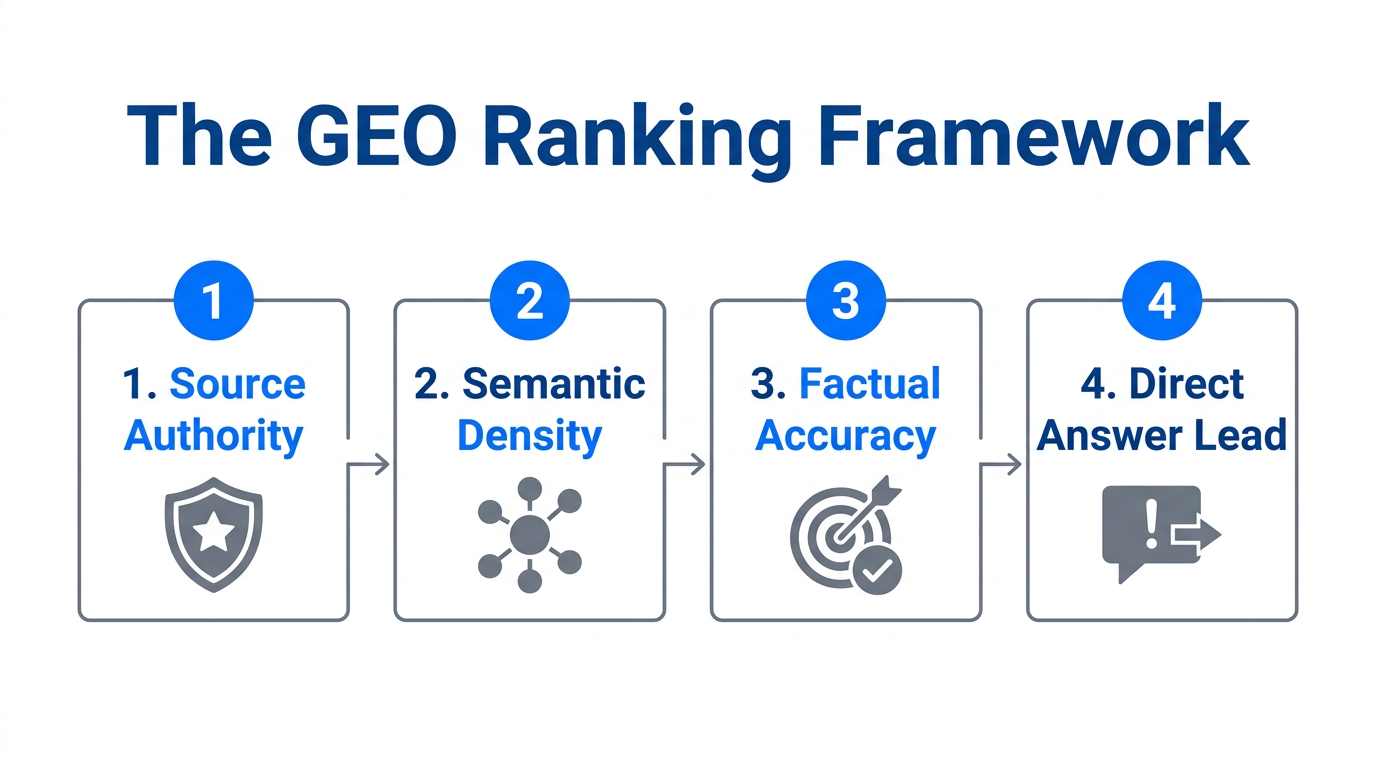
Generative Engine Optimization (GEO) isn't guesswork; it’s a technical discipline rooted in scientific research. A landmark study by researchers at Princeton, Georgia Tech, and the Allen Institute for AI identified the exact variables that trigger AI citations. This framework has become the gold standard for GEO marketing tactics in 2026. By implementing specific experimental techniques, brands can boost their visibility in AI answers by up to 40%.
The core of this framework rests on three pillars of content enrichment:
- Citations: Simply adding credible links to .edu or .gov sources increases your brand's probability of being cited by an LLM by 10%.
- Statistics Addition: AI agents prioritize quantitative data over qualitative fluff. Replacing "fast growth" with "14.2% MoM growth" yields a significant visibility boost in generative responses.
- Expert Quotations: Including quotes from high-authority entities makes your content more "citation-bait" for LLMs.
"Traditional Domain Authority correlation with ranking has dropped from r=0.43 to r=0.18. Meanwhile, Semantic Completeness—how well you cover every facet of a topic—has shot up to r=0.87."
Formatting for Extraction: The 'Primary Answer' Lead
To rank in ChatGPT and Perplexity, your content must be machine-parseable. AI crawlers, such as GPTBot and PerplexityBot, are designed to find the most efficient answer to a user's query. This has led to the rise of the "Answer-First" formatting strategy. To ensure AI agents extract your brand as the top solution, you must place a 2-3 sentence direct summary of the target query at the very top of your page—above the fold.
Furthermore, clean Markdown headers have become the 2026 standard for AI-friendly content distribution. LLMs favor Markdown because it mirrors their own output format, making it easier for the bot to scrape, summarize, and cite. If your site relies heavily on complex JavaScript or non-standard layouts, you risk being ignored. Many brands are moving back to Server-Side Rendering (SSR) to ensure that the full text is immediately visible to AI crawlers, a trend highlighted in recent technical SEO deep dives.
Implementing Schema 2.0: Dataset, FAQ, and Speakable
While basic Article schema was sufficient in 2024, the 2026 landscape requires Schema 2.0. This involves transforming unstructured HTML into "machine-readable chunks" that LLMs can prioritize. Specifically, GTM teams should focus on Schema.org types including:
- Dataset Schema: If you provide original research or statistics, use Dataset markup to help AI agents index your data as a primary source.
- FAQ Schema: This remains the most effective way to feed direct "question-answer" pairs into an AI's knowledge graph.
- Speakable Schema: As voice-activated AI agents (like OpenAI’s "Operator") become more prevalent, Speakable schema identifies which parts of your content are best suited for audio playback.
| Feature | Traditional SEO (2022-2024) | AI SEO / GEO (2026) |
|---|---|---|
| Primary Goal | Rank #1 for Keywords | Be the "Cited Source" in AI answers |
| Currency | Backlinks (DR/DA) | Citations & Entity Trust |
| Strategy | Content Quality + Links | Reputation Arbitrage + Machine Readability |
| Success Metric | Monthly Organic Traffic | AI Share of Voice & Conversion Quality |
From Keywords to 'Conversational Nodes'
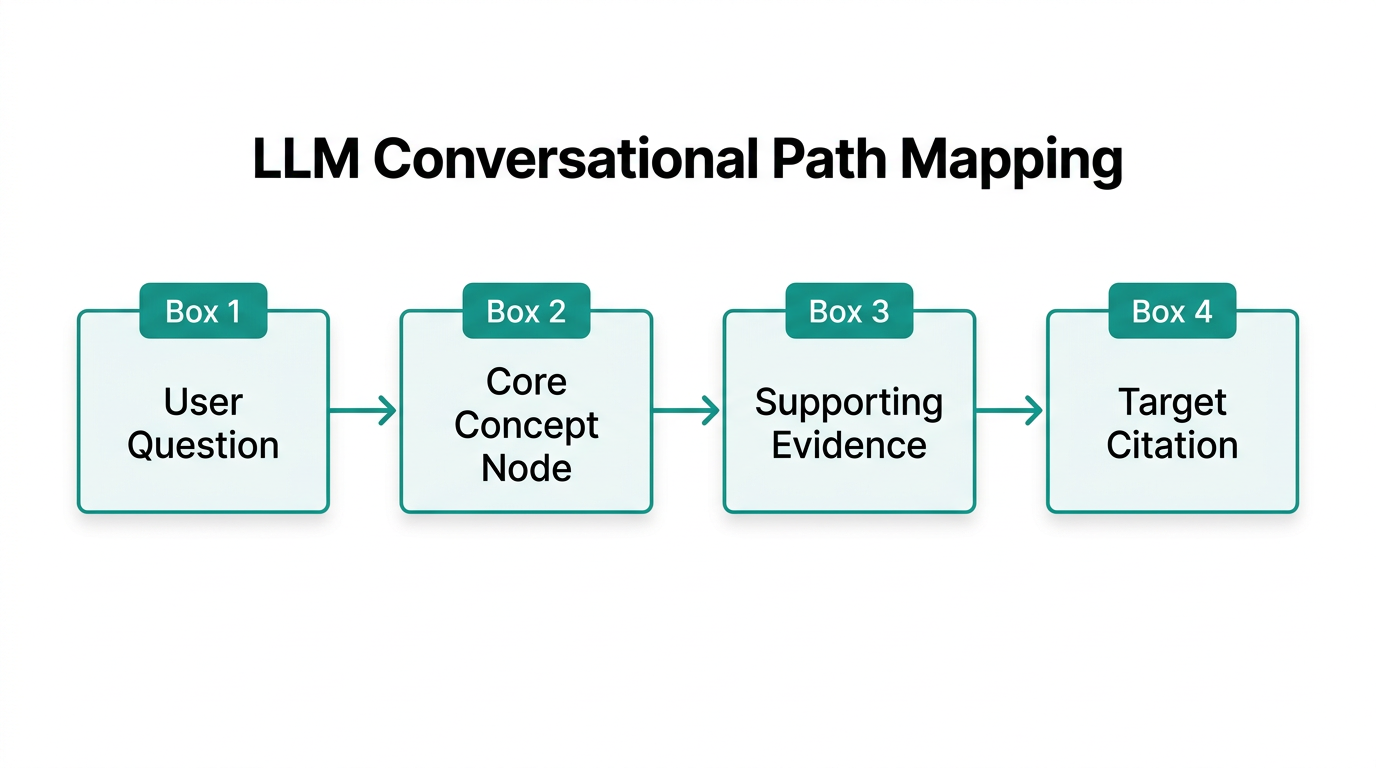
Keyword research is dead; Conversational Node Mapping is the future. Users are no longer typing fragmented phrases like "best CRM for startups." Instead, they are asking complex, multi-layered questions: "What is the consensus on HubSpot for a 10-person fintech startup that needs high security but has a budget under $500?"
To capture this high-intent traffic, your Perplexity SEO strategy must map out these conversational paths. This involves identifying the "entities" related to your brand—competitors, features, pricing tiers, and integration partners—and ensuring your brand is mentioned alongside them in trusted third-party environments. In 2026, platforms like Stormy AI excel at identifying these niche influence pockets across social platforms where AI bots pull their sentiment data. This is what experts call Reputation Arbitrage.
"ChatGPT doesn't read your website; it reads who talks about you. This isn't SEO anymore; it's reputation arbitrage." — Rokas, AI SEO Specialist
Case Study: The $100k Deal with Zero Backlinks
The power of GEO is best illustrated by a 2026 B2B SaaS startup that closed a $100,000 enterprise contract without a single traditional backlink. Instead of fighting for Domain Authority (DA), they dominated "The Trusted Sources." They seeded 50+ high-value Reddit threads, optimized their profiles on G2, and secured features in top-10 listicles on high-authority domains. When the prospect asked ChatGPT for the "best automation tool" for their niche, the AI cited the Reddit discussions and G2 reviews, recommending the brand as the #1 choice. This "Proof of Concept" has been widely discussed by The Boring Marketer as the ultimate win in the AI era.
However, scaling this requires a hybrid approach. While tools like Byword.ai allow for programmatic content at scale, Google's 2026 algorithms are aggressive against "unhelpful" AI content. You must blend machine efficiency with human-verified authority. For example, when sourcing expert opinions to boost your GEO citations, platforms like Stormy AI can help you discover and reach out to niche creators who can provide the original quotes and social proof that AI agents crave.
The 2026 GEO Toolset
The global AI SEO software market has reached $2.43 billion in 2026, according to SpotRise AI. To stay competitive, GTM leaders are building stacks that prioritize visibility and citation tracking rather than just rank tracking.
| Tool | Primary Function | Starting Price |
|---|---|---|
| Profound | Enterprise AI visibility & citation tracking | Enterprise |
| Byword.ai | Programmatic AI content at scale | $99/mo |
| Surfer SEO | Content optimization & AI content score | $89/mo |
| Goodie AI | Built-for-GEO monitoring and intelligence | $495/mo |
Agentic SEO: The Next Frontier
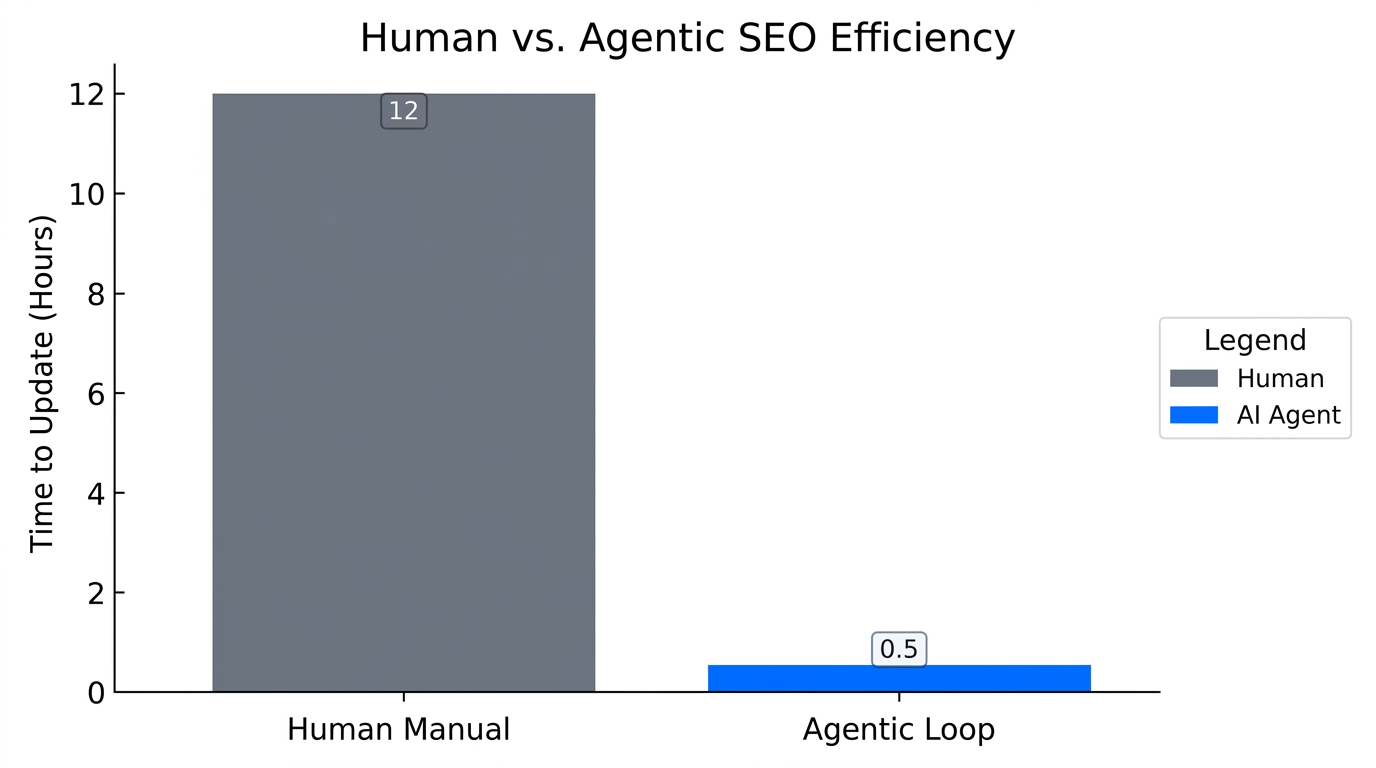
As we look toward the end of 2026, the focus is shifting from Answer Engines to Action Engines. AI agents like OpenAI’s "Operator" are no longer just finding information—they are executing transactions. If a user says, "Find the best project management tool for a creative agency and buy a Pro subscription," the agent will look for the most cited, most trusted, and most machine-readable option.
Jim Yu, CEO of BrightEdge, notes that we are moving into the era of Agentic Commerce. Brands that fail to optimize for machine readability and citation-based trust will be invisible to these autonomous buyers. This makes implementing an Answer Engine Optimization guide more than just an SEO task; it's a core business survival strategy.
Conclusion: Your 2026 GEO Playbook
The transition to Generative Engine Optimization is not a trend; it is a fundamental shift in how information is indexed and consumed. To win in this new era, your strategy must include:
- Citing authoritative sources to increase your own citation probability.
- Using the 'Primary Answer' lead at the top of every page for easy AI extraction.
- Focusing on Reputation Arbitrage by building trust on platforms like Reddit and LinkedIn.
- Implementing Schema 2.0 to provide structured data to AI bots.
While the collapse of traditional CTR is daunting, the conversion quality of AI search traffic is often 3x higher than traditional Google search. By positioning your brand as the cited authority, you aren't just getting clicks—ality you are getting recommended by the most powerful assistants in history.