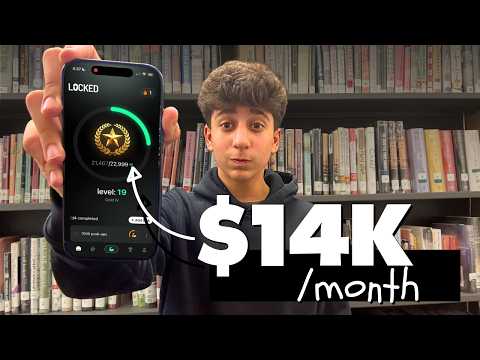
In the hyper-competitive mobile landscape of 2026, launching a functional app is no longer enough to guarantee success. As user acquisition costs on platforms like Meta Ads Manager continue to climb, founders are turning toward more sophisticated app monetization strategies 2026 to drive sustainable growth. One standout success story is Evan, the founder of Locked, who scaled his gamified fitness app to $14,000 in monthly recurring revenue (MRR) in just four months without a massive initial audience or heavy ad spend. His secret? A lethal combination of deep gamification and relentless paywall A/B testing.
By shifting the focus from simple utility to community-driven competition and psychological pricing, Evan transformed a standard habit tracker into a high-conversion revenue engine. According to recent market research reports, apps that implement social-competitive elements see a 30% higher LTV compared to standalone utilities. This blueprint examines the exact framework used to achieve these results, focusing on how you can implement similar strategies to maximize your app's LTV and user retention.
The Gamification Framework: Driving DAU through XP and Characters
 2:05
2:05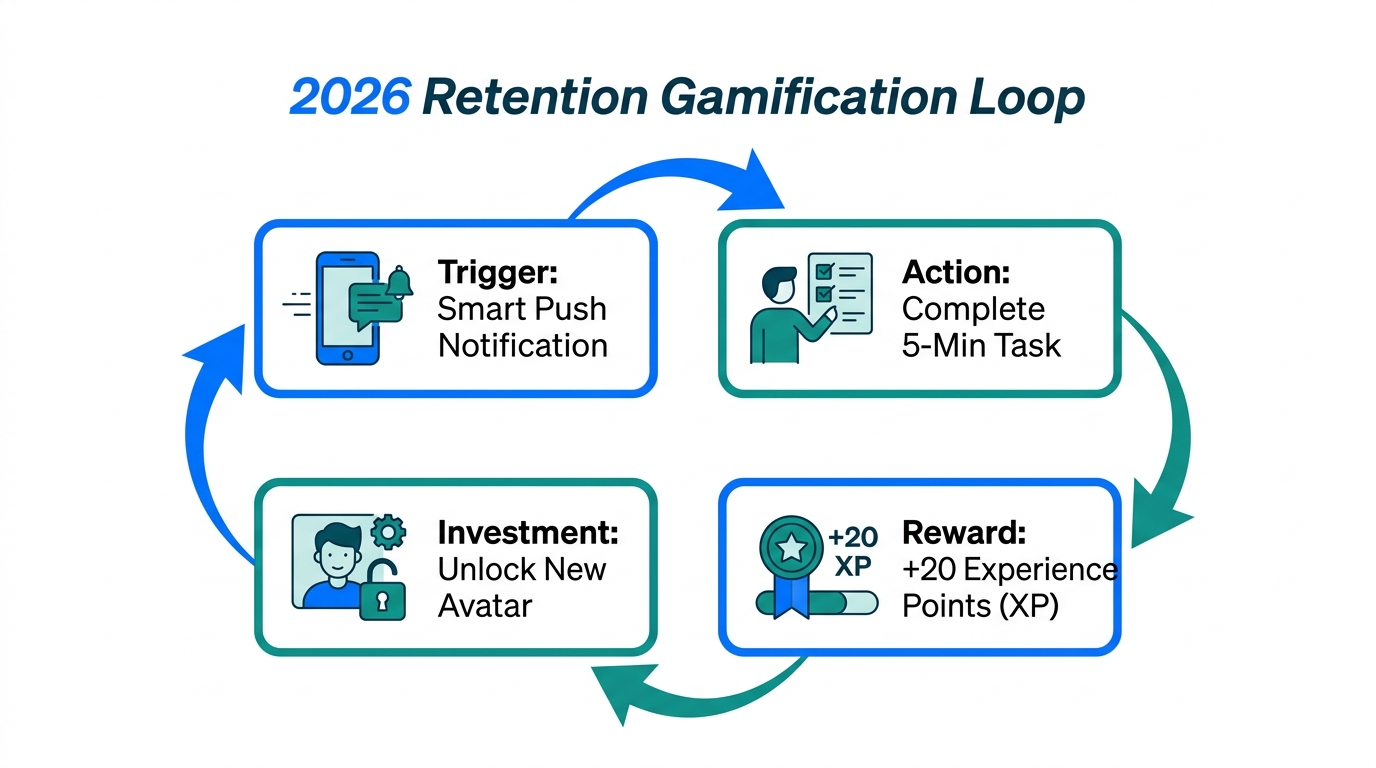
The core of Locked’s success lies in its refusal to be another "boring habit tracker." Instead, Evan treated his app like a RPG (Role-Playing Game). In 2026, gamification for user retention is about more than just a progress bar; it is about identity and status. The onboarding process in Locked immediately forces a choice: users must select a character to represent them. This creates immediate psychological buy-in before the user even sees the main dashboard.
To keep Daily Active Users (DAU) high, the app utilizes three primary pillars of gamification, inspired by the Octalysis Framework:
- Experience Points (XP): Every completed task rewards the user with XP, providing an immediate hit of dopamine and a tangible sense of progress.
- Global Leaderboards: By displaying all-time, 7-day, and daily rankings, the app taps into the user's competitive nature. Seeing where you stand against the community is a powerful anti-churn mechanism.
- Badges and Levels: These serve as digital milestones, rewarding long-term consistency and giving users something to share on social media.
"We didn't want another boring habit tracker, so we gamified the whole experience with leaderboards, XP, badges, and even characters. It changes the app from a chore into a game."
Paywall Psychology: The $40/Year vs. $7/Week Battle
2:35Pricing is often an afterthought for many developers, but it is perhaps the most critical lever for mobile app revenue growth. Evan’s strategy for Locked centers on a binary choice that guides users toward the most profitable path. Using subscription infrastructure tools like RevenueCat, developers can easily manage the complex backend of these offers. The app presents two primary options: $40 per year (including a 3-day free trial) or $7 per week.
This pricing structure is a masterclass in psychological anchoring. When a user sees a weekly price of $7, the $40 annual price suddenly looks like an incredible bargain. The annual plan is roughly the cost of just six weeks on the weekly plan, making the yearly commitment the obvious choice for anyone planning to use the app for more than a month and a half.
| Pricing Tier | Price Point | Psychological Trigger | Primary Goal |
|---|---|---|---|
| Weekly | $7.00/week | High cost per unit | Anchoring / Friction |
| Annual | $40.00/year | Value perception | LTV Maximization |
| Trial | 3 Days Free | Risk reversal | Conversion velocity |
Furthermore, the inclusion of a 3-day free trial on the annual plan lowers the barrier to entry, allowing users to experience the gamified features before the first payment is processed. This "try-before-you-buy" model, when paired with high-engagement features, ensures that users are already "hooked" on their XP progress before the trial ends.
Transaction Abandonment: The 'Escape' Paywall Strategy
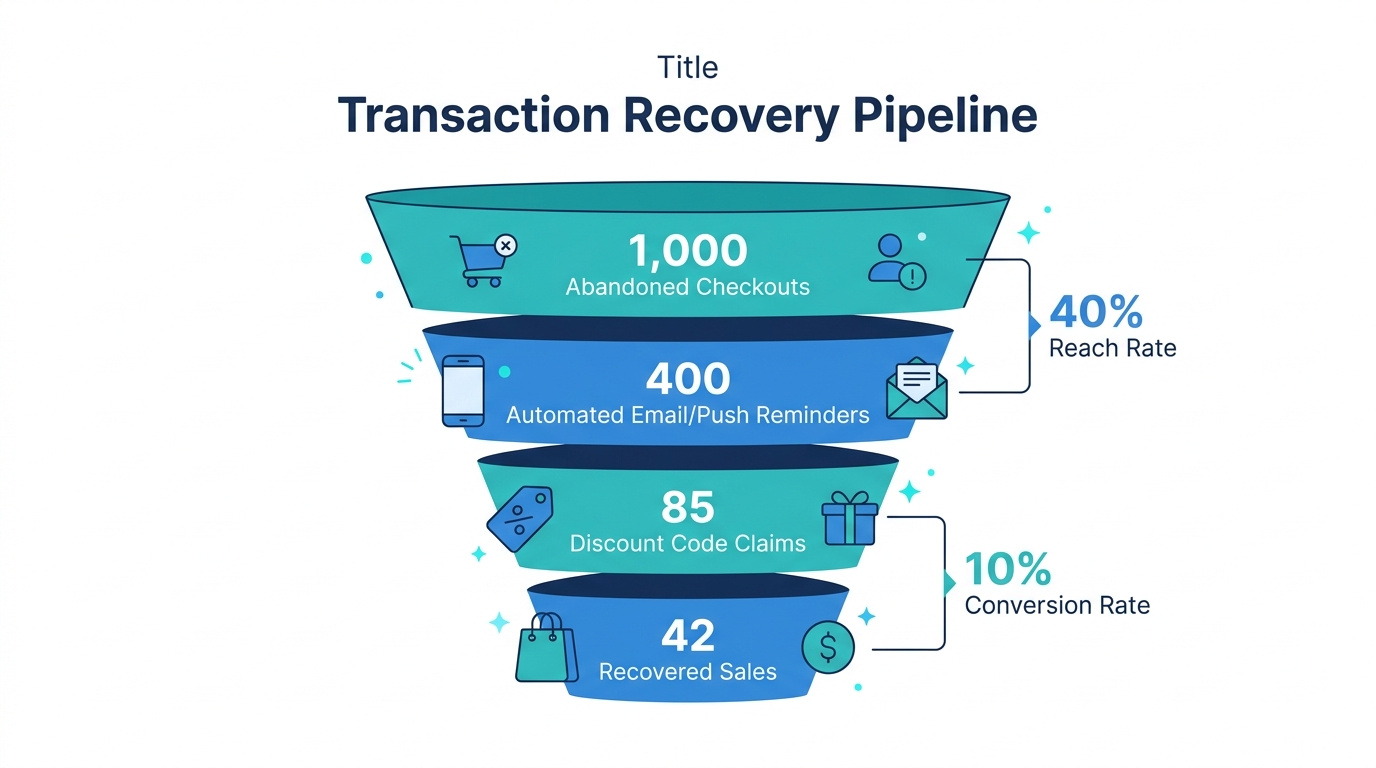
One of the most underutilized app monetization strategies 2026 is the recovery of lost sales at the point of exit. When a user clicks the 'X' to close a paywall without purchasing, they are often gone forever. Locked prevents this by using a discounted "escape" paywall. If a user attempts to leave the initial offer, they are presented with a final, one-time offer: $20 for the full year, processed securely via Stripe or the App Store.
This 50% discount captures users who were interested in the product but found the $40 price point just slightly out of reach. While it lowers the immediate ARPU (Average Revenue Per User), it dramatically increases the conversion rate and turns a potential bounce into a paying subscriber who can be upsold later. Capturing 50% of the revenue is always better than capturing 0%.
"If they X out of this paywall or escape, it takes them to a transaction abandon paywall—basically a discounted offer for only $20 a year to capture that lost revenue."
Leveraging Superwall for Rapid Paywall A/B Testing
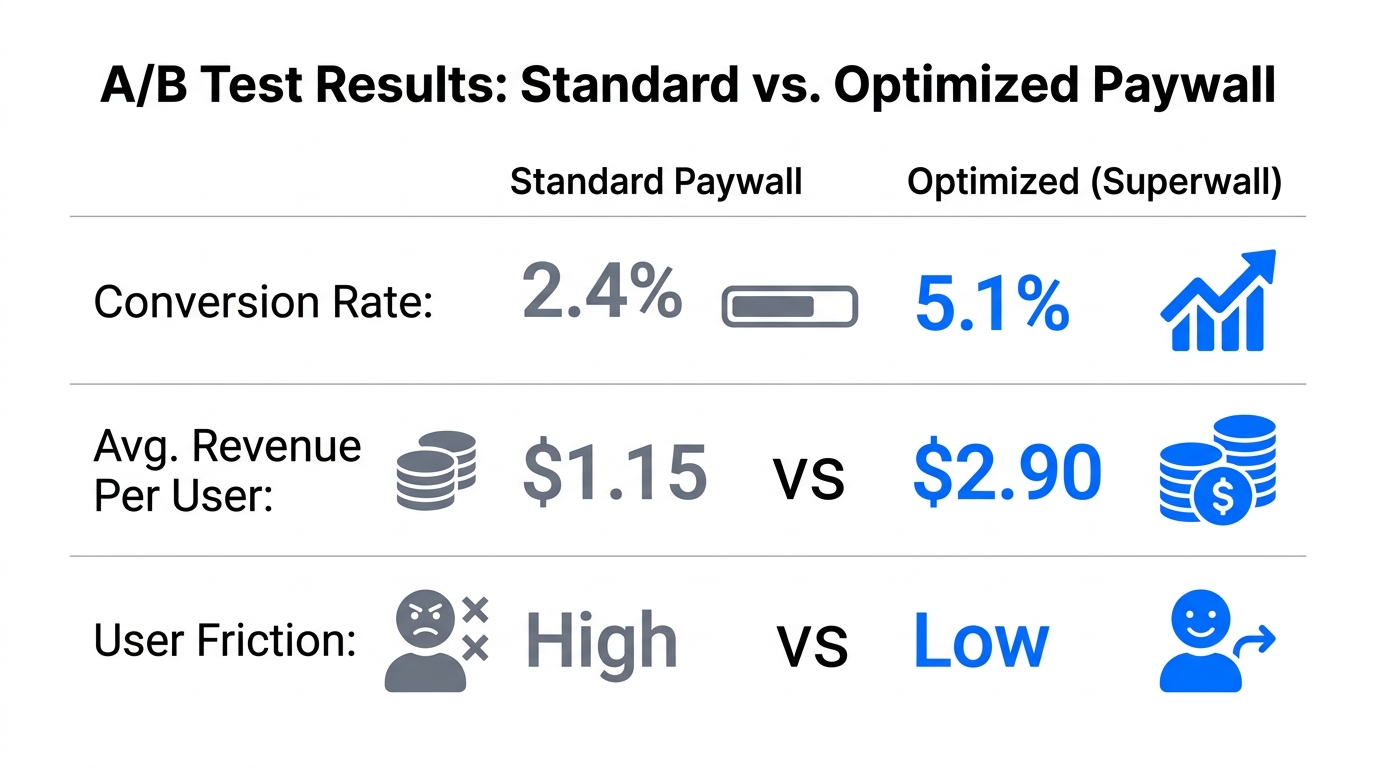
In previous years, changing a paywall required a full app update and waiting for App Store approval. In 2026, top-tier developers use Superwall to perform paywall A/B testing on the fly. This tool allows you to change pricing, copy, colors, and layouts remotely, without shipping a single line of new code to the App Store.
Evan integrates Superwall with Supabase to track user data and performance metrics. This allows for rapid iteration. For instance, if the $7/week plan isn't converting, a developer can test a $4.99/week plan or a monthly option instantly. The ability to iterate faster than the competition is often the deciding factor in reaching that $10K+/month milestone.
The 2026 Distribution Playbook: High-Trust Influencer Partnerships
6:10While the internal mechanics of the app drive revenue, distribution is what feeds the engine. Evan’s growth was fueled by organic short-form content on TikTok and Instagram. By partnering with influencers like Jeremiah Jones, who already have established trust with their audiences, the app gained 1,800 downloads and approximately $3,000 in revenue from a single viral video.
The key to these partnerships is alignment and authenticity. The influencer's content (focusing on productivity and "locking in") perfectly matched the app's utility. For founders looking to replicate this, the process involves reaching out to creators in your niche and closing them on profitable deals that keep your Customer Acquisition Cost (CAC) below your revenue per user.
When searching for these creators, platforms like Stormy AI are essential. Stormy AI allows you to search across TikTok, YouTube, and Instagram using natural language prompts to find influencers who match your specific niche and engagement requirements, making the outreach process significantly more efficient.
Structuring Profitable Influencer Deals
8:13To ensure mobile app revenue growth, you must structure your deals to guarantee a positive ROI. Evan recommends four primary deal types for 2026:
- Flat Rate: A set fee for a set number of posts (e.g., $500 for one reel). Best for creators with proven, consistent view counts.
- CPM Deal: Paying a specific rate per 1,000 views (e.g., $1.50 CPM). Always include a payment cap to protect your budget if a video goes mega-viral.
- Minimum View Clause (MVC): This is Evan’s preferred method. You pay a fee (e.g., $500) but only if the creator hits a specific view threshold (e.g., 500,000 views). If they miss it, they post more content until the goal is met.
- Bonus Deal: A base pay plus a performance bonus for hitting specific view or install milestones.
| Deal Type | Risk Level | When to Use |
|---|---|---|
| Flat Rate | High | Proven creators with loyal audiences |
| CPM | Low | Testing new creators or niches |
| MVC | Moderate | Standard scaling (Evan's choice) |
| Bonus | Low | Incentivizing high-quality production |
"Distribution is everything. If you can close creators at a CPM lower than your RPM, you have an infinite money printer."
The 2026 Subscription App Business Model: Community First
Looking forward, the subscription app business model is shifting toward community and competitive features. Users are no longer willing to pay monthly fees for static tools. They want dynamic environments where their progress is recognized. This is why features like the "Motivational Screen" in Locked—where influencers actually speak to the user—are so effective. It bridges the gap between the creator's platform and the app's utility.
Furthermore, Apple Search Ads and ASO (App Store Optimization) remain critical, but they should serve as a secondary layer to the organic heat generated by influencer content. As Pat Walls noted in his analysis of Locked, the combination of a simple, gamified product and a viral distribution strategy is the most reliable path to success in the current market.
Conclusion: Your Path to $14K/Month
Scaling a mobile app to $14,000 a month in 2026 requires a shift in mindset from developer to growth engineer. By prioritizing gamification for user retention, implementing high-velocity paywall A/B testing via Superwall, and recovering lost sales through abandonment paywalls, you create a product that not only attracts users but keeps them paying.
Combine this technical foundation with a robust influencer outreach strategy—using tools like Stormy AI to find and vet your partners—and you have a repeatable blueprint for success. Stop building boring apps and start building experiences that people feel compelled to play, compete in, and ultimately, subscribe to.