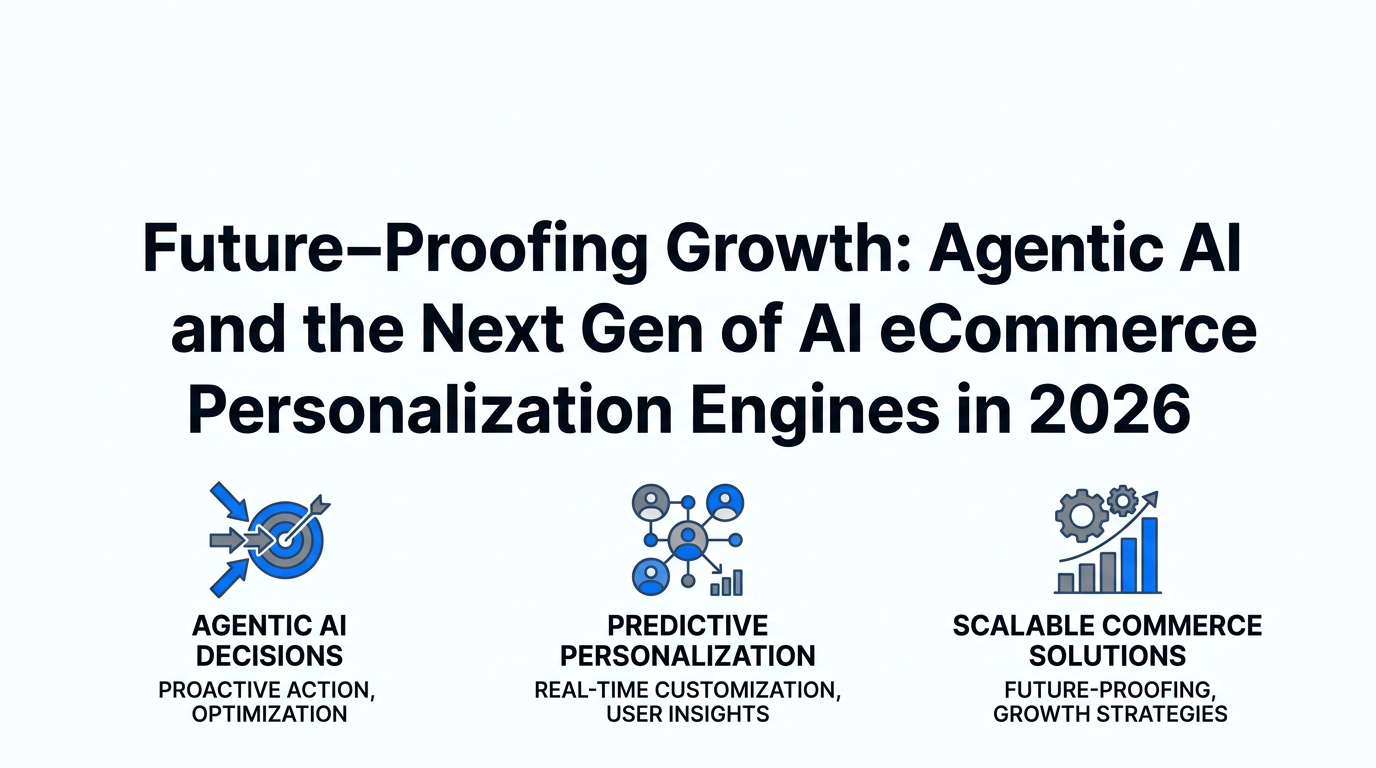
The era of the static storefront is officially dead. In 2026, the retail landscape has shifted from "search-and-browse" to "converse-and-receive." We are no longer just using recommendation widgets; we are deploying autonomous agentic AI ecommerce systems that act as personal concierges for every single visitor. As the global AI-enabled eCommerce market nears its projected $22.6 billion valuation by 2032, the distinction between brands that survive and those that thrive comes down to one thing: the depth of their personalization engine. In this guide, we explore how shopping assistants 2026, visual search, and zero-party data are redefining growth for the modern merchant.
The Evolution: From Recommendations to Autonomous Shopping Assistants
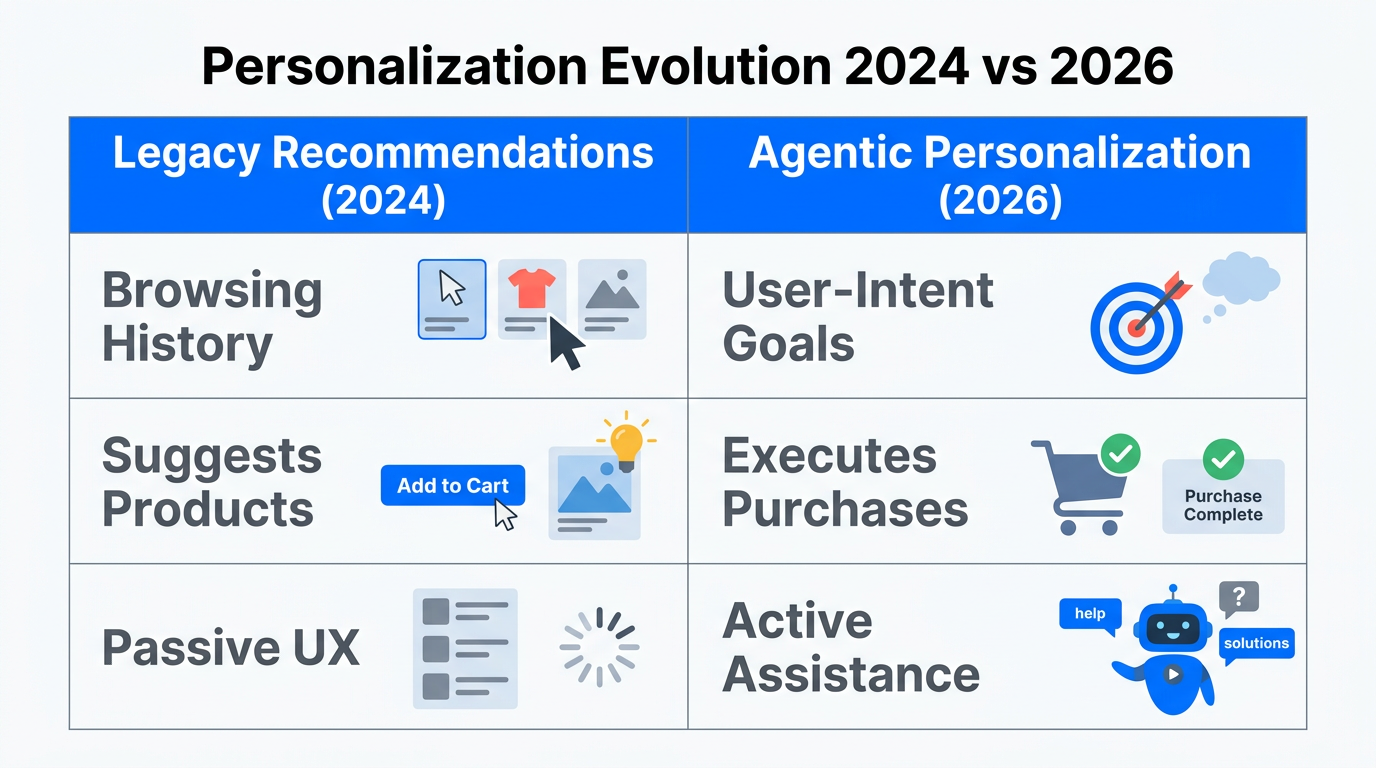
For years, eCommerce personalization was limited to "People who bought X also bought Y." Today, that logic is considered primitive. Modern engines now utilize relevancy scores—a concept championed by experts like Vinod Sivagnanam at Adobe—which synthesize clickstream data in real-time. This isn't just about showing more products; it’s about showing the exact product a user needs based on micro-behaviors like hover time and scroll depth.
In 2026, agentic AI takes this a step further. These are not just chatbots; they are autonomous agents capable of handling complex, natural-language queries. A shopper can now say, "Find me a sustainable dress for a beach wedding under $200," and the agent will cross-reference inventory, sustainability ratings, and price points to provide a curated selection instantly. This level of service is why McKinsey reports that companies excelling at personalization generate 40% more revenue than those that don't.
"The future of retail isn't about more choice—it's about the elimination of irrelevant choice through autonomous agents."Capturing Intent with AI Visual and Multimodal Search
We are increasingly living in a visual-first world. In 2026, high-intent shoppers aren't typing keywords into a search bar; they are uploading screenshots from TikTok or Instagram. Platforms like ViSenze have revolutionized AI visual search, allowing engines to analyze color, texture, and style to recommend perfect matches or close alternatives.
This shift to multimodal search—where text, image, and even voice inputs are processed simultaneously—is critical for capturing the "I want that" moment. For instance, L’Oréal has seen their "ModiFace" tool deliver 3x higher conversion rates compared to static images by allowing virtual try-ons and visual diagnostics. By integrating visual discovery, brands reduce the friction between inspiration and purchase.
- Analyze Visual Attributes: AI now identifies specific patterns (e.g., "houndstooth") rather than just general categories.
- Style Matching: Engines suggest complementary items (shoes to match a bag) based on visual harmony.
- Instant Alternatives: If an item is out of stock, the engine uses visual similarity to suggest a replacement that keeps the shopper on-site.
Predictive Commerce: The Science of the Replenishment Nudge
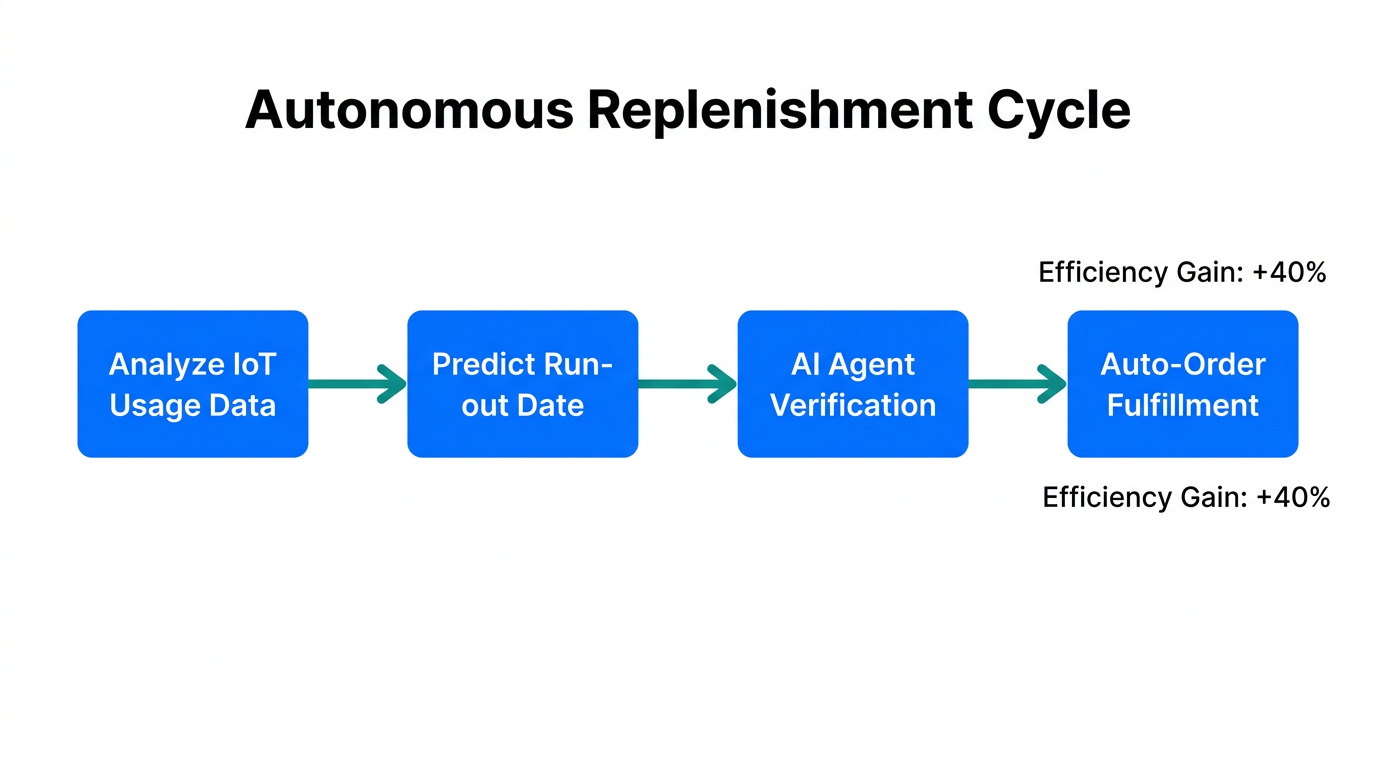
Wait-and-see marketing is a relic of the past. Predictive commerce trends in 2026 focus on identifying needs before the customer does. Using machine learning models, brands can now predict when a customer is likely to run out of a consumable product—be it coffee, skincare, or pet food—and trigger a replenishment nudge at the precise moment of need.
Tools like Klaviyo allow for these automated discovery funnels using replenishment logic. Instead of waiting for a "Cart Abandonment" email, brands use "Browse Abandonment" triggers. If a user views a product three times but doesn't buy, the AI analyzes why (Price? Shipping? Lack of UGC?) and sends a personalized offer or a video testimonial to close the gap. Predictive shopping agents ensure that the customer never has to think about their shopping list.
| Strategy | Traditional Approach | Agentic AI Approach (2026) |
|---|---|---|
| Discovery | Keyword-based search bars | Natural language autonomous agents |
| Engagement | Static newsletters | Predictive replenishment nudges |
| Conversion | Generic discount codes | Real-time behavioral adaptation |
| Search | Text-only queries | Multimodal (Visual + Voice + Text) |
Solving the Privacy Puzzle with Zero-Party Data
With the final death of third-party cookies and the tightening of GDPR and CCPA regulations, the industry has pivoted toward zero-party data marketing. This is data that a customer intentionally and proactively shares with a brand. In 2026, this is primarily collected through interactive quizzes, preference centers, and onboarding flows.
Platforms like OptiMonk use these insights to build robust first-party profiles. When a user tells a quiz they have "dry skin" and "prefer vegan products," the entire site experience—from the hero banner to the product recommendations—mutates to reflect those specific values. 78% of consumers are more likely to make repeat purchases when brands use this data to respect their preferences rather than tracking them across the web via cookies.
"Zero-party data is the ultimate trust signal; it’s the customer saying 'I want you to know me so you can serve me better.'"Scaling One-to-One Marketing to Millions
The ultimate goal of eCommerce has always been the "one-to-one" experience—treating a million-user database as a million individual relationships. In 2026, this is only possible through AI-powered personalization engines like Nosto and Bloomreach. These platforms allow brands to automate homepage adaptations in real-time based on the traffic source or geographic location.
For example, Saks Global utilized AI to personalize homepages, resulting in a higher conversion rate through tailored discovery. To fuel these engines with authentic content, many brands now integrate user-generated content (UGC) directly into their AI workflows. By using platforms like Stormy AI, marketers can instantly find and vet creators who produce the high-intent video content that AI shopping agents use to build social proof and trust during the conversion phase.
Your 2026 Implementation Playbook
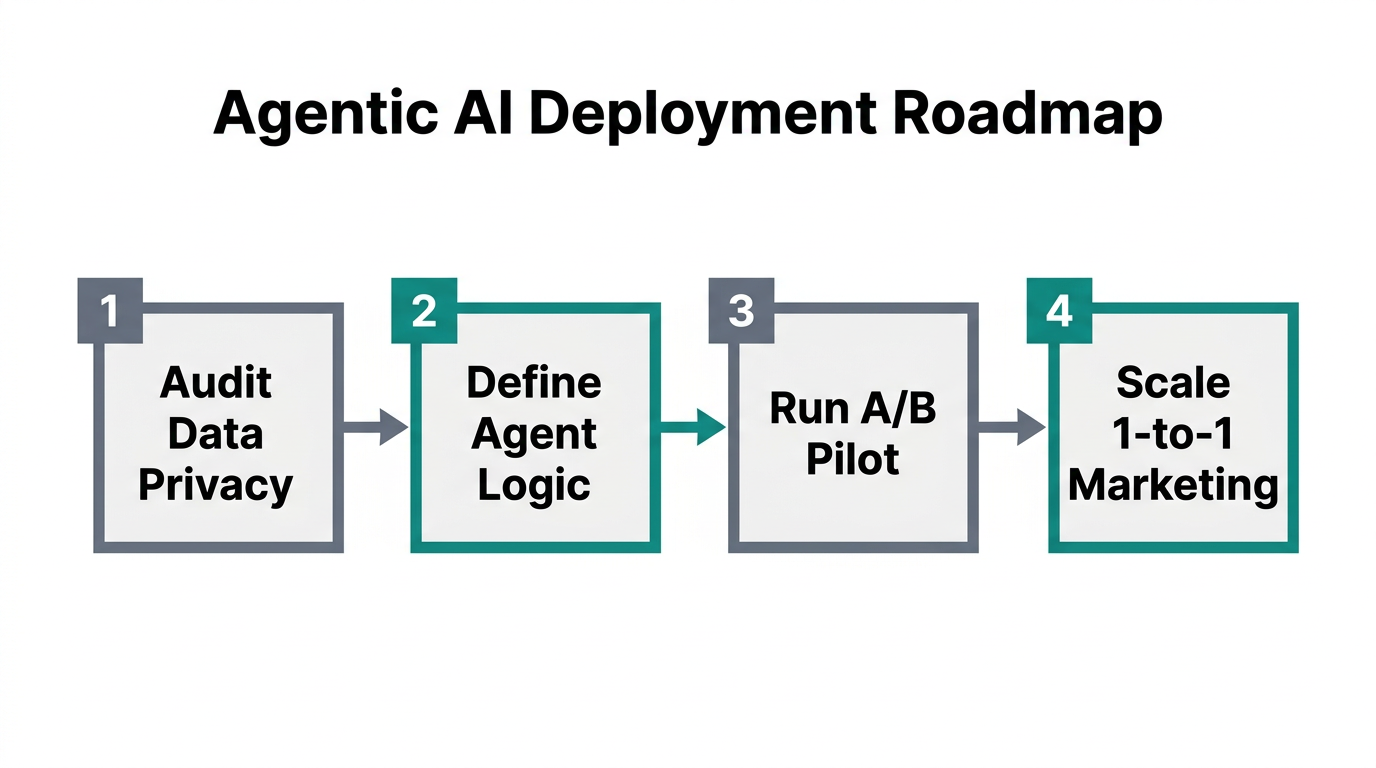
If you are looking to future-proof your growth, follow these steps to integrate agentic AI into your stack:
Step 1: Audit Your Data Silos
Ensure your personalization engine has a holistic view of the customer. If your AI doesn't know a customer bought an item in-store, it will annoy them with irrelevant online ads. Centralize your data into a Shopify or similar ecosystem that supports real-time synchronization.
Step 2: Deploy an Autonomous Agent
Replace your legacy FAQ bot with a true shopping assistant. Use a platform like Clerk.io to implement intelligent search that corrects typos and re-ranks results based on past session intent.
Step 3: Incentivize Zero-Party Data
Create a reason for users to share their preferences. Use a gamified quiz or a personalized "Style Profile" to gather the data needed to fuel your predictive models. Remember, privacy-first marketing is a competitive advantage.
Step 4: Fuel the Engine with UGC
An AI agent is only as good as the content it can show. Use Stormy AI to discover creators who can provide the authentic videos and reviews that your AI engine will then serve to the right customer at the right time.
Conclusion: The Future is Agentic
The transition to agentic AI ecommerce is not just a technological upgrade; it is a fundamental shift in how brands interact with human beings. By 2026, the brands that win will be those that use shopping assistants to remove friction, visual search to mirror human inspiration, and zero-party data to respect consumer privacy. As you scale, remember that the most powerful marketing is still a personal connection—AI simply allows you to make that connection with millions of people at once. Start by automating your discovery and outreach, and let the agents handle the rest.