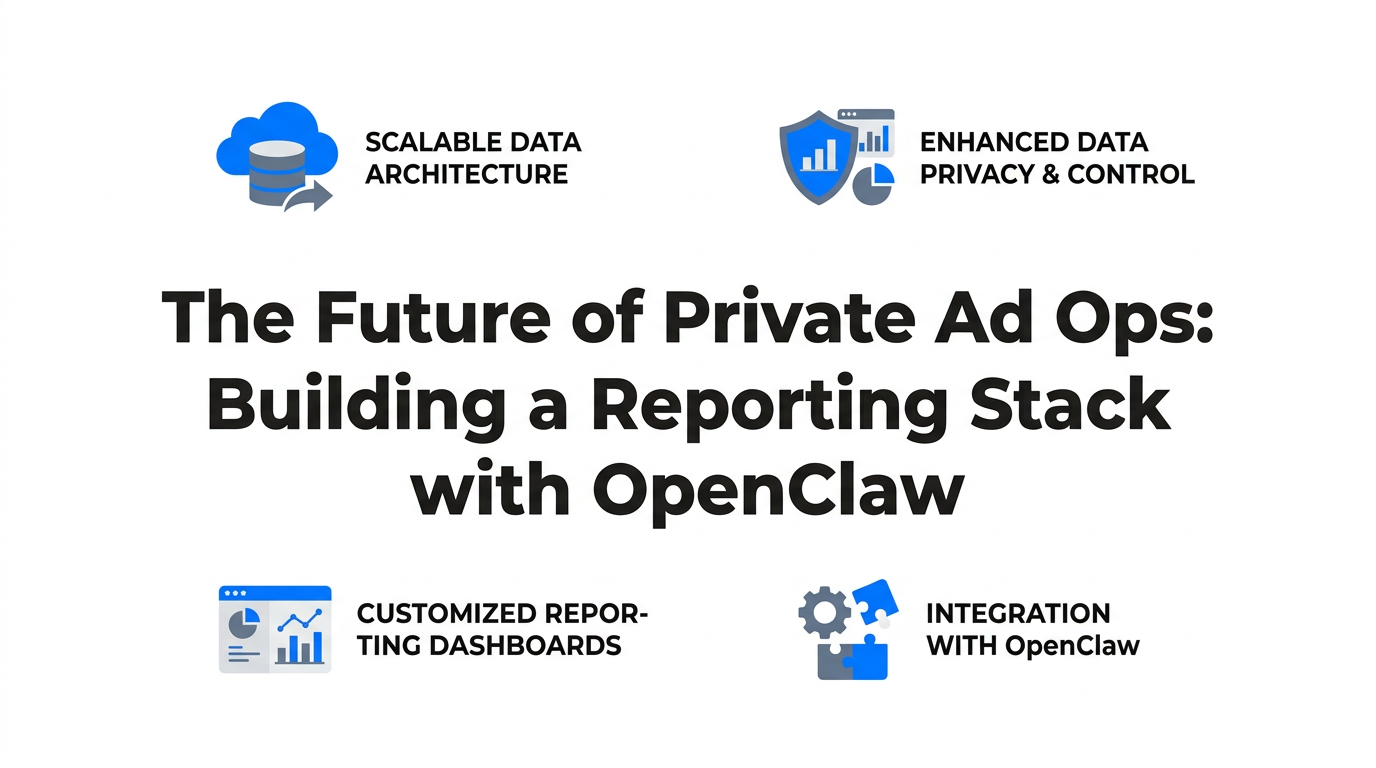
In the rapidly evolving landscape of 2026, the definition of a high-performing marketing team has shifted. We are no longer in the era of manual dashboard monitoring; we have entered the age of Agentic Marketing. Leading this charge is OpenClaw (formerly known as Clawdbot), an open-source framework that has transformed from a niche tool into a powerhouse with over 300,000 GitHub stars. For agencies and brands, the priority has moved from generative AI—which merely writes ads—to agentic AI, which autonomously runs and optimizes them.
This deep dive explores how modern growth teams are building a private ad ops stack that prioritizes data sovereignty, cross-platform consolidation, and extreme operational efficiency. By transitioning to a self-hosted marketing automation model, brands are reclaiming their data and saving hundreds of hours of manual labor every month.
The Local-First Advantage: Why Private Ad Ops is Winning in 2026
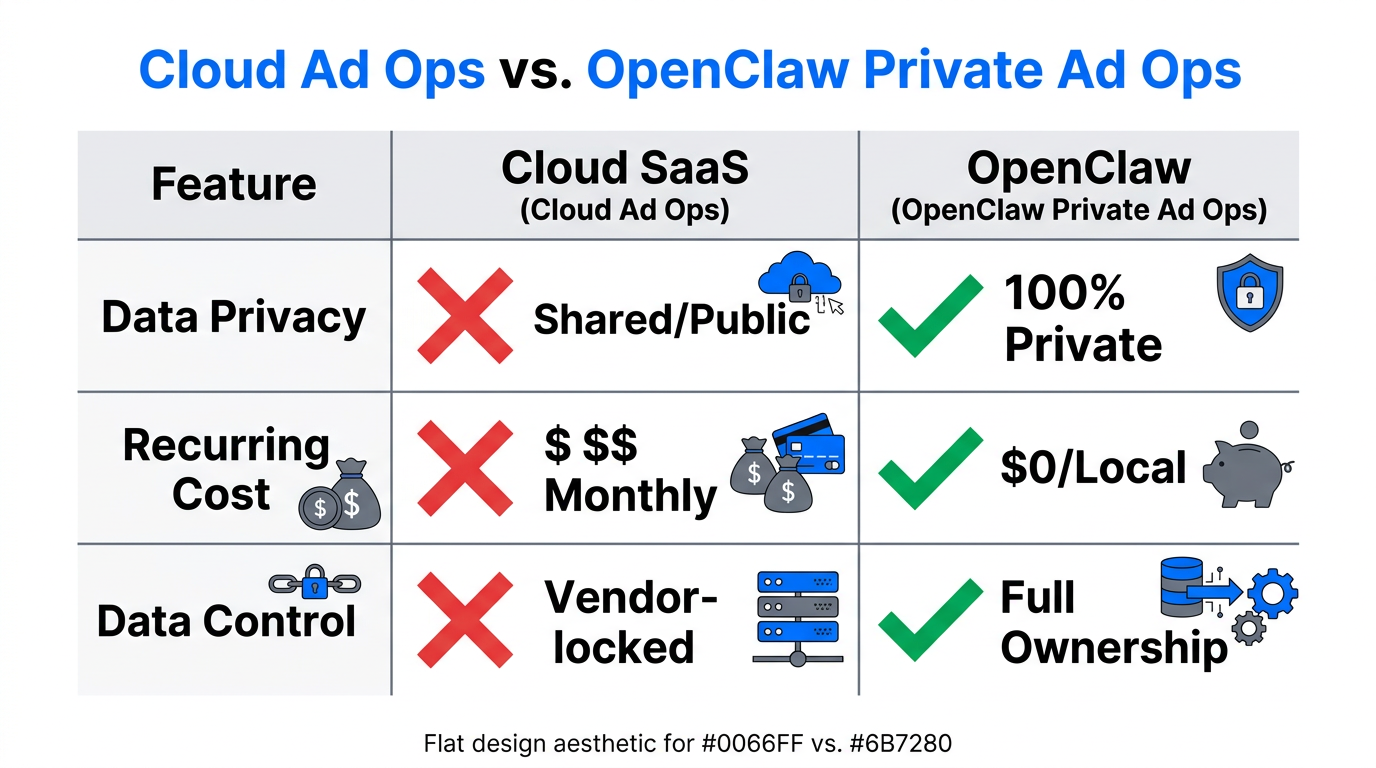
For years, marketing agencies relied on third-party SaaS platforms to aggregate their reporting. However, as privacy regulations tightened and first-party data became the lifeblood of performance, the risks of "leaking" data to cloud-based middle-men became too high. This has given rise to the local-first movement in advertising operations.
Unlike traditional tools, an OpenClaw reporting agent runs on your own infrastructure—be it a Virtual Private Server (VPS) or local hardware. This ensures that sensitive customer lists, ROAS data, and proprietary bidding strategies never leave your controlled environment. Brands are moving away from cloud-based reporting SaaS because they want total ownership of their data pipelines and the ability to customize agents without the constraints of a rigid software interface.
"The era of the manual PPC agency is over; the era of the 'Agent Architect' has begun." — Peter Steinberger, Creator of OpenClaw.
The 7 Core Skills of an OpenClaw Agent Stack
To build a robust private ad ops infrastructure, you need to deploy specific "skills" within the OpenClaw framework. These skills act as specialized modules that handle everything from structural audits to AI negative keyword mining.
| Skill Name | Core Function | Business Impact |
|---|---|---|
| Performance Auditor | Scans account structure and tracking gaps. | Detects "broken" conversion tracking automatically. |
| Creative Analyst | Monitors CTR decay and asset fatigue. | Reduces creative production waste by 70%. |
| Bid & Budget Manager | Scales winners and trims laggards in real-time. | Maintains ROAS targets without manual logins. |
| Search Term Analyzer | Automated negative keyword mining. | Eliminates waste spend on irrelevant queries. |
| Reporting Agent | Unifies Meta, TikTok, and Google data. | Saves 10–13 hours per week per account. |
AI Negative Keyword Mining: From Monthly Task to Real-Time Execution
One of the most immediate ROI drivers in cross-platform ad automation is the Search Term Analyzer. Historically, PPC managers would download a search term report once a month, manually filter out irrelevant queries, and add them as negative keywords. In 2026, this is a real-time, agent-led process.
The OpenClaw agent scans Google Search Term reports every hour, identifying high-spend, zero-conversion queries or irrelevant terms that don't match the intent of the landing page. By automating this, brands are significantly reducing wasteful spending that occurs between manual reviews. According to industry data from Search Engine Land, 26% of ad budgets are typically wasted on ineffective targeting—a gap that agentic auditing is closing rapidly.
Creative Fatigue and Asset Rotation
Creative is the new targeting. As platforms like Meta Ads and TikTok Ads lean further into broad targeting, the creative asset itself does the heavy lifting. The Creative Analyst skill monitors CTR decay at the asset level. When a video starts to lose its punch, the agent flags it or automatically swaps it with a fresh variant from the library.
Research indicates that brands using automated creative auditing have reduced production waste by 70%. While OpenClaw handles the optimization, platforms like Stormy AI streamline creator sourcing and outreach, ensuring that the high-performing UGC assets being managed by your agents are always refreshed with high-quality talent.
"If you aren't rotating assets based on fatigue signals, you're overpaying for attention. Data-driven rotation is the only way to scale in 2026." — Nikhil Kumar, Growth Marketer.
The 'Agent Architect' Career Path: The Evolution of PPC
The rise of self-hosted marketing automation has fundamentally changed the career trajectory for performance marketers. We are seeing the death of the "manual button-pusher" and the birth of the Agent Architect. Instead of spending 40 hours a week inside Google Ads Manager or TikTok Ads Manager, these professionals spend their time designing the logic that agents follow.
An Agent Architect doesn't just look at a dashboard; they build SOUL.md files—structured instruction sets that tell the agent how to react to market volatility. They implement a "Human-in-the-Loop" (HITL) protocol where the agent drafts a bid change and sends a message to Slack for approval before execution. This allows a single marketer to manage 5x more accounts than they could in the legacy manual era.
Consolidating TikTok, Meta, and Google into Unified Markdown Reports
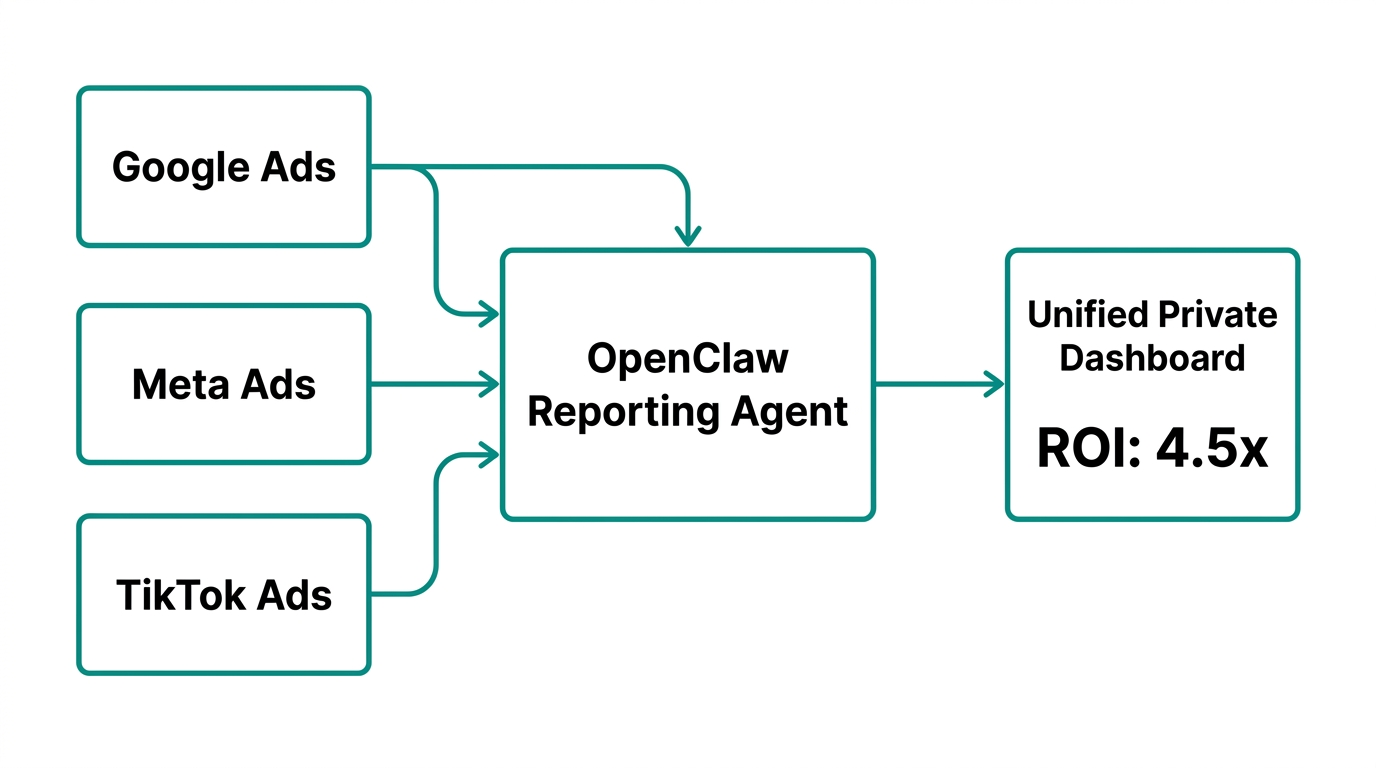
One of the biggest pain points for agencies is the fragmented nature of cross-platform data. Logging into three different dashboards to piece together a coherent story for a client is a relic of the past. The OpenClaw reporting agent solves this by unifying data into a single, clean Markdown file or a live Telegram dashboard.
Early adopters report saving 10–13 hours per week per account by automating this consolidation. Because the agent uses the Ad Context Protocol (AdCP), it can read across hundreds of different ad tools through a single interface, pulling the exact metrics needed for a high-level executive summary without the fluff of standard cloud reports.
The Implementation Playbook: How to Start with Private Ad Ops
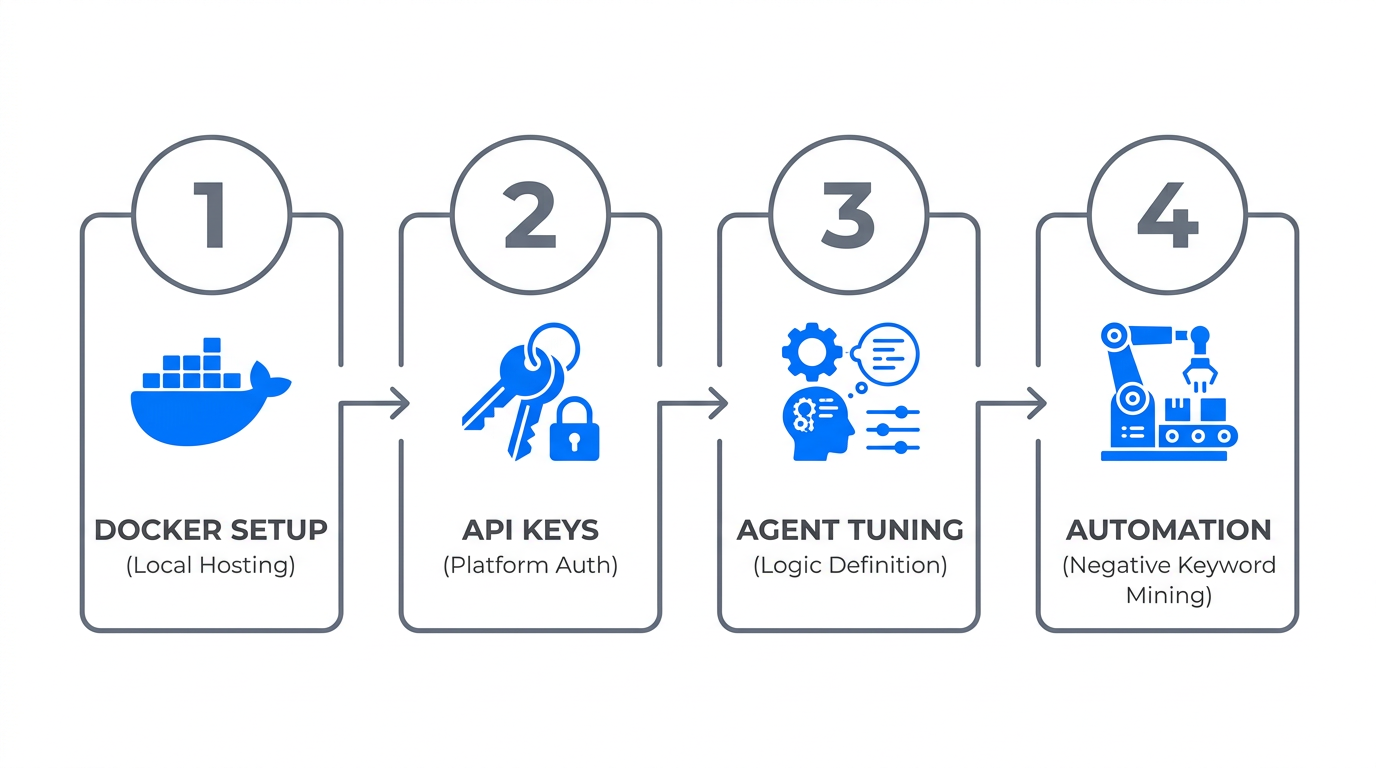
Ready to transition to a self-hosted stack? Follow these steps to deploy your first OpenClaw agent safely.
- Step 1: Secure Your Infrastructure. Deploy a VPS through a provider like DigitalOcean or Hetzner. OpenClaw must run 24/7 to ensure "Friday night overspend" protection.
- Step 2: Initialize with Read-Only Access. Never give an agent "Write" access on day one. Use the Performance Auditor in read-only mode for 14 days to build trust and audit your current account structure.
- Step 3: Secure Your Secrets. Use the
openclaw secretscommand to store your API keys. Never hard-code your Meta or Google tokens into a prompt or publicly accessible file. - Step 4: Implement Human-in-the-Loop. Set up your SOUL.md file to require approval for budget increases over 20%. The agent will ping your team on Slack, and you can approve the change with a single click.
- Step 5: Scale to Reporting. Once the auditing logic is sound, connect the Reporting Agent to generate weekly Markdown summaries that live on your own server.
"The future of growth is not about finding better keywords; it's about building better systems that find them for you."
The Bottom Line: Ownership is the Future
As the market for AI in marketing is projected to reach $217.33 billion by 2034 according to Precedence Research, the gap between brands that own their systems and brands that rent them will only widen. By building a reporting and optimization stack with OpenClaw, you are not just automating tasks; you are building a proprietary asset.
Whether you are scaling a B2B SaaS company or managing a high-volume e-commerce brand, the move toward private ad ops is inevitable. Start small with a Search Term Analyzer to master AI negative keyword mining, and eventually expand into a full-scale agentic operation. For those looking to fuel these automated accounts with high-performing creator content, integrating tools like Stormy AI into your workflow ensures your "Lobsters" always have the best assets to optimize.