The traditional era of the 'manual marketer'—the practitioner who spends their morning clicking through 14 browser tabs to adjust bids and refresh creative—is effectively over. As we look toward the 2026 landscape, a brutal reality has set in for growth teams: the average Cost Per Lead (CPL) has surged to $27.66, representing a nearly 20% year-over-year increase. According to research from Azarian Growth Agency, this rising cost floor is creating what experts call 'The Efficiency Gap.' To survive, founders and marketing leaders are moving away from dashboard-based management in favor of a Funnel as Code approach, treating their entire go-to-market (GTM) strategy as a deployable, automated codebase.
The Efficiency Gap: Why Manual Bidding is a Sunk Cost
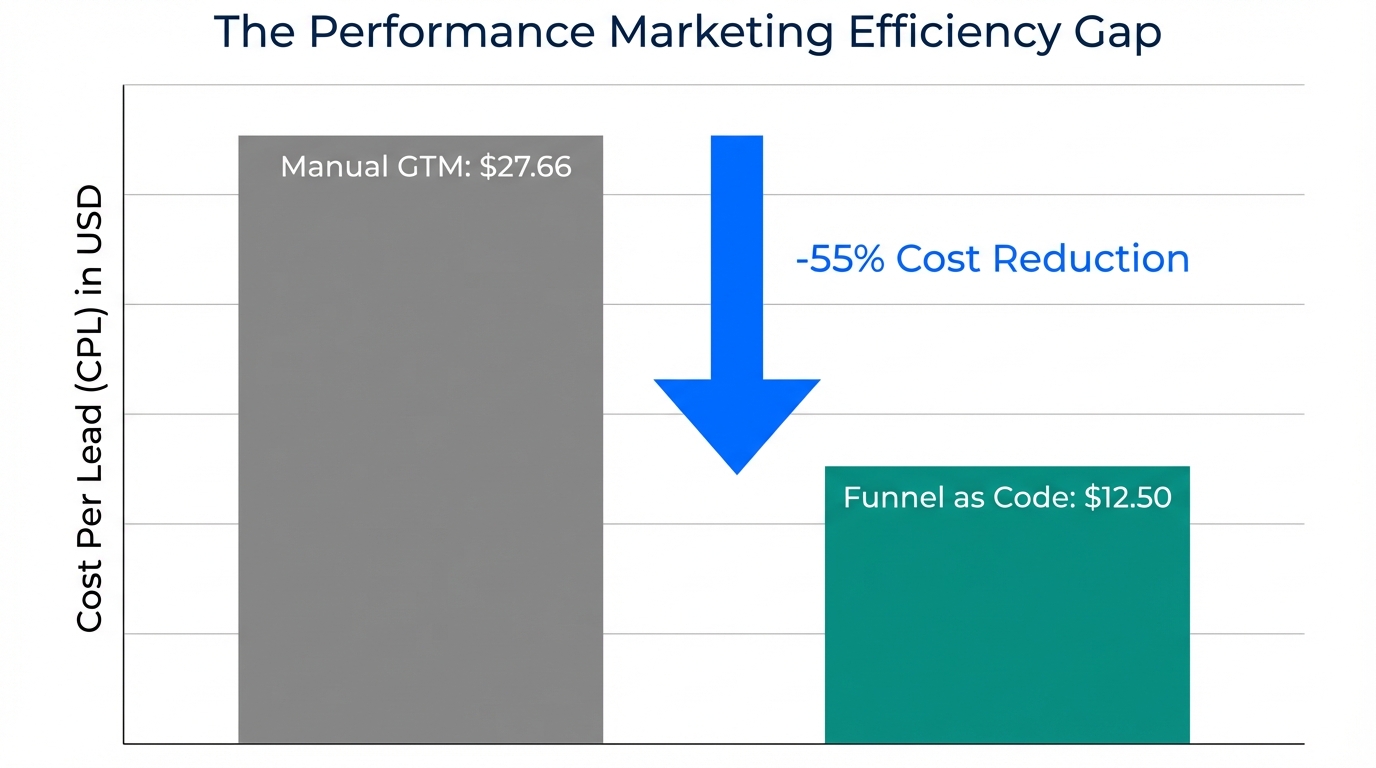
In a hyper-competitive market, the performance difference between teams using basic AI tools and those utilizing custom automated systems is widening into a chasm. Data indicates that AI-driven bidding delivers a 27% higher ROAS (Return on Ad Spend) than manual efforts. While 82% of marketers have adopted baseline tools like Meta Advantage+, the real winners are those who use Claude Code to build proprietary optimization layers. The goal is no longer just to 'run ads,' but to build a system that manages them. Those stuck in the manual workflow are losing an average of 12 hours per week to the 'Context Death Spiral,' a term coined for the fatigue of switching between Google Ads and internal spreadsheets, as noted by practitioners on Reddit.
"The Efficiency Gap isn't just about speed; it's about the 27% ROAS difference between those who click buttons and those who write systems."Defining 'Funnel as Code': Marketing as a Deployable Asset
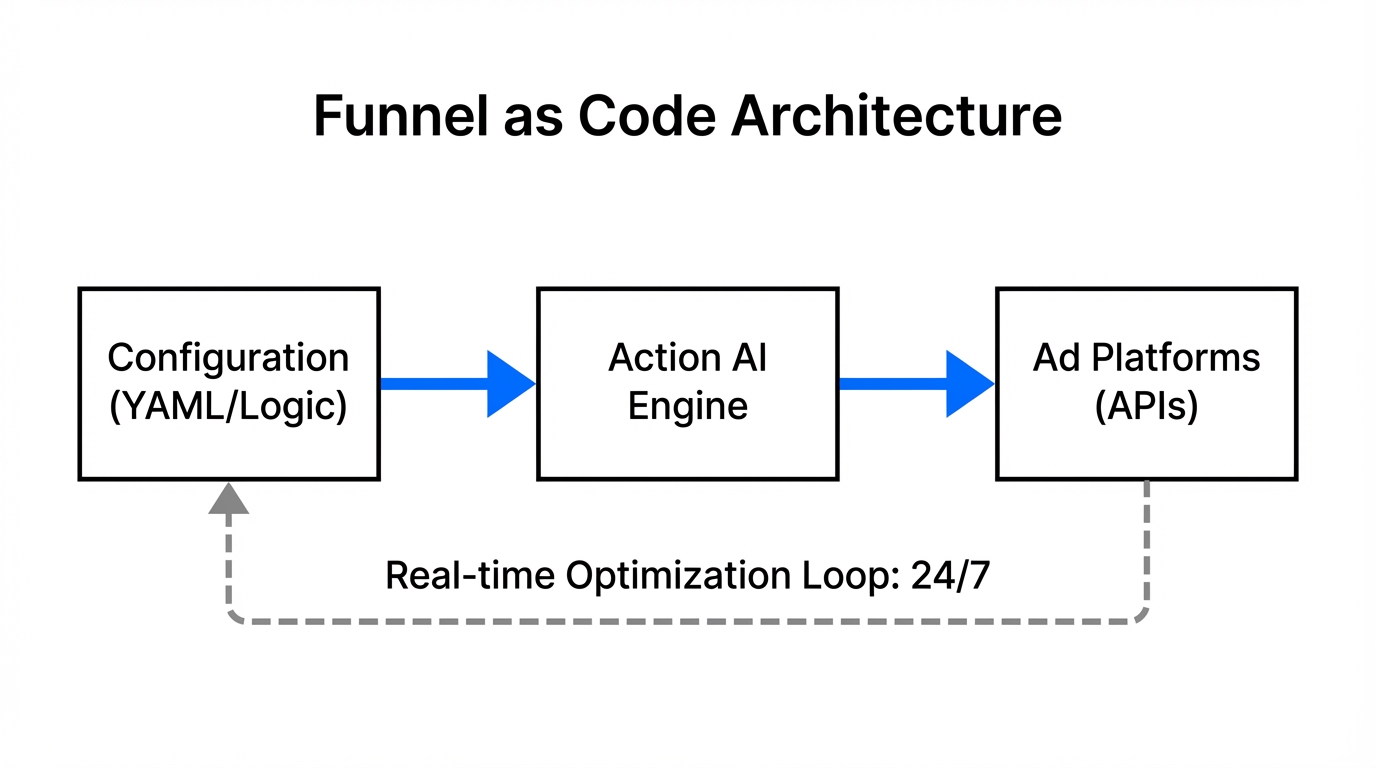
The 'Funnel as Code' trend, often associated with the rise of 'Vibe Marketing,' treats every element of the marketing stack—from Framer landing pages to TikTok Ads Manager variants—as code files. Instead of manually uploading a JPEG, a marketer might run a terminal command that generates 45% more ad variants and pushes them directly to the API. This methodology reduces creative production time from 30 minutes to 30 seconds. By treating assets as code, teams can maintain version control over their entire strategy, ensuring that a change in brand voice is reflected across all channels instantly. Research from AIivine highlights that this level of creative volume leads to a 15.6% reduction in ad fatigue, keeping performance stable even at high spend levels.
The Shift from Chat AI to Action AI
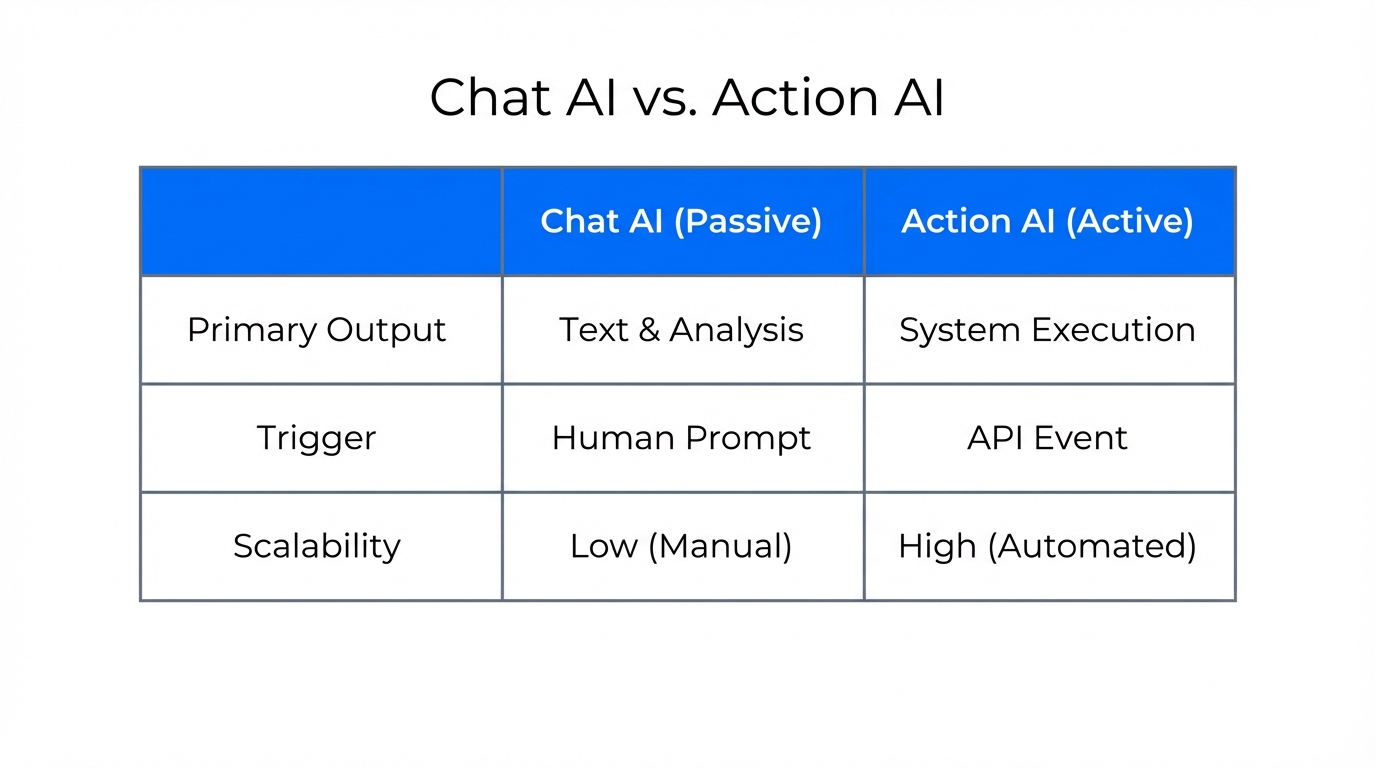
For the past few years, marketers used 'Chat AI' primarily for brainstorming or writing copy. However, we are now entering the age of Action AI—autonomous execution where the AI actually performs the work. This shift is best exemplified by terminal-based agents like Claude Code, which can query live data, edit landing page code, and execute API calls. Experts at ElectroIQ argue that the real value lies in AI that moves beyond the text box. For instance, instead of asking an AI 'How should I optimize my Meta ads?', an Action AI agent queries the Meta Marketing API, identifies underperforming segments, and pauses them automatically.
| Feature | Legacy 'Chat' AI | Modern 'Action' AI (Funnel as Code) |
|---|---|---|
| Primary Interface | Browser/Chatbox | Terminal / IDE |
| Data Source | Manual Copy-Paste | Live API Connection (MCP) |
| Creative Output | Static Copy Suggestions | Automated File Generation & Upload |
| Decision Making | Human interprets AI advice | Autonomous Execution (Loop) |
A Playbook for Automating Creative Rotations
To implement a Funnel as Code strategy, growth teams must bridge the gap between their AI agents and their ad platforms. This is often done using the Model Context Protocol (MCP). By using tools like Pipeboard or Madgicx, you can create a secure bridge that allows Claude Code to 'see' your live performance data. Once connected, you can deploy a 'Ralph Wiggum' optimization loop—a persistent script that monitors your PostHog analytics and adjusts Meta spend in real-time. For example, when frequency exceeds 3.0 and CTR drops below 1.5%, the system can automatically swap creative assets stored in a local directory.
"Reducing ad creation time from 30 minutes to 30 seconds isn't just a productivity hack; it's a competitive necessity in a $27+ CPL market."When sourcing the high-quality human talent needed to feed these automated creative rotations, teams often turn to modern platforms. Tools like Stormy AI allow marketers to source and manage UGC creators at scale, ensuring there is a constant supply of raw video material for the AI to iterate upon. By pairing Stormy AI for creator discovery with a code-based deployment system, brands can achieve 10x the creative output of a traditional agency model.
Ensuring Consistency with CLAUDE.md
A major risk of autonomous execution is 'brand drift.' When an AI is generating hundreds of ad variants, how do you ensure it stays on-brand? The solution is a centralized brand voice file, typically named CLAUDE.md. This file acts as the 'source of truth' for the AI agent, containing your tone of voice, forbidden words, and unique selling propositions. By forcing the AI to cross-reference every generated asset against this file, you maintain a cohesive identity while scaling volume. This is how teams at Anthropic manage to automate creative exports for Apple Search Ads and Meta without losing the human touch that defines their brand.
Common Mistakes to Avoid in Automated Performance Marketing
While the transition to code-based marketing is powerful, it is not without pitfalls. The most common mistake is Over-Reliance on Advantage+. While Meta's internal AI is excellent, relying 100% on it leads to 'creative homogenization.' You must use your custom AI to find the niche audience segments that Meta's broad algorithms might overlook. Another critical error is a Poor Data Foundation. If your Conversions API (CAPI) is not correctly configured, you are simply 'scaling your errors' with faster automation. Finally, be mindful of API Rate Limiting; querying Meta's API too frequently via an automated loop can lead to temporary account locks.
Conclusion: Embracing the New GTM Standard
The future of performance marketing strategy is undeniably technical. The GTM strategy efficiency of 2026 will be measured by how little time humans spend on tactical execution and how much they spend on strategic orchestration. By adopting the 'Funnel as Code' framework—treating your landing pages, ad copy, and creator relationships as deployable assets—you can effectively close the efficiency gap. Whether you are using Zapier for simple triggers or building a full terminal-based agent stack, the goal remains the same: moving from 30 minutes of manual work to 30 seconds of automated deployment. The tools are ready; the question is whether your team is ready to stop clicking and start coding.