The landscape for health and wellness influencers is undergoing a seismic shift from aesthetic inspiration to biological optimization. We are moving away from the era of generic 'day in the life' vlogs and toward a future where wearable data analytics drive every recommendation. As noted by trend expert Steph Smith, the next generation of successful creators won't just look fit; they will prove their health status through real-time data and radical transparency. This evolution is driven by a sophisticated audience that no longer settles for anecdotal evidence, demanding instead a level of AI in fitness that provides personalized, actionable insights.
Why Health Is the New Wealth
In current wellness industry trends, the phrase 'health is wealth' has taken on a literal meaning. High-performance individuals are investing thousands of dollars into tools that monitor their internal biology, treating their bodies like high-growth startups. This shift means that health and wellness influencers must adapt by becoming data aggregators rather than just lifestyle models. Consumers are increasingly skeptical of sponsored content that doesn't align with biological reality. By leveraging platforms like Function Health to track blood markers and sharing those results openly, creators can build a 'trust moat' that is impossible to replicate with filters or clever editing.

This 'open-source' approach to personal health mirrors the 'Open Pages' trend seen in the tech world, where startups share their revenue and growth metrics in real-time. For a wellness creator, this might mean a public digital health dashboard that displays their sleep scores, glucose levels, and recovery metrics. Building this level of transparency is becoming a core strategy for personalized health coaching, as it allows the coach to lead by example. When an audience sees the direct correlation between a creator's habits and their biological data, the incentive to follow their advice increases exponentially. This is the new standard for AI in fitness: using technology to validate the human experience.
The Rise of Wearable Data Analytics
To succeed in this new era, creators must master a diverse stack of hardware and software. The 'Quantified Self' movement is no longer niche; it is the foundation of wearable data analytics. Influencers are now aggregating data from tools like the Oura ring for sleep and readiness, the Eight Sleep for thermal regulation, and continuous glucose monitors (CGMs) from Dexcom or Abbott. By synthesizing these data points, creators can find personal correlations that were previously invisible, such as how a late-night meal affects REM sleep or how specific workouts impact glucose spikes.
The challenge, however, is that these devices often exist in silos. Influencers who can build a centralized platform to integrate this information will dominate the space. For example, syncing Strava activity data with sleep and nutrition metrics allows a creator to explain exactly why they felt nauseous during a marathon or why their recovery took longer than expected. This level of detail transforms a simple workout post into a masterclass in human biology. As influencers use tools like Cursor to build custom data visualizations, they provide their audience with a level of insight that traditional media cannot match. This is the core of modern AI in fitness: making complex data digestible and relatable.
Building the Digital Doctor Layer
A significant opportunity for health and wellness influencers lies in the 'Digital Doctor' layer. This involves using AI to interrogate one's own health data to find content ideas and personal insights. Instead of a doctor spending fifteen minutes reviewing your charts, an AI agent can analyze thousands of data points from your wearables 24/7. Creators can use these AI assistants to triangulate issues, such as identifying if a specific medication is impacting their athletic performance. This diagnostic capability allows influencers to share 'detective stories' about their health, which are highly engaging and educational for their followers. By documenting this process, they provide a blueprint for personalized health coaching that empowers their audience to do the same.
The integration of AI also allows for the creation of custom GPTs that act as specialized health assistants. For instance, a creator could build a GPT trained on their own health history, their favorite research papers, and their specific fitness philosophy. This AI tool can then answer follower questions with a level of nuance that a standard chatbot could never achieve. As wellness industry trends move toward hyper-personalization, these AI layers will become essential for maintaining a high-touch relationship with a large audience. Brands looking for these specialized creators often use tools like Stormy AI to find influencers who are already utilizing wearable data analytics to drive their content strategy.
Sharing the Journey of Micro-Habits
While the data-heavy aspects of wellness are compelling, the most relatable content often comes from the struggle to implement basic habits. Health and wellness influencers are finding success by sharing their journey with 'micro-fixes'—small, AI-prompted changes to posture, hydration, or breathing. Using AI assistants to build these micro-habits provides a transparent look at the discipline required for health. For example, a creator might share how they used an AI coach to finally fix their chronic dehydration, showing the daily reminders and the resulting data improvements on their Oura dashboard. This narrative arc—problem, technological intervention, data-backed result—is incredibly persuasive.
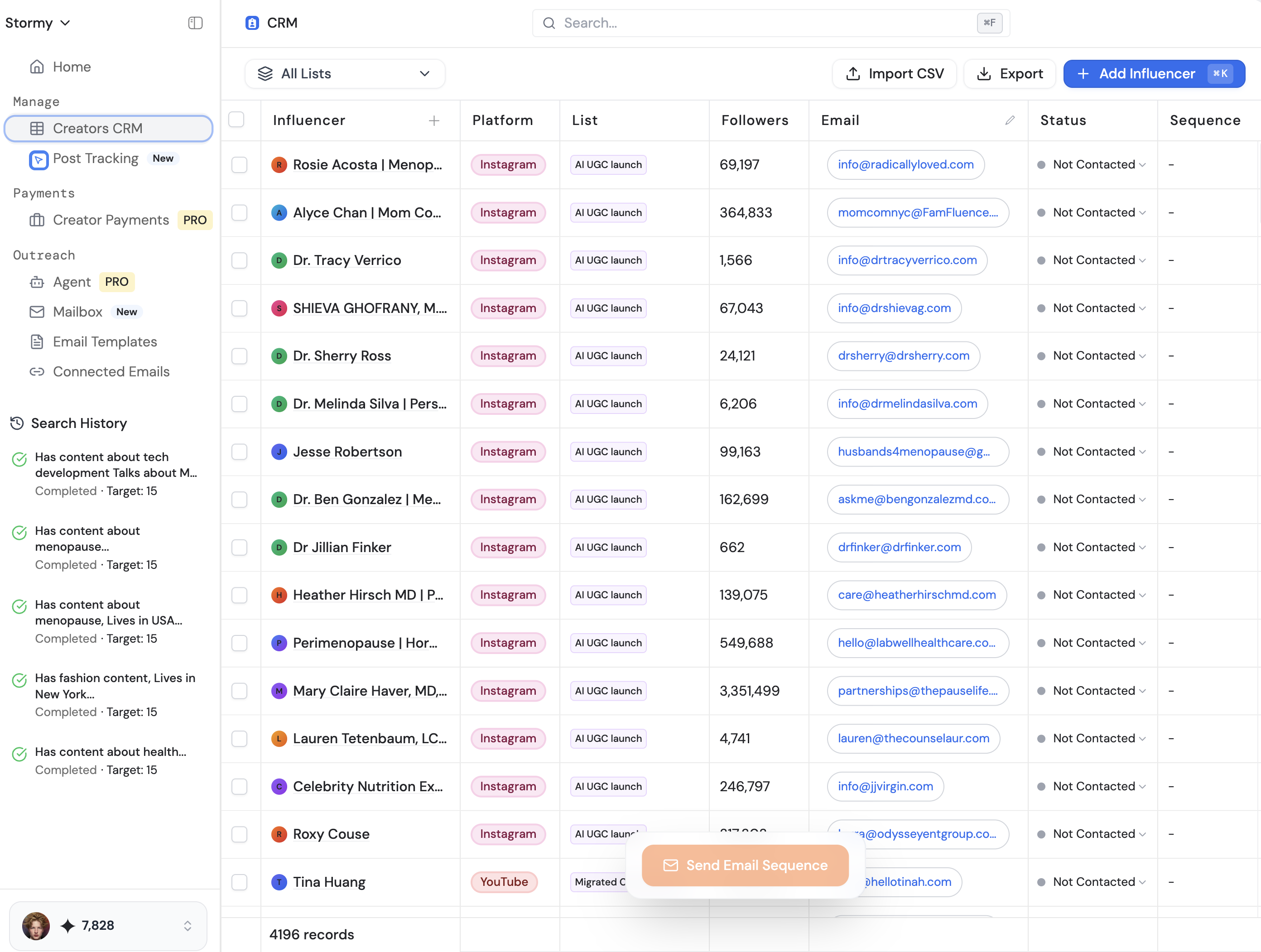
This transparency also extends to mental health and sobriety. Sharing 'open pages' for sobriety milestones or stress levels measured via heart rate variability (HRV) builds deep empathy. When followers see the real-world impact of stress on a creator's data, the advice on mindfulness or meditation becomes much more credible. Managing these complex creator-brand relationships and tracking the success of these niche campaigns is made easier with a Stormy AI creator CRM, which helps both brands and influencers stay organized as the complexity of data-backed collaborations grows. In a world of AI-generated content, this raw, data-validated human experience is the ultimate differentiator.
Monetizing Data-Backed Wellness
The monetization opportunities in this space are evolving beyond simple affiliate links. While partnerships with brands like Beehiiv for newsletters or supplement companies remain lucrative, the real value is in personalized health coaching and data-as-a-service. Influencers can charge a premium for coaching programs that include data analysis of their clients' wearables. By acting as the 'human layer' on top of wearable data analytics, they provide the motivation and context that automated apps often lack. This high-ticket coaching model is supported by the trust built through their 'Open Health' pages and consistent data reporting.
Furthermore, the affiliate model is becoming more sophisticated. Instead of just sharing a discount code, influencers can show the actual data-backed results of the products they use. If a specific magnesium supplement consistently improves a creator's deep sleep score on their Eight Sleep, that data point becomes a powerful sales tool. This level of proof reduces the 'newsletter fatigue' many consumers feel and replaces it with a genuine interest in biological results. For brands, finding these creators who are at the intersection of AI in fitness and authentic storytelling is the key to winning in the modern wellness market.
The Future of Personalized Health Coaching
As we look toward the future, the integration of AI will likely lead to the death of the 'one-size-fits-all' fitness plan. Personalized health coaching will become the standard, powered by AI models that can process vast amounts of personal data to provide real-time recommendations. Health and wellness influencers will serve as the curators and educators in this ecosystem, helping their audience navigate the flood of information. By staying at the forefront of wellness industry trends and embracing a data-first mindset, creators can ensure their longevity in an increasingly competitive space.
Step 1: Audit Your Tech Stack
Identify which wearable data analytics tools you are already using and ensure you are capturing that data in a way that can be shared. Tools like Strava or Apple Health are great starting points.
Step 2: Build Your Data Dashboard
Consider creating an 'Open Page' for your health. Use platforms like Cursor or modular website builders to display your key metrics to your audience, building immediate trust through transparency.
Step 3: Integrate an AI Layer
Use AI to analyze your health data for patterns. Share these insights with your followers to show them how AI in fitness can be used to solve real-world health problems, such as sleep issues or athletic plateaus.
Step 4: Develop Specialized Coaching
Transition your monetization strategy toward personalized health coaching. Use your own data-backed success stories as a case study to attract high-value clients who want more than just a generic workout plan.
In conclusion, the era of the 'expert' influencer who relies solely on their physique is ending. The new leaders in the wellness space are those who can bridge the gap between wearable data analytics and actionable lifestyle advice. By leveraging AI in fitness and maintaining radical transparency through data, influencers can build a sustainable, trust-based brand that thrives in the evolving wellness economy. Whether you are a creator or a brand, focusing on these data-driven wellness industry trends is no longer optional—it is the requirement for success.