The landscape of digital commerce is shifting beneath our feet. For years, Amazon PPC managers have operated like air traffic controllers, manually toggling bids, harvesting keywords from bulky CSV files, and navigating a labyrinth of seller dashboards. However, as we move into 2026, the era of manual clicking is coming to an abrupt end. The introduction of the Model Context Protocol (MCP) and the rise of agentic workflows are redefining the future of amazon advertising. For brands that move quickly, a 12 to 24-month window of massive competitive advantage is now open.
The MCP Revolution: A New Standard for Advertising Connectivity
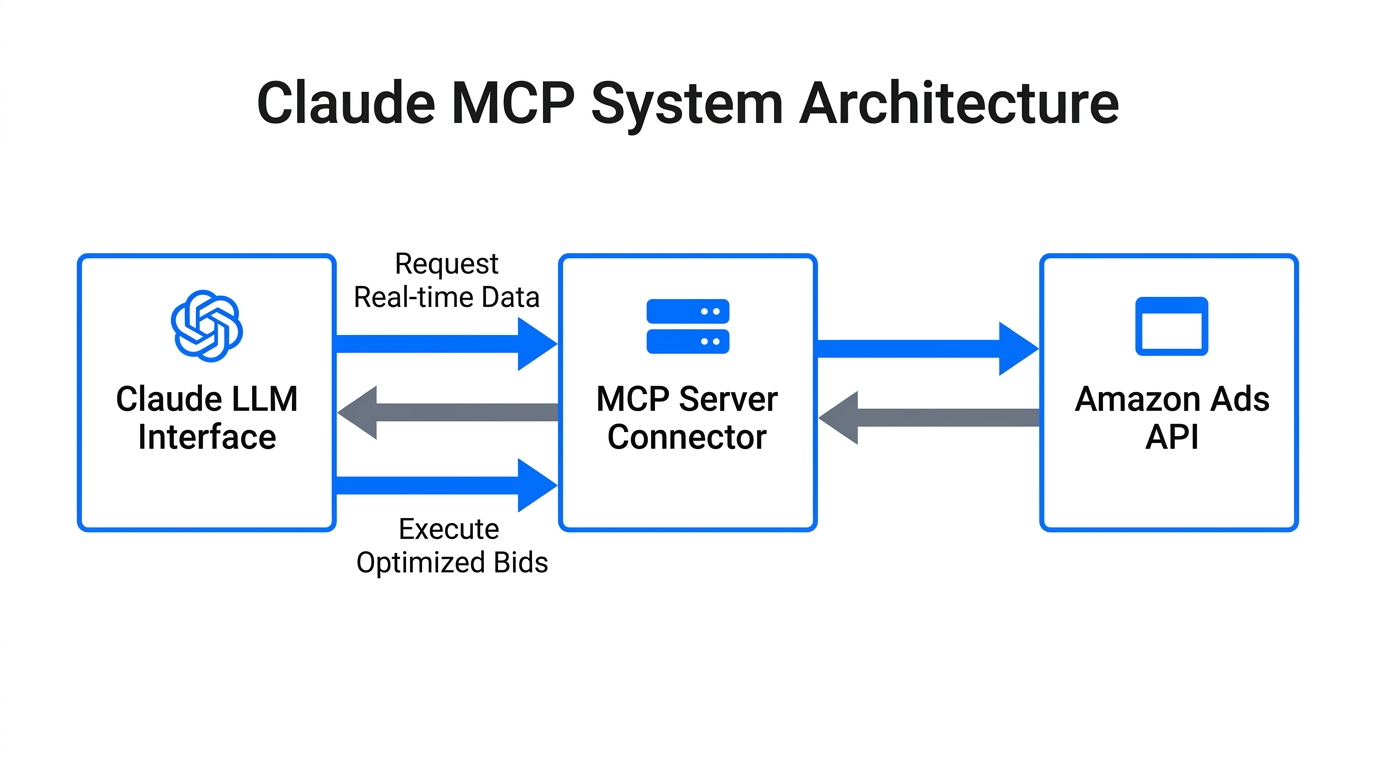
At the heart of this shift is the Model Context Protocol (MCP), an open-source standard pioneered by Anthropic. Think of MCP as the "USB-C for Large Language Models." Before MCP, connecting an AI like Claude to your live Amazon data required complex custom API integrations or manual data exports. Now, with the launch of the Amazon Ads MCP Server in early 2026, advertisers can bridge the gap between their strategy and execution with a single, standardized connection.
This integration, which entered open beta on February 2, 2026, allows a brand manager to ask Claude Desktop to "identify all keywords with an ACOS over 40% in my 'Summer-Promo' campaign and decrease their bids by 10%." The AI doesn't just suggest the change; it executes it through Amazon Ads directly. This is the birth of the Ads Agent.
Beyond Keywords: The Rise of Intent-Driven Advertising
For decades, Amazon has functioned on simple keyword matching. If a user typed "running shoes," you bid on "running shoes." But AI is changing the fundamental unit of commerce from the keyword to the intent. Amazon's updated algorithms now prioritize semantic purchase intent over basic character matching. This AIDA update means that Claude and other LLMs are uniquely positioned to analyze search patterns that humans might miss, much like how Amazon's A10 algorithm shifted focus toward relevance and performance history.
"The shift from 'clicking and scrolling' to 'describing outcomes' is the most significant change in e-commerce since the invention of the sponsored listing."
Using agentic workflows, sellers are now targeting a new metric: the Competitive Displacement Score. This metric rewards ads that consistently outperform organic listings for specific high-intent queries by offering them lower CPCs. AI tools analyze these displacement opportunities in real-time, shifting budget to the most efficient "theft" of organic space before competitors can react.
The Agentic Advantage: Why the Early Bird Gets the Sales
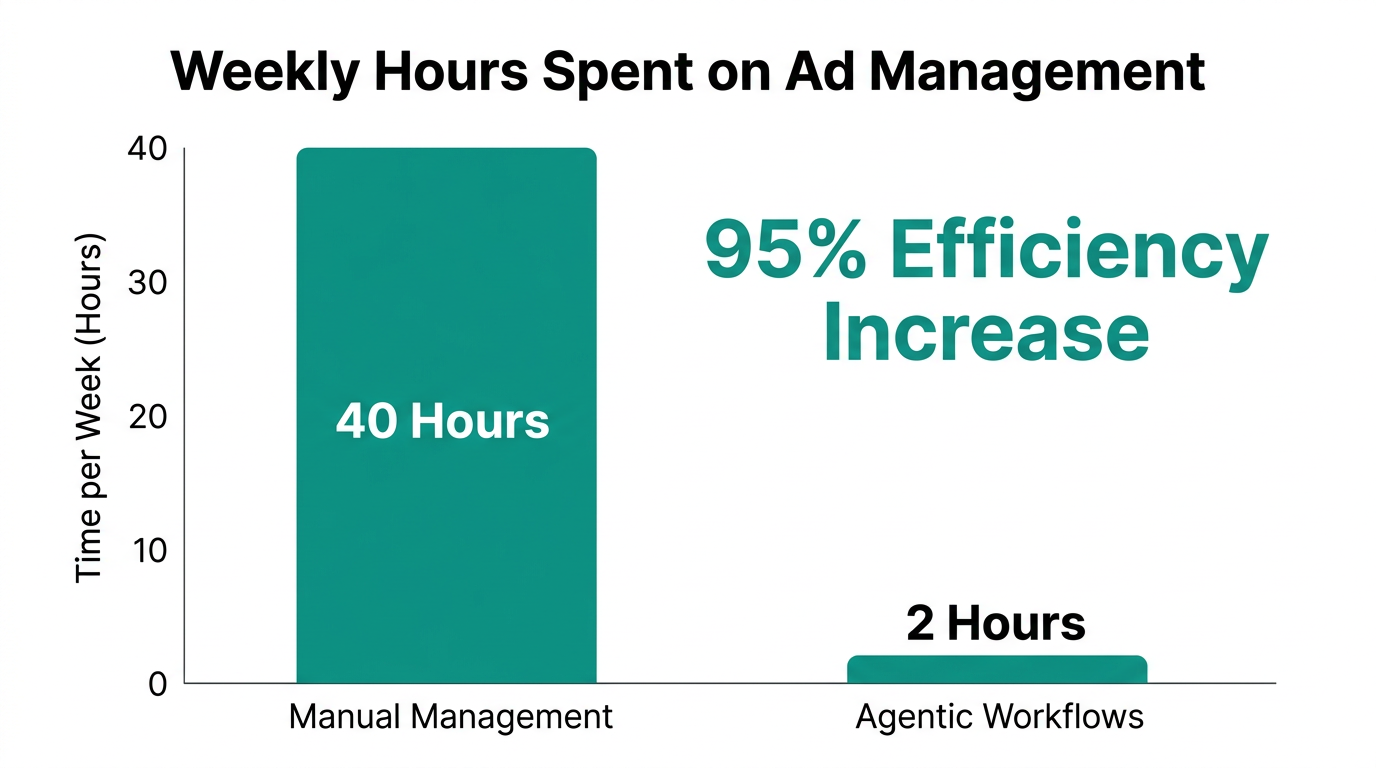
The data from early 2026 beta testing is staggering. Businesses that have integrated ai marketing trends 2026 into their core operations are seeing massive efficiency gains:
| Metric | Traditional Management | AI-Agentic Management | Improvement |
|---|---|---|---|
| Campaign Launch Time | Hours/Days | Minutes | 67% Faster |
| Weekly Admin Tasks | 10-15 Hours | 4-5 Hours | 5.6 Hours Saved |
| Reaction Speed | Days | Minutes | 78% Improvement |
| Average ROI | Baseline | Optimized | 300% Average Return |
As of late 2025, 74% of SMBs were already testing some form of AI advertising according to Statista reports. However, there is a distinct difference between using ChatGPT to write a product description and using an autonomous agent to manage a $50,000 monthly ad spend. The former is a tool; the latter is a strategy.
Strategic vs. Tactical AI: What to Delegate to Claude
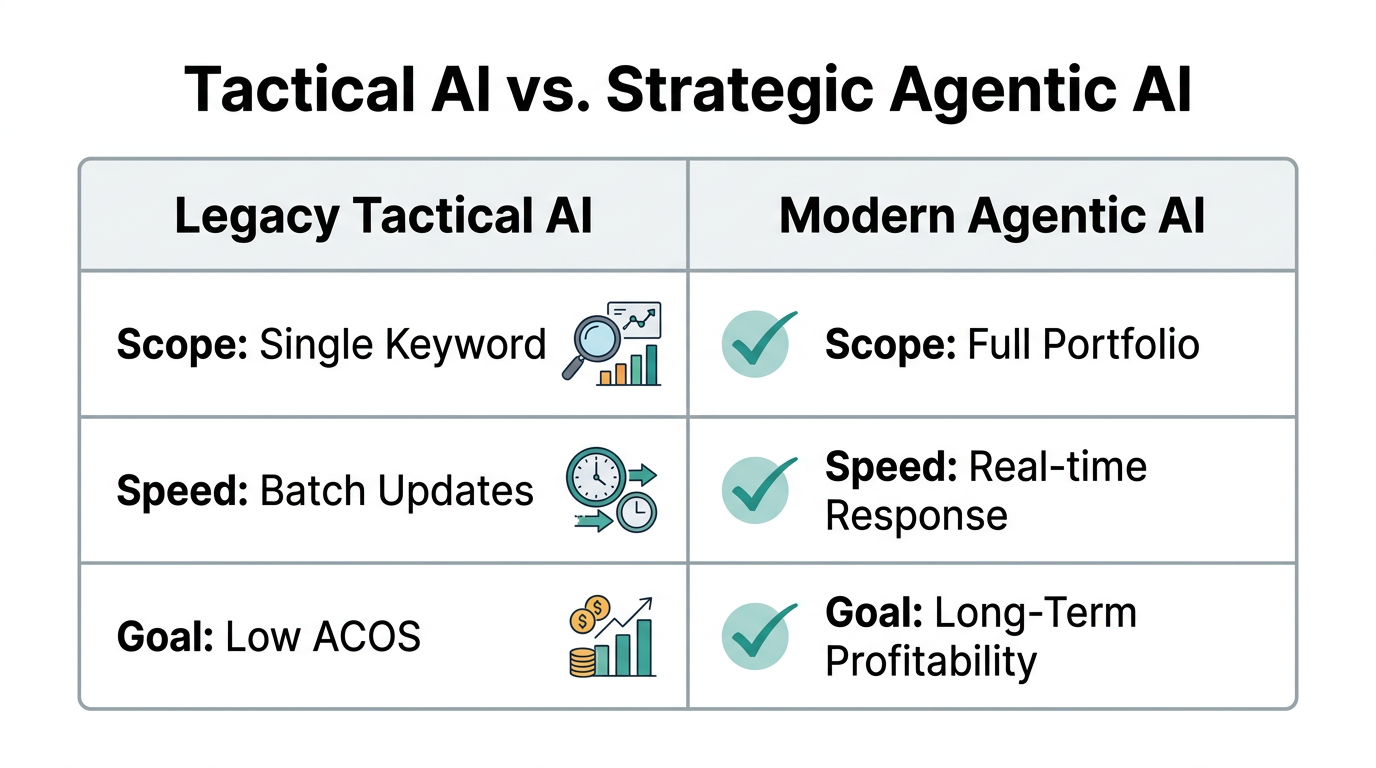
A common mistake in the amazon seller competitive advantage race is attempting to automate everything at once. Expert consensus, including insights from veteran managers at Helium 10 (Adtomic), suggests a Human-in-the-Loop (HITL) approach is essential.
What Claude Does Best (Tactical)
- SQL-Free Data Science: Querying the Amazon Marketing Cloud (AMC) in plain English to build multi-touch attribution reports.
- Keyword Harvesting: Bridging "Auto" and "Manual" campaigns by moving high-performing terms and setting negatives instantly.
- Real-Time Bid Optimization: adjusting bids based on hourly performance windows using servers like Marketplace Ad Pros.
- Performance Tracking: Using connectors like Adzviser to pull cross-platform data from Google Ads and Meta Ads Manager.
What Humans Must Keep (Strategic)
- Brand Identity: Defining the "soul" of the product. Claude can write copy, but it can't feel the brand's mission.
- Product Development: Identifying a "message-market mismatch." AI can optimize a bad product, but it can't fix it.
- Creator Partnerships: Identifying and vetting the right influencers for UGC. While Stormy AI can streamline creator sourcing and outreach at scale, the final creative direction and relationship building remain human-centric tasks.
"Let AI handle the tasks, but never the strategy. An agent can optimize a path, but it can't tell you if you're on the wrong mountain."
The Agentic Playbook: Building Your Workflow
Ready to implement agentic workflows in marketing? Follow this three-step sequence to transition from a manual manager to an AI orchestrator, perhaps leveraging tools like Zapier's AI agents to connect various stages of your funnel.
Step 1: Secure Your Connection
Avoid using unofficial or "leaked" MCP servers. Use verified providers like Openbridge or Marketplace Ad Pros to ensure your Amazon API keys are protected. Configure your claude_desktop_config.json to point to your marketplace (avoiding common region mismatch errors between NA and UK profiles).
Step 2: Automate Keyword Velocity
Set up a recurring prompt for Claude to bridge your campaigns. Example: "Access my 'Auto-Targeting' report for the last 30 days. Identify search terms with 3+ orders and ACOS < 20%. Move these as Exact Match to 'Scale-Manual' and add as Negative Phrase in 'Auto'."
Step 3: Scale Creative Testing
Integrate Amazon's AI Creative Studio into your workflow. Use Claude to analyze customer sentiment from your product reviews and generate 25+ ad copy variations monthly. Push these directly into Sponsored Brands Video experiments. For high-impact visual content, many top sellers use Stormy AI to find UGC creators who can film the raw footage that the AI then optimizes for different placements.
Conclusion: The 2026 Competitive Window
The future of amazon advertising belongs to the orchestrators. In the next 12-24 months, natural language campaign management will likely become a standard feature of Seller Central. Until then, those who master Claude MCP and agentic workflows will operate with a level of speed and precision that manual sellers simply cannot match.
By delegating the tactical heavy lifting to AI—from bid adjustments to data analysis—you free up your team to focus on what actually builds a sustainable brand: innovation, customer experience, and high-quality creative. The tools are here. The protocol is open. The only question is: will you lead the shift, or be displaced by it?