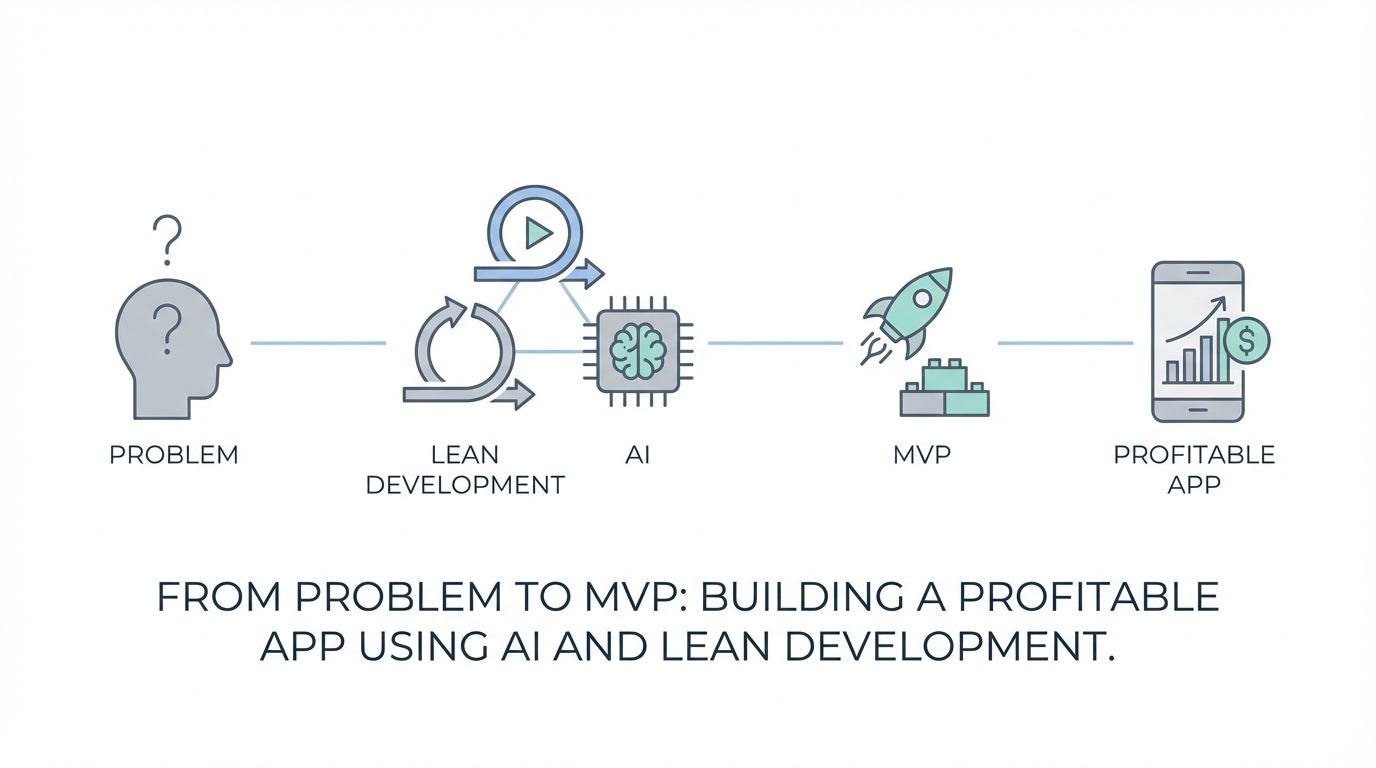
In the world of software development, the path from a lightbulb moment to a $40,000 per month recurring revenue stream is often paved with unnecessary complexity. Many aspiring entrepreneurs believe they need a massive team, millions in VC funding, and a perfectly polished product to even enter the market. However, as the story of Joe and his app, Waitly, demonstrates, the most successful ventures often start as a simple solution to a localized point of friction. By using a minimum viable product framework and leveraging modern tools, solo founders can now build an app with AI in a fraction of the time it took just five years ago.
The 'Friction First' Method: Identifying Market Gaps
Most great SaaS ideas aren't found in a laboratory; they are found in the middle of a frustrating user experience. Joe's journey began at a local brunch spot on a busy Saturday morning. After being placed on a waitlist, he received a text message containing a link to view his wait time. However, upon clicking, he was immediately prompted to download a major third-party app and create an account just to see how much longer he had to wait. By the time he navigated the sign-up process, his table was ready. This is a classic example of friction—a barrier between the customer and the value they are seeking.
The core philosophy of the 'Friction First' method is to look for instances where existing solutions are over-engineered or create unnecessary hurdles for the end-user. In this case, the friction was the forced account creation for a simple data point. Joe realized that a lean, web-based solution that required no downloads could serve both the restaurant and the customer more efficiently. To validate this, he didn't write a 50-page business plan; he listened to the suggestion of his wife and started building a prototype. According to Starter Story, this focus on solving a singular, painful problem is what allowed Joe to eventually scale to over 59 million parties waitlisted through his platform.
The Minimum Viable Product Framework: Speed Over Perfection
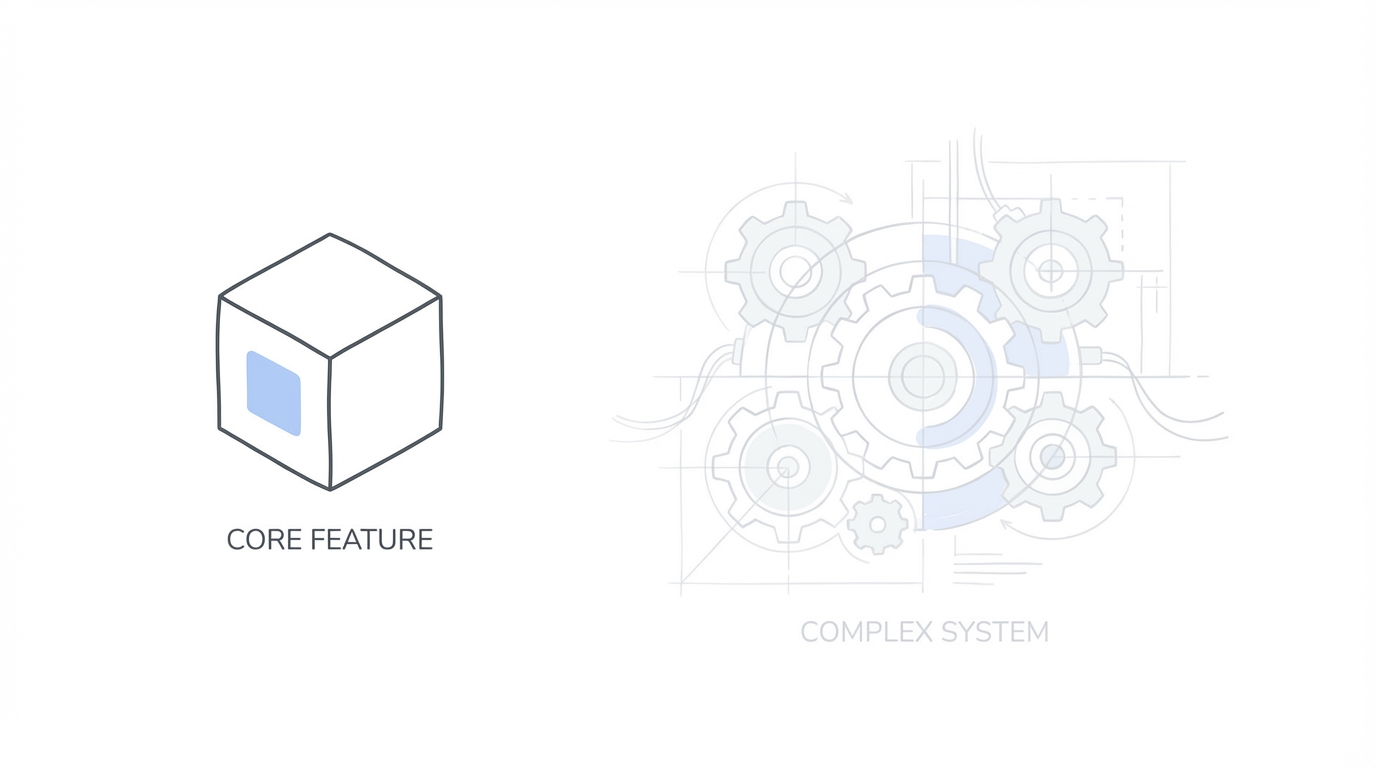
One of the biggest traps for solo founders is 'feature creep'—the desire to build every possible functionality before launching. Joe’s minimum viable product framework was ruthlessly simple: create a digital list that could add people and track their status. In fact, his first working prototype couldn't even send text messages yet. He focused entirely on the core utility of the app: managing a list of names and party sizes.
Lean software development dictates that you should launch when you are slightly embarrassed by your product. If you wait until it is perfect, you have waited too long. Joe took roughly a year and a half to refine the app to a point where it could handle in-app purchases on the App Store, but the initial validation came from just getting a functional list in front of potential users. This approach minimizes the risk of building something nobody wants. By launching a 'bare bones' version, you allow the market to tell you which features are actually necessary.
The Modern SaaS Tech Stack for Solo Founders
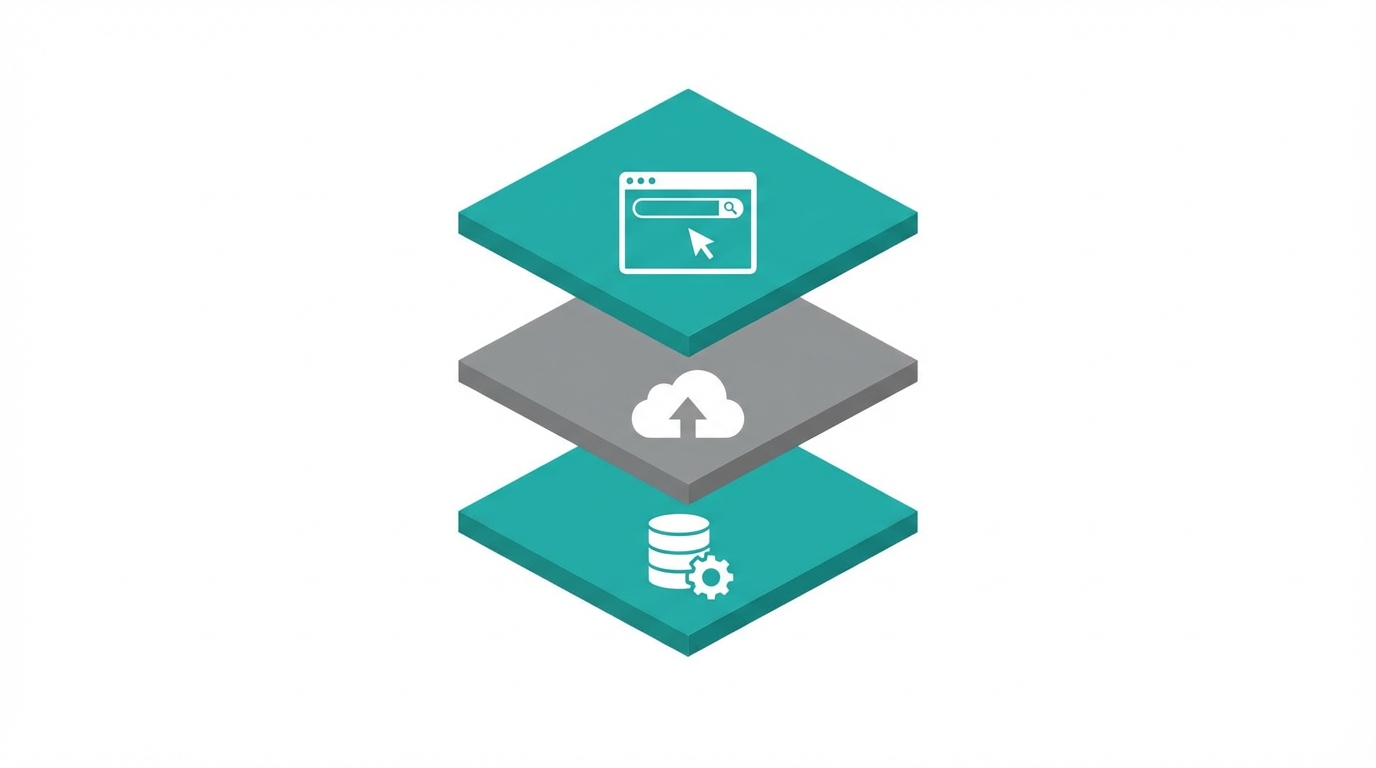
Building a scalable application as a single developer requires a tech stack that handles the 'heavy lifting' of infrastructure so you can focus on the unique logic of your business. Joe’s SaaS tech stack for solo founders relies heavily on managed services that scale automatically. At the heart of his operation is Google Firebase, which handles hosting, authentication, and the database. This eliminates the need for a solo dev to manage physical servers or complex backend configurations.
For the frontend and backend logic, the gold standard remains a combination of Node.js for backend services and ReactJS for the web interface. This JavaScript-centric stack allows for high code reusability and a massive ecosystem of libraries. For the mobile experience, Joe utilized Swift to build a native iOS application, ensuring a smooth user interface that feels 'at home' on an iPhone. To manage the financial side of the business without a full accounting team, many founders turn to platforms like Doola to handle LLC formation, bookkeeping, and tax compliance, allowing the founder to stay in 'builder mode' rather than 'admin mode.'
How to Build an App with AI: A Solo Developer Playbook
The emergence of Large Language Models (LLMs) has fundamentally changed how code is written. You no longer need to be a senior engineer with decades of experience to ship production-quality features. Joe currently spends approximately $200 a month on Claude to help with coding tasks and uses ChatGPT to generate marketing and email content. Here is a playbook for using AI to accelerate your development:
Step 1: Architect the Database Schema
Before writing a single line of UI code, use an AI tool like Claude to design your database structure. For a waitlist app, you might prompt: "Design a Firebase Firestore schema for a waitlist app that tracks customer names, phone numbers, party sizes, and 'notified' status." The AI can provide a structured JSON or NoSQL layout that ensures your data is organized for fast queries.
Step 2: Generate Boilerplate Logic
Writing standard functions like 'Add Customer' or 'Send SMS Notification' is repetitive. You can provide your tech stack details to the AI and ask it to generate the specific function. For example: "Write a Node.js cloud function for Firebase that sends a text message using the Twilio API whenever a new document is added to the 'waitlist' collection." This saves hours of documentation reading and debugging.
Step 3: Refine and Debug
When you encounter a bug, paste the error message and the relevant code snippet into the AI. Because tools like Claude have a deep understanding of lean software development patterns, they can often identify logic errors or syntax issues in seconds. This acts as a 24/7 pair-programmer for the solo founder.
How to Validate App Ideas and Drive Growth

Building the app is only half the battle; how to validate app ideas in the real world is where most founders fail. Joe used a data-driven approach by leveraging Apple Search Ads. By bidding on specific keywords like "restaurant waitlist" or "reservation system," he was able to place his app directly in front of people already searching for a solution. His metrics provide a masterclass in unit economics: a Customer Acquisition Cost (CAC) of approximately $130 against a Lifetime Value (LTV) of $750 to $1,000. When your LTV is nearly 6x to 8x your CAC, you have a business that is ready for aggressive scaling.
Beyond paid ads, validation comes from seeing how users interact with the tool. During the COVID-19 pandemic, Joe noticed a surge in retail chains needing to manage outdoor queues. By adapting his 'restaurant' app for general retail use, he was able to 10x his business in a single year, eventually reaching 700 paying locations. This level of adaptability is only possible when you maintain a lean operation. As your user base grows, you may also need to scale your marketing efforts. For instance, platforms like Stormy AI streamline creator sourcing and outreach, allowing you to find influencers who can demonstrate your app to new niches without you having to manually vet every creator.
The Iteration Loop: Turning Feedback into a Roadmap
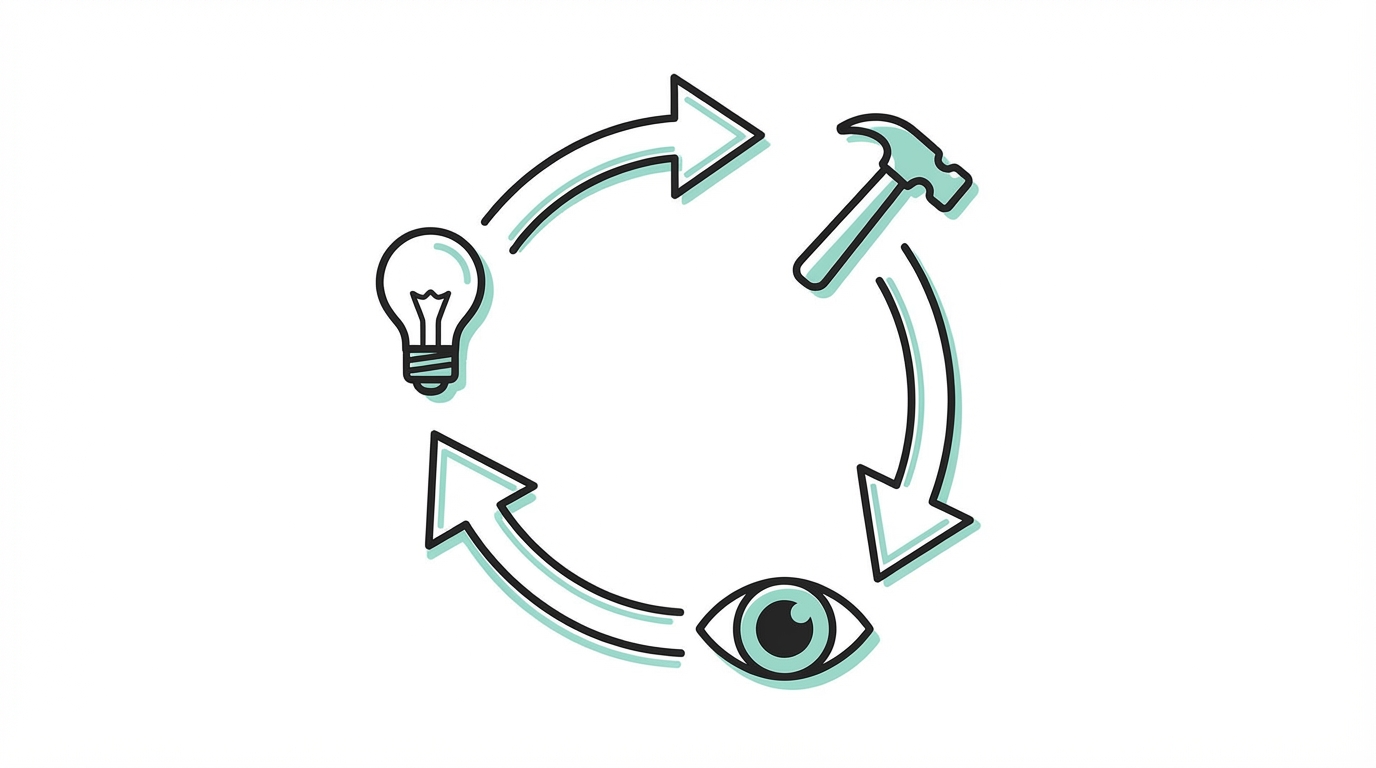
The final stage of the minimum viable product framework is the iteration loop. Once you have users, your job shifts from 'guessing' what they want to 'listening' to what they need. Joe uses a specific suite of tools to manage this feedback loop: SurveyMonkey for capturing structured user sentiment and Freshdesk for managing customer support tickets. This ensures that every bug report or feature request is documented and prioritized based on actual user pain.
To keep the business profitable as a solo dev, automation is key. Joe uses RevenueCat to handle complex mobile subscriptions and Stripe for web-based payments. By outsourcing these critical but non-core functions, he maintains a high-margin business where the primary costs are just software overhead and SMS fees. This lean approach allowed him to grow from making $0 in Year 1 to being on pace for over half a million dollars in revenue this year.
Conclusion: From Side Project to Half-Million Dollar Business
The journey from a brunch waitlist frustration to a $40k/month SaaS highlights a vital lesson for the modern entrepreneur: simplicity and speed win. By identifying a clear point of friction, utilizing a SaaS tech stack for solo founders, and learning how to build an app with AI, you can bypass the traditional barriers to entry in the tech world. Don't wait for a billion-dollar idea. Find a problem that is being poorly solved by the 'giants' of the industry, build a lean solution, and let your users guide your growth. Whether you are using Calendly to book demos or AI to write your backend logic, the tools to build your future are already at your fingertips. The only thing left to do is launch.