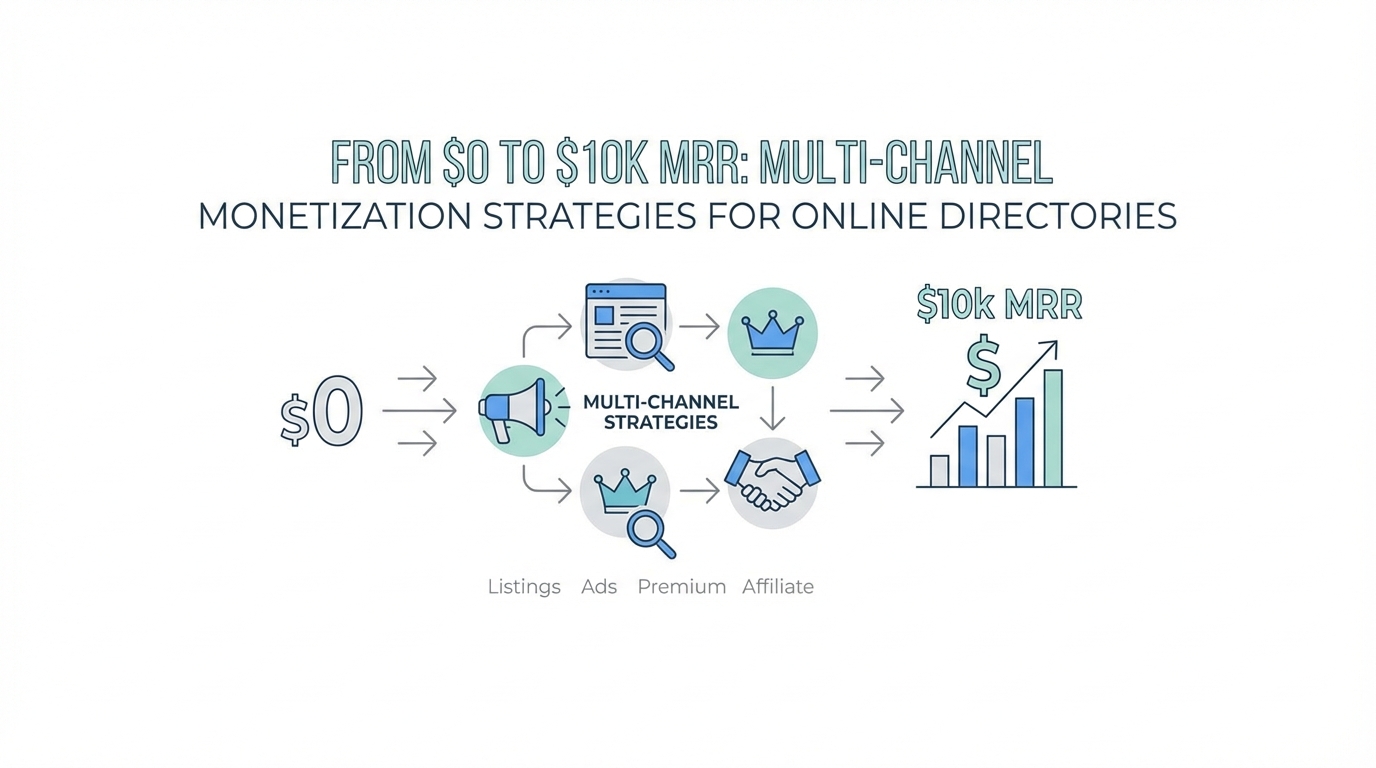
Most entrepreneurs look for the next flashy AI startup or a complex SaaS product to build their fortune. But there is a "boring" corner of the internet where people are quietly building $10,000 per month passive income streams with nothing more than a list of locations and a simple website. These are online directories—modern digital phone books that solve specific problems for niche audiences. While they might look like they are stuck in 1996, the revenue they generate is very much in the future. If you are looking for passive income ideas 2024, understanding how to scale online business models through directory structures is the ultimate shortcut to financial independence.
The Hierarchy of Directory Monetization: From Ads to Affiliates
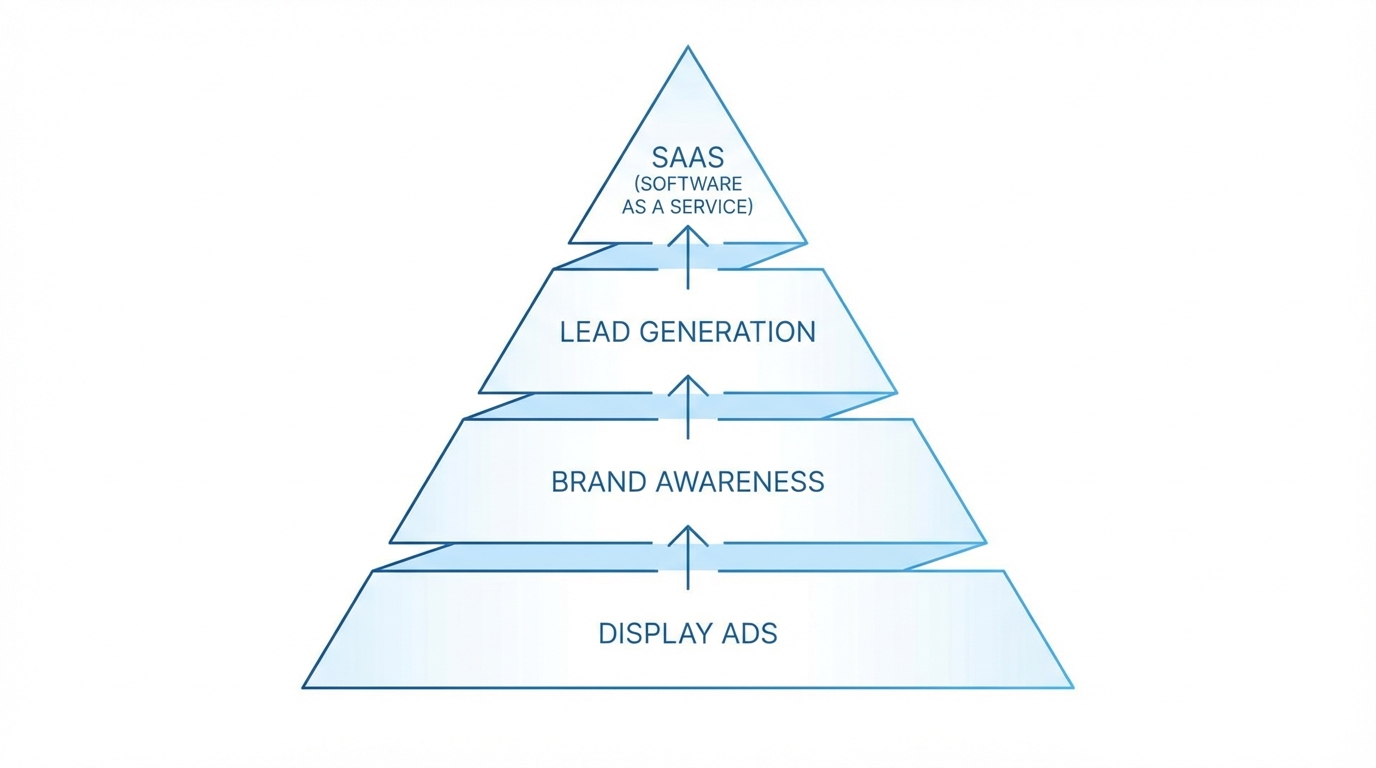
When you first launch a directory, your primary focus is traffic. Without eyeballs, your data is just a spreadsheet on a server. However, once the traffic starts flowing, you need a sophisticated approach to website monetization strategies. Most beginners start and stop at display ads, but high-revenue founders understand there is a hierarchy to how you extract value from a directory.
The base of the pyramid is Display Advertising. Sites like Roadside America or Find A Grave thrive on this. With 1.4 million monthly visitors, a site like Find A Grave can generate anywhere from $60,000 to $100,000 per month just through Google AdSense. It is the closest thing to true passive income because the content is static and the ads are served automatically. However, display ads typically offer the lowest RPM (revenue per thousand impressions).
To move up the hierarchy, you must integrate Affiliate Marketing. Take a directory like Atlas Obscura, which sees over 1.1 million visitors monthly. While they use display ads, they also sell books and link to travel experiences. If your directory covers dog parks, for example, your website monetization strategies should include affiliate links for pet insurance, DNA kits, or travel gear. This shifts your revenue from pennies per click to high-percentage commissions on high-ticket items.
At the top of the hierarchy is Lead Generation. This is where you transform a simple list into a lead generation directory. Instead of just showing a business address, you provide a form where users can request a quote or service. You then sell these high-intent leads to the businesses listed. This is the model used by industry giants and can easily push a directory into the $10k+ MRR territory because a single lead in industries like legal or home services can be worth $50 to $200.
Building 'Software on Top': Why Directories are the Ultimate Top-of-Funnel

One of the most powerful ways to scale online business in the directory space is to view the directory not as the end product, but as a customer acquisition engine. The hardest part of any SaaS business is the cost of customer acquisition (CAC). A directory solves this by providing free, organic traffic from users looking for a solution.
Imagine a directory for local farms and CSAs. The directory itself provides value by helping people find fresh produce. However, the real money is in building Software on Top—for example, a management platform that helps these farms handle subscriptions, deliveries, and payments. By funneling directory traffic into a proprietary software tool, you create a "moat" that competitors can't easily cross. You aren't just selling ad space; you are providing the infrastructure the industry needs to function.
This strategy also dramatically increases your business valuation. While an ad-supported site might sell for a 3x multiple of annual profit, a SaaS business with recurring revenue and a built-in acquisition channel can command a 5x to 10x multiple. This is how you transition from a lifestyle business to a high-multiple exit.
The 'BarkBox' Model: Turning Directory Traffic into a High-Value Data Asset

In the world of online business, data is often more valuable than immediate cash flow. Consider the BarkBox model. While they are known for their subscription boxes, their value skyrocketed because of the data they collected on pet owners. A directory is the perfect tool for gathering first-party data. If you own a directory of dog parks, you are sitting on a goldmine of information about dog owners in specific geographic locations.
By offering a lead magnet—such as a "State-by-State Guide to Off-Leash Safety" or a newsletter subscription—you can build an email list that is hyper-segmented. This list becomes an asset you can monetize repeatedly. You can use it to launch your own physical products, promote affiliate offers, or even sell anonymized market research to larger corporations. When a company like BarkBox gets acquired for $90 million, it isn’t just for their monthly revenue; it’s for the data-driven relationship they have with their customers.
To build this level of trust, your directory content needs to be high-quality. Simple text isn't enough anymore. Users want to see the parks, the shade, and the amenities. This is where modern tools become essential. To scale your content production, tools like Stormy AI can help you discover creators who specialize in your niche. By sourcing authentic User-Generated Content (UGC) from influencers who already visit these locations, you can enrich your directory with videos and photos that build massive credibility with your audience.
The 15-Minute Weekly Maintenance Playbook: Scaling to $10,000/Month
The dream of passive income ideas 2024 is often ruined by the reality of heavy maintenance. However, the secret to a low-maintenance directory is focusing on evergreen, location-based niches. Niche topics like "pumpkin patches near me" are highly seasonal and require constant updates, which kills your freedom. Instead, look for categories like "dog parks," "public boat ramps," or "recycling centers" where the data changes slowly.
Step 1: Identify Fragmented Search Intent
Use a tool like Ahrefs to find keywords with high volume (30k-100k searches) but low competition. Look for fragmentation. In our dog park example, people aren't just searching for "dog park." They are searching for "indoor dog park," "off-leash dog park," and "dog water park." This indicates that the general results on Google Maps aren't satisfying their specific needs.
Step 2: Automated Data Scraping and Enrichment
Don't manually copy and paste addresses. Use a specialized scraper like Outscraper to pull data directly from Google Maps. The key is data enrichment. Use the scraper to get reviews, hours, and location IDs. Then, use AI tools or specialized scripts to parse those reviews for specific features—like whether a park has shade, benches, or water fountains. This "enriched data" is what makes your directory better than the competition.
Step 3: Build a Static Pillar Page Directory
You don't need a complex backend. A static pillar page on a platform like WordPress or a modern CMS can rank for thousands of keywords. By creating long-form pages that target specific cities (e.g., "Best Dog Parks in Los Angeles"), you capture the high-intent traffic that advertisers love. Once the SEO is set, the site requires almost zero daily work.
Leveraging UGC and AI for Content Dominance

As you scale, you will find that the highest-ranking directories are those that feel "alive." If your directory is just a sterile list of addresses, users won't stay long. To increase your Time on Page and Domain Authority, you need to incorporate social proof. This is where the intersection of UGC and AI becomes your competitive advantage.
For a directory owner, manually reaching out to hundreds of people for photos is impossible. However, you can use Stormy AI to set up an AI agent that automatically discovers and outreaches to creators in your specific niche. If you are building a directory of "Instagrammable Cafes," you can find local lifestyle influencers, send them AI-personalized emails, and manage the relationship through a built-in Creator CRM. This allows you to populate your directory with high-quality visual content on autopilot, making your site the definitive resource in your niche.
By integrating UGC creator sourcing into your workflow, you move beyond being a mere data aggregator. You become a community hub. Advertisers are willing to pay a premium to be featured on sites that have high engagement and authentic visual content, further boosting your lead generation directory revenue.
From Lifestyle Business to a High-Multiple Exit
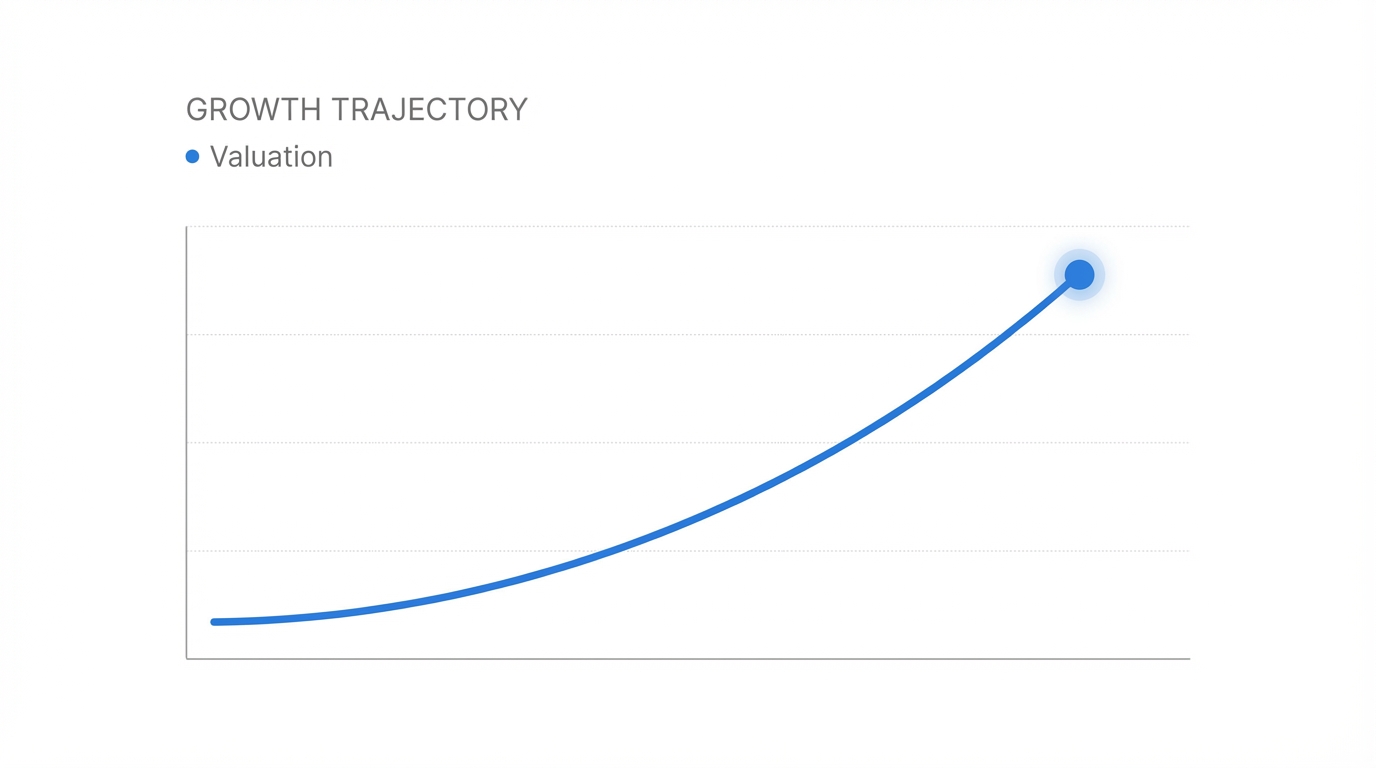
The final step in your journey to $10k MRR and beyond is preparing for an exit. A directory that makes $10,000 a month with 15 minutes of work is an incredible lifestyle business, but it is also a highly liquid asset. Investors are currently hungry for "boring" cash-flow businesses that have predictable SEO traffic.
To maximize your exit value, ensure you have: 1) Clean, first-party data (your email list), 2) Diversified revenue streams (ads + affiliates + lead gen), and 3) A documented SOP (Standard Operating Procedure) for your scraping and enrichment process. When you can show an acquirer that the business runs without you, you are no longer just selling a website—you are selling a passive income machine.
Whether you choose to keep the site as "mailbox money" to pay your mortgage or sell it for a life-changing sum, the directory model remains one of the most accessible ways to scale online business in 2024. By focusing on utility, data enrichment, and smart monetization, you can turn a simple list of locations into a thriving digital empire.
Conclusion: Your Path to $10k MRR
Building a profitable online directory doesn't require a computer science degree; it requires pattern recognition and persistence. By identifying niches with fragmented search intent, enriching your data with AI, and moving up the hierarchy of website monetization strategies, you can create an asset that generates revenue while you sleep. Remember to focus on evergreen niches, leverage tools for UGC and outreach, and always look for ways to build "Software on Top." The internet is full of boring data waiting to be organized—your job is to find it and turn it into gold.