In the traditional software-as-a-service (SaaS) world, the path to conversion is often treated like a series of hurdles. We ask users to book a demo, sign up for a trial, verify their email, and then integrate a complex SDK—all before they see a single ounce of value. But a new breed of tools is flipping the script. By adopting a frictionless go-to-market strategy, products like ChartDB and Claude Code are achieving massive adoption by meeting users exactly where they are: in their local environments, without a registration wall in sight.
The core philosophy is simple: Value first, friction later. When developers or technical buyers encounter a tool that solves a specific pain point instantly, the psychological barrier to eventually paying for a cloud version or a team license vanishes. This article explores the mechanics of this "low friction marketing" approach, drawing on the success of ChartDB—which recently surpassed $9,400 in Monthly Recurring Revenue (MRR) and 21,000 GitHub stars—to provide a playbook for modern SaaS customer acquisition.
Designing for Constraints: Building for the Persona's Specific Workflow Hurdles
Most founders build for an "ideal" scenario where the customer has a corporate credit card ready and no security concerns. In reality, the developer persona is defined by constraints. They often work in environments where they cannot easily share database credentials with a third-party AI wrapper, or they simply don't want to deal with another sales representative.
Jonathan Fishner, co-founder of ChartDB, learned this the hard way. His team originally built an AI database client that required users to provide database access and credentials. "People don't really adopt that... without any credibility and trust from the engineers, we said it's too tough," Fishner explained during an interview on Starter Story. They pivoted to a visualization tool that runs locally, requires no sign-up, and asks for zero credentials.
To win in developer persona marketing, you must build for the reality of their workflow. If your tool requires a Docker container, an NPM install, or a simple SQL query to show value, it will always outperform a tool that requires a "Book a Demo" button. This shift from permission-based software to utility-based software is the foundation of the product-led growth examples we see dominating the market today.
"Every persona has their constraints. Developers prefer self-hosted tools they can test on their local environment instead of going through a sign-up wall."
The 'Wedge' Strategy: Why One Core Value Trumps a Full-Feature Vision
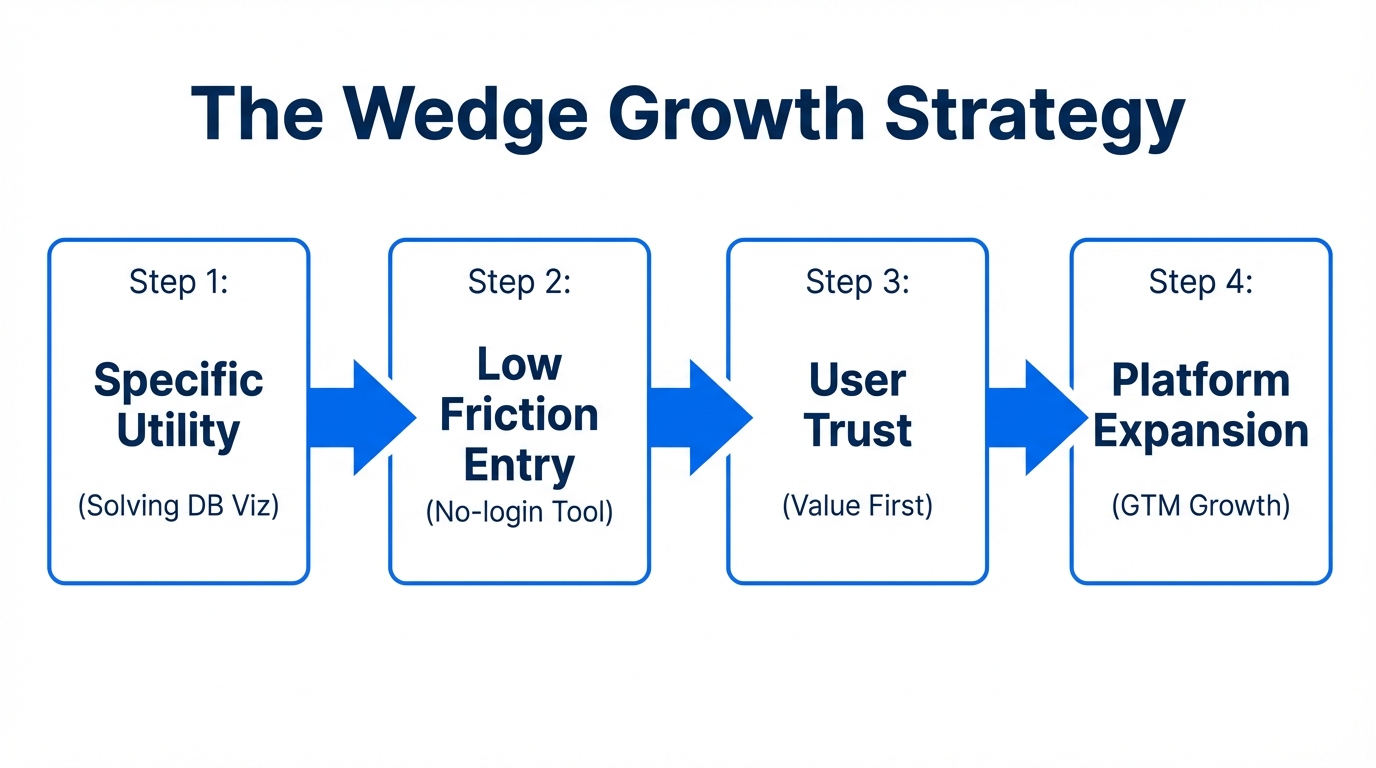
A common mistake in any go-to-market strategy is trying to build the "all-in-one" platform too early. Large platforms feel heavy and complex, which creates friction. Instead, successful modern tools use a "wedge" strategy: solving one highly specific, painful problem so well that it becomes an obvious choice.
For ChartDB, the wedge was database visualization. By creating a "smart query" that a developer can run in their own client (like DBeaver or TablePlus) and paste into ChartDB, they turned a complex task—manually mapping an Entity Relationship Diagram (ERD)—into a 10-second visualization. They didn't try to build a full database management suite; they built a tool that made the database look good and easy to interact with.
| Feature Focus | Legacy GTM Approach | Frictionless 'Wedge' Approach |
|---|---|---|
| First Action | Create Account / Sign Up | NPM Install / Run Query |
| Data Privacy | Connect Database to Cloud | Local Processing / No Credentials |
| Core Value | Full CRM/Admin Suite | One-Click Visualization |
| Monetization | Paywalls on Core Features | Usage/Collaboration Scaling |
By being obsessed with one core value, you create a "wow effect" that triggers word-of-mouth. When a tool is 10x better at one specific thing, it bypasses the need for traditional outbound sales. It becomes a utility that developers share on platforms like Hacker News or Reddit because it solves a problem without making their lives harder.
Self-Hosting as a Marketing Funnel: Driving Cloud Subscriptions
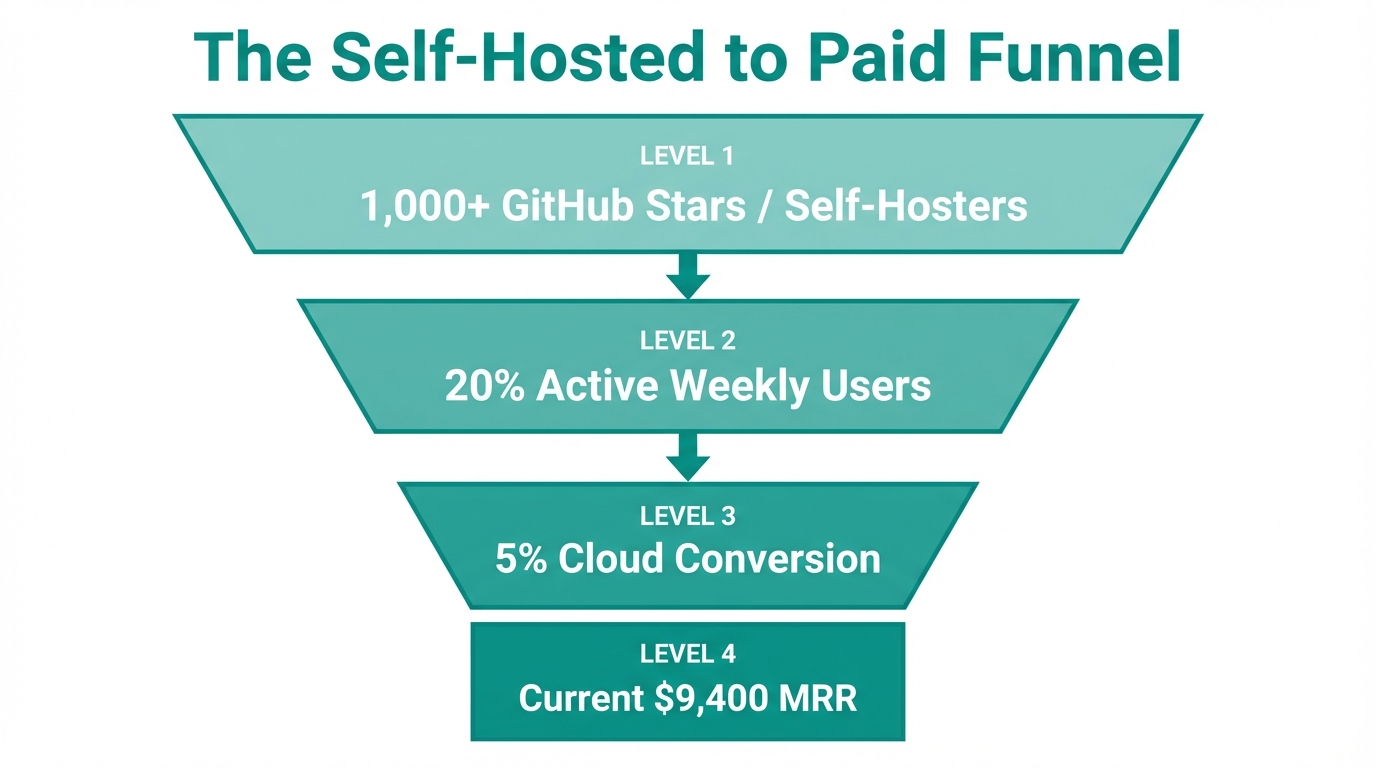
One of the most effective low friction marketing tactics is offering an open-source, self-hosted version of your product. This acts as the ultimate "top of funnel." ChartDB allows developers to use the tool for free on their local machines. Once that developer integrates it into their workflow and wants to collaborate with a team in real-time, they naturally migrate to the paid ChartDB Cloud version.
This "Open Core" model works because it aligns the interests of the user and the business:
- User side: They get a powerful, free tool they can trust because they can see the source code on GitHub.
- Business side: Usage patterns dictate monetization. Instead of guessing what to charge for, you wait for users to ask for features—like team collaboration or persistent hosting—that are inherently cloud-based.
ChartDB uses a modern tech stack to maintain this growth, including React, Tailwind CSS, and AWS for their cloud hosting. They manage their transactional emails via Resend and process payments through Stripe, keeping their overhead low while scaling to nearly $10k MRR with a tiny team.
Lessons from Claude Code: High-Utility and Viral Loops
The success of ChartDB isn't an isolated incident. We are seeing a massive surge in CLI-based and terminal-based tools like Claude Code. Within a week of release, Claude Code achieved hundreds of thousands of interactions. Why? Because it lives in the terminal—the developer’s home. It doesn't require a complex browser-based onboarding; it requires a command like npm install -g @anthropic-ai/claude-code.
This low-friction entry point creates a viral loop. When a tool is this easy to install, it becomes highly "shareable" in technical communities. You aren't asking a friend to "sign up for this service"; you are telling them to "run this command." The velocity of adoption for terminal-based or open-source utilities is exponentially higher than traditional SaaS because the time-to-value is measured in seconds, not minutes or hours.
"Distribution should feel natural. Market where the ICP lives—GitHub, Hacker News, and niche subreddits—rather than trying to invent new channels."
For brands looking to replicate this, identifying the right influencers and creators to showcase these tools is critical. Using platforms like Stormy AI, marketing teams can discover technical creators on YouTube or TikTok who specialize in developer tools and open-source projects, allowing for highly targeted SaaS customer acquisition through authentic technical reviews rather than flashy ads.
Marketing Where the ICP Lives: Natural Distribution
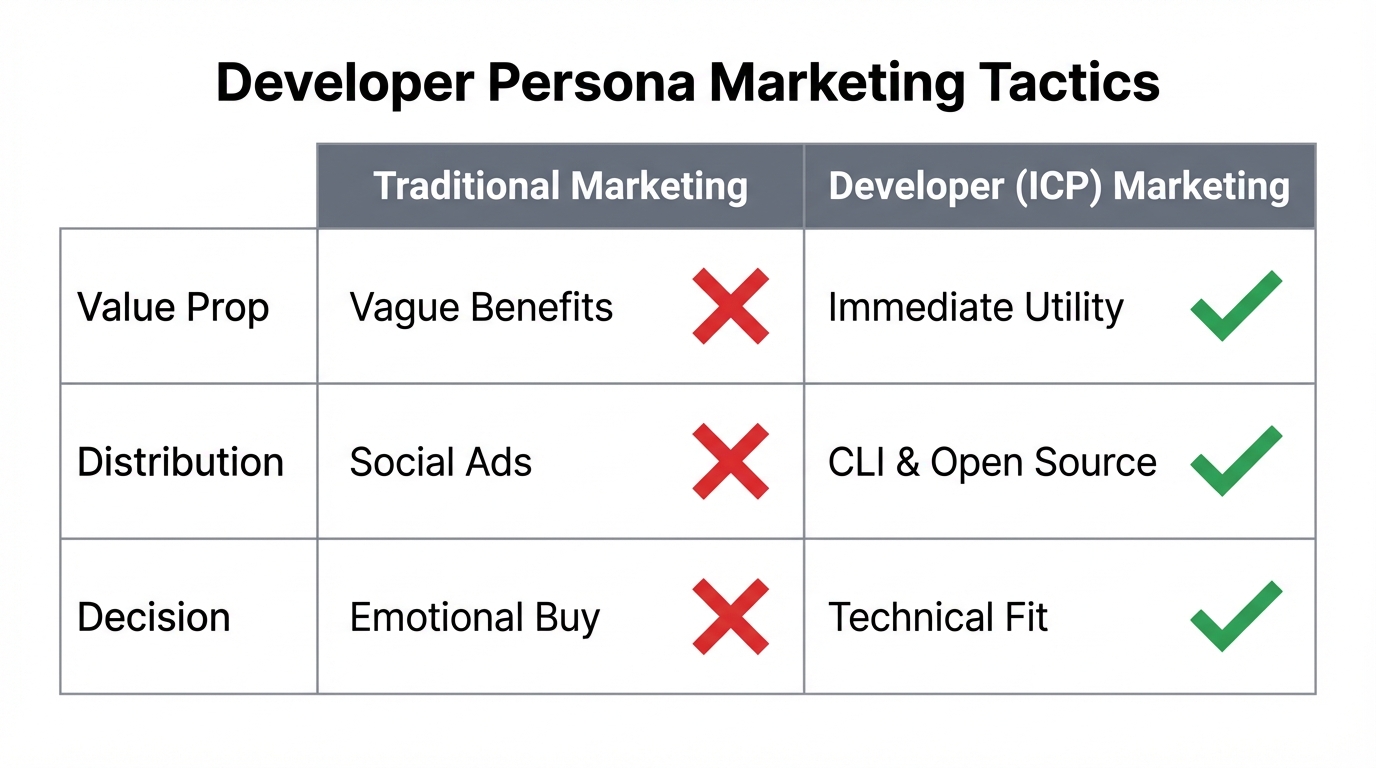
A frictionless product still needs a distribution engine. However, for technical products, traditional advertising on Meta Ads Manager often yields lower ROI than community-driven growth. ChartDB’s growth exploded after a single Show HN post on Hacker News, which brought thousands of engineers to the site in 24 hours.
The playbook for this distribution includes:
- Showcase, don't tell: Use platforms like Framer to build a marketing site that shows a live demo or a video of the tool in action before the fold.
- Leverage Organic Reach: Use tools like Ahrefs to identify keywords your ICP (Ideal Customer Profile) is searching for, such as "database schema visualizer" or "ERD generator."
- Analyze Behavior: Use privacy-focused analytics like Plausible Analytics to see which features users interact with most in the free version.
Monetization as a Response, Not a Guess
The final lesson from the frictionless model is that monetization should be a response to user behavior. ChartDB didn't start with a pricing page. They watched how users interacted with the tool and waited for the pain points of the free version to emerge. When users began asking for way to share their diagrams with their teams, they knew they had a reason to build a paid cloud tier.
By delaying monetization until you have proven utility, you ensure that you aren't building features nobody wants to pay for. You move from "selling a product" to "providing a solution" for a problem your users have already identified in their daily work. This creates a sustainable growth loop where the free product seeds the market and the paid product captures the value of the most power users.
Conclusion: The Future of GTM is Seamless
The success of ChartDB and the rapid rise of tools like Claude Code signal a permanent shift in go-to-market strategy. The era of gated software and high-friction onboarding is giving way to high-utility, low-friction utilities that respect the user's time and security constraints.
If you are building a product in 2026, your mission is simple: Pick one core value and defend it aggressively. Remove every barrier between your user and that value. Whether it’s through an open-source wedge, a CLI-first approach, or a "no-registration" web tool, the winner in any category will be the one that provides the most value with the least resistance. For those ready to scale, remember to focus on where your users already live—and use the right tools to find the voices that can amplify your message to the right audience.