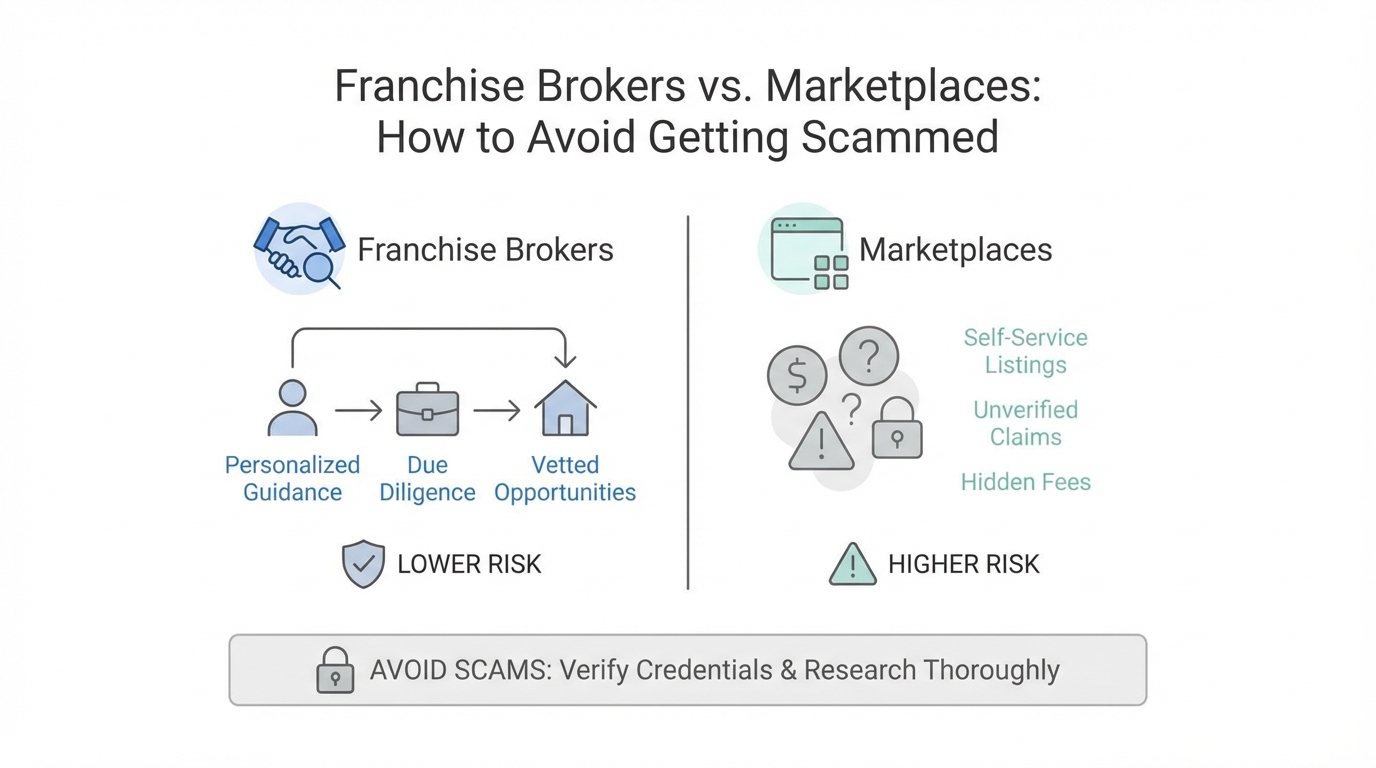
Franchising is often cited as the most overlooked path to wealth creation in America. According to industry data, there are more millionaires generated from franchising than all the combined players who have ever played in the NFL. Despite this massive potential, the industry remains a bit of a "black box" for the uninitiated. Most people assume that entering the world of franchising requires millions of dollars for a McDonald's or a Subway, yet the market consists of over 4,000 distinct brands across dozens of industries. However, navigating this hay stack of opportunities requires more than just a checkbook; it requires a deep understanding of the systemic misalignments that plague the franchise sales process. If you are asking yourself is a franchise a good investment, you must first learn how to bypass the gatekeepers who are incentivized to sell you a dream rather than a viable business.
The 'Dirty Secret' of Franchise Brokers: 60% Commissions
The most significant hurdle for prospective investors is the lack of transparency in how franchises are sold. In the real estate world, agents are licensed, their commissions are disclosed, and they have a fiduciary duty to their clients. In the world of franchise consulting, it is the Wild West. There is currently no federal licensing requirement to become a franchise broker. You, your neighbor, or a random person on LinkedIn could decide to call themselves a consultant tomorrow without passing a single exam or registering with a state board. This lack of oversight has led to many franchise consulting scams where the "advisor" is nothing more than a high-pressure salesperson.
The core of the issue lies in the commission structure. It is not uncommon for a franchise broker to take a commission as high as 40% to 60% of the initial franchise fee. When a franchise fee is $50,000, the broker stands to make $30,000 for a single signature. This creates a massive incentive for the broker to say whatever is necessary to close the deal. Unlike a business partner, the broker does not care if you are profitable three years from now; they are paid upon the execution of the contract. This is why many experienced operators recommend looking at the industry through a critical lens, much like how you would vet a high-budget campaign on Meta Ads Manager where tracking every dollar of ROI is essential. You can achieve this same level of transparency by using Stormy AI to monitor post-performance and track engagement across social platforms once your franchise is live.
The Filter Bubble: Why You Only See a Fraction of the Market


Because brokers rely on these massive commissions, they typically only work with a "portal" or a select group of brands that have agreed to pay those fees. While there are over 4,000 franchise brands in existence, a typical broker might only represent 15 to 20 of them. When you engage with a consultant, you aren't seeing the whole market; you are seeing their specific inventory. This is the ultimate franchise broker red flag. If your consultant is steering you toward a specific brand of gym or a boutique cookie shop without explaining why it fits your specific financial goals better than the other 3,900 options, you are likely in a filter bubble.
Modern platforms like Stormy AI, an AI-powered platform for creator discovery, especially for mobile app marketing and UGC campaigns, help brands find partners by using data to bridge the gap, and a similar approach is needed in franchising. Instead of relying on a human gatekeeper, modern investors are turning to data-scraping tools and marketplaces that analyze the entire universe of Federal Trade Commission (FTC) filings. By looking at the raw data, you can see which brands are actually growing and which ones are simply good at marketing to prospective franchisees. For example, brands like Dave's Hot Chicken have seen viral growth not just because of their food, but because their unit economics are robust, often generating over $3 million in average revenue per location.
How to Spot a 'Lemon' Franchise: Red Flags in the FDD
To truly understand how to research a franchise, you must become an expert in the Franchise Disclosure Document (FDD). This is a 200+ page legal document that every franchisor is required by law to provide to prospective buyers. While most people skip to the earnings claims (Item 19), the real secrets are buried in the other sections. A franchise disclosure document analysis should always start with Item 20, which tracks the health of the system. You want to look for a high number of "terminations," "non-renewals," or "reacquired by franchisor" units. If a brand has sold 100 units but only 20 are open, that is a massive red flag indicating that the system is failing to get locations off the ground.
Other red flags include:
- Significant Litigation (Item 3): If the franchisor is constantly being sued by its own franchisees, there is a systemic issue with their support or their business model.
- Bankruptcy (Item 4): Any history of corporate bankruptcy should be a non-starter.
- Declining AUV (Average Unit Volume): If the revenue per unit is dropping year-over-year while the system is expanding, the brand may be over-saturating markets or losing its competitive edge.
When investigating these metrics, you should treat it with the same technical rigor you would apply to Apple Search Ads analytics. You are looking for a trend line that moves upward, not just a snapshot of success. For instance, in the home services sector, brands like Aftermath.com have found success in specialized niches like crime scene cleanup because they provide a service with high barriers to entry and consistent demand that isn't tied to consumer fashion trends.
The Franchise Research Playbook: Step-by-Step
To avoid the pitfalls of the industry, you need a repeatable process. Do not let a broker rush you into a "Discovery Day." Instead, follow this playbook to ensure you are making an objective decision.
Step 1: Scrape and Compare the Data
Don't settle for the brochures. Use data tools to look at the entire category. If you are interested in fitness, don't just look at Orange Theory; look at every boutique fitness brand and compare their initial investment costs vs. their Item 19 earnings. You are looking for the best Cash on Cash IRR. A good franchisee should be upset if they aren't seeing a return north of 25% annually once the business is stabilized.
Step 2: Conduct "Validation Calls" Beyond the Referral List
The franchisor will give you a list of 3-5 happy franchisees to call. Ignore them. Instead, go to LinkedIn and find owners who are not on that list. Reach out and ask them three specific questions:
- Would you do this again knowing everything you know now?
- Is the 6% royalty actually worth the support you receive?
- How long did it take you to actually become cash-flow positive?
Step 3: Evaluate the "Unattended" and Passive Models
One of the biggest trends in modern franchising is the shift away from labor-heavy businesses. With rising labor costs, brands like Another9—an unattended indoor golf simulator franchise—are gaining traction. These models use technology to allow customers to fob into a facility 24/7 without on-site staff. This drastically reduces the headaches of management and increases margins. As you discover creators on Stormy AI to market your new venture, having a business with high margins allows you more budget to reinvest in growth.
Using AI and Data Scraping for Objective Metrics


The future of franchising lies in democratization through technology. Just as Google Ads revolutionized how we find customers, AI-powered marketplaces are revolutionizing how we find businesses. By using AI to match your net worth, skill set, and risk tolerance against thousands of FDDs, you can find "hidden gems" that brokers would never show you because they don't pay high enough commissions.
For example, senior care and turf installation are two "unsexy" industries with massive tailwinds. The aging Baby Boomer population is creating a supply-demand imbalance in senior care, while environmental regulations in states like Nevada are forcing homeowners to switch to artificial turf. These aren't the types of businesses that make for a flashy Instagram post, but they are the ones producing annual revenues of $1.3 million with $270,000 in profit for a relatively low initial investment. By using objective data tools, you can spot these trends before they become mainstream. Similarly, you can use Stormy AI to set up an autonomous AI agent that discovers and reaches out to niche-relevant creators on a daily schedule to promote your new franchise.
Building Your Fiduciary Team: Why You Need Specialists
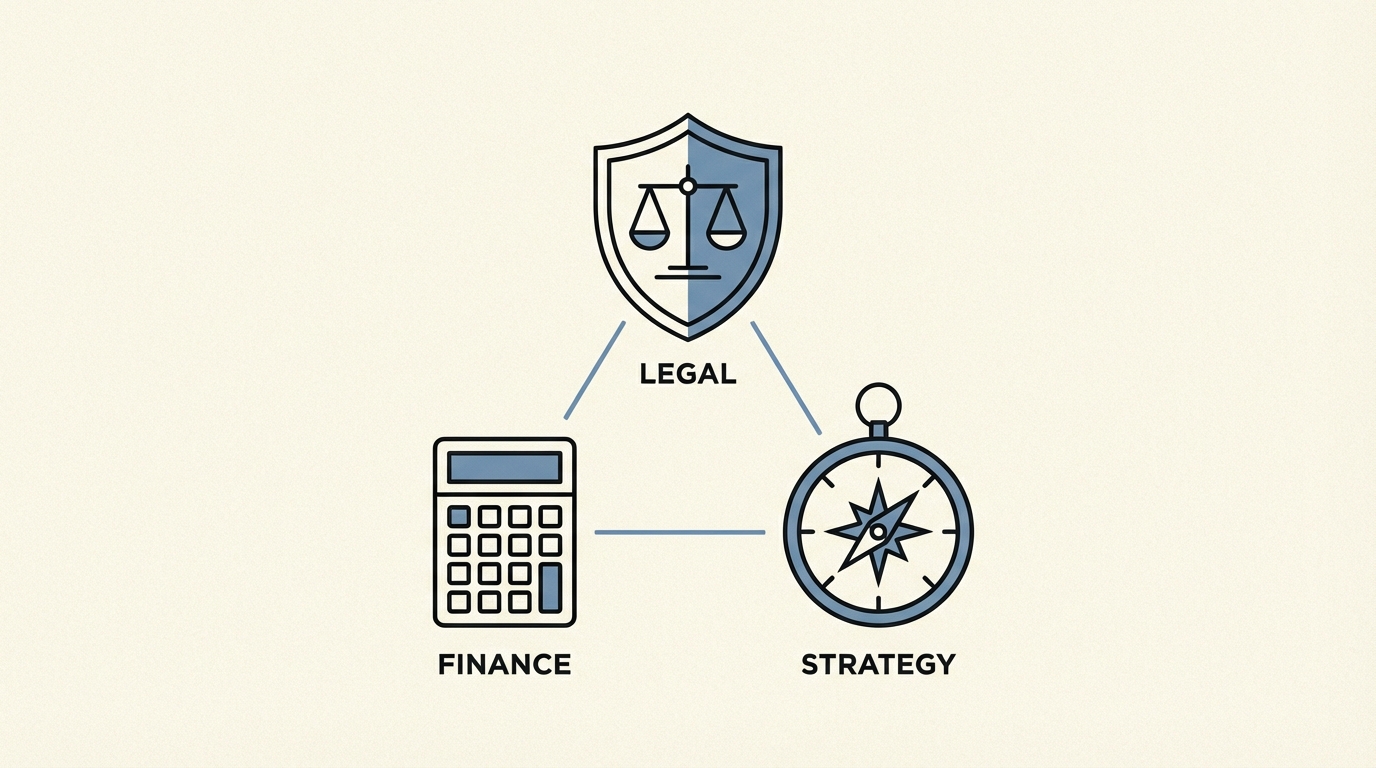
If you decide to move forward, you must build a team that works for you, not the franchisor. This starts with a franchise attorney. General business lawyers will not understand the nuances of a franchise agreement, which is notoriously one-sided in favor of the franchisor. You need someone who can negotiate specific clauses, such as the right to sell the business later or the protection of your exclusive territory.
Secondly, you need a CPA who specializes in the franchise model. They will understand how to structure your SBA loan and how to account for royalties and marketing fund contributions. Remember, when you use a platform like Stormy AI to manage your creator CRM and find UGC creators for your local business, those are business expenses that need to be modeled into your initial pro-forma. A specialized CPA will help you understand your true break-even point after the franchisor takes their 6% royalty and 2% marketing fee.
Conclusion: Taking Control of Your Investment
Franchising can be a powerful engine for wealth, but only if you enter the deal with your eyes wide open. To avoid franchise consulting scams, you must realize that the person "helping" you find a business may have a $30,000 reason to ignore the franchise broker red flags. By taking a data-driven approach, analyzing the FDD with a specialized team, and looking beyond the 20 brands recommended by brokers, you can find a business that offers a genuine path to financial freedom. Whether you are looking for a passive model like an unattended gym or a high-growth brand like Dave's Hot Chicken, the key is to be an investor first and an enthusiast second. Do the work, vet the data, and build your own legacy on a foundation of facts, not sales pitches.