The journey from a napkin sketch to a functional software product has historically been a high-friction marathon of hiring, technical debt, and endless debugging. However, early 2025 has signaled a fundamental shift in the entrepreneurship AI tools landscape. We have moved beyond "chatbots that suggest" to "agents that execute." At the forefront of this revolution is Claude Code, an agentic CLI tool that allows solo founders and lean teams to build complex software at a speed that was previously reserved for well-funded engineering departments. If you are looking to master SaaS MVP development, the rules of the game have just been rewritten.
The New Standard for MVP Throughput: 20-40% Efficiency Gains
For a founder, time is the only currency that matters. Recent data shows that the barrier to entry for technical execution is collapsing. According to the 2024 Stack Overflow Developer Survey, 76% of developers were already planning to use AI tools, a figure that surged to 84% by early 2025. This isn't just a trend; it's a structural change in lean startup execution.
The core engine behind this acceleration is Claude 3.5 Sonnet. When benchmarked against real-world coding challenges, Claude 3.5 Sonnet scored 49.0% on SWE-bench Verified, vastly outperforming legacy models. For a founder, this means that the AI can now handle the "heavy lifting" of writing functional, context-aware code rather than just acting as a glorified autocomplete. It allows you to move from the drawing board to a live environment in weeks rather than months.
"The shift from interactive chat to agentic orchestration means founders can now manage their codebase like a CEO, not just a line-cook."
The Rapid Prototyping Playbook: Backends in Under 20 Minutes
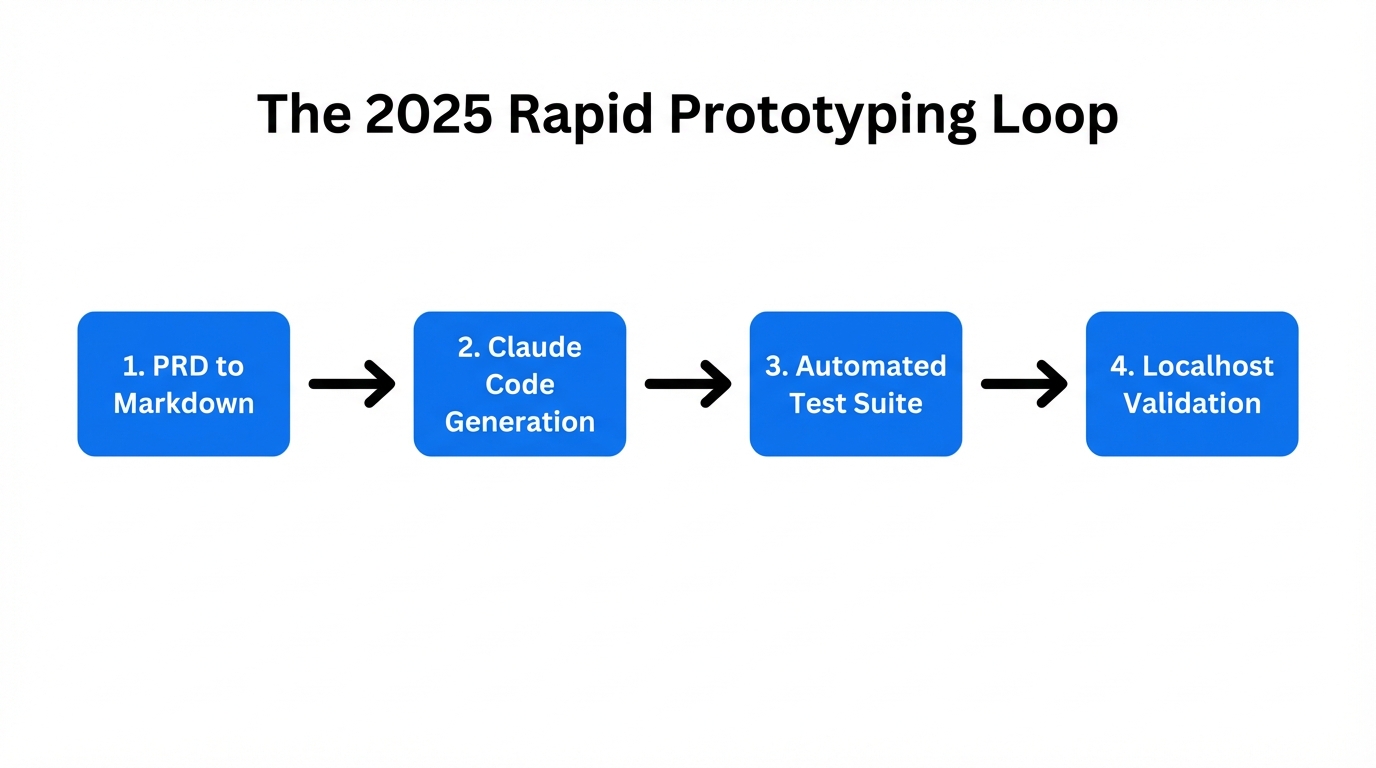
One of the most powerful applications of rapid prototyping for founders is the ability to scaffold complex backends almost instantly. In the past, setting up a FastAPI backend with authentication, database migrations, and password hashing would take a full day of focused work. With Claude Code's terminal-first workflow, this process is compressed into a 20-minute conversation.
| Development Phase | Traditional Timeline | AI-Powered (Claude Code) |
|---|---|---|
| Environment & Boilerplate | 4-6 Hours | 5 Minutes |
| Auth & Database Schema | 1-2 Days | 15 Minutes |
| API Integration | 3-5 Days | 2-3 Hours |
| Unit Test Generation | 1 Day | 10 Minutes |
The Step-by-Step Scaffolding Process
- Initialize the Agent: Use the CLI to give Claude access to your local repository. For trusted environments, use the
--dangerously-skip-permissionsflag to allow the agent to edit files without a prompt for every single line of code. - Define the Architecture: Instead of coding, use natural language. Instruct Claude to "Build a FastAPI backend with PostgreSQL, include JWT authentication, and create a user registration endpoint."
- Iterate and Run: Unlike simple LLMs, Claude Code can run tests and fix bugs iteratively. If the code fails a linting check, the agent sees the error in the terminal and corrects it automatically.
Strategic Context Engineering: Using CLAUDE.md
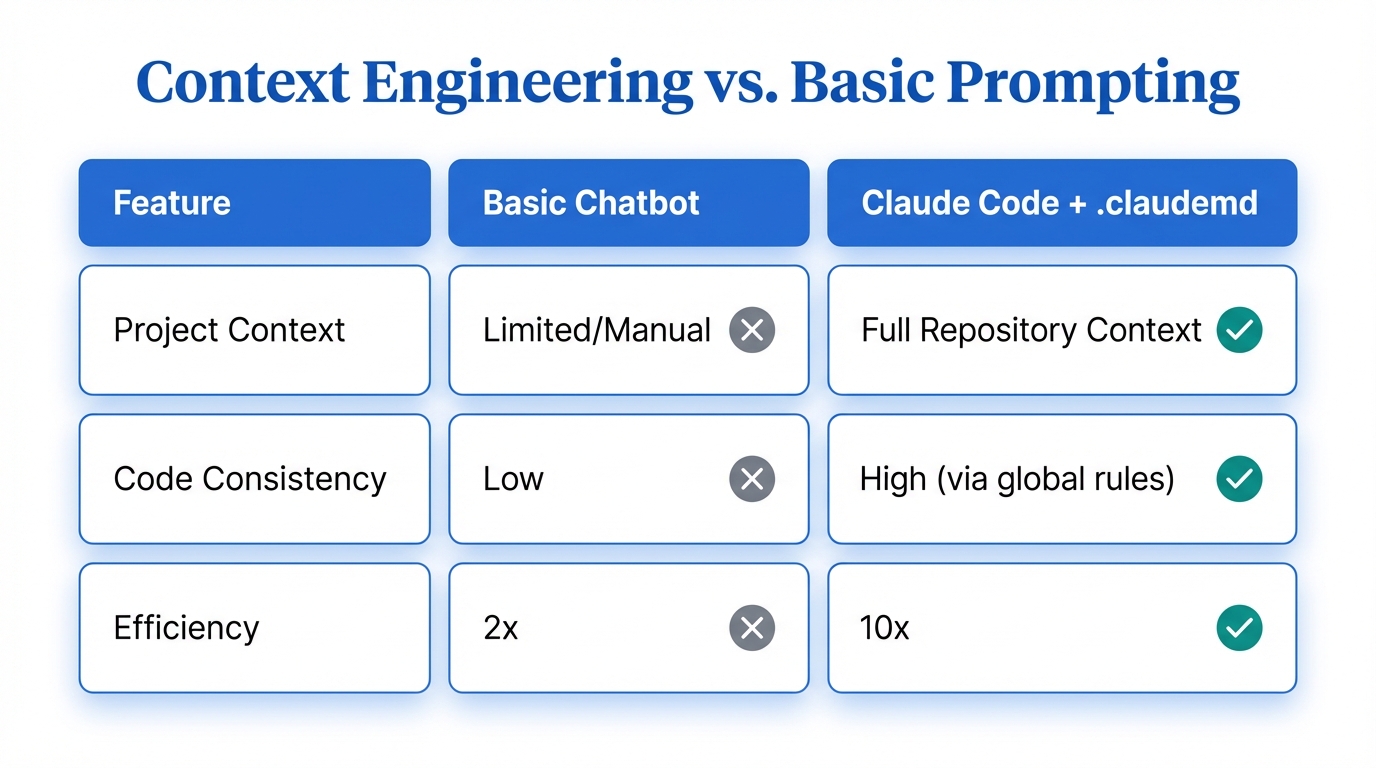
As a founder, you cannot afford for your AI to lose its "memory" of your brand or business logic. This is where Context Engineering becomes critical. By creating a CLAUDE.md file in your root directory, you establish a permanent "brain" for the AI. This file should contain your architectural decisions, naming conventions, and preferred tech stack standards.
Claude Code reads this file at the start of every session, ensuring that every new feature aligns with your Claude 3.5 Sonnet for business strategy. Without this, you risk the AI introducing conflicting libraries or ignoring your specific brand styling. Experts warn that 48% of AI-generated code can contain vulnerabilities if not properly constrained; use your CLAUDE.md file to enforce security rules like "Never hardcode API keys" and "Always use .env files for secrets."
"CLAUDE.md is not just a README; it is the constitution for your autonomous developer agent."
Managing Technical Debt and Scaling Costs
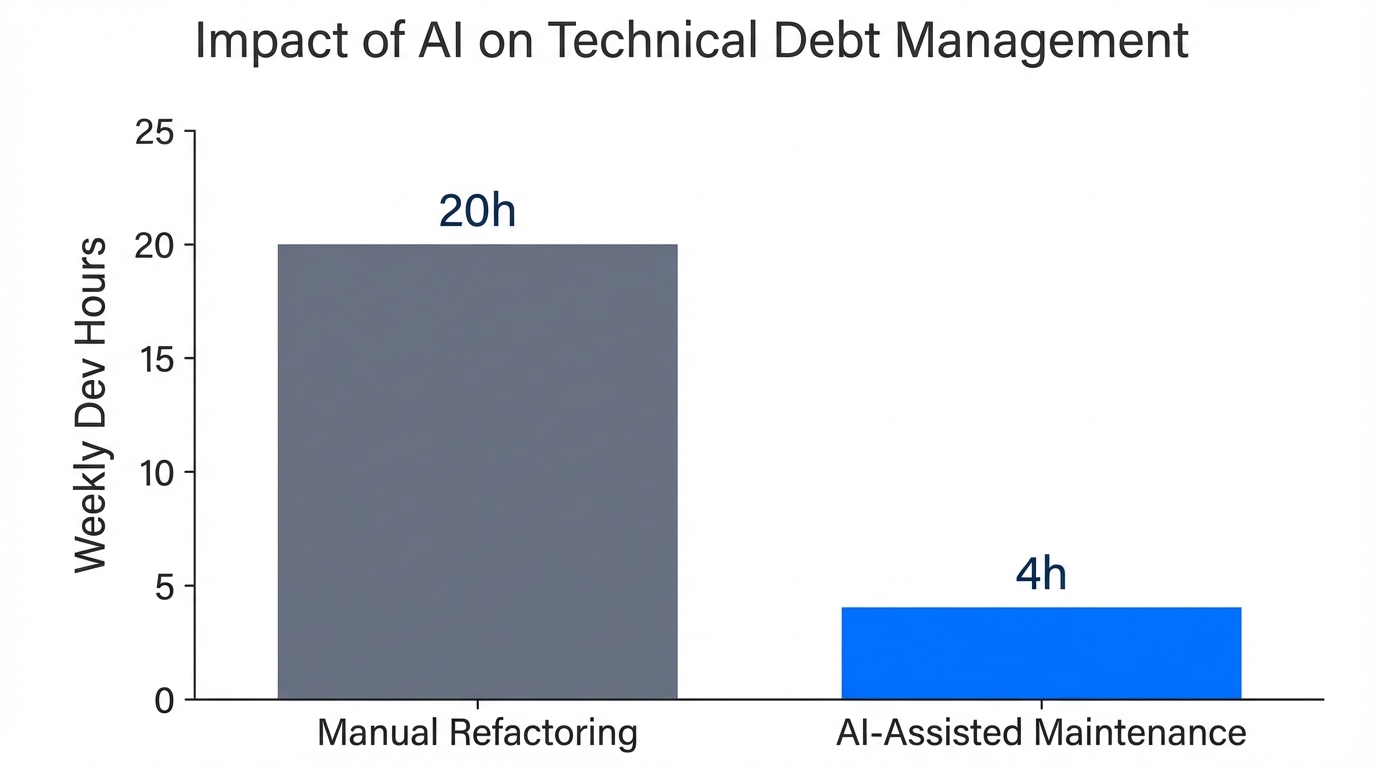
While AI can build quickly, it can also create "technical debt at lightspeed." A common mistake for founders is treating the AI as an autopilot rather than a co-pilot. To avoid this, utilize the /plan mode. Before a single line of code is written, have the agent outline its multi-step implementation. Review the plan to ensure it isn't hallucinating complex solutions for simple problems.
Furthermore, managing costs is vital for lean startups. While Sonnet is the gold standard for complex logic, using it for simple tasks like fixing CSS typos can lead to massive API bills. Smart founders toggle between models or use open-source alternatives like Cline for routine maintenance. For massive refactoring tasks, Claude Code is uniquely capable; an engineer at Builder.io recently used it to refactor an 18,000-line React component that other tools simply couldn't handle.
/clear command frequently. This resets the chat history to prevent the "exploding context" problem, where the AI becomes slow or confused by irrelevant data from three hours ago.From Coder to Visionary: The Rise of 'Vibe Coding'
The ultimate goal for a founder using entrepreneurship AI tools is to transition from "how to code" to "vision execution." Andrej Karpathy recently coined the term "Vibe Coding," which refers to providing high-level natural language instructions and letting the AI handle the implementation. This allows you to focus on growth, user acquisition, and product-market fit.
Tools like Model Context Protocol (MCP) allow Claude to connect to your external business tools like Jira or Slack, meaning your development agent now "knows" your project context beyond just the code. This holistic view is what enables a true lean startup execution model.
Once your MVP is live, the focus shifts from building to growth. To support this, platforms like Stormy AI can help source and manage UGC creators at scale, ensuring your product launch has the viral momentum it needs. By pairing AI-powered development with AI-powered marketing discovery, founders can maintain a lean headcount while achieving enterprise-level results.
Conclusion: The Founder's Unfair Advantage
The era of the $100,000 MVP is ending. By leveraging SaaS MVP development agents like Claude Code, the modern founder can act as architect, developer, and QA engineer simultaneously. The key is to maintain a disciplined approach: use CLAUDE.md for standards, /plan for logic, and always review the output to avoid technical debt.
Whether you are building a mobile app or a complex SaaS platform, the combination of agentic coding and growth tools like Stormy AI provides a blueprint for building, launching, and scaling in the AI-first economy. The code is no longer the bottleneck; your vision is the only limit.