In the rapidly evolving landscape of 2026, the definition of a "lean startup" has been fundamentally rewritten. We have moved past the era of simple LLM-assisted coding and entered the age of Agentic AI. For the modern founder, this isn't just about faster typing; it's about a complete paradigm shift in SaaS entrepreneurship 2026. The benchmark for success is no longer how many engineers you hire, but how effectively you orchestrate autonomous agents to build, test, and scale your vision. This guide analyzes how industry leaders are leveraging agentic AI for founders to achieve hyper-growth with skeletal teams.
The $500M ARR Blueprint: Why AI-Native Growth Wins
By the end of 2025, Cursor, the AI-native IDE, shocked the tech world by reaching a $500M Annual Recurring Revenue (ARR) while maintaining a 4.9/5 user rating, according to Point Dynamics. This milestone wasn't achieved by merely adding a chat sidebar to a text editor. Instead, Cursor pioneered a workflow where the AI acts as a primary architect through its "Composer" mode.
Founders are now looking at Cursor as the blueprint for AI-native product growth. Unlike legacy tools that offer autocomplete, modern agentic systems are capable of multi-file editing and repository-wide reasoning. As noted in Medium, approximately 55% of developer mindshare in 2026 has shifted toward these autonomous systems. For a founder, this means the technical barrier to entry has plummeted while the premium on "architectural taste" has skyrocketed, often refined using design tools like Figma.
"In 2026, the competitive advantage isn't writing code—it's the ability to manage the agents that write it for you."
The Shift to Founder-Led Agentic Workflows
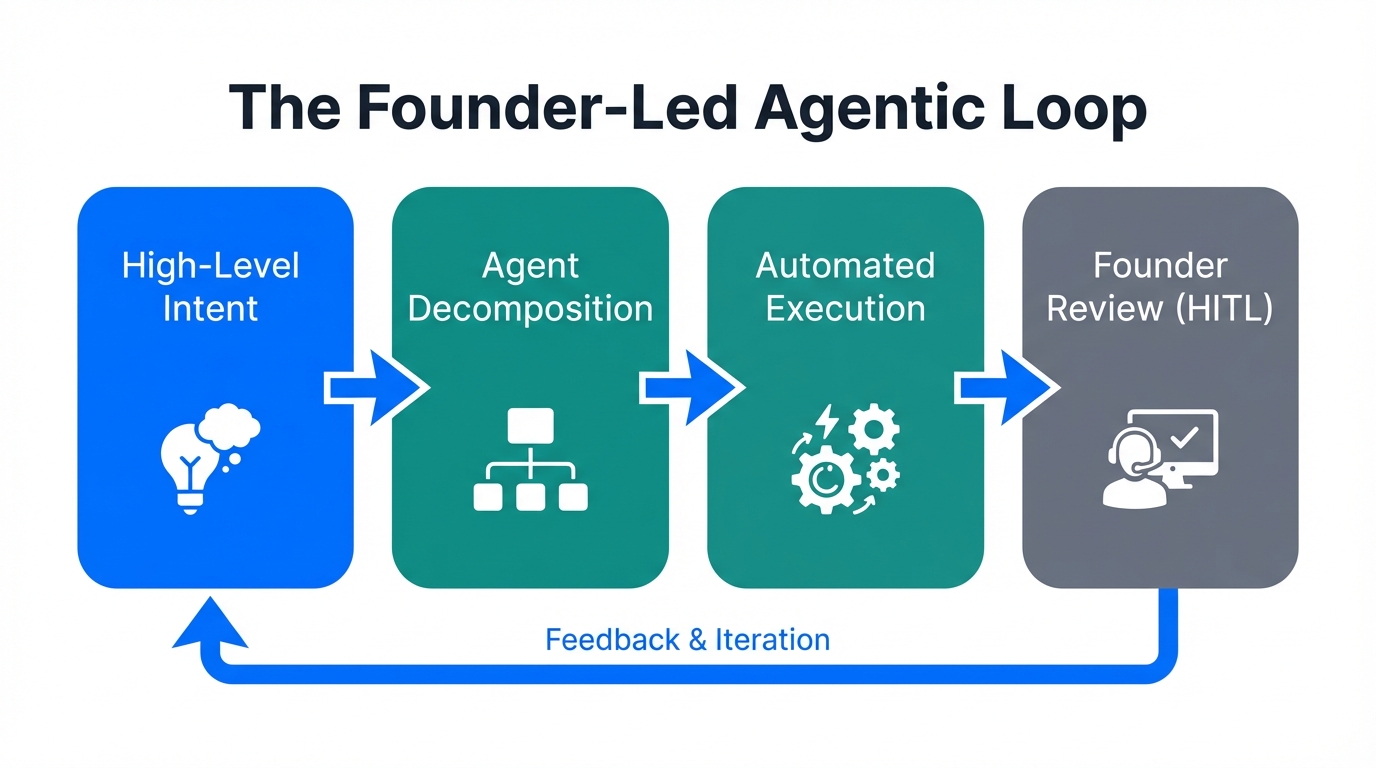
Traditional software development was human-heavy, sequential, and prone to communication overhead. In 2026, the most successful startups use a parallel agent workflow. This allows a single founder or product manager to direct up to 8 parallel agents simultaneously to refactor different parts of a codebase, a feature recently highlighted by Local AI Master.
When comparing Cursor vs Claude Code for business, the choice often comes down to the depth of reasoning required. While Cursor is the king of prototyping speed, Claude Code (powered by Opus 4.5/4.6) holds an 80.9% accuracy rate on the SWE-bench Verified leaderboard for fixing real-world bugs, as reported by AI Tool Analysis. This level of reliability allows founders to delegate "complex refactoring" and "terminal-native delegation" to an agent while they focus on market-fit and user experience.
The Economics of Elite Tiers: Max vs. Ultra
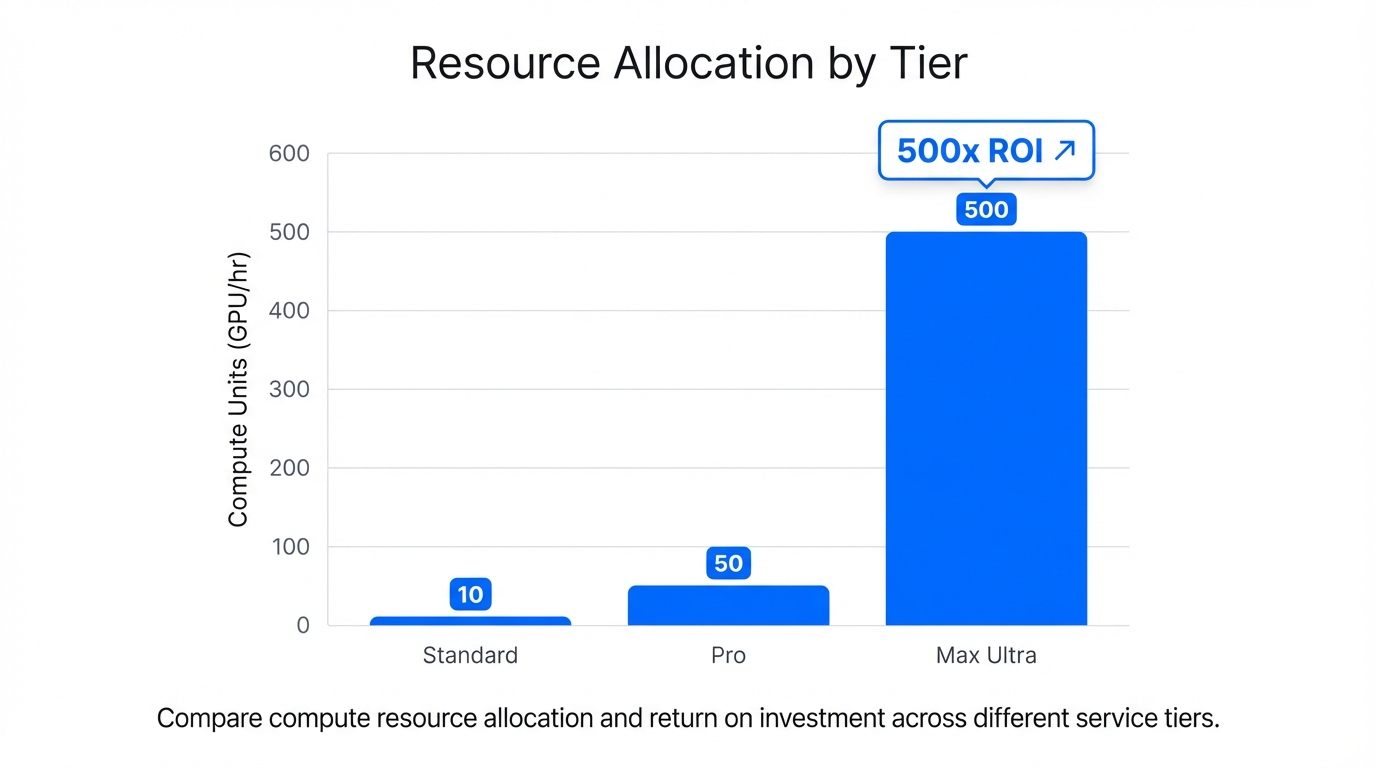
A significant trend in 2026 is the migration of founders toward "Max" and "Ultra" AI subscription tiers. Previously, a $200/month subscription seemed steep for a single tool; now, it is seen as an alternative to a $150,000 junior engineer salary. High-tier accounts bypass the traditional bottlenecks of rate limits and low-context reasoning.
| Platform | Tier Name | Cost (per Month) | Primary Benefit |
|---|---|---|---|
| Cursor | Ultra | $200 | 20x usage multipliers and 8 parallel agents |
| Claude Code | Max | $100 - $200 | 5x-20x higher message limits for complex refactoring |
| GitHub Copilot | Pro+ | $39 | Cross-model toggling (GPT-5.2, Claude 4, Gemini 3) |
According to CheckThat.ai, GitHub Copilot remains the market leader with a 42% share, but power-users are increasingly diversifying their stack. In fact, 59% of professional developers now use three or more AI coding tools weekly to leverage different model strengths, with many toggling between OpenAI's latest models and Google Gemini, as noted by Panto AI.
The Allianz Framework: Non-Technical Product Scaffolding
One of the most compelling case studies for agentic efficiency comes from Allianz. In early 2026, they partnered with Anthropic to deploy Claude Code across their internal teams. The goal was to enable non-technical staff to generate compliant documentation and initial code scaffolds without waiting for an engineering ticket to be cleared. You can read more about this initiative on Medium.
This "Allianz framework" proves that scaling with AI agents is not just for developers. By creating a standardized library of prompts and "agent skills," product managers can now launch feature prototypes that are 80% ready for production. This has led to companies like Salt Technologies reporting a 40-60% time reduction in writing unit tests and basic CRUD operations, as detailed on SaltTechno.
Navigating the Pitfalls: Workslop and Security
Despite the velocity gains, 2026 has introduced a new form of technical debt known as "Workslop." Because AI can generate code 2.5x faster than humans can review it, many codebases are becoming bloated with unoptimized or redundant logic. Developers on Reddit have expressed concerns that AI-generated code often works in isolation but ignores broader architectural patterns.
Security remains a critical concern. Research indicates that 45% of AI-generated code still contains OWASP Top 10 vulnerabilities, with Java being particularly susceptible. Furthermore, Gartner predicts that while adoption is high, 40% of agentic AI projects will be canceled by 2027 due to "agent washing"—where vendors slap an "AI" label on legacy software without adding true autonomous capabilities (Gartner).
"Velocity without verification is just a faster way to build a legacy mess. The context window is your most valuable asset—keep it clean or risk hallucination spirals."
To avoid these traps, experts at Builder.io suggest keeping context usage below 60% capacity. When an agent has too much "history" in its window, it begins to hallucinate and ignore project conventions. Just as platforms like Stormy AI streamline creator sourcing and outreach by providing high-quality, vetted data, founders must provide their AI agents with clean, well-documented codebases to ensure high-quality output.
Playbook: Auditing Your 2026 Tech Stack for Efficiency
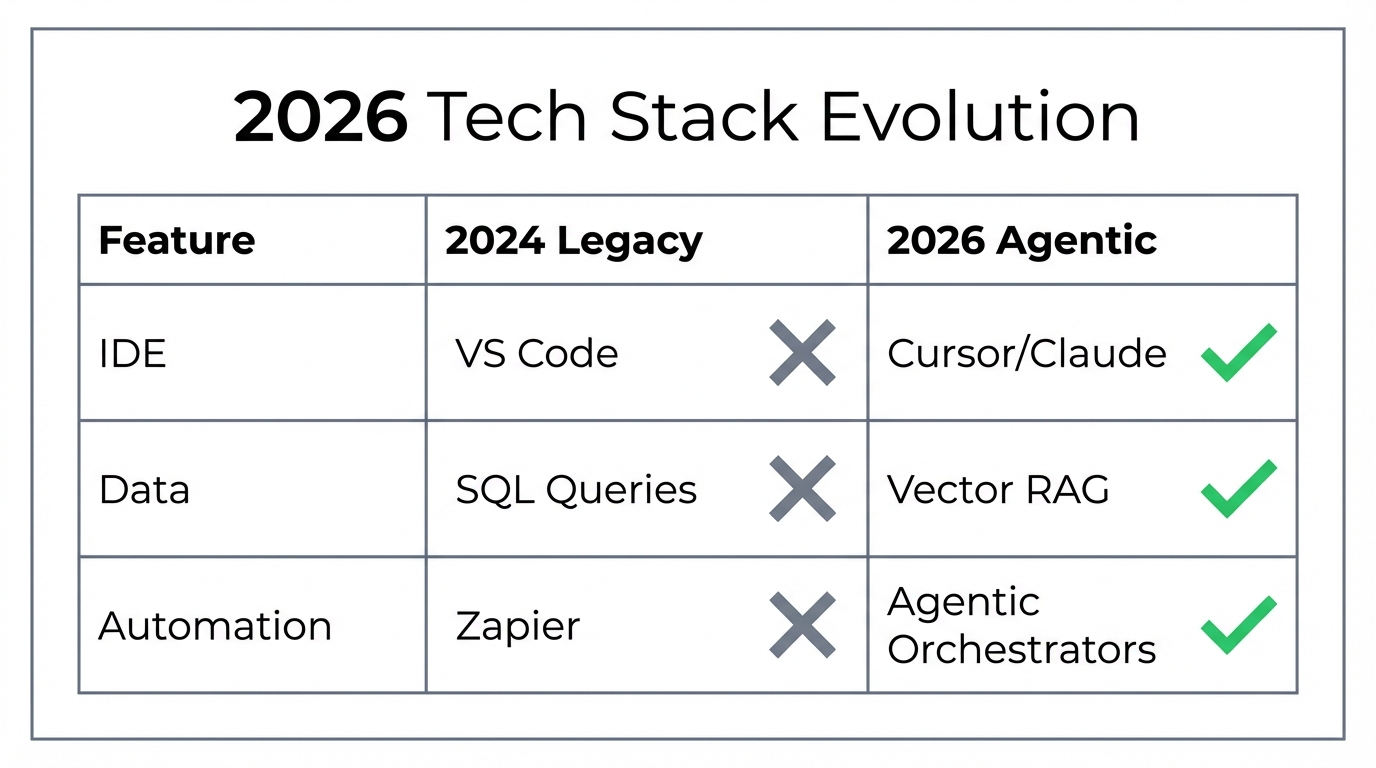
If you are building a SaaS in 2026, your tech stack should be built for agentic efficiency. Follow these steps to ensure you aren't leaving productivity on the table.
- Implement a Credit-Based Usage Model: Shift from flat seats to usage-based models to maximize ROI during heavy development sprints. PlayCode.io suggests this is the standard for credit-based usage models in 2026.
- Establish Skill Hot-Reloading: Use Claude Code's terminal features to update custom agent tools instantly, ensuring your AI is always aware of your latest API changes.
- Automate the "Boring Stuff": Use GitHub Copilot Agent Mode to handle the transition from a GitHub Issue to a Pull Request automatically.
- Manage AI Cloud Costs: With rising API usage, use tools like Finout to monitor your LLM spend across different models.
- Diversify with specialized tools: Use Cursor for core product building, but leverage an AI agent like Stormy AI for specialized tasks like influencer discovery and automated creator outreach to drive growth for your app.
The Road to $500M ARR
The success of Cursor proves that SaaS entrepreneurship 2026 is about more than just a good idea; it’s about a superior operating model. By transitioning to a founder-led agentic workflow, you can bypass traditional hiring bottlenecks and build a multi-million dollar product with a fraction of the traditional headcount. However, success requires a vigilant approach to security and a commitment to maintaining a high "architectural bar" to prevent the rise of Workslop. Start auditing your tech stack today, upgrade to the Ultra tiers where necessary, and embrace the agentic future of product growth.