The High-Agency Mandate: Why Startups Fail with Corporate Hires
Most startups face an existential threat every day. Whether it's a competitor's surprise announcement or a breaking process at 100 employees, the environment is rarely stable. Brian Halligan, who scaled HubSpot to a multi-billion dollar enterprise, notes that in the early days, you are essentially dealing with a "shit sandwich" of bad news, broken Slack messages, and technical debt 90% of the time. In this environment, recruiting high agency talent isn't a luxury; it's a survival mechanism. To find these individuals at scale, many founders now use Stormy AI to search for creators and talent who demonstrate high-agency through their content and community building. If you hire someone who needs a clear handbook and a support staff, they will drown. You need people who thrive in uncertainty and view a broken system as an invitation to build something better.

Many founders make the mistake of hiring a "big name" executive from a tech giant too early. They see a CMO from Microsoft or a VP from Google and think they’ve won. But as Halligan points out, these hires often fail because they are used to having an infrastructure that doesn't exist in a startup. They walk in and ask, "Where is my coffee? Where are my reports?" They are tourists in an industry that requires missionaries. To avoid this, you need a structured way to identify the traits that define founder market fit and high-agency potential.
Decoding the FLOCK Framework: A Startup Hiring Rubric

When Brian Halligan advises companies at Sequoia Capital, he uses a specific rubric to evaluate CEOs and early-stage hires. He calls it FLOCK: First Principles, Lovable, Obsessed, Chip on the shoulder, and Knowledgeable. If a candidate checks all five boxes, talent, money, and customers will naturally flock to them. This rubric is particularly effective when hiring for startups because it prioritizes mindset and character over legacy experience.
F: First Principles Thinking
High-agency talent doesn't rely on "best practices" or what the competition is doing. They break problems down to their fundamental truths and build upward from there. If the industry says you must sell to enterprises to survive, a first-principles thinker might realize that the SMB (Small and Medium Business) market is an untapped goldmine because the current tools are too complex. This is how HubSpot successfully challenged the dominance of Salesforce. When interviewing, look for candidates who question the "why" behind every process rather than just executing the "how."
L: Lovable (The "Broken Glass" Test)
Halligan’s metric for this is simple: "If I were 27, would I walk over broken glass to work for this person?" In a startup, leadership isn't just about giving orders; it's about being someone others are inspired to follow through the darkest days. This doesn't mean being a "nice guy"—it means having a magnetic passion and a clear vision. It's about being a "missionary" who makes the work feel meaningful. If a hire isn't lovable, they won't be able to recruit the next wave of elite talent for you.
O: Obsessed
You want people who have gone deep down a rabbit hole in their life. Maybe they were a world-class ping-pong player or built a complex software tool just for fun. Obsession is a proxy for the ability to focus and master a craft. In the world of app marketing, for example, you want a growth lead who uses Stormy AI to obsessively track account performance and monitor views, likes, and engagement to find the perfect hook. They should be someone who thinks about the problem in their sleep.
C: Chip on the Shoulder
Startups are grueling. Those who have something to prove are far more likely to stick through the "two steps forward, one step back" reality of scaling. Halligan notes that he is often skeptical of "nepo babies" or those who have had an easy ride. He looks for candidates with a chip on their shoulder—people who have been underestimated or have a burning desire to change their status. This grit is what allows a founder or an early hire to survive an existential threat from a much larger competitor.
K: Knowledgeable (Founder Market Fit)
Are they an expert in the field, or are they just a tourist? Deep domain knowledge, or founder market fit, is essential. They need to know the industry's nuances, the players, and the gaps. If you are building a tool for lawyers, you want someone who understands the legal workflow as deeply as the founders of Harvey AI. Without this depth, they will spend too much time learning and not enough time executing.
Missionary vs. Tourist Talent

A critical distinction in recruiting high agency talent is identifying the 'Missionary' versus the 'Tourist.' This concept, popularized by leaders like John Doerr and echoed by Brian Halligan, suggests that missionaries are motivated by a deep sense of purpose and the long-term success of the project. Tourists, on the other hand, are there for the resume boost, the high salary, or the novelty of a startup environment. When things break—as they inevitably do around the 150-employee mark (Dunbar's number)—the tourists are the first to check out, while the missionaries double down.
To identify missionaries, look for their risk-seeking appetite. Are they willing to take a lower base salary for a higher equity stake? Do they focus their interview questions on the company's long-term vision or the office amenities? In the context of mobile app marketing, a missionary creator will iterate on UGC content until they find the winning hook, whereas a tourist will deliver one video and disappear when it doesn't immediately go viral. This is a key reason why platforms like Stormy AI focus on finding creators who act as true partners to brands. Stormy AI is an AI-powered platform for creator discovery, especially for mobile app marketing and UGC campaigns.
The Rise of the Five-Tool CEO

In the new age of AI, we are seeing the emergence of the "Five Tool CEO"—a new breed of high-agency individual who can code, sell, design, fundraise, and recruit with high taste. These people are the ultimate "FLOCK" candidates. Instead of the traditional split between a technical founder and a business founder (the "Ying and Yang" of Halligan and Dharmesh Shah), AI tools like Rogo for finance or ChatGPT for coding are empowering single individuals to operate with the power of an entire team. These "superheroes" are how to hire a CEO or a department head who can actually keep pace with the current speed of innovation.
When you are hiring for startups today, you are looking for these versatile players. They understand how to leverage AI-powered productivity boosts to do the work of three people. For example, they might use Function Health to optimize their own biological performance or use advanced LLM projects to act as a "daily coach" for their team. They don't just manage; they execute. If you can find a five-tool player who also fits the FLOCK rubric, you have found a future industry leader.
Playbook: Implementing the FLOCK Rubric in Your Interview Process

Recruiting high agency talent requires a different set of interview questions. You aren't looking for standard answers; you're looking for signs of the FLOCK traits. Use this step-by-step playbook to refine your vetting process.
Step 1: Test for First Principles
Ask: "Describe a common industry practice you disagree with. Why is it wrong, and what would you do instead?" A high-agency candidate will have a contrarian view backed by logic. If they just quote a popular blog post, they are likely a derivative thinker. Look for people who can explain a complex topic from the ground up without relying on jargon.
Step 2: Measure the "Broken Glass" Quotient
Instead of asking about their management style, ask about their recruitment style. "Who is the best person you ever hired, and how did you convince them to join?" If they can't speak passionately about the people they've inspired, they lack the 'Lovable' quality needed for high-growth environments. A true leader in a startup must be a recruiter-in-chief.
Step 3: Identify the Rabbit Hole
Ask: "What is something you have become obsessed with in the last 12 months? How far did you go to master it?" This doesn't have to be work-related. Whether it's mastering Meta Ads Manager or learning the history of the Grateful Dead (as Brian Halligan famously did), the depth of their interest is a proxy for their work ethic. High-agency talent doesn't do things halfway.
Step 4: Check for the Chip
Ask: "Tell me about a time you were told 'no' or that you weren't good enough. How did you respond?" You are looking for resilience and a healthy level of paranoia. The best founders and employees often feel they have something to prove. They view setbacks not as failures but as fuel for their next attempt.
Applying FLOCK to Creator Marketing with Stormy AI
The FLOCK rubric isn't just for full-time hires; it's also the best way to vet the creators and influencers you partner with for mobile app marketing. In an era where UGC (user-generated content) is the primary driver of app installs, you cannot afford to work with "tourist" creators who only care about a one-off fee. You need high-agency creators who are obsessed with your product and have the first-principles thinking to create content that actually converts on Apple Search Ads or TikTok.
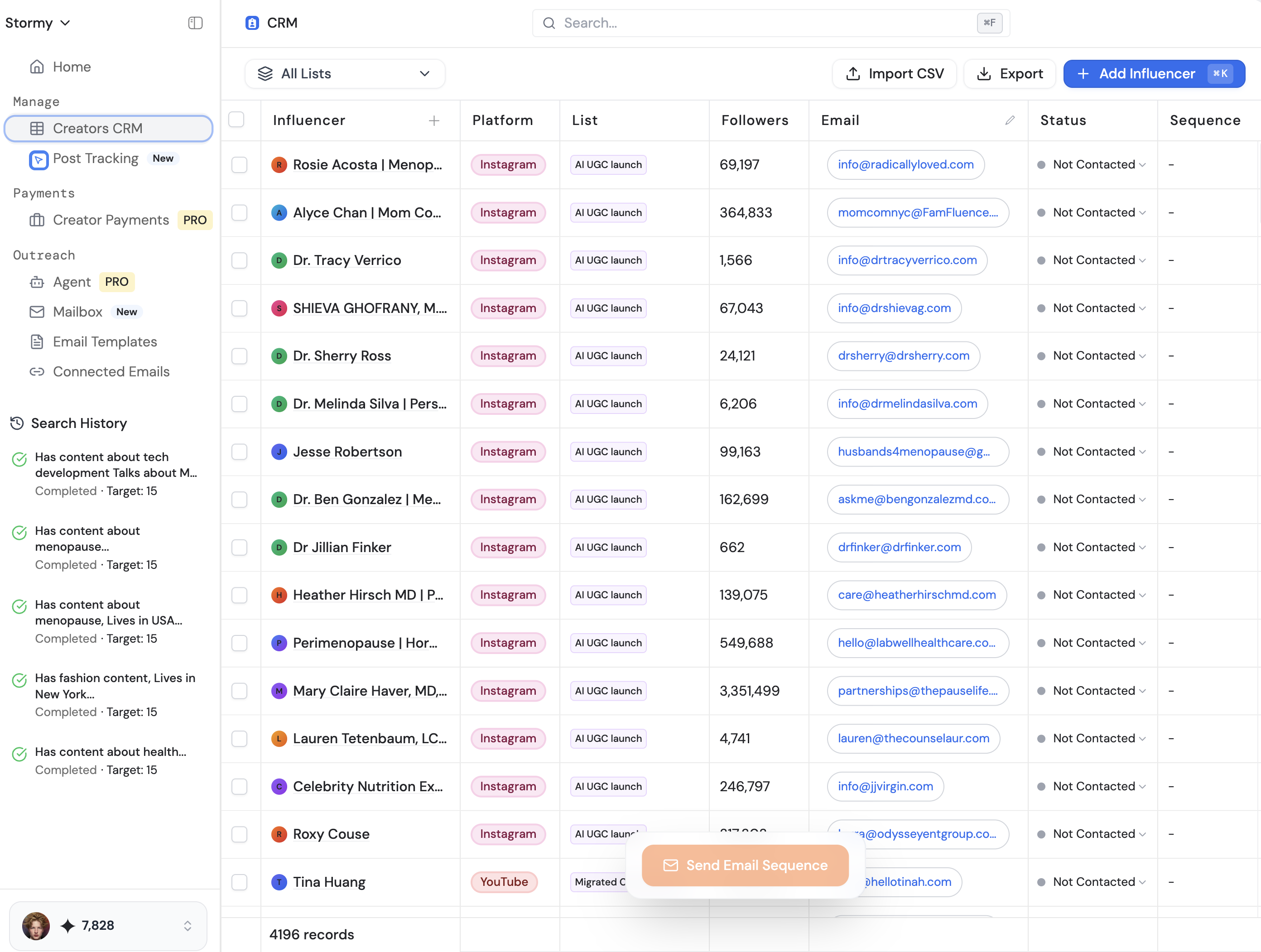
This is where platforms like Stormy AI are changing the game. By using Stormy AI, brands and app developers can discover creators who exhibit these high-agency traits and manage the entire relationship within a professional Creator CRM. The platform’s AI-powered analytics allow you to look past follower counts and see which creators are truly knowledgeable about their niche and obsessed with performance. When you find a creator who fits the FLOCK framework, they don't just provide a video; they become a "mini-founder" of your brand's growth strategy. They iterate, they provide feedback, and they act with the agency required to move the needle in a crowded marketplace.
Cultural Architecture: The Inbound Legacy and the Grateful Dead
Finally, recruiting high agency talent requires building a culture that attracts them. Brian Halligan and Dharmesh Shah built the HubSpot Culture Code on the principle of being "first principles" about the workplace itself. They didn't just copy Google; they built a unique environment that valued results over hours and autonomy over micromanagement. This is what Halligan calls "creating a quality product for employees."
Interestingly, Halligan drew much of his marketing and cultural inspiration from the Grateful Dead. As he details in his book, Marketing Lessons from the Grateful Dead, the band was the first to use "inbound marketing" by allowing fans to record and trade concert tapes via communities like nugs.net. They weren't protective of their IP in a corporate way; they were risk-seeking and first-principled. They built a "spiky" team of musicians from different genres to create a new category. Startups should do the same. Don't hire for a "well-rounded" team; hire for a team of spiky, high-agency individuals who each possess a unique superpower.
Conclusion: The Long Game of High-Agency Hiring
Recruiting high agency talent is not a one-time event; it is a continuous process of refining your startup hiring rubric. Whether you are wondering how to hire a CEO or looking for the perfect UGC creator for your next mobile app campaign, the FLOCK framework provides a clear North Star. By prioritizing First Principles, Lovability, Obsession, the Chip on the shoulder, and deep Knowledge, you ensure that your team is made of missionaries, not tourists.
As you scale, remember the core lesson from Brian Halligan: everything will break. Processes will fail, the market will shift, and competitors will emerge. But if you have seeded your company with high-agency individuals who possess the drive of a founder, you will always have the capacity to rebuild, iterate, and win. If you're ready to start finding these high-agency partners for your next marketing push, Stormy AI helps you find creators who operate with the same mission-driven intensity as your founding team.