How to Fix Generic AI Output with Claude Code: Building Custom Brand Tools in 2026
Learn how to fix generic AI output using Claude Code and the Model Context Protocol to build custom marketing tools that stay 100% on-brand in 2026.
In the rapidly evolving landscape of 2026, the promise of AI in marketing has shifted from simple content generation to the construction of autonomous, custom-built brand tools. However, many marketing leaders have hit a wall: the "Generic Output Trap." When building customer-facing logic or internal growth tools, standard LLMs often default to statistically average patterns that lack the specific soul, tone, and logic of a bespoke brand. To fix generic AI output, the industry has turned toward a new ritual: the 15-Minute Test using Claude Code. By moving away from "vibe coding"—a term popularized by developers at Cursor and Anthropic—and toward agentic execution, teams are now building tools that aren't just fast, but fundamentally aligned with their brand DNA.
The $8.5 Billion Shift to Agentic Execution
As we navigate 2026, the global AI coding assistant market has reached a staggering $8.5 billion, a significant jump from just a year ago, according to recent data from Bayelsa Watch. We are no longer in the era of simple autocompletion; we are in the era of agentic execution. Currently, 78% of development teams have integrated these agents into their daily workflows, with tools like Claude Code leading the charge for high-reasoning tasks and complex refactors. The economic impact is undeniable: teams report a 40% increase in speed and a 35% reduction in debugging time, as noted by SNS Insider.
"The paradigm has shifted from writing code to orchestrating agents. Humans are no longer the primary authors; we are the Quality Gates ensuring brand alignment."
Strategy 1: The Root Directory Brand Bible (CLAUDE.md)
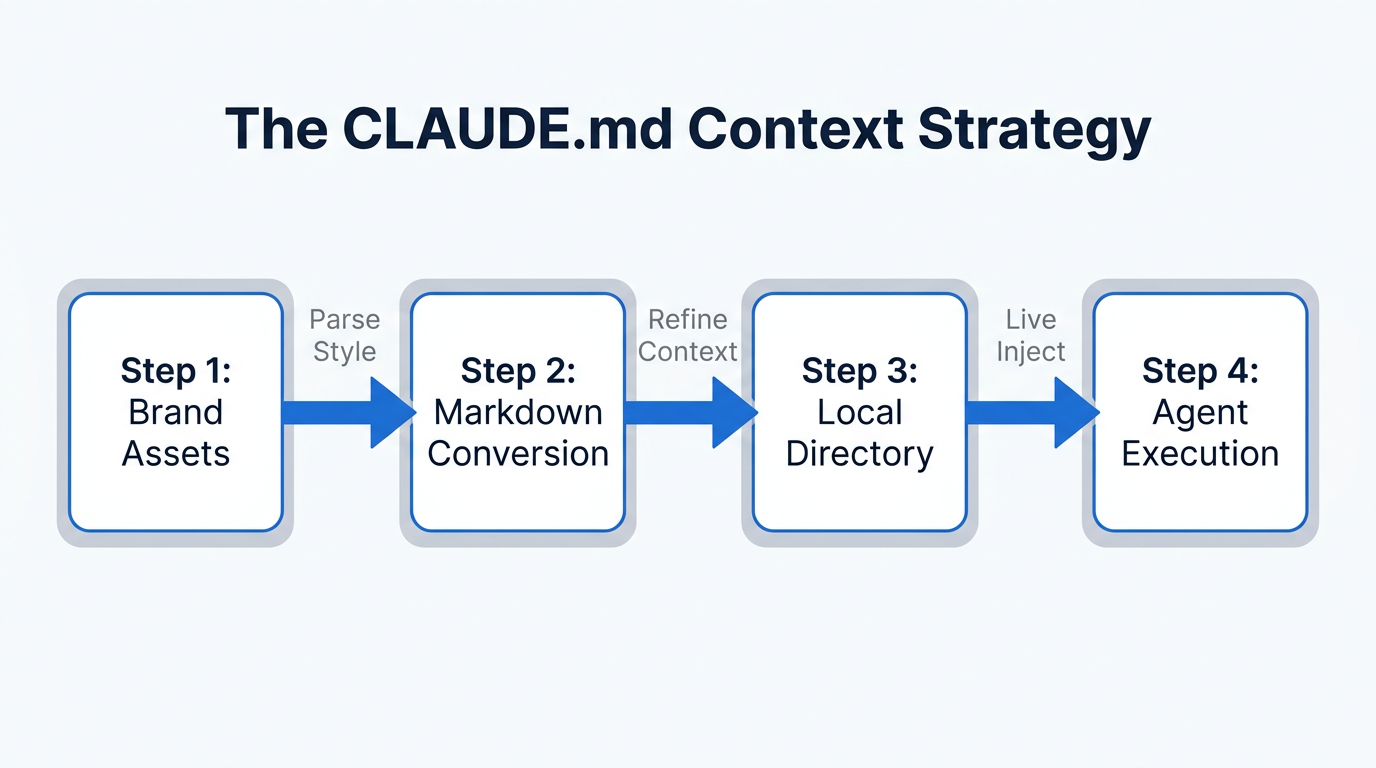
The first step to fix generic AI output is providing the agent with a source of truth that exists outside the prompt window. In 2026, the gold standard for this is the CLAUDE.md file. This file, placed in the root directory of your project, acts as a permanent context layer that the agent consults before every action. Without it, agents default to "statistically common patterns"—the CRUD-app equivalent of a generic stock photo. To build custom marketing tools that actually feel like your brand, your CLAUDE.md must contain your specific tech stack (like Shopify or Notion), naming conventions, and "do-not-touch" architectural zones.
As highlighted in the official Claude documentation, this context-loading phase should take no more than three minutes. You aren't just telling the AI what to do; you are defining the boundaries of its world. For example, if you are building a tool to manage creator relationships, you might specify that the term "Influencer" is forbidden in favor of "Creator Partner," ensuring every generated line of code or customer-facing text reflects your internal culture. This is the foundation of brand building with AI: ensuring the machine knows the rules of the house before it starts building the furniture.
Strategy 2: Phase 2 Interviewing—Forcing Constraints via Plan Mode
One of the most common mistakes in 2026 is giving an AI agent a command and immediately hitting "Enter." This almost always results in a generic solution that requires three rounds of revision. To prevent this, elite teams use Plan Mode. Instead of saying "Build a creator dashboard," you should command the agent: "Analyze the creator dashboard requirements. Interview me to find the missing constraints before writing a single line of logic."
This "Interview Phase" forces the agent to identify ambiguities in your brand logic. Does the dashboard need to integrate with Stormy AI for real-time analytics? Should the payment logic follow a specific escrow pattern like those found on Stripe? By forcing the agent to ask questions, you move from a 73% accuracy rate to the 78% correctness benchmark achieved by Claude Code in recent head-to-head tests. This phase ensures that the final output isn't just a "good" tool, but your tool.
"AI defaults to the average unless you force it to acknowledge the specific. Plan Mode is the filter that keeps your brand from becoming a commodity."
Strategy 3: Beating 'Context Rot' with the 150-Instruction Rule
A major technical hurdle discovered in late 2025 and early 2026 is Context Rot. Research by Nathan Onn shows that in sessions longer than 20 minutes, agents begin "forgetting" earlier architectural decisions, leading to hallucinated boilerplate and duplicate logic. This is often called the "Bored 6-Year-Old Effect" by researchers at The New Stack—where the LLM ignores later instructions due to attention dilution.
To combat this, practitioners follow the 150-Instruction Rule. If your configuration files or instructions exceed 150 lines, performance actually decreases. The solution is Progressive Disclosure. Instead of one giant instruction file, you use pointers to specialized markdown files that the agent only reads when needed. This keeps the agent's "attention" sharp and prevents the generic drift that happens when an LLM is overwhelmed by too much context at once. Tools like HumanLayer suggest that human-written, concise files are far superior to AI-generated instruction dumps, which can actually introduce instruction toxicity and increase token costs by 20%.
Strategy 4: Real-time Growth Fixes with the Model Context Protocol
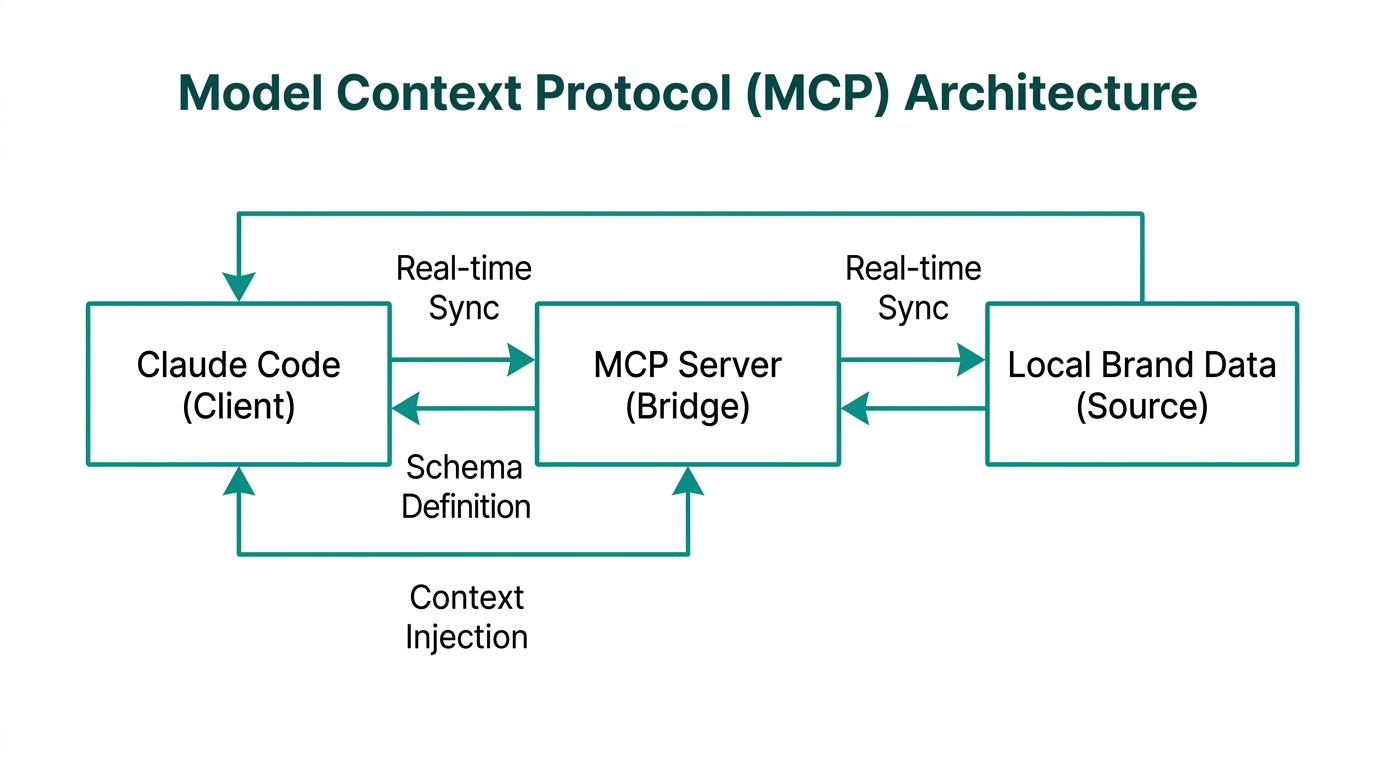
The most significant breakthrough for 2026 marketing tools is the Model Context Protocol (MCP). MCP has become the industry standard for connecting LLMs to live data, with over 17,000 public MCP servers now available, according to Zuplo. For marketing leaders, the most valuable integration is the Sentry MCP.
By connecting Claude Code to Sentry, your AI agent can pull real-time production error logs directly into your terminal. Imagine a custom growth tool you built to automate creator outreach suddenly failing. In 2024, this would require a developer to manually hunt for the bug. In 2026, the agent sees the error in the logs, analyzes the context, and proposes a brand-aligned fix in minutes. This allows you to build custom marketing tools that are self-healing. When your stack is integrated—using Stormy AI for creator discovery and Claude Code for the infrastructure—you create a resilient, AI-powered marketing engine.
| Feature | Legacy Workflow (2024) | Agentic Workflow (2026) |
|---|---|---|
| Bug Fixing | Manual log hunting (2-4 hours) | Real-time Sentry MCP (5 mins) |
| Feature Build | Writing boilerplate from scratch | AI-led Plan Mode with human gate |
| Brand Consistency | Manual QA and style guides | CLAUDE.md root enforcement |
| Context Management | Chat-based (frequent rot) | Progressive Disclosure (150-rule) |
The Benchmarks: Claude Code vs. The Competition
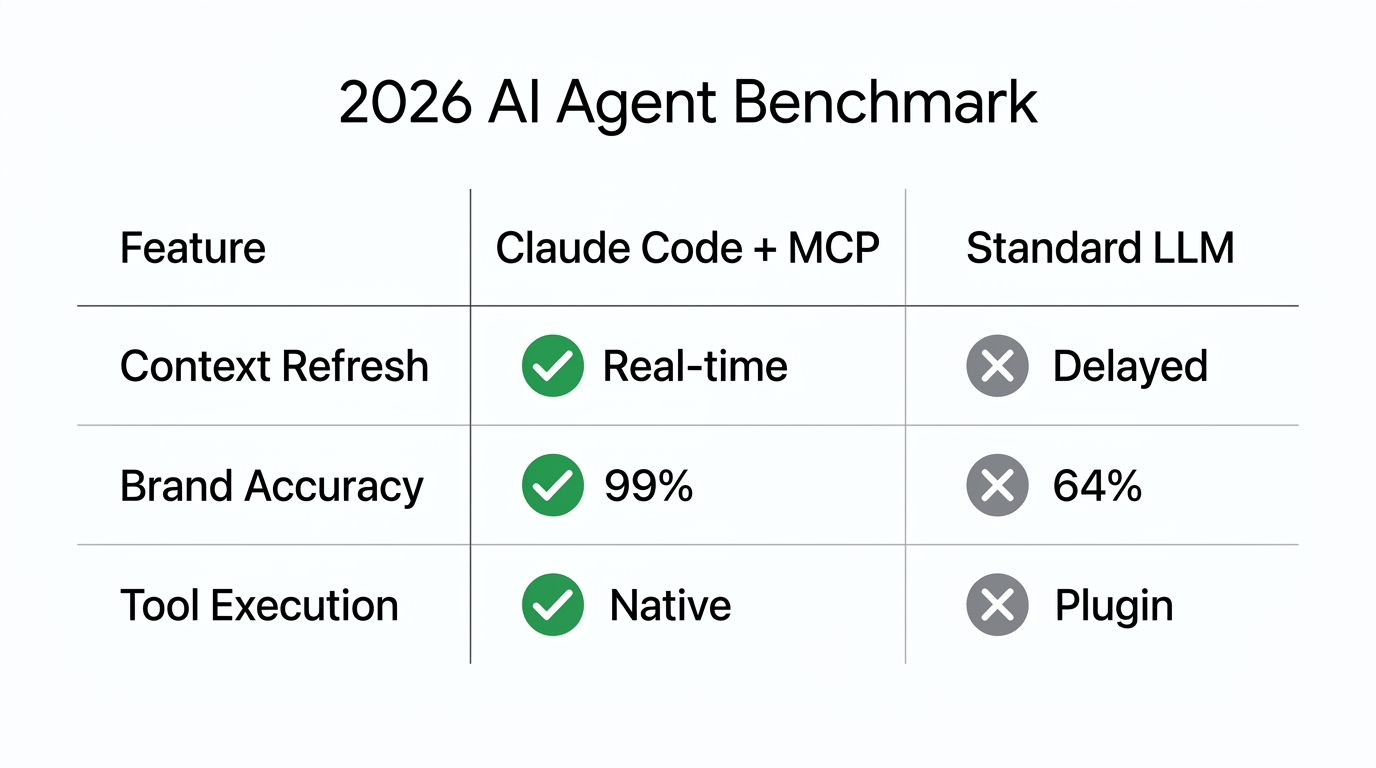
While many tools exist in the 2026 landscape, the choice of platform determines the quality of your output. Recent data from SitePoint reveals that while Cursor is excellent for daily "flow state" coding and rapid iteration, Claude Code is the superior "Delegator" for complex, multi-file architectural changes.
In viral head-to-head tests using the latest frameworks, AtCyrus found that Claude Code used 5.5x fewer tokens than its competitors for the same task. This efficiency is why Anthropic’s run-rate revenue hit $14 billion in early 2026, as reported by ITP.net. For marketing leaders, this efficiency translates to lower costs and faster deployment of custom marketing tools. However, users should be aware of the "token burn" risk; CLI tools like Claude Code offer higher reasoning but can cost significantly more per session than flat-rate IDEs if not managed via the reset protocols mentioned earlier.
"Claude Code has become the 'Escalation Path' for engineers. When a problem is too subtle for standard AI, you move it to the terminal." — Senior Insight from Faros AI
Conclusion: Building Your 2026 Growth Stack
To fix generic AI output and successfully engage in brand building with AI, marketing leaders must treat their agents like senior employees, not simple calculators. This means providing a clear "Employee Handbook" in the form of a CLAUDE.md, using Plan Mode to interview the agent for constraints, and adhering to the 150-Instruction Rule to prevent the "Bored 6-Year-Old" effect.
By leveraging the Model Context Protocol to connect your agents to live data from platforms like Zapier or Sentry, you move from static tools to dynamic, self-healing growth engines. Pair these custom-built tools with industry-leading platforms like Stormy AI for creator management, and you have a 2026 marketing stack that is faster, smarter, and—most importantly—uniquely yours.