In the world of hyper-growth startups, we are often told to build automated systems, optimize conversion funnels, and lean heavily into tools like Meta Ads Manager to buy our way to scale. But for the bootstrapped founder or the creator starting from zero, the secret to how to get first 1000 users isn't found in a dashboard or an algorithm. It is found in the gritty, manual, and often unsexy work of doing things that don't scale. Success at the earliest stages is less about automation and more about shaking the hand of every single person who walks through your digital door. This article serves as a comprehensive playbook for early stage startup growth, focusing on manual outreach, high-friction entry points, and the psychological triggers that build a die-hard initial user base.
The Foundation of Story and Credibility
Before you send your first DM or launch a landing page, you need a story. In the early days of founder led growth, you don't have a product track record, so you must leverage your personal credibility. This is what we call the Marketing Killshot. A killshot is a single sentence that establishes immediate proof and authority, making it nearly impossible for a potential user to say no.
Consider the launch of beehiiv. The founder, Tyler Denk, didn't just say he was building a newsletter tool. His killshot was: "I ran growth for Morning Brew, the fastest-growing newsletter in the world, and now I’m building a tool so you can grow yours the same way." This immediately bridges the gap between an unknown product and a proven outcome. If you don't have a "Morning Brew" in your background, you can manufacture credibility through an anti-credibility story. Tell the story of a massive mistake you made or a pain point you suffered through—like missing out on an early investment because you didn't understand the tech—and explain how your product ensures neither you nor your users ever make that mistake again.
Deep Research Through "Twitter Lurking"

One of the most effective bootstrap marketing tactics is what we call "Twitter lurking." Before you build a single feature, you must become an anthropologist in the digital spaces where your customers live. By searching for keywords related to your industry on social platforms like X (formerly Twitter), you can identify exactly where your competitors are failing. For example, while platforms like Stormy AI are an AI-powered platform for creator discovery, especially for mobile app marketing and UGC campaigns, manual lurking allows you to see the raw, unedited complaints of users.
Search for phrases like "[Competitor Name] is so annoying" or "Why can't [Product] let me do X?" This is exactly how the initial roadmap for beehiiv was built. By identifying that users hated Substack taking a cut of their revenue or the lack of custom referral programs, the founders could build talking points that resonated instantly. You aren't just guessing what people want; you are reading their public diary of frustrations. This level of deep consumer research ensures that when you finally reach out, you aren't selling—you are solving.
The Waitlist Strategy and False Scarcity
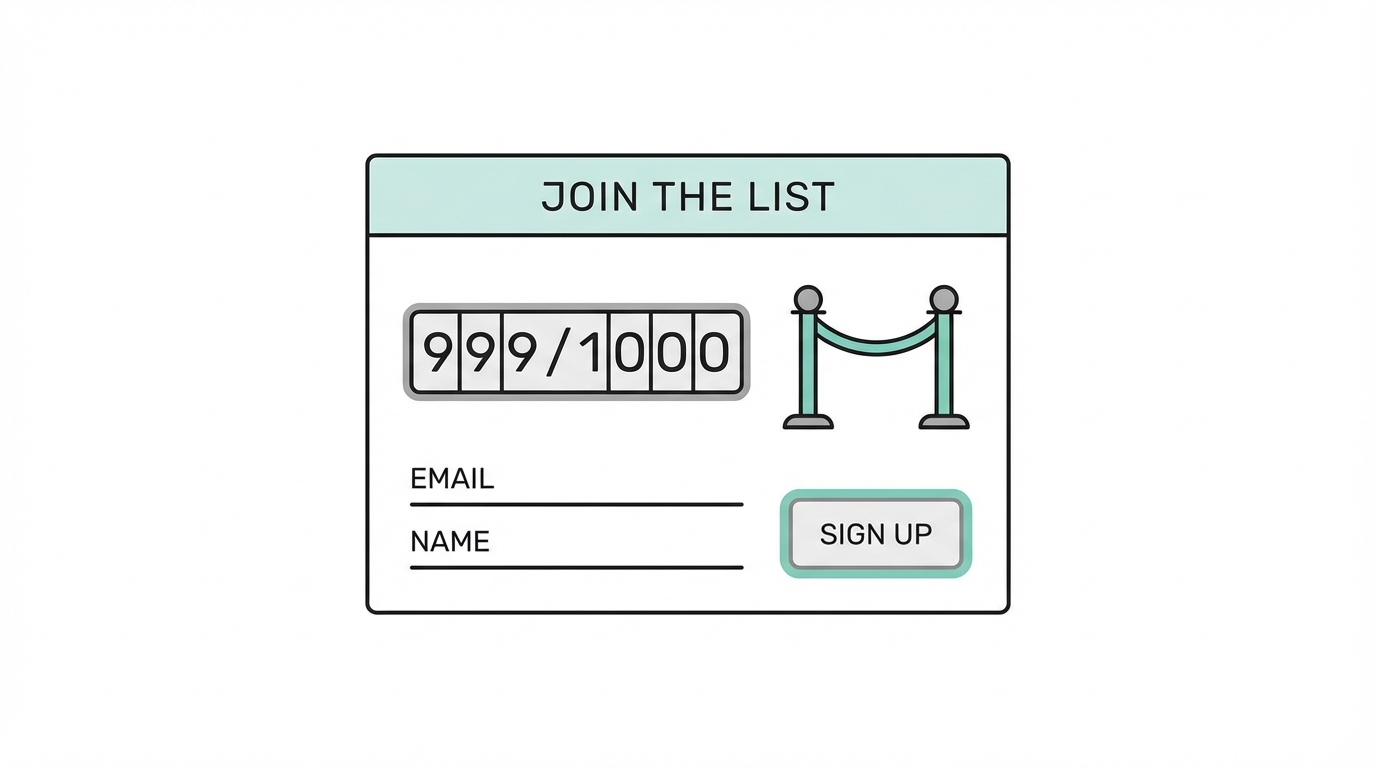
Once you have identified your target audience, the next step in your user acquisition strategy is to build a waitlist. Even if your platform can technically support an unlimited number of people, you should introduce psychological triggers like scarcity and urgency. Launching with a message like "Only 5 spots left for our early access beta" forces a decision. People who like trying new products—your early adopters—are naturally drawn to exclusive opportunities.
When you use a waitlist, don't just ask for an email. Ask one critical discovery question: "What is the number one thing that made you interested in checking this out?" This turns your sign-up list into a CRM of pain points. If a user tells you they are signing up because they hate Google Ads costs and want to build owned distribution, you know exactly how to pitch them in your follow-up email. You are essentially asking the user for a manual on how to sell them.
Turning Friction Into Relationships
Most growth experts will tell you to remove friction from your sign-up process. For your first 1,000 users, we recommend the exact opposite. Implement a manual approval process. When a user signs up, instead of giving them immediate access, put them in a "brick" state where they must wait for you to approve them. This allows you to vet every user manually.
While this sounds like it would kill growth, it actually creates a massive competitive advantage. For every user that signs up, go to their Twitter or LinkedIn profile. Follow them. Send them a personal DM: "Hey, I just saw you signed up for our beta. I'm the founder. I noticed you're building [X], so I've moved you to the front of the line and approved your account. Let me know what you think!" This turns a frustrated user who had to wait into a superfan who feels personally connected to the CEO. If you're looking to scale this further, Stormy AI is excellent for finding UGC creators and influencers who are worth this high-touch manual effort.
The Playbook for Direct Outreach
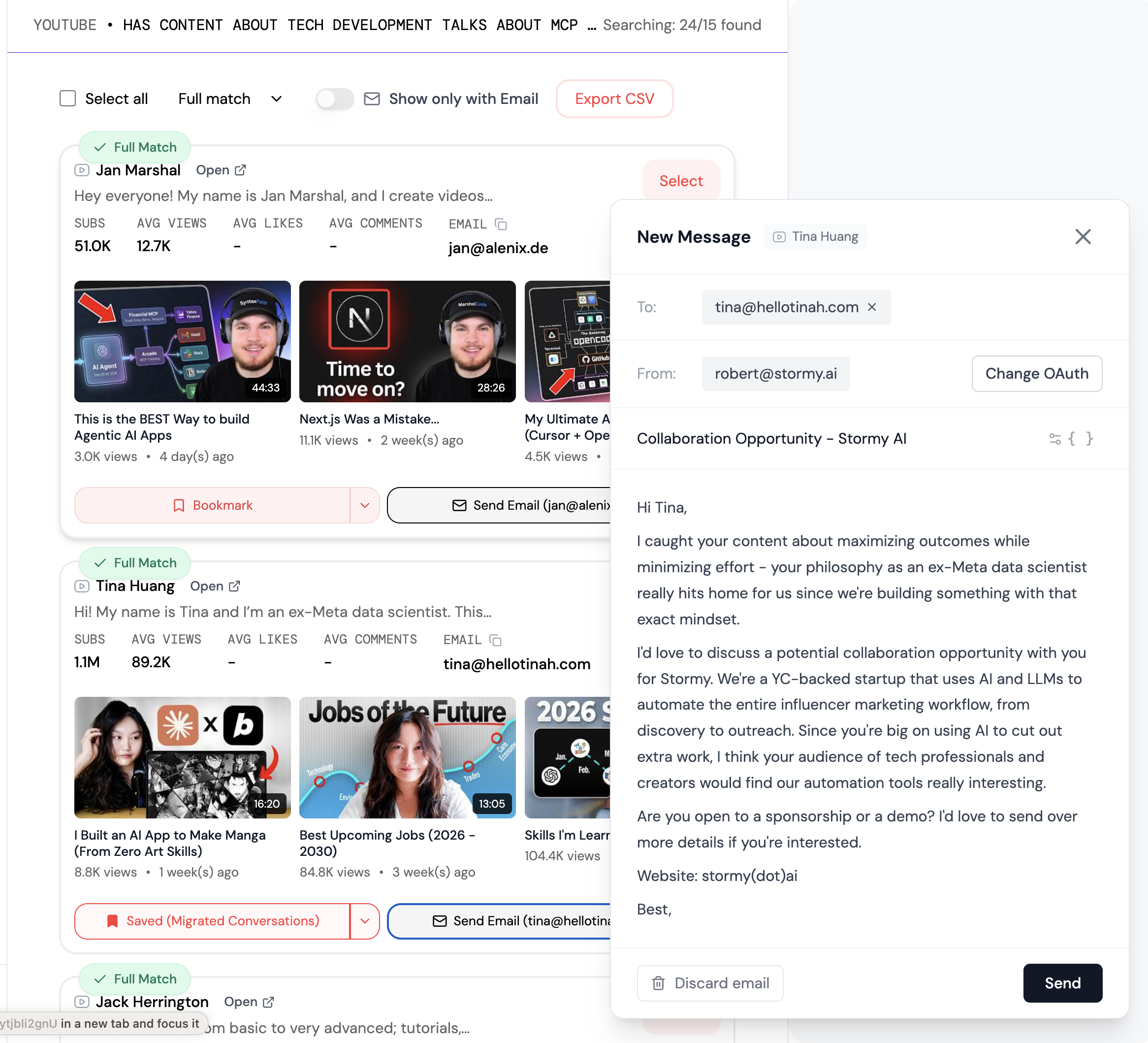
Step-by-step, here is how you move from a lead list to your first 1,000 users without using a single automation tool:
Step 1: Identify 100-200 Target Users
Use social search and industry lists to find the people currently experiencing the pain your product solves. Don't look for the biggest names; look for the most active and frustrated users. You can also use Stormy AI to find creators in specific niches and instantly find their contact emails to build this list faster.
Step 2: Ask the Three Magic Questions
Emmett Shear, the founder of Twitch, used a specific interview framework that is legendary in the tech world. He would reach out to streamers and ask: 1. What do you like about your current platform? 2. What do you dislike about it? 3. What would it take for you to switch? This 7-minute interview provides a roadmap for your product development. If they say they'd switch for a specific feature, go build it, then go back to them and say, "We built it. Now it's time to switch."
Step 3: Move Your List to a Manual CRM
Whether it’s a Google Sheet or a simple Notion board, track every interaction. Note their dream outcomes. When you pitch them, don't talk about your features; talk about their dream outcome. If you are selling to someone using Apple Search Ads for app growth, explain how your UGC-focused strategy will lower their CPA, not just that you have an AI editor.
Product Velocity and the "Marketable Feature"
In the early days, your product will be imperfect. You will lack the features your competitors have. Your only defense is product velocity. Commit to shipping one "marketable feature" every single week. A marketable feature is something that is flashy enough to warrant a tweet or an email announcement. It’s not just a bug fix; it’s a tool that solves a visible problem.
Adopt the Amazon strategy of working backwards from the press release (or the tweet). Before you build a feature, ask: "What would the tweet announcing this look like? Will anyone care?" If the answer is no, don't build it yet. Use your weekly releases to build a narrative of momentum. Even if a user isn't ready to switch today, seeing you ship a new feature every Tuesday for three months will eventually convince them that you are the future of the industry. For modern brands, using Stormy AI to track how these features impact content performance can provide the data needed to keep this velocity high.
The Investor Update Flywheel
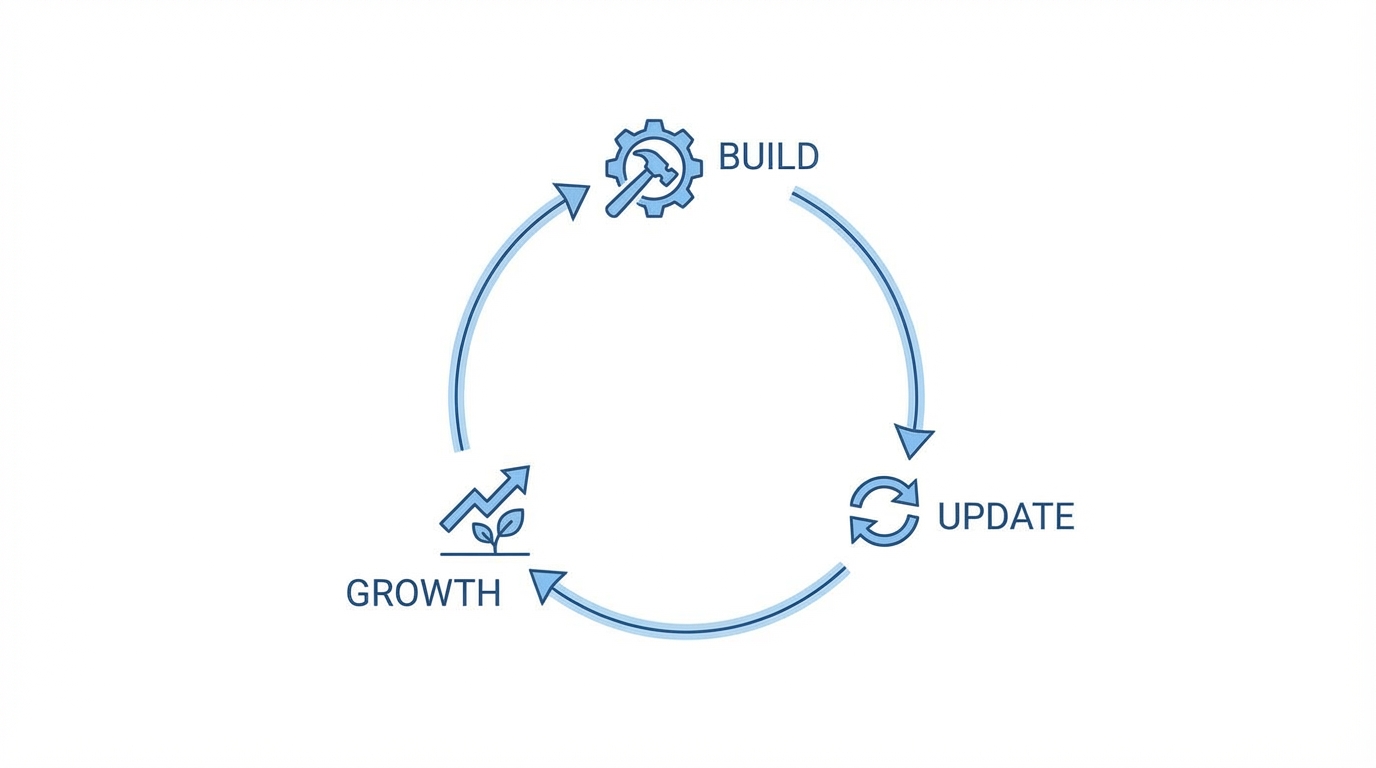
Transparency is a growth hack. By "building in public" and sharing your progress—both the wins and the losses—you expand your addressable market from just potential customers to anyone interested in the startup journey. A powerful way to do this is through a monthly investor update. Send this to current investors, people who passed on your round, and potential future partners.
Sharing your revenue numbers and growth metrics creates Fear Of Missing Out (FOMO). When an investor who passed on you sees you go from $1M to $5M in revenue in 12 months, they will be the first to reach out for your next round. More importantly, this transparency builds trust with your users. They aren't just using a tool; they are rooting for a team they've come to know through their updates. This communal support is vital for early stage startup growth. To manage these key relationships effectively, a dedicated Stormy AI creator CRM can help you stay organized as you scale.
The 20-Mile March Mindset
Scaling to your first 1,000 users is a marathon, not a sprint. We often see founders work in fits and starts—sprinting when they feel motivated and disappearing when things get hard. Instead, adopt the 20-mile march strategy. This concept, inspired by the race to the South Pole, suggests that you should aim for consistent, moderate progress regardless of the "weather."
Whether the market is up or down, whether you feel inspired or exhausted, you must do the basic bricks of growth every day: reach out to 10 leads, engage with 20 community members, and push one piece of code. Consistency compounds. Most startups don't fail because they lacked a genius strategy; they fail because they stopped marching before they reached the 1,000-user mark. In the early days, you don't need to work smarter—you need to work harder on the things that actually move the needle.
Conclusion: The Path to 1,000

Getting your first 1,000 users is a test of will. It requires you to abandon the comfort of automation and embrace the vulnerability of manual outreach. By leveraging a powerful story, lurking in social communities to find pain points, and using high-friction sign-ups to build personal relationships, you create a foundation that is defensible against even the largest competitors.
Remember: Pet the dog. Be the founder who picks up the phone, the CEO who follows every user on Twitter, and the team that ships one marketable feature every week. If you commit to the 20-mile march and stay focused on solving one user's problem at a time, those first 1,000 users will become the bedrock of a company that scales to millions. Stop searching for the secret sauce and start laying the bricks.