The 'Eyes and Hands' Framework: Why Your Sales AI is Currently Blind
 11:54
11:54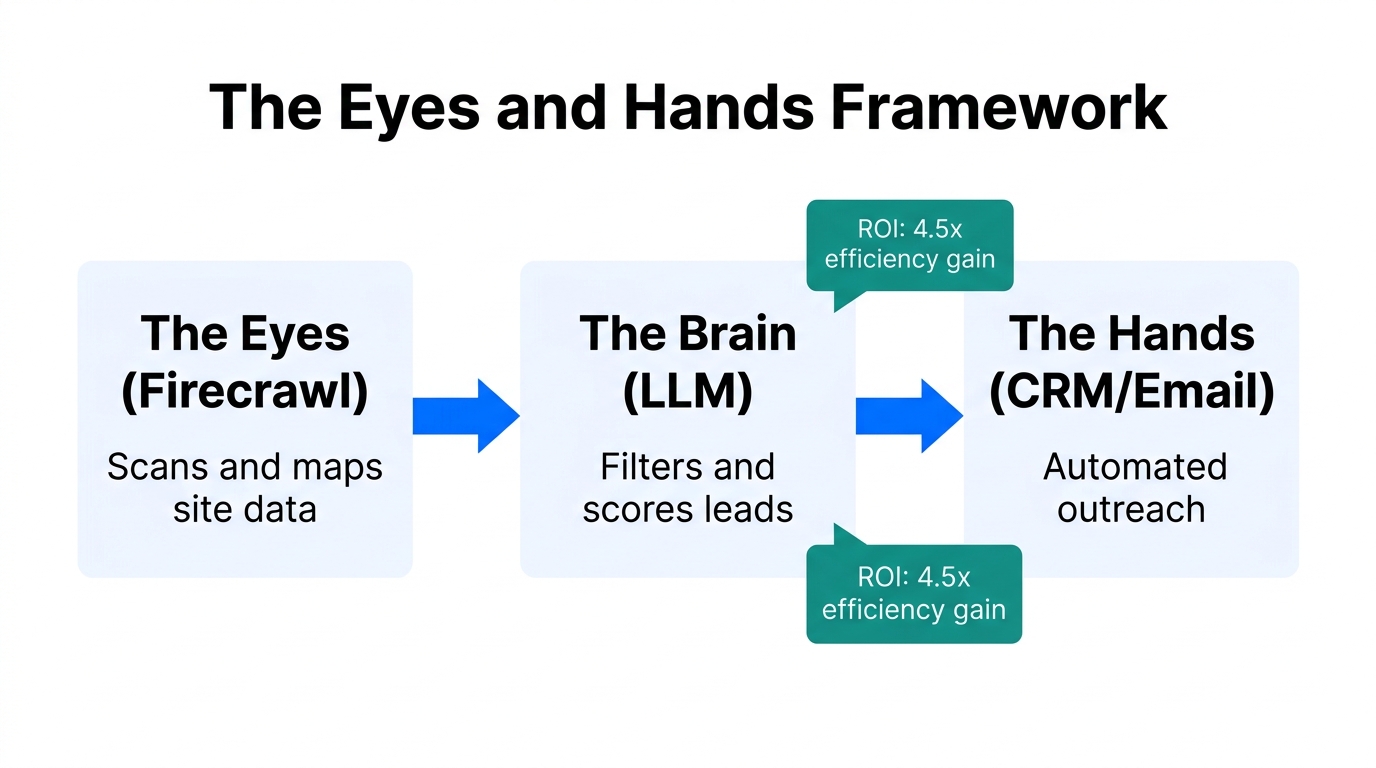
To understand the power of Firecrawl AI lead generation, we must first look at the AI infrastructure stack. Most companies focus solely on the "Brain" (the LLM). However, a brain without sensory input is useless for high-velocity sales. In 2026, every builder needs a five-layer stack to stay competitive: an agent harness (like Cursor), a search layer (like Perplexity), an ops brain (like Notion), an outbound stack (like Instantly), and most importantly, the web data layer.
"Clean, structured web data is the new oil of the 2026 economy. The people who understand how to wrap this data around an LLM will build the most valuable software products of the decade." [Source: World Economic Forum]
Traditional web scraping was a nightmare of managing proxies, handling anti-bot detection, and writing custom scripts for every single site. Firecrawl changes the game by offering a single API call that converts any URL into clean markdown or structured JSON. This allows your AI agents to "read" the internet exactly like a human would, but at a scale of thousands of pages per minute. Whether you are using Idea Browser to find trending startups or building a custom internal tool, this web data layer is the foundation of modern sales intelligence.
Traditional Scraping vs. Firecrawl AI: The 2026 Comparison
26:33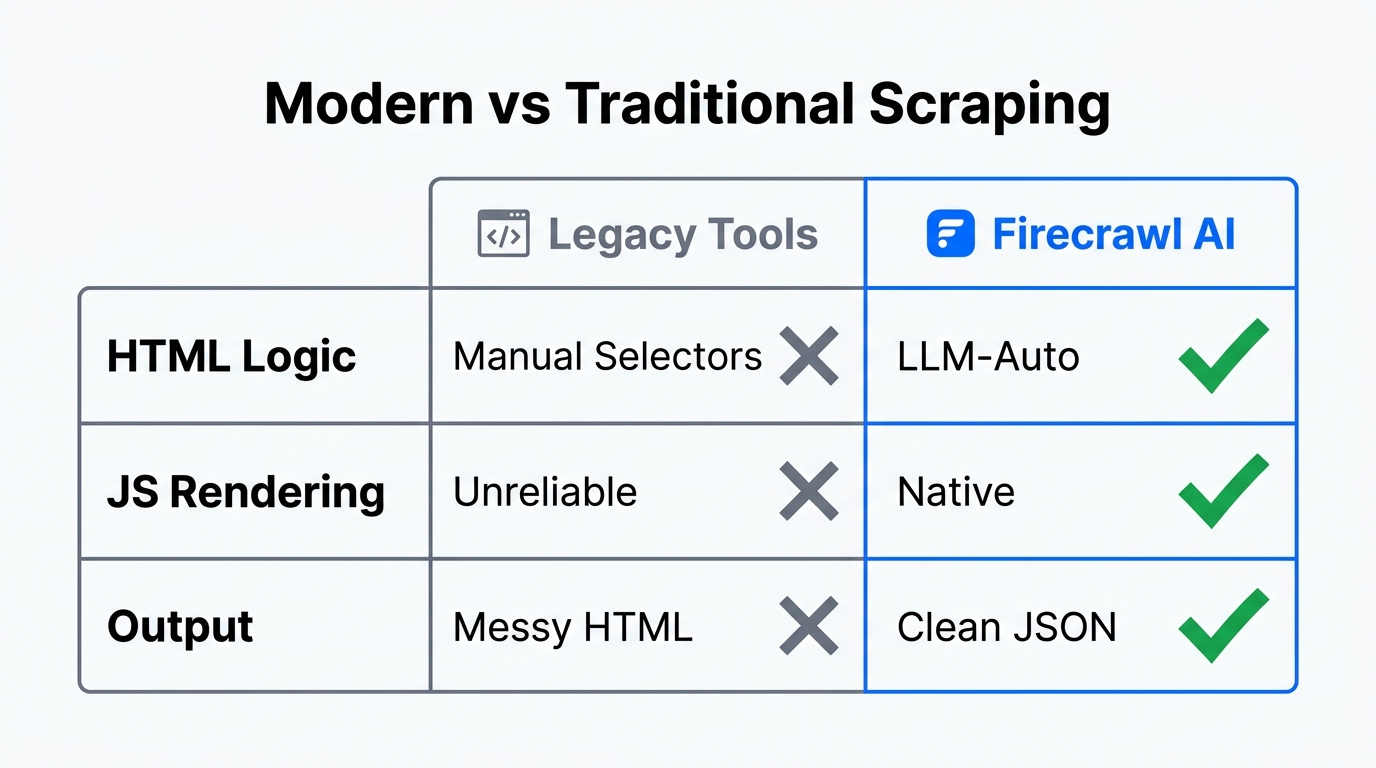
In the past, scraping was synonymous with "shady" or "unreliable." In 2026, it is recognized as critical AI infrastructure. Let's look at why sales automation tools in 2026 are moving away from legacy scripts toward AI-native extraction.
| Feature | Legacy Scraping (Selenium/Playwright) | Firecrawl AI |
|---|---|---|
| Setup Time | Hours/Days per website | Seconds (1 API call) |
| Maintenance | Breaks when HTML changes | AI handles layout shifts |
| Data Quality | Messy HTML/Noisy data | Clean Markdown/JSON |
| Anti-Bot | Requires manual proxy rotation | Built-in & Automated |
| Output | Raw text/CSV | LLM-ready structured data |
Firecrawl's six superpowers—Scrape, Crawl, Map, Search, Agent, and Browser—allow you to move beyond simple data collection. For example, the Map function can instantly chart every URL on a domain, revealing hidden subdirectories. This is the AWS moment for web data; you no longer need to manage the "servers" of scraping; you just call the API. For developers still using Selenium or Playwright, the shift to AI-managed browsers represents a massive leap in stability.
Tutorial: Finding Y Combinator Founders and Contact Data in One Call
The most powerful use case for Firecrawl AI is finding highly specific cohorts of leads that aren't available in static databases like ZoomInfo or Apollo. Let’s say you want to target the latest batch of Y Combinator founders in the dev tool space.
Step 1: Set Your Prompt
Instead of writing code to click through the Y Combinator directory, you simply use the Firecrawl Agent endpoint with a natural language prompt: "Find all of Y Combinator’s Winter 2024 dev tool companies, their founders, and their LinkedIn URLs."
Step 2: Automated Browsing
Firecrawl launches a browser sandbox. You can actually watch live as the AI navigates the directory, handles pagination, and clicks into individual company profiles. It bypasses any login screens or authentication hurdles automatically.
Step 3: Structured Extraction
Within seconds, you receive a perfectly structured JSON object. No need to parse messy tags. You get a list of 50+ companies with founder names, emails, and company descriptions ready to be pushed into your CRM.
"One API call with Firecrawl replaces thousands of lines of legacy code and hours of manual data entry for your sales team."
Creating High-Margin Lead Generation Services for $2
14:32For agencies and growth consultants, Firecrawl creates an opportunity to sell B2B data enrichment services with astronomical margins. Traditional lead gen companies charge thousands for "bespoke research." Using Firecrawl, your fulfillment cost is essentially zero.
- Identify the Niche: Find industries where data is fragmented, such as Canadian dental clinics or real estate developers in the Sun Belt.
- Build the Pipeline: Use a simple Python script or a tool like Make.com to trigger Firecrawl whenever a new lead is identified.
- Deliver Value: Instead of selling a list of 500 names, sell a "Deep Insight Report" that includes the lead's latest blog post, their current pricing tiers, and their competitor gaps.
If you spend $2 in Firecrawl credits to generate a lead list that you sell for $500, you are running a business with 99% margins. This is the exact strategy used by high-end influencer marketing agents to find micro-creators in hyper-specific niches before they go mainstream.
Building a Review Intelligence Tracker for Amazon FBA Sellers
19:13Sales intelligence isn't just about finding people; it's about automated market research. Amazon FBA sellers are constantly looking for "product gaps"—places where competitors are failing so they can launch a superior version.
Using Firecrawl, you can build a Review Intelligence Tracker that monitors competitor listings daily. The Firecrawl agent can go to an Amazon product page, scroll through the latest 100 reviews, and use an LLM to summarize the top 3 complaints. For instance, if the AI detects that "battery life" is mentioned as a negative in 40% of reviews for a specific sneaker light, that is a multi-million dollar insight for a manufacturer.
You can package this as a vertical SaaS product for $99/month. Your cost to monitor 500 listings is negligible, but the value to a seller who avoids a bad inventory bet is immense. This type of review intelligence is far more actionable than generic sentiment analysis found in tools like Brand24.
"Vertical software is the future. Use Firecrawl to build a tool that does one thing perfectly for one specific customer, and you'll beat the horizontal giants every time."
Integrating Firecrawl AI into Your Outbound Stack (Instantly, Apollo, and CRM)
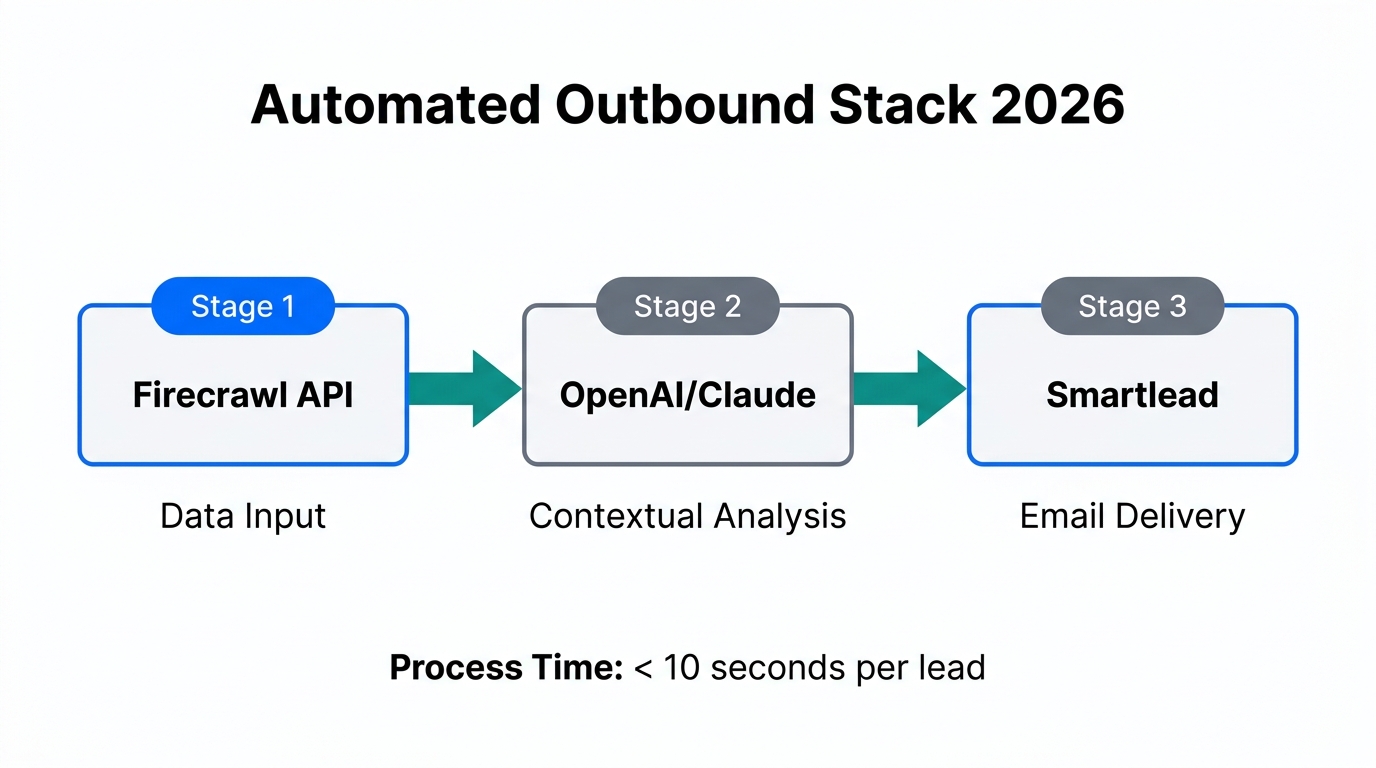
The goal of sales automation in 2026 is to create a seamless "Hand-to-Hand" loop between data and outreach. Here is the blueprint for a fully automated outbound machine:
- Sourcing: Use Apollo or Stormy AI to find the initial list of accounts or creators.
- Enrichment: Pass those URLs to Firecrawl to extract "icebreakers" (recent news, podcast appearances, or specific site features).
- Personalization: Feed that structured data into Claude or ChatGPT to write a hyper-personalized first line.
- Delivery: Push the personalized leads into Instantly or Lemlist for automated sending.
- Sync: Automatically log all interactions in HubSpot or Pipedrive.
This workflow allows a single growth marketer to perform the work of a 20-person SDR team. By using AI sales agents to handle the tedious research, your human sales reps can focus exclusively on closing deals.
| Stack Component | Recommended Tool | Role in 2026 Stack |
|---|---|---|
| Lead Sourcing | Stormy AI | Finding creators and social-first leads |
| Data Extraction | Firecrawl AI | The "Eyes" that read competitor sites |
| Email Sending | Instantly | Automated scale and deliverability |
| CRM | HubSpot | The central source of truth |
The Bottom Line for Sales Automation in 2026
The era of "blind" AI is over. Tools like Firecrawl AI are providing the eyes and hands that modern sales teams need to operate autonomously. Whether you are building an Amazon FBA intelligence tool, an SEO gap finder for dentists, or a high-margin lead generation agency, the key is clean, structured web data.
Start by picking a niche where data is currently hard to reach. Use the Firecrawl agent to map the landscape, extract the truth, and package it into a format that solves a specific pain point. In a world where everyone has access to the same LLM "brains," the winners will be those who control the best data inputs. Don't just build another chatbot; build a system that understands the world in real-time. The infrastructure is here—it's time to build.