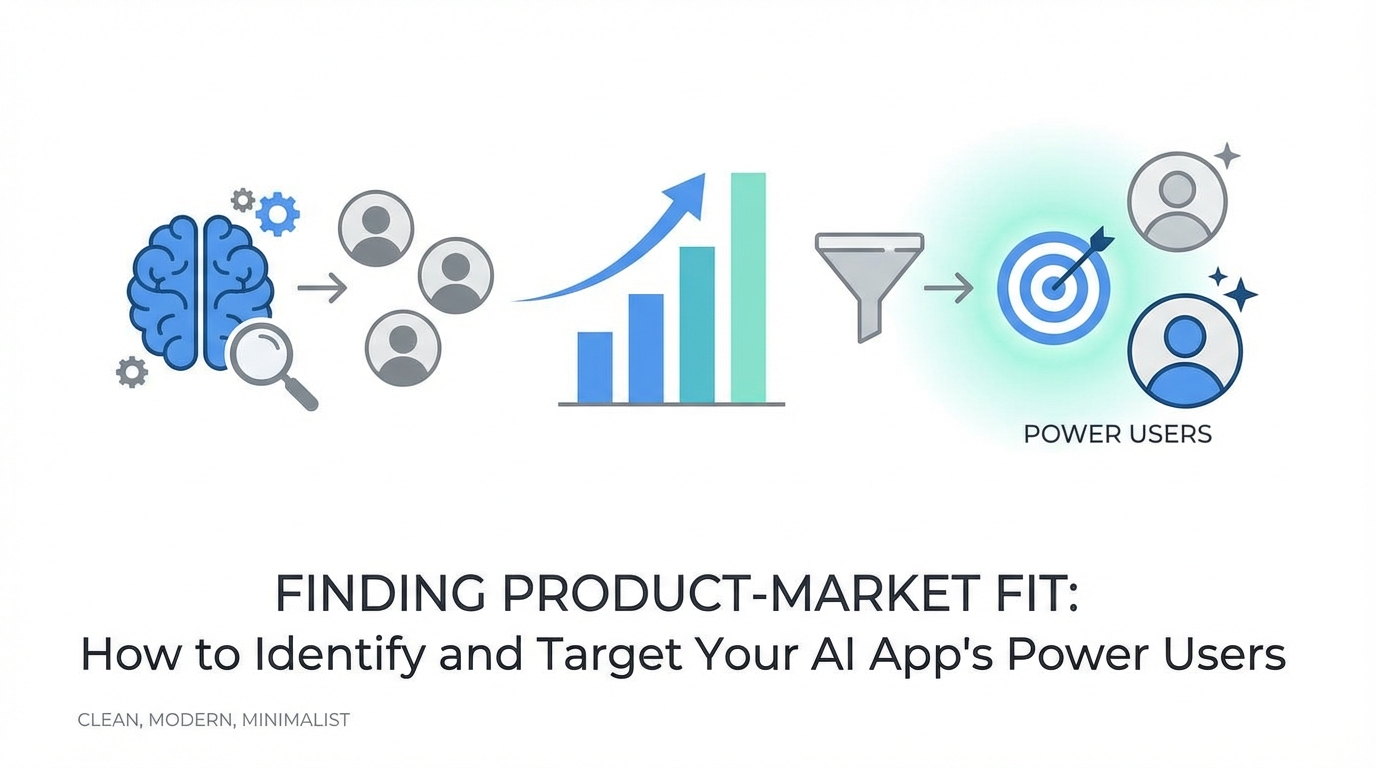
Building a successful AI application today requires more than just a clever prompt or a sleek interface. In a market saturated with thousands of GPT-wrappers and niche tools, the difference between a project that stalls and one that generates $80,000 in six months often comes down to one critical factor: finding product market fit. Many founders fall into the trap of building for their peers—other developers and enthusiasts—rather than identifying a specific ideal customer profile for SaaS that is actually willing to pay for a solution. This article outlines a tactical playbook for shifting your mindset from a "skillsman" to an entrepreneur, identifying high-value power users, and optimizing your distribution to drive real revenue.
The Mindset Shift: Stop Building for Developers, Start Building for Buyers
One of the most common pitfalls for solo founders is what entrepreneur Prrenit calls operating as a "skillsman." In a recent Starter Story interview, he explained that for years, he was building apps to impress his peers rather than to solve market problems. This developer-centric approach often results in technically impressive tools that lack a clear commercial purpose. To achieve SaaS growth strategies that work, you must pivot your focus toward the market's needs, not the technical elegance of your code.
Finding product-market fit starts with recognizing that your goal is to make people's lives better in exchange for money. This means ignoring the urge to build features just because they are possible with tools like Vercel’s AI SDK and instead focusing on the friction points that prevent users from achieving their goals. Platforms like Cursor have revolutionized how we build, but the "what" you build is still more important than the "how."
Identifying the Power User Niche: Solving the Linear Chat Problem


To successfully understand how to market an AI tool, you must identify a segment of users who are hitting the limits of existing general-purpose tools. For example, while millions use ChatGPT, a small percentage are "Power Users" who engage in complex, multi-layered research or coding sessions. These users often face a specific friction point: linear conversation fatigue. In a standard chat interface, it is easy to lose context or have the AI "forget" previous instructions as the thread grows longer.
By identifying this friction, you can build a niche solution like Canvas Mode (formerly Rabbit Holes AI). This tool allows users to branch off from conversations into new nodes, creating a non-linear workspace. Instead of competing with giants like Claude or Perplexity, you are building an expert layer on top of them. This is a classic example of narrowing your ideal customer profile for SaaS to those who derive the most value from a specific UX improvement.
For mobile app developers looking to scale, finding these power users is often done through social listening. Using tools like Stormy AI for finding UGC creators and influencers can help you identify creators and influencers who are already complaining about the limitations of current AI apps. You can even use Stormy AI to vet creators instantly, ensuring their audience aligns with your power user niche through deep demographic analysis and fake follower detection. These influencers can provide the high-quality UGC (user-generated content) needed to demonstrate your tool’s unique value proposition to their dedicated audiences.
Landing Page Copywriting: Explicitly Calling Out Your ICP
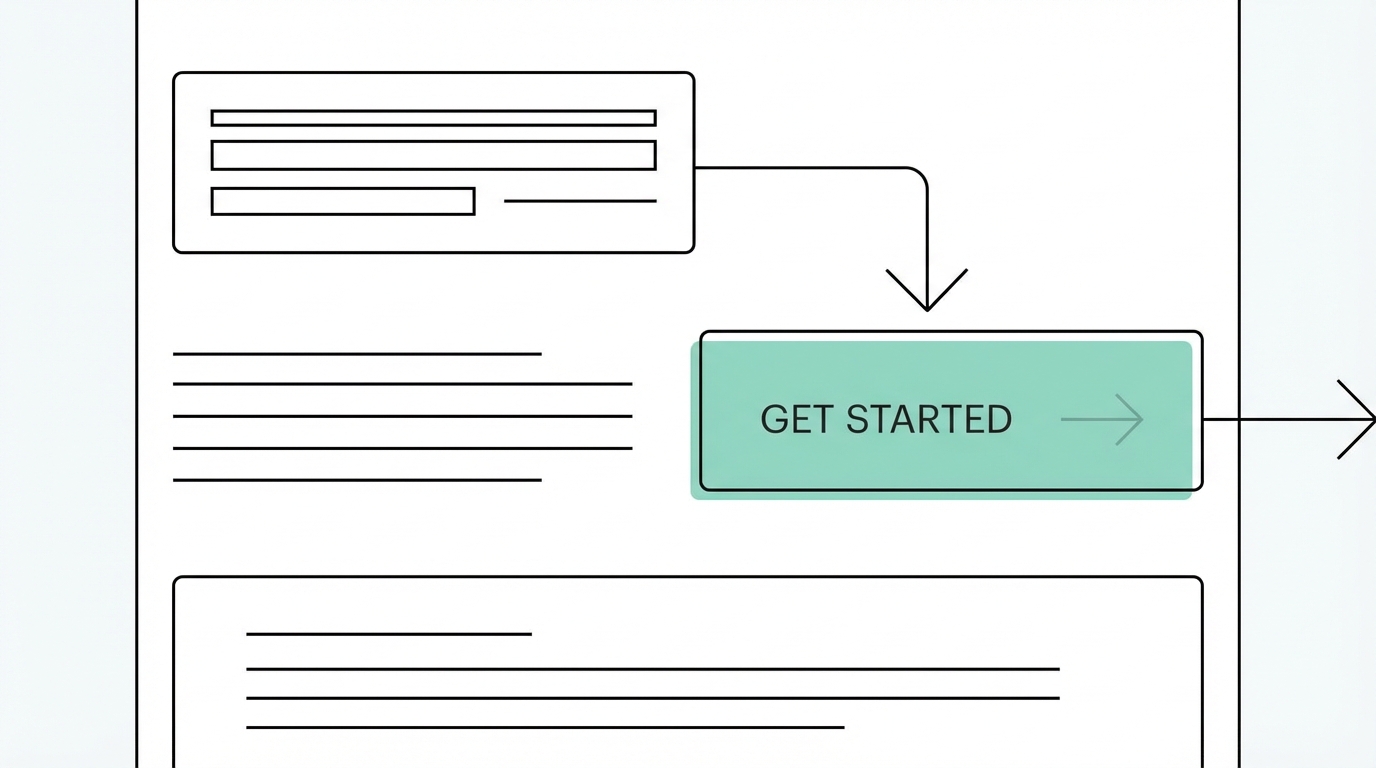
Once you have identified your niche, your website must act as a filter. Landing page copywriting for AI should not be vague; it should explicitly name the person it is for. If your app is for "Power AI Users," your H1 header should say exactly that. This immediately qualifies the visitor and tells them they are in the right place.
The Power of the H1 Header
Your H1 is the most valuable real estate on your page. Instead of saying "The Best AI Interface," try "A Canvas-First Way for Power Users to Interact with AI." This approach does two things: it calls out the persona and it highlights the unique mechanism (the canvas). When Prrenit changed his landing page to explicitly target power users, his conversion rates began to climb. He used Next.js to build a fast, responsive site that focused on these clear benefits.
Social Proof and Friction Removal
Beyond the headline, your copy should address the specific pain points identified during your research. If your users are tired of paying for five different subscriptions, highlight that your tool allows them to "Bring Your Own Keys" (BYOK). This not only appeals to the cost-conscious power user but also signals that you are a pro-user tool that doesn't lock them into a specific model provider.
The 'Hinting' Strategy: How to Grow on Social Media Without Spamming
Many founders struggle with how to market an AI tool on platforms like Twitter (X). The mistake is often being too promotional too early. A more effective approach is the "Hinting" strategy. This involves participating in existing conversations about AI friction and subtly mentioning how your tool solves that specific problem.
- Step 1: Monitor Relevant Keywords. Use social listening to find people complaining about ChatGPT losing context or the limitations of linear chat.
- Step 2: Provide Value First. Offer a tip or a workaround for their problem.
- Step 3: Drop a Hint. Mention that you were frustrated by the same thing, so you built a small tool to fix it. This feels like a helpful recommendation rather than a cold pitch.
By using this method, you can drive targeted traffic to your landing page without burning your reputation in the community. This organic growth is vital for bootstrapping and finding product market fit without a massive ad budget.
Pricing Strategy: Why Lifetime Deals (LTDs) Work for Bootstrappers

While the recurring revenue of a subscription model is the holy grail of SaaS, it isn't always the best starting point for a bootstrapped AI app. In the early stages, your goal is validation and feedback. Offering a lifetime deal (LTD) can provide the initial capital needed to sustain development while building a core group of power users. To ensure you're getting the best return on your early marketing efforts, you can use Stormy AI to track the performance of any creator collaborations, monitoring views and engagement in real-time.
Prrenit’s success—moving from $0 to $80,000—was largely due to switching from a subscription model to a one-time purchase with a "Bring Your Own Key" (BYOK) model. This structure eliminates your server and API costs, as users pay OpenAI or Anthropic directly for their usage. If you are looking to launch quickly, participating in programs like Starter Story Build can help you refine this pricing strategy to ensure you are profitable from day one.
Leveraging AI Tools for Creator Discovery and Marketing
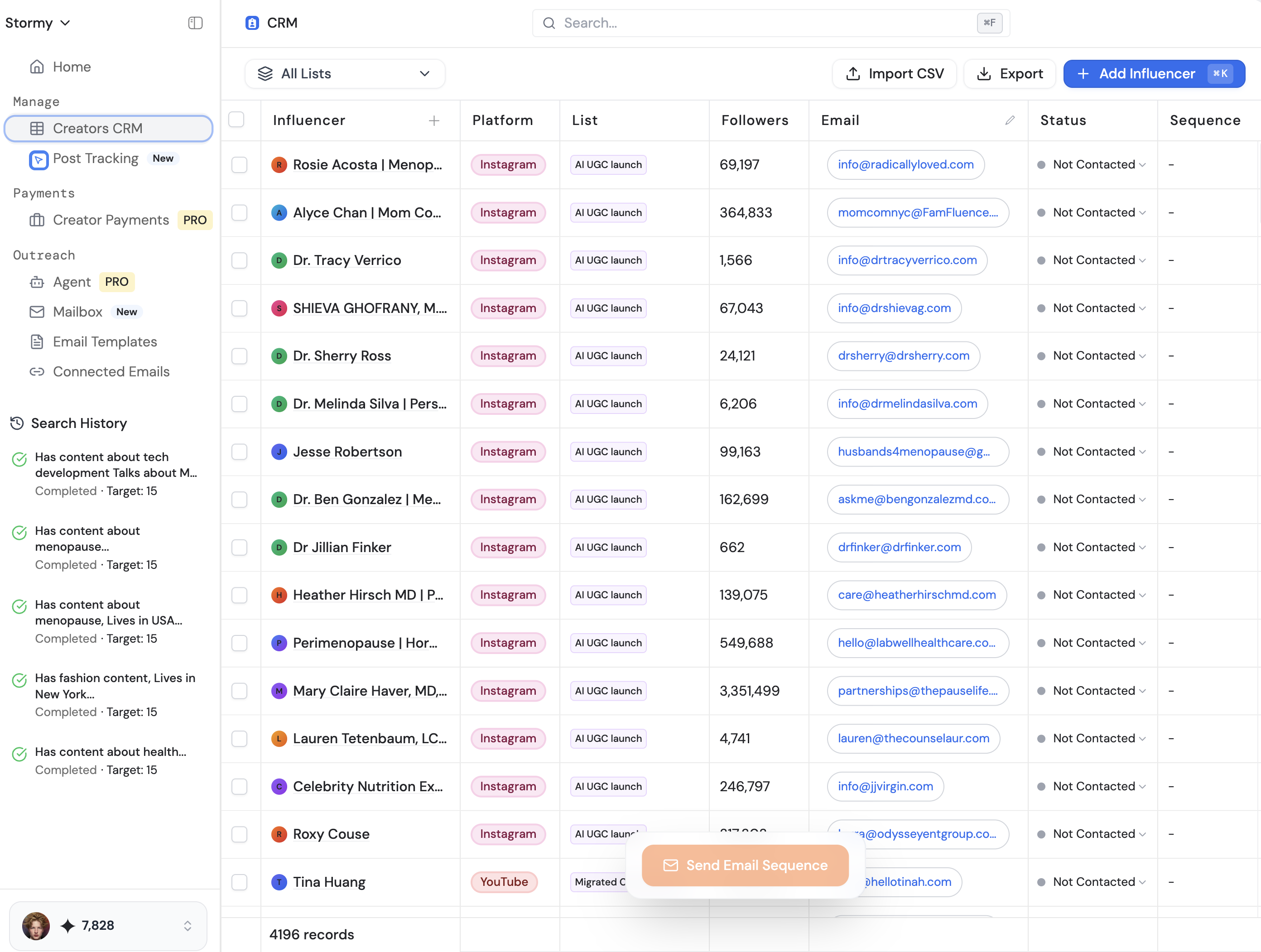

As your app grows, you’ll need to scale your outreach. This is where AI-powered creator discovery becomes essential. For developers launching mobile apps or specialized AI tools, finding the right creators for app marketing campaigns is a logistical challenge. Stormy is an AI-powered platform for creator discovery, especially for mobile app marketing and UGC campaigns. Tools like Stormy AI allow you to search through millions of creators to find those specifically interested in AI productivity or tech tutorials. You can even deploy a Stormy AI agent that discovers, outreaches, and follows up with creators on a daily schedule, automating your entire marketing funnel.
By partnering with these creators, you can generate authentic UGC for mobile app ads that demonstrates your product in action. Watching a power user navigate a complex "canvas" of AI nodes is much more convincing than a static screenshot. This visual proof is a core component of modern SaaS growth strategies.
Conclusion: Your Playbook for Finding Product-Market Fit
Finding product market fit for an AI tool isn't about having the best code; it's about having the best understanding of your ideal customer profile for SaaS. By shifting your mindset from developer to problem-solver, you can identify the friction points in popular tools like Perplexity and build targeted solutions that users are eager to pay for.
Key Takeaways:
1. Stop Building for Peers: Focus on solving real-world friction for paying customers.
2. Identify Power Users: Look for the 1% who are pushing current tools to their limits.
3. Optimize Your Copy: Use landing page copywriting for AI that explicitly calls out your target audience in the H1.
4. Use the Hinting Strategy: Grow on social media by being helpful and subtly mentioning your solution.
5. Consider LTDs: For bootstrappers, a lifetime deal with a BYOK model can provide the cash flow and feedback loop needed to scale.
If you're ready to start building and launching your own AI-powered business, consider exploring the resources at Starter Story Build to accelerate your journey from idea to revenue.