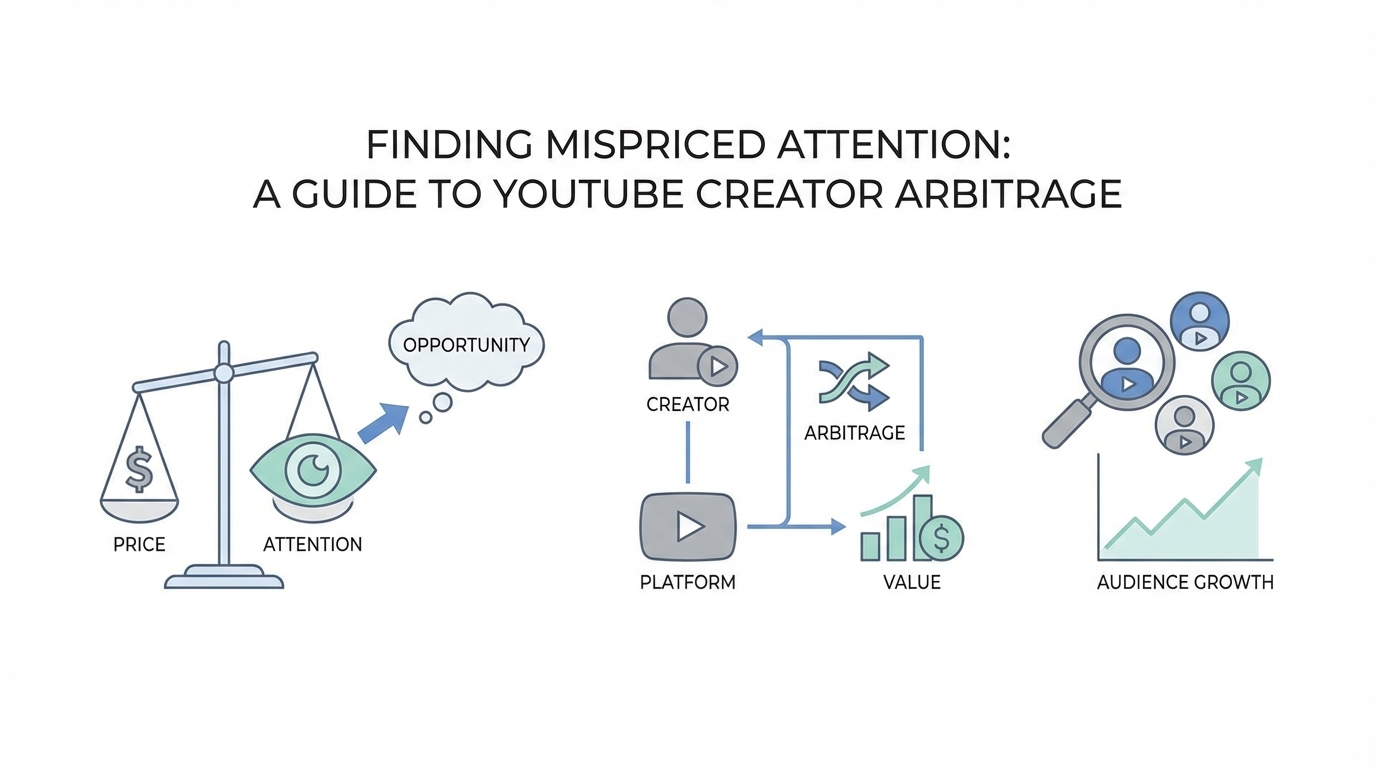
In the early days of digital marketing, empires were built on the back of mispriced attention. Companies like Wish.com and Zynga scaled to billion-dollar valuations by identifying channels where the cost of a click was significantly lower than its eventual value. Wish, for example, famously spent millions on Facebook Ads when link clicks were costing pennies, effectively cornering the market before competitors caught on. Today, that same opportunity exists within the world of YouTube micro-influencers. While the big names charge premium youtube sponsorship rates, a massive segment of creators with 10,000 to 50,000 subscribers remains largely untapped and undervalued.
The Inefficient Market Theory: Why Micro-Influencers Underprice
The core of any arbitrage strategy is finding an inefficient market. In influencer marketing, inefficiency occurs because creators often do not know their true market value. When a creator reaches the 10k-50k subscriber milestone, they have enough of an audience to drive meaningful results, but they are often still operating as a hobbyist or a solo creator without an agent or a sophisticated pricing model.
Because these creators haven't been "schooled" by talent agencies on what to charge, their pricing is often arbitrary. If you reach out to 100 creators in this tier, you will find a massive variance in quotes for the exact same deliverable. This delta—the difference between what they charge and the revenue they generate—is where your influencer marketing ROI lives. Unlike major influencers who command fixed, high-CPM rates, micro-influencers are often willing to negotiate based on their immediate needs or a simple desire to work with a professional brand. They represent a pool of high-quality, high-intent attention that hasn't yet been commoditized by the broader advertising market.
Step 1: The Tactical Hunt to Find YouTube Creator Emails


To execute this at scale, you need data. You cannot rely on the handful of creators you already follow; you need a list of 1,000+ targeted leads. The first hurdle is the technical challenge of gathering contact information. While you can manually navigate to a YouTube profile's "About" section and click "View Email Address," YouTube limits this to roughly eight reveals per 24-hour window per account. To scale your micro-influencer outreach, you need a more robust system.
There are three primary ways to solve the "email bottleneck":
- The Manual/Freelance Approach: You can hire a data researcher on Fiverr or Upwork to scrape emails for you. For roughly $100-$150, you can often get a list of 5,000 to 10,000 niche-specific creator emails. This is the path of least resistance for teams without technical resources.
- The API Method: For those with a bit of technical savvy, using a YouTube API scraper or a specialized service via Rapid API is the gold standard. These tools allow you to query YouTube’s database directly and pull email addresses in bulk, often bypassing the standard captcha limits by using distributed validation services.
- Niche Searching: Start by searching for specific tutorials or keywords related to your product (e.g., "Google Ads tutorial" or "Notion setup"). Filter by videos uploaded "This Month" and between "4-20 minutes." These are the active, mid-form creators who are most likely to be open to sponsorships.
Step 2: The Math of Arbitrage — Rank-Stacking for Value

Once you have your list of creators and their basic stats (subscribers and average views), you need to determine who is actually "cheap." To do this, create a simple Google Sheets or Notion database. Do not look at youtube sponsorship rates in a vacuum; look at them relative to reach.
Calculate a Cost-per-Subscriber or Cost-per-Average-View ratio. For example, if Creator A has 20,000 subscribers and charges $500 for a video, and Creator B has 10,000 subscribers and charges $100, Creator B is significantly more undervalued. By rank-stacking your leads from the lowest cost-to-reach ratio to the highest, you identify your primary targets for outreach. Your goal is to find the "outliers"—the creators who are delivering 5x the value of their peers for the same price. This creator marketing strategy turns your marketing spend into a data-driven investment rather than a guessing game.
Step 3: The Cold Outreach Script That Wins
Micro-influencers are inundated with generic spam. To stand out, your micro-influencer outreach needs to be concise and professional, and clear about the financial upside. Through extensive testing, the most effective subject line is surprisingly simple: "Paid Collaboration." This immediately signals to the creator that this isn't a request for free work.
The body of the email should follow this template:
"Hey [Name], love the content you're posting on YouTube. Can I get a cost breakdown for a three-video package? We'd also like to offer an affiliate commission of 30% on top of the flat fee. Let me know if you're interested!"
Why a three-video package? A single video is often a "flash in the pan." By securing three videos over a 6-8 week period, you allow the audience to see the product multiple times, increasing trust and conversion rates. It also gives the creator a larger upfront payday, making them more likely to agree to a lower per-video rate. This structured approach is essential for a sustainable creator marketing strategy.
Step 4: Negotiation Tactics and the Affiliate Kicker
When a creator comes back with a quote that is too high, do not walk away immediately. Instead, pivot to a performance-based model. Many creators are hesitant to take a 100% affiliate deal because they have bills to pay. However, they are often open to a hybrid model: a lower flat fee combined with a higher affiliate commission.
Use tools like Rewardful to track these conversions. The affiliate component is your secret weapon for two reasons: First, it allows you to accurately measure the influencer marketing ROI of every single dollar spent. Second, it creates "lock-in." If a creator is earning recurring commissions via Stripe from your brand, they are unlikely to switch to a competitor or raise their base rates on you. They become a long-term partner invested in your success.
Step 5: Scaling Your Workflow with Stormy AI
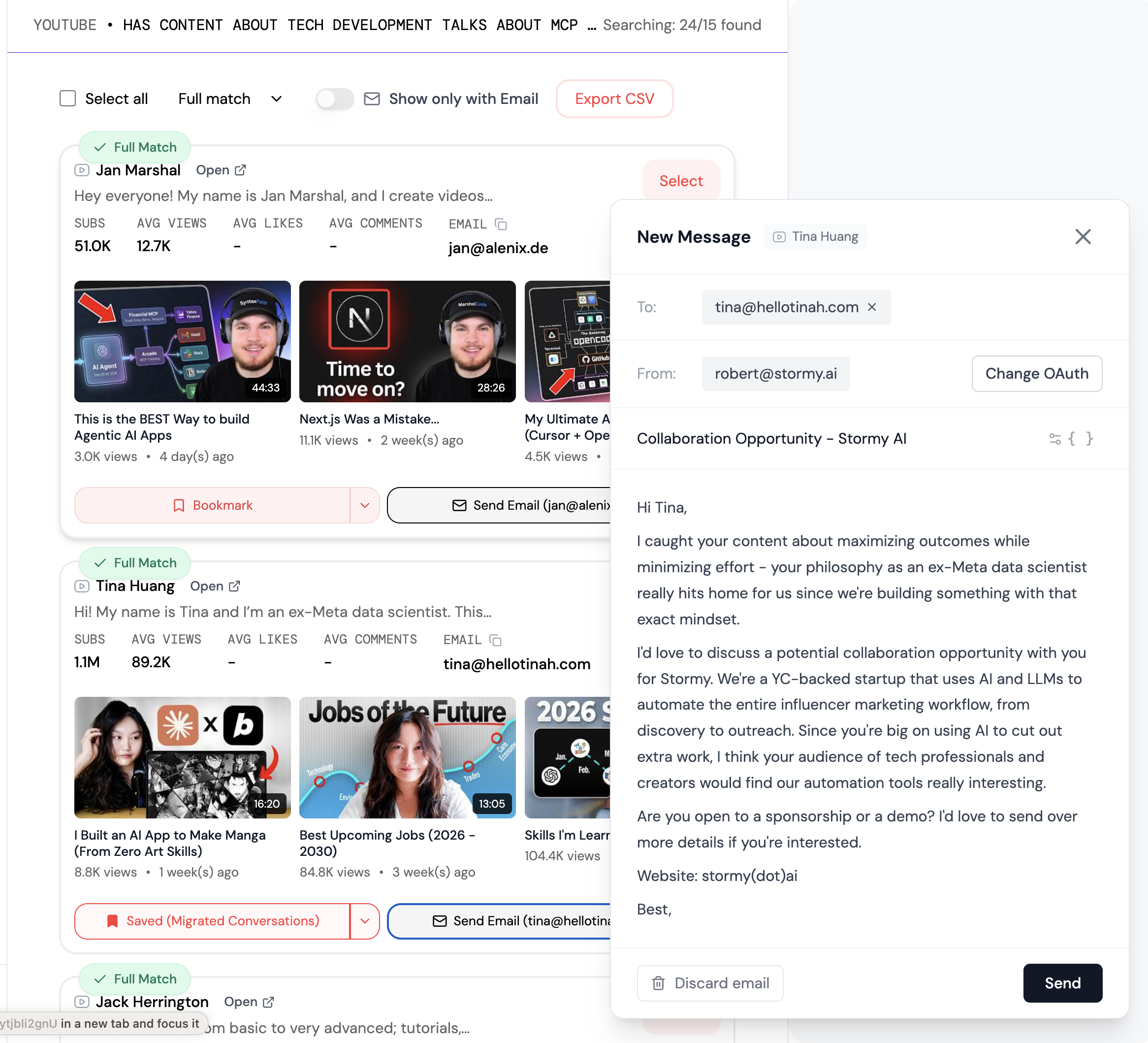
The manual labor of finding, vetting, and negotiating with hundreds of creators is the biggest barrier to scaling this arbitrage model. This is where modern AI tools become essential. Platforms like Stormy AI can help source and manage UGC creators at scale by automating the discovery process.
Instead of manually scraping Rapid API or hiring freelancers, you can use Stormy AI's search engine to find creators who have already made videos about your specific niche. The platform’s AI agent can even handle the initial micro-influencer outreach and negotiate pricing based on your parameters. This allows a single marketing manager to manage a roster of 100+ creators, creating an "astro-turfing" effect where your product seems to be everywhere at once within a specific community. By leveraging a creator CRM, you can track every deal stage and ensure that no high-value opportunity falls through the cracks.
Step 6: Building the Retainer Flywheel
The final stage of the arbitrage strategy is the Retainer Flywheel. After your initial cohort of 10-20 creators has posted their videos, analyze the data. You will typically find that 20% of the creators drive 80% of the results.
Approach these top performers and offer them a monthly retainer. Creators love recurring revenue; it provides them with the financial stability to keep making content. For you, it ensures a consistent stream of ROI-positive media. As you move these winners to retainers, you begin a new outreach cycle to find the next batch of undervalued talent. Over 12-18 months, this process can scale a company from zero to millions in ARR, as seen with brands like Everbee, which scaled entirely through bootstrapped YouTube arbitrage.
Conclusion: The Window of Opportunity
We are currently in a "medium-rare" state of the creator market. The biggest brands are still pouring money into high-priced celebrity influencers and Google Ads, leaving the micro-creator space open for tactical arbitrageurs. By focusing on finding YouTube creator emails in the 10k-50k subscriber range, rank-stacking them by value, and using hybrid affiliate models, you can build a growth engine that is both scalable and highly profitable. The key is to act before these micro-influencers realize their true market value and the arbitrage window closes. Start building your list in YouTube Creator Studio, send that first "Paid Collaboration" email, and let the math of mispriced attention work in your favor.