Most founders wait for a lightning strike of inspiration, believing that billion-dollar ideas come from a flash of genius. In reality, according to Harvard Business Review research on innovation, the most successful companies are often built on the most mundane, repetitive headaches. The 'Stressor' Framework is a strategic approach to business opportunity identification that moves away from abstract brainstorming and toward the observation of friction. By identifying what keeps people awake at night—or what causes a sudden spike in cortisol on a Sunday evening—you can pinpoint profitable business niches that customers are already desperate to pay for.
The Psychology of Stress: Selling Peace of Mind

In the world of market research for founders, we often focus on utility: Does this tool do the job faster or cheaper? While utility is important, the most powerful motivator for high-ticket purchases is often stress reduction. Customers will pay a significant premium for 'peace of mind' over raw utility. When you solve a problem that causes mental fatigue, you aren't just selling a service; you're selling a better night's sleep.
Take, for example, the sudden realization that your home's gutters are overflowing or your AC filter hasn't been changed in eighteen months. These aren't just maintenance tasks; they are mental cognitive loads—a concept often cited in psychological studies regarding burnout. As Sahil Bloom and Greg Isenberg discussed on The Room Where It Happens, the modern generation of homeowners often has no clue how to manage these basic adult responsibilities. This gap between ownership and expertise creates a massive opportunity for a home concierge business.
When you are looking for how to find startup ideas, start by documenting your own stressors. Did a sewage backup on a Sunday night leave you frantically Googling for a plumber? That moment of panic is a market signal. In that state, you are price-insensitive. You don't care if the plumber costs $200 or $500; you just want the 'stinky water' gone. Identifying these moments of peak stress is the first step in profitable business niches discovery.
The Uber Driver Method: Unconventional Market Research

Traditional market research for founders often involves expensive reports and stale data. A more effective, boots-on-the-ground approach is the 'Uber Driver Method.' This involves using daily interactions with service providers and blue-collar workers as a proxy for understanding market friction.
Next time you take an Uber, don't just sit in silence. Ask the driver: "What's the hardest part of running your business?" or "What part of this job stresses you out the most?" You might find out they struggle with cash flow timing, leading to the discovery of financing solutions like Capchase, which allows startups to tap into future revenue today. Or you might learn about the nightmare of traditional banking interfaces, which explains why founders are flocking to elegant solutions like Mercury for their business banking.
This method works because it bypasses the 'echo chamber' of tech Twitter and puts you in touch with real-world operational bottlenecks. Intellectual curiosity is your best research tool. By talking to random people—the handyman, the inspector, the driver—you gain insights into industries that haven't been disrupted in decades because Silicon Valley hasn't bothered to look at them.
Reddit and Niche Communities: Identifying 'Unsolved Headaches'

If you want to scale your business opportunity identification, move from the Uber seat to the digital forum. Reddit and niche communities are goldmines for 'unsolved headaches.' People don't go to Reddit to talk about what's working; they go there to complain about what's broken.
Search for terms like "Does anyone know how to...", "I'm so frustrated with...", or "Why is it so hard to find a good...". In the home maintenance space, for instance, you'll find endless threads of people complaining about platforms like Angie (formerly Angie's List). The stressor here isn't a lack of providers; it's the spam and lack of quality control. Users plug in their info and get bombarded by 100 low-quality phone calls. This reveals a demand for a curated, concierge-like experience where the platform takes the stress of vetting away from the user.
When you find a recurring complaint in a niche community, you've found a profitable business niche. Your job as a founder is to build the 'bridge' between that frustration and a seamless solution. This is how companies like Hello Alfred were born—by recognizing that office managers and residents didn't just need a list of vendors; they needed a single point of contact to manage the chaos.
Applying the 'Product Hat': Verticalizing for Success
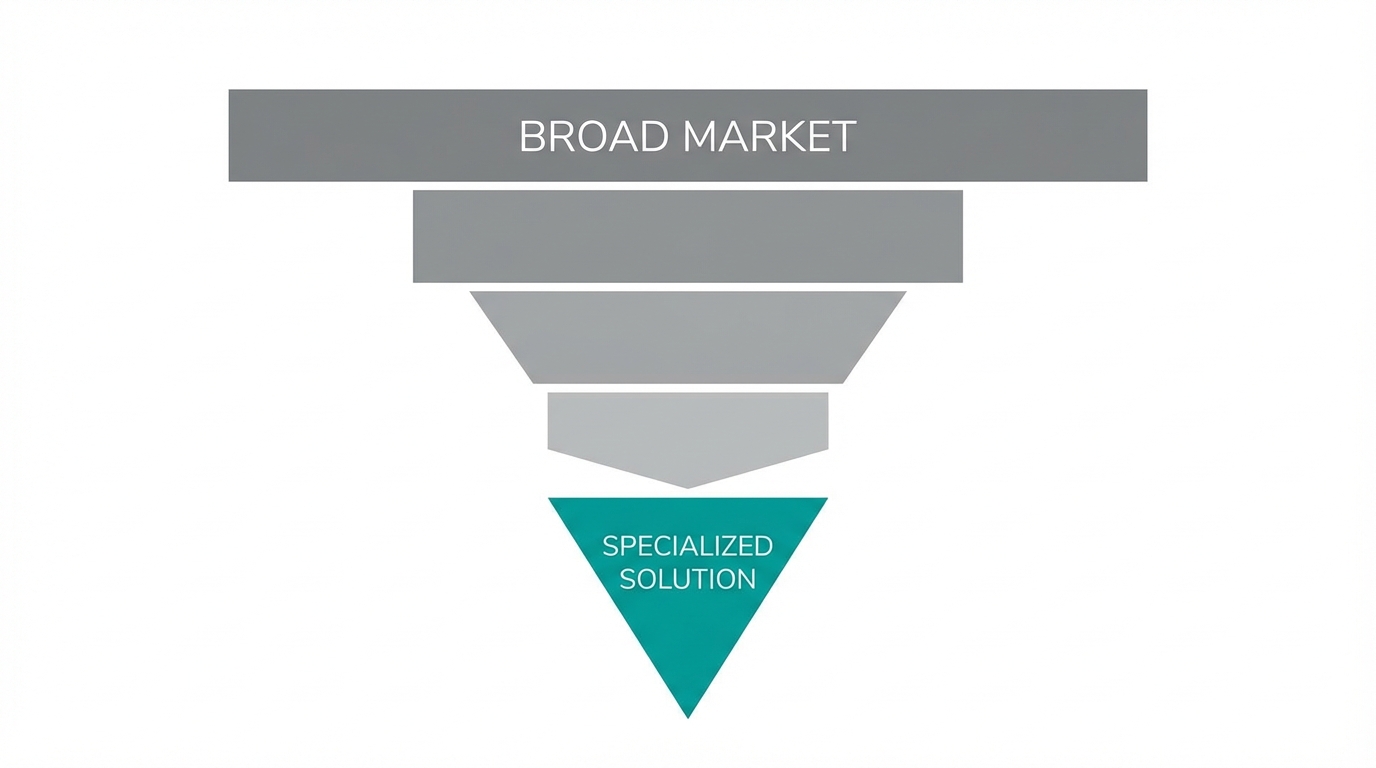
A common mistake in how to find startup ideas is trying to be 'everything to everyone' immediately. When you identify a broad stressor—like home maintenance—you must apply your 'Product Hat' to find the atomic unit of the service. You need to verticalize.
Instead of launching a national home management platform, you might start with a specific archetype: The 30-something New Yorker who just bought their first home in Westchester. This person has the disposable income to pay for a concierge but zero knowledge of how to change an AC filter or clean a gutter. By narrowing your focus to a specific geography and demographic, you solve the 'operations problem' of having to find service providers everywhere at once.
Verticalization allows you to guarantee capacity. In a stress-based business model, availability is your product. If you charge a $500 monthly fee for a concierge service, you can use that profit to pay providers 20% above market rate to ensure they show up immediately when your client calls. This hyper-local density is exactly how the early Uber playbook worked—starting with black cars in San Francisco before expanding to UberX and food delivery.
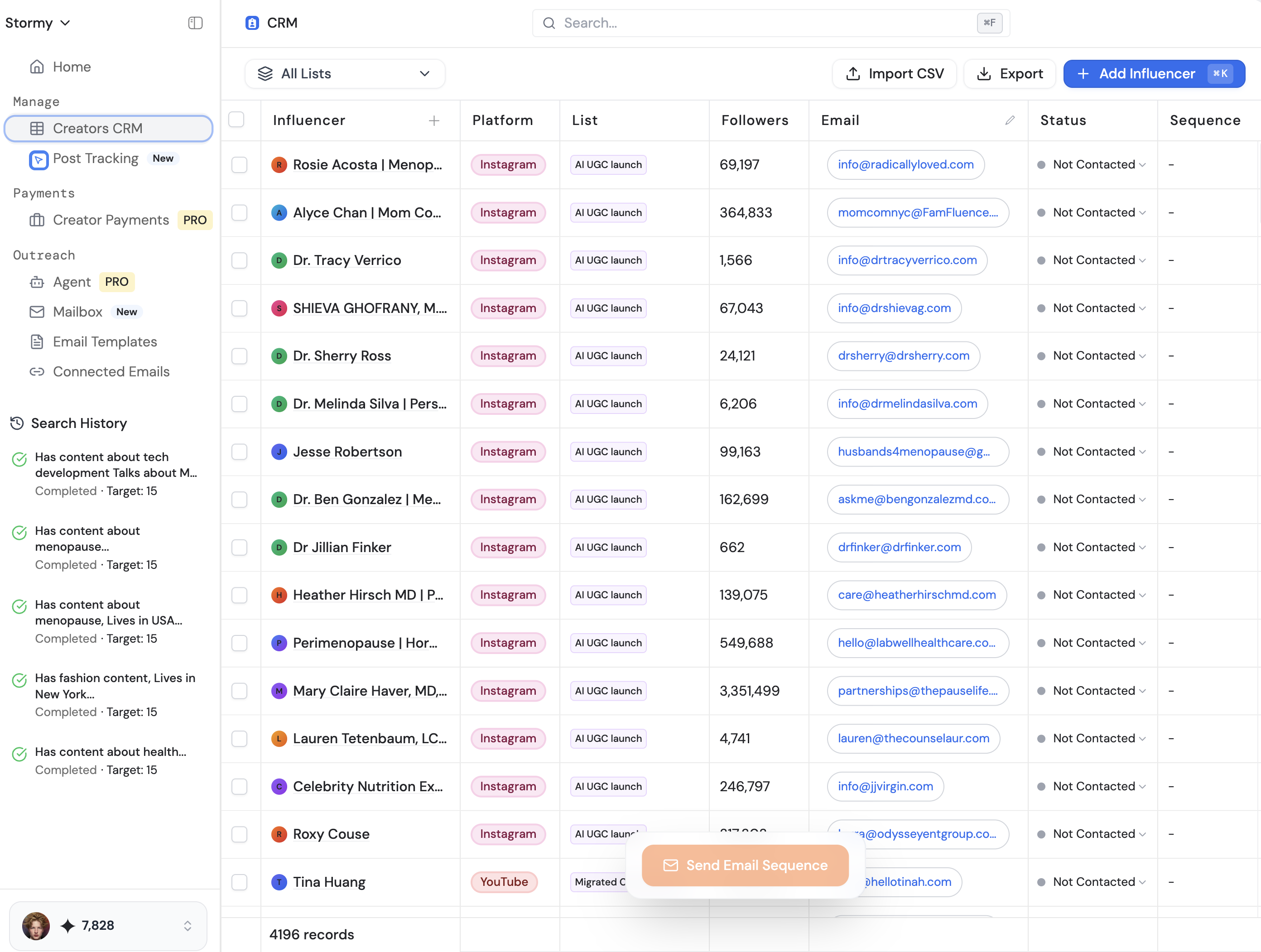
To market these verticalized services effectively, you need to find the right voices. Platforms like Stormy AI streamline creator sourcing and outreach, helping you discover and vet local influencers who already have the trust of your target demographic in specific regions. Instead of broad ads, you can use an AI-powered search to find creators who specifically cater to 'new homeowners' or 'suburban lifestyle' niches, allowing you to scale your entrepreneurial framework with surgical precision.
Case Study: The Billion-Dollar Gap in Old-School Industries
The home maintenance industry is a classic example of a massive market—estimated by Angi's State of Home Spending report to be over $600 billion—that is still operating on 1990s technology. Most homeowners receive a 80-page PDF from a home inspector when they buy a house, which they then promptly lose. There is no digital standardization for home health.
This creates two types of opportunities within the Stressor Framework: Proactive and Reactive.
- Proactive: Automated reminders for AC filters, gutter cleaning, and pool maintenance. This is the 'Amazon Prime' of home care.
- Reactive: The single point of contact for emergencies (the sewage backup).
We are seeing this play out in the vacation home market with companies like Pacaso, which verticalized the 'second home' experience. While Pacaso focuses on the status signaling and equity side of home ownership, there is a massive gap for a service that focuses purely on the operational headache of primary residences. The 'Stressor' here is the sheer volume of things that can go wrong in a 3,500-square-foot house when the owner doesn't know what a 'Bel Batis' is or how to spot wood rot.
The Reverse Test: Validating Your Billion-Dollar Idea

Once you have identified a potential business opportunity, how do you know it's a winner? Apply the 'Reverse Test.' This framework asks: "If this service existed and I started using it, would I ever go back to the way I did things before?"
If the answer is a resounding "Absolutely not," you have a sticky, high-retention business. Most people who use a concierge service for their home or an all-in-one AI platform like Stormy AI to manage their marketing outreach and creator CRM find the old way—manual spreadsheets and endless cold calls—completely intolerable by comparison. When a product removes a significant mental load, it becomes essential infrastructure rather than a luxury.
Conclusion: Your Action Plan for Idea Discovery
To find your next profitable business niche, stop looking for what's 'cool' and start looking for what's 'heavy.' Follow these steps to apply the Stressor Framework today:
- Audit Your Anxiety: List every task in the last 30 days that caused you to procrastinate or feel overwhelmed. These are your raw materials.
- Run the Uber Driver Method: Commit to asking three people outside your industry about their biggest work stressors this week.
- Verticalize the Archetype: Pick one stressor and define the exact person who feels it most acutely. Build for them first.
- Apply the Reverse Test: If your solution existed, would the old way feel primitive?
The goal isn't just to build a company; it's to build a system that provides peace of mind. In an increasingly chaotic world, the person who can reliably take away a customer's stress will always have a million-dollar business.