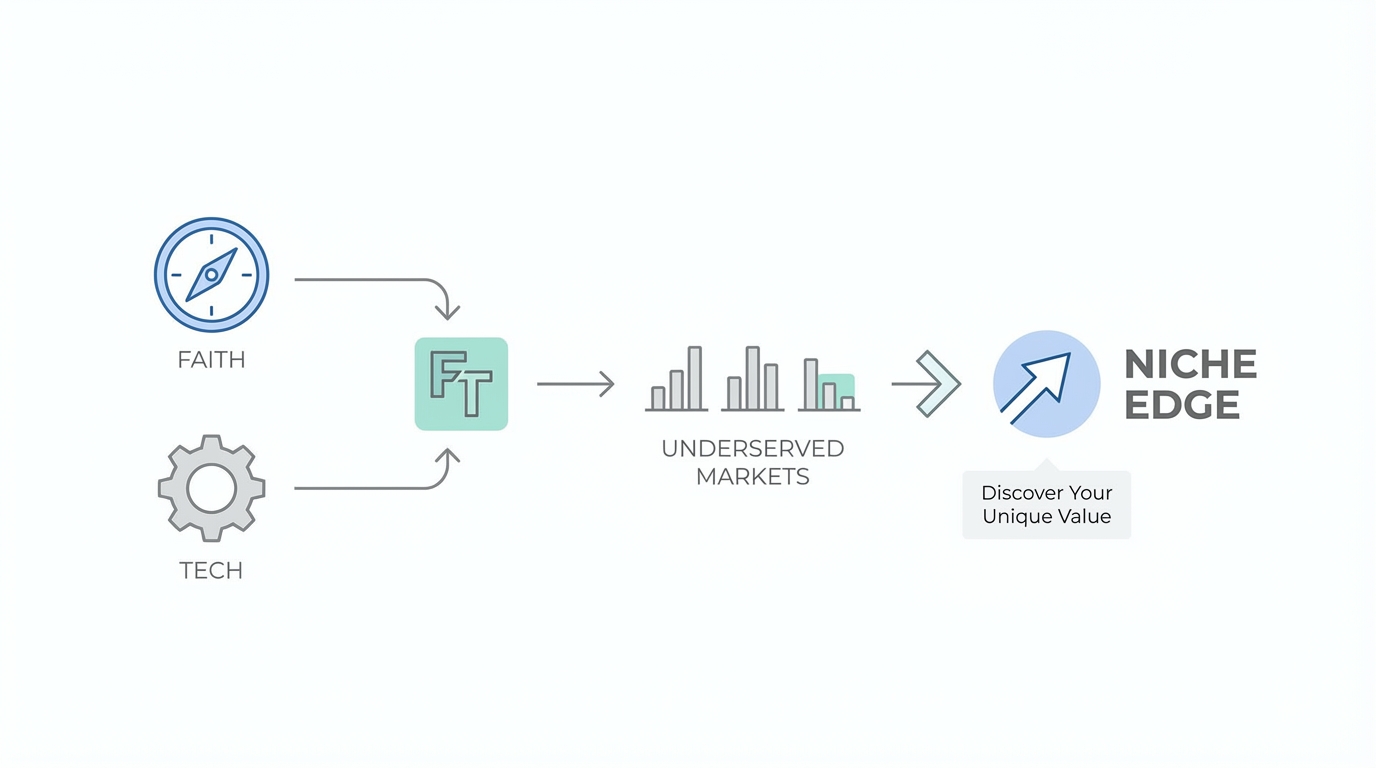
In the hyper-saturated landscape of the modern App Store, most developers are fighting for crumbs in the same crowded categories: generic productivity, meditation, and hyper-casual gaming. However, a new breed of entrepreneurs is realizing that the most profitable app niches aren't found in the center of the zeitgeist, but at the edges. By targeting specific, high-intent communities—most notably the faith-tech sector—founders are finding that they can achieve massive growth with lower acquisition costs and higher loyalty than the mass market could ever provide.
The 'Niche Edge' Theory: Why Specialized Communities Win


The core philosophy behind the success of current faith-tech market trends is the "Niche Edge" theory. This concept posits that most transformative technology reaches specialized or religious communities last. When a new technology like Generative AI emerges, the first wave of applications is usually broad and secular. This creates a vacuum where a massive, underserved audience is waiting for tools that speak their specific cultural and spiritual language. Founders like Lots, a London-based developer who has generated over $500,000 flipping niche apps, have proven that being the first to bring modern tech to these segments creates an immediate first-mover advantage.
Instead of building another generic AI chatbot, Lots focused on the Christian market with apps like Bible Buddy, which acted as an AI therapist for believers. By using tools like Sensor Tower to identify top-performing apps in adjacent categories, developers can spot where a trend is working in the general population and then "port" that value proposition over to a niche community. This strategy reduces the risk of niche software development because the core utility of the app has already been validated elsewhere.
Retention Secrets: Achieving 60% Day-30 Retention

One of the hardest hurdles in mobile growth is keeping users coming back. While the average utility app struggles to maintain a 10% retention rate after a month, apps built for high-intent niches often see mobile app retention strategies succeed at much higher levels. A prime example is Pray Screen, an app that blocks a user's distracting social media feeds and requires them to pray before the apps can be unlocked. This combination of a utility (app blocking) and a deeply ingrained spiritual habit resulted in a staggering 60% Day-30 retention rate.
This level of engagement is rarely seen in underserved app markets because the app is woven into the user's existing daily rituals. When an app solves a pain point—like digital distraction—while reinforcing a core identity—like daily prayer—it moves from being an option to being a necessity. To build such habit-forming software, many developers now use platforms like Rocket to move from a concept to a full-stack app in minutes, allowing them to test retention hypotheses rapidly before committing to long-term development cycles.
Building a Cross-Sell Ecosystem: The Power of Lookalike Audiences
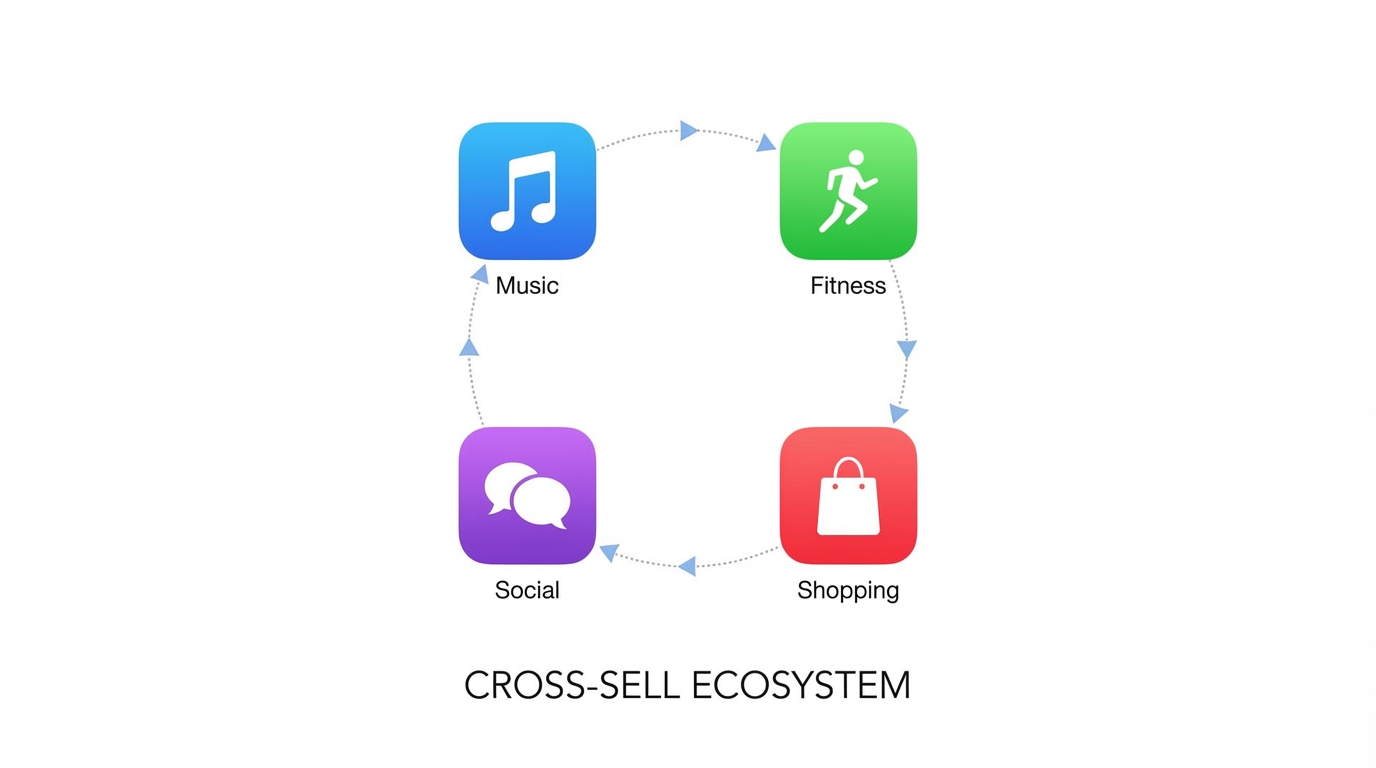
The real power of dominating a niche like faith-tech isn't just in the individual app revenue; it is in the data ecosystem you build. By scaling multiple apps within the same niche, founders can build massive email lists and custom audiences that make subsequent launches significantly cheaper. For instance, having a list of over 1.2 million Christians allows a developer to launch a new product and immediately achieve a low cost-per-install (CPI) through Meta Ads Manager by utilizing lookalike audiences.
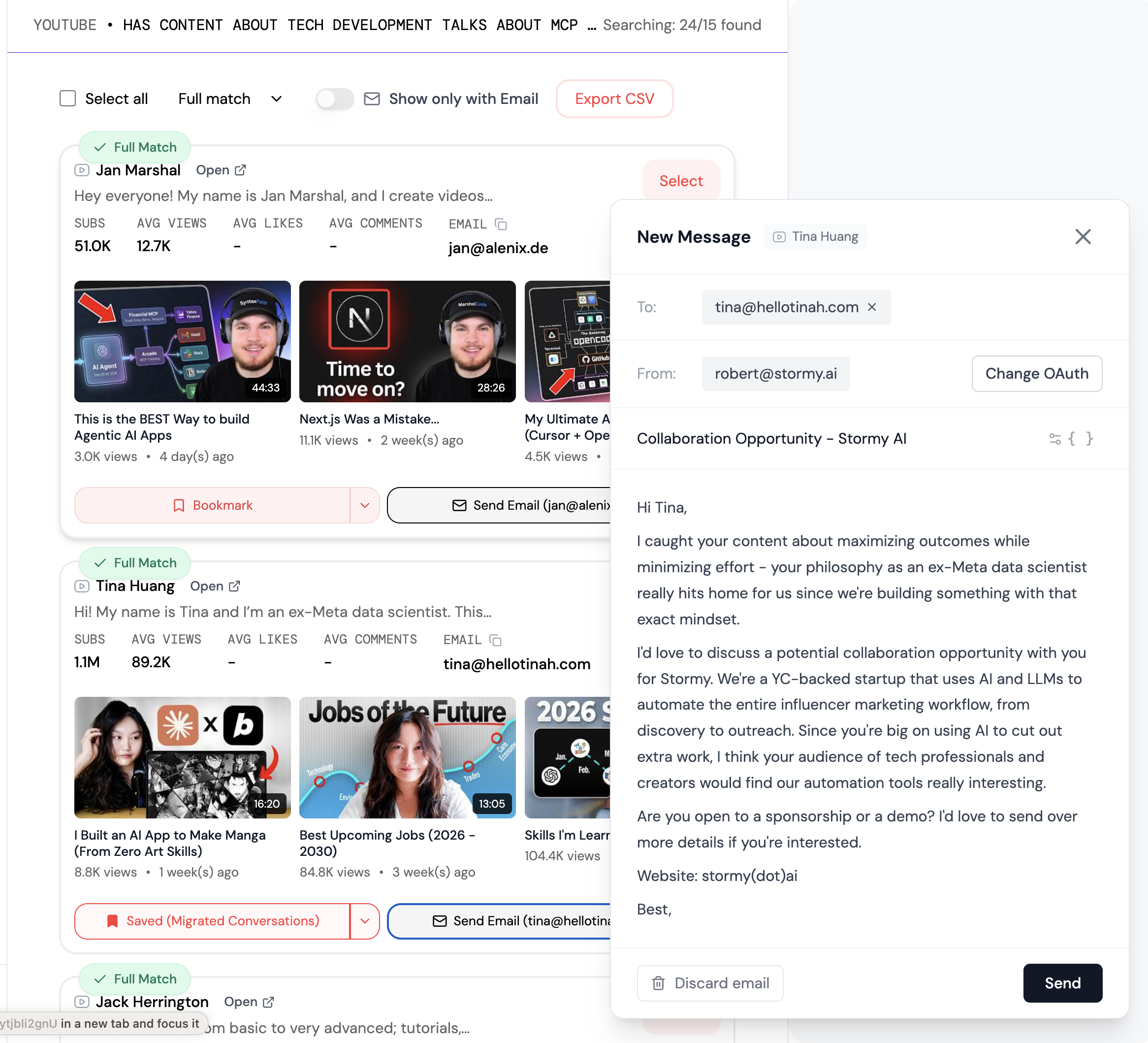
In this ecosystem, you can effectively cross-sell within your own portfolio, selling ad space from one app to another for free. This creates a defensive moat that competitors cannot easily penetrate. To find the right faces for these campaigns, Stormy AI is an AI-powered platform for creator discovery, especially for mobile app marketing and UGC campaigns, that is invaluable for developers who need to Stormy AI to find influencers who can produce authentic User-Generated Content (UGC) that resonates with these specific demographics. When your marketing feels like a community recommendation rather than a cold ad, conversion rates skyrocket.
Case Study: Analyzing the Success of Bible Buddy and Pray Screen
The journey of Bible Buddy highlights the importance of technical flexibility in niche software development. Originally launched on WhatsApp to test the waters, the app's costs ballooned to $15,000 per month due to messaging fees. Recognizing the potential, the founder quickly transitioned the app to a native iOS and Android experience. This move not only stabilized costs but also allowed for a more emotional, therapist-like AI experience that better served the user base's needs.
Success in these profitable app niches is often about simplicity. Both Bible Buddy and Pray Screen were "single-player" apps. They didn't require a network effect or a social graph to be useful; a single user could download the app and receive 100% of its value immediately. This makes the initial marketing pull much stronger, as you only need to convince one person to download, rather than a whole group. Once the apps reached a steady state of 10K to 20K Monthly Recurring Revenue (MRR), they became prime targets for acquisition on platforms like Acquire.com, often selling for 2x to 4x EBITDA.
The UGC Playbook: Scaling with Low CPIs
To scale these apps in underserved app markets, the most effective tool is UGC-led advertising. The strategy involves creating content on TikTok that uses "rage bait" or highly relatable emotional hooks to drive engagement. By showing a controversial or highly specific scenario—like an app that literally stops you from scrolling until you pray—you force the algorithm to boost the content due to high comment volume and watch time.
Using this method, apps in the faith-tech space have seen CPIs as low as 30 to 50 cents in the competitive US market. Once a high-performing hook is identified through organic testing, it can be scaled through paid media. For developers looking to replicate this, programs like Starter Story Build provide a roadmap for using AI tools to turn these niche ideas into functional, market-ready applications. Managing the creators who make this content is a full-time job, which is why founders often turn to Stormy AI to automate outreach and creator management to keep their margins healthy—ideally above 70%.
Future Niches: Identifying High-Intent Gaps

While faith-tech remains a powerhouse, several other profitable app niches are currently following the same trajectory. The key is to look for markets where people are already spending significant time and money offline or in fragmented communities. Three major areas of opportunity include:
- Korean Skincare (K-Beauty): There is a massive trend around "glass skin" and specific skincare regimens. A market analysis shows an AI-powered tracker that monitors facial progress and suggests product routines could tap into a high-intent audience with a high propensity to spend.
- Relationship Management AI: Men, in particular, often struggle with the logistical side of romance. An app that tracks important dates, provides gift reminders based on journal entries, and integrates with flower delivery services could solve a universal pain point.
- Health Trackers for Specific Demographics: Generic calorie counters are everywhere, but trackers tailored for specific age groups (like 18-30 year-old women) or specific dietary needs associated with wellness trends can command much higher loyalty.
By focusing on these specific segments, developers can avoid the "death by a thousand features" that kills most general-market apps. Instead, they can build lean, "plug-and-play" tech stacks that are attractive to buyers looking for consistent cash flow assets.
Conclusion: Securing Your Niche Edge
The lesson for developers and marketers in 2025 is clear: stop competing in the middle of the market. The real opportunity lies in the underserved app markets where your technology can provide a spiritual or specialized utility that doesn't currently exist. By focusing on high-retention strategies, leveraging UGC creators through tools like Stormy AI, and building with an exit in mind, you can create a portfolio of assets that provide financial freedom without the decade-long grind of a typical VC-backed startup.
Whether it's faith, skincare, or relationship management, the formula remains the same: find a community that technology has forgotten, solve their specific pain point with a single-player utility, and scale using authentic human content. That is the frontier of the modern App Store, and it's waiting for those bold enough to narrow their focus.