Experiential Marketing Trends 2026: Why Physical Distribution Is Shifting From Products to Experiences
Discover the experiential marketing trends 2026 shaping retail. Learn why the 'Big Box' middle is dying and how brands thrive by offering un-downloadable experiences.
In 2026, the retail landscape has reached a definitive tipping point. For over a decade, analysts predicted the total demise of brick-and-mortar commerce, yet the reality has proven far more nuanced. We aren't witnessing the death of physical shopping; we are witnessing the extinction of the mediocre middle. As digital native brands scale via Shopify and legacy giants restructure, a new physical distribution strategy has emerged: the shift from selling products to distributing "un-downloadable" experiences.
The Death of the 'Big Box' Middle: Lessons from 2024-2025 Bankruptcies
Discover why traditional big-box retail models are failing in the modern economy.
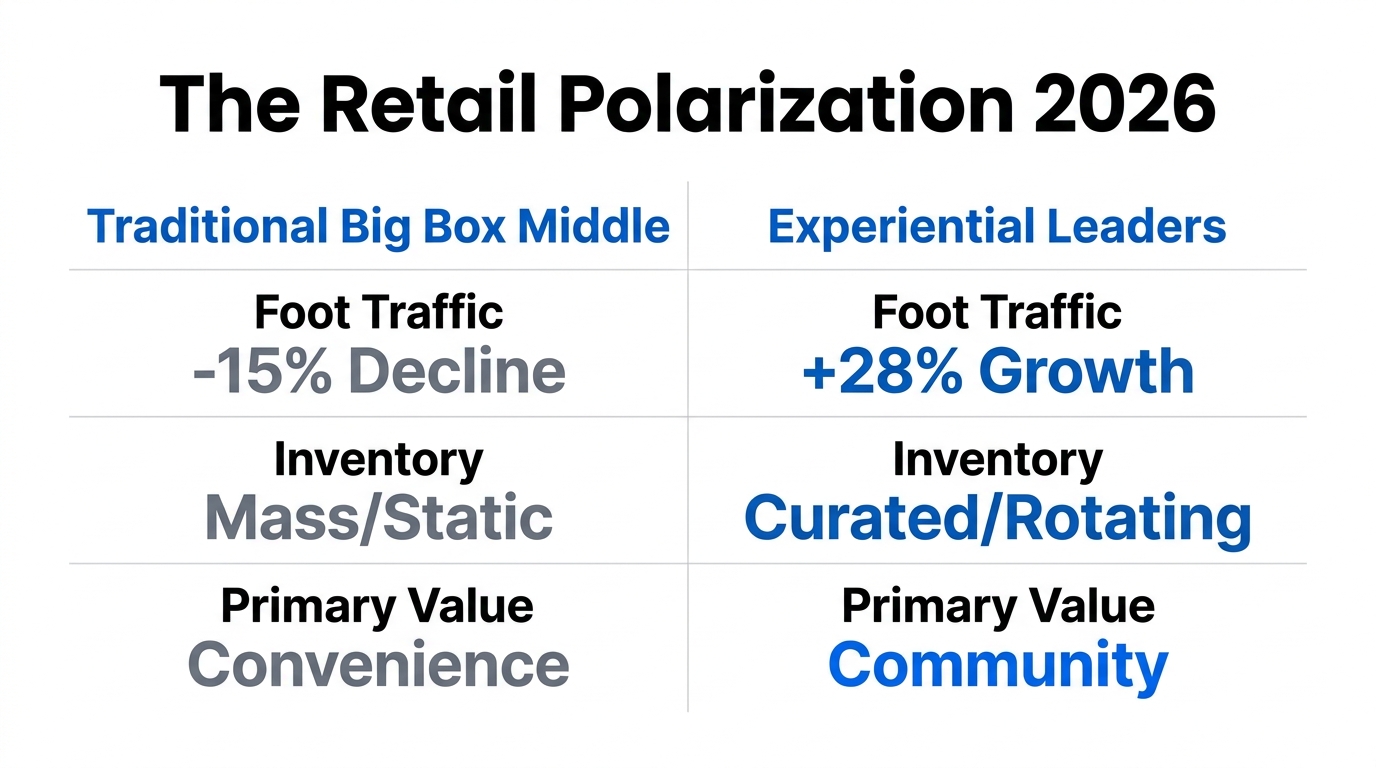
The recent bankruptcies of Joann’s and Big Lots serve as a stark warning for the 2026 retail environment. These brands fell into the "dead zone" of retail—they were neither the cheapest nor the most experiential. As noted by real estate experts, these companies failed to adapt to a world where a consumer can order almost any commodity via TikTok Shop or Amazon in seconds.
When a retailer carries $2 billion in debt without a clear experiential driver, they become a liability. The 2026 retail brand strategy requires every square foot to justify its existence through either extreme utility or extreme entertainment. Brands like Rite Aid and Big Lots struggled because their physical locations offered nothing that couldn't be replicated—and improved upon—by a digital interface.
"Success in 2026 retail is about the 'un-downloadable.' If a customer can get the same value from their couch, your store is already dead."
The 'Treasure Hunt' Retail Psychology: TJ Maxx and Home Goods
How retailers like Ross and TJ Maxx succeed through the treasure hunt experience.While middle-tier retailers falter, brands like TJ Maxx and Home Goods are thriving by leveraging a specific consumer behavior shift: the "Treasure Hunt." This strategy relies on the psychological thrill of discovery. Unlike a standard e-commerce search bar, these stores offer a high-intent, tactile experience where the inventory is constantly rotating, a strategy documented by Business Insider as a "retail apocalypse" survivor.
This model works because it is non-linear. Shoppers don't just go to buy a specific SKU; they go to see what is available today. By sourcing unique inventory that is difficult to find through standard Google Ads searches, these retailers create a reason for foot traffic that is immune to the convenience of the internet.
| Retail Category | Old Strategy (Pre-2025) | 2026 Experiential Strategy |
|---|---|---|
| Big Box | Massive inventory, low service | Decentralized distribution hubs |
| Specialty Retail | Predictable seasonal stock | Treasure hunt/rotating discovery |
| Services | Single-use (dry cleaning, etc.) | Lifestyle drivers (Fitness, Wellness) |
Integrating Experiential Drivers: From Apparel to Athletics
The transition from traditional gyms to experiential spaces like pickleball and trampoline parks.The most successful shopping centers in 2026 are no longer anchored solely by department stores. Instead, they are anchored by fitness centers, pickleball courts, and trampoline parks. The shift is clear: you can buy a shirt online, but you cannot play a game of pickleball in a browser, leading to a massive spike in sports participation rates according to the SFIA.
Integrating high-frequency lifestyle uses into retail centers creates reliable, high-intent foot traffic. When a customer visits a gym five times a week, they are five times more likely to stop at the neighboring smoothie shop or grocery store. This "fixed cost" business model—once the rent and labor are covered, every additional member is pure profit—is why large-scale gym chains, as noted by IHRSA reports, have become the new retail darlings. Platforms like Stormy AI can help brands identify the exact influencers and local creators who frequent these lifestyle hubs to coordinate hyper-local marketing campaigns.
Retail Locations as Decentralized Distribution Hubs
Why modern retailers must integrate distribution hubs directly into their physical store locations.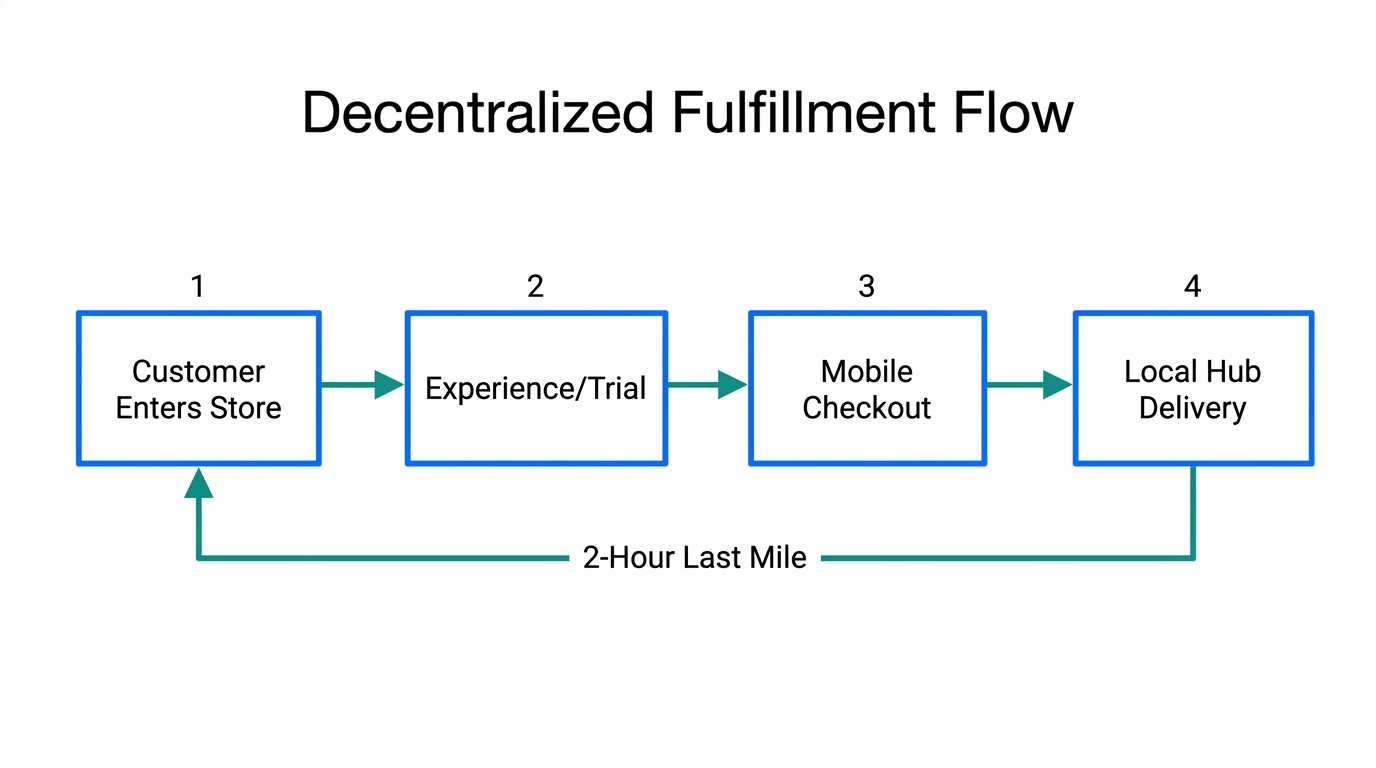
A major physical distribution strategy for 2026 is the blurring of lines between a storefront and a warehouse. Smarter retailers are now using their brick-and-mortar footprints to solve the "last mile" delivery problem. Instead of shipping from a 150,000-square-foot warehouse in the desert, they ship directly from their store in the suburbs, a trend highlighted in National Retail Federation (NRF) insights.
By integrating e-commerce fulfillment into the retail floor, brands can offer same-day delivery or "buy online, pick up in-store" (BOPIS) options that dominate the competition. This dual-use strategy ensures that even if foot traffic dips, the location remains a productive asset for the brand's digital sales. Managing these complex customer journeys often requires a robust Stormy AI Creator CRM to track the transition from online lead to in-store visitor and manage collaboration history with local advocates.
"The most valuable retail square footage today isn't just a showroom; it's a micro-fulfillment center with a high-end facade."
The 2026 Guide to Location-Based Marketing
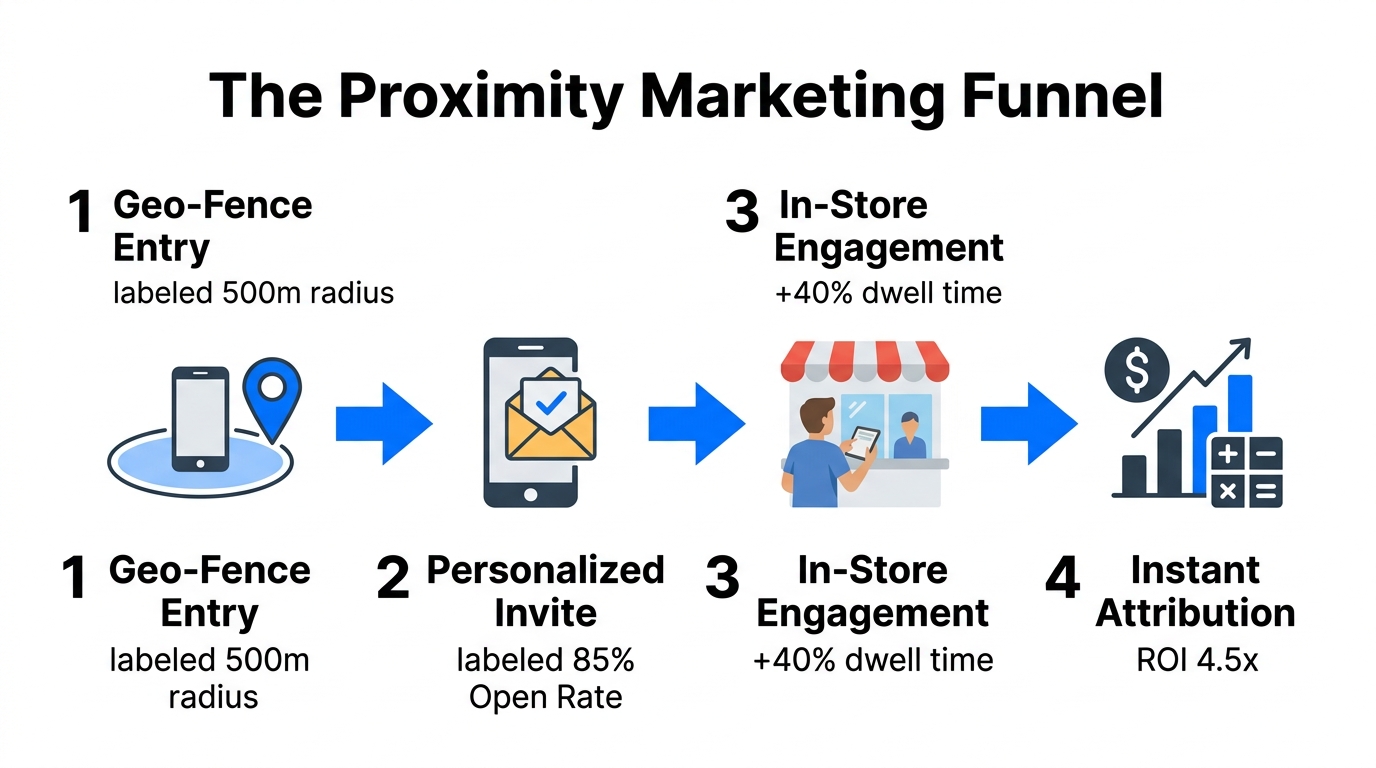
Finding where your high-intent foot traffic lives is the