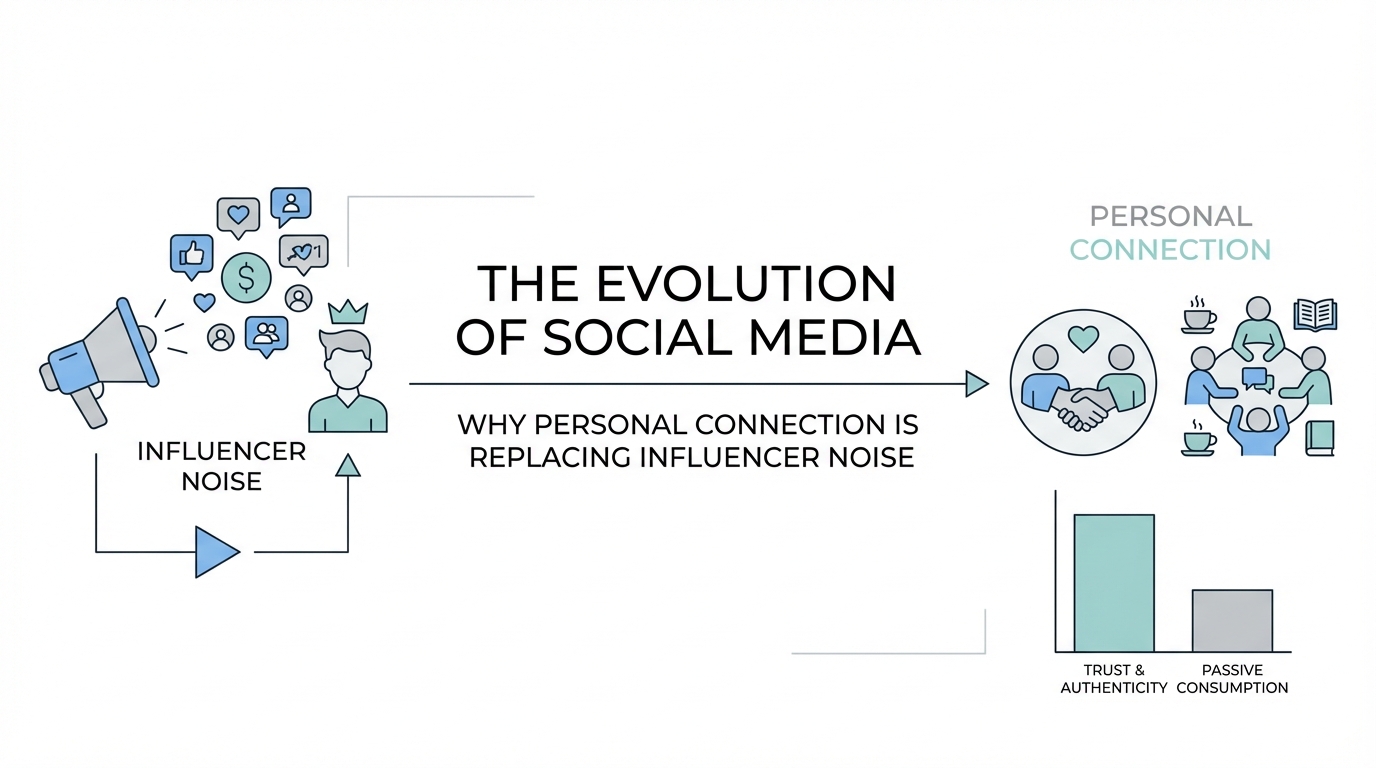
We have reached a breaking point in the digital attention economy. For the better part of a decade, the formula for social media success was simple: maximize reach, partner with the biggest names, and flood the feed with high-production content. But as we move deeper into 2024, the landscape is fracturing. Users are no longer just consuming content; they are retreating from it. The era of "algorithmic exhaustion" has arrived, giving way to a significant shift in social media trends 2024. People are tired of being sold to by polished avatars of perfection. Instead, they are looking for the digital equivalent of a backyard barbecue—smaller, more intimate, and significantly more authentic. This evolution represents a fundamental change in the future of influencer marketing, moving away from broad broadcasting and toward community-led growth.
The Anti-Doomscrolling Movement: Fighting Social Media Fatigue


The term "doomscrolling" has become a permanent fixture in our vocabulary, but its impact on consumer behavior is finally being quantified. There is a growing sense of social media fatigue as users realize that their feeds have become less about connecting with friends and more about a relentless stream of sponsored content and corporate messaging. According to industry observations, the passive consumption of content is being replaced by a desire for active, meaningful participation. This isn't just a vibe shift; it is a defensive reaction to the way platforms like Instagram and TikTok have optimized for engagement over connection.
As users spend more time in "monetized" environments, they are beginning to crave "utility" environments. This is a concept echoed by entrepreneurs like Joe, the founder of Waitly, who notes that modern social media is increasingly run by corporations and influencers, leaving regular people itching to connect with friends and family again. When every video feels like a performance and every post feels like an ad, the value of the platform diminishes for the average user. Brands that ignore this social media fatigue risk becoming part of the noise that users are actively trying to filter out.
The Return to Roots: Why Simplicity is the New Viral
If you look at the most successful startups today, they aren't trying to be "everything apps." Instead, they are solving specific, unglamorous problems. Joe’s success with Waitly—an app that managed to compete with giants like Yelp and OpenTable—was built on the back of simplicity and customer service. He found that by focusing on a niche (small restaurants) and providing a friction-less experience (no forced app downloads), he could build a business generating over $40,000 in monthly recurring revenue. This same principle is now applying to social media. Users want platforms that "just work" for their specific needs, whether that is a family photo share or a pickleball league management app like Swish.
The market gap is widening for platforms that prioritize personal connection over creator discovery. In the early days of social media, the primary value proposition was seeing what your high school friends were doing. Today, that content is buried under layers of professional creators. The "return to roots" means brands must stop trying to be the loudest voice in the room and start trying to be the most helpful. This is where community-led growth becomes the competitive advantage. By fostering small, high-trust groups, brands can achieve higher conversion rates than they ever could through mass-market influencer campaigns.
Redefining Social Media Analytics for Brands

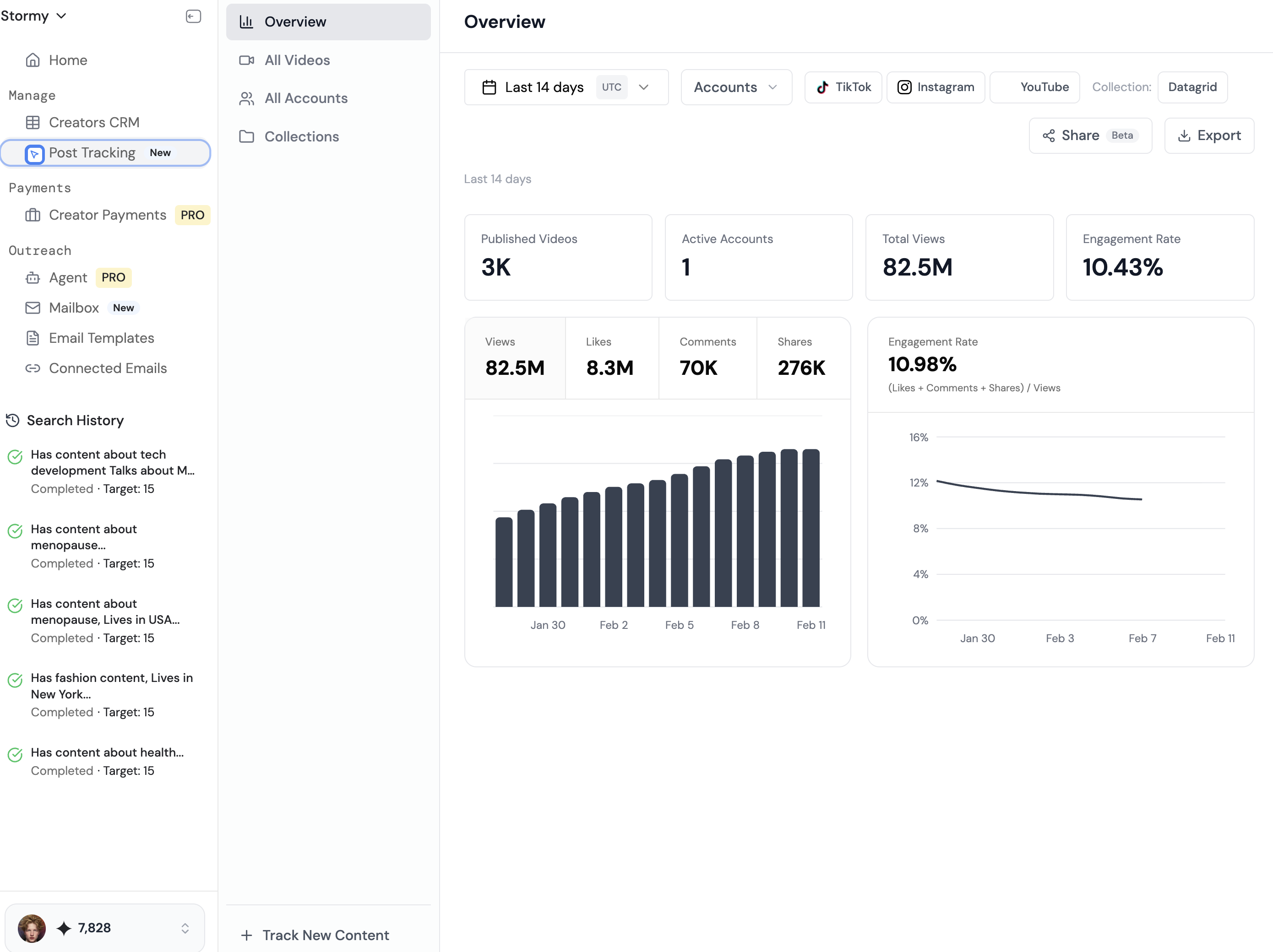
In the old world of social media, the most important metrics were impressions and follower counts. In the new world, these are considered "vanity metrics." To succeed today, social media analytics for brands must evolve to measure sentiment, retention, and community health. If your "reach" is high but your engagement is superficial, you aren't building a brand; you're just buying noise. Modern founders are finding that high-quality, targeted growth is far more sustainable than viral spikes. For instance, using tools like Apple Search Ads allows developers to find users with high intent, even if the cost to acquire is higher ($130 in Joe's case), because the lifetime value ($750-$1,000) justifies the spend.
Similarly, when brands look for creators to represent them, they shouldn't just look at the number of followers. They need to look at the quality of the audience. Is the creator a leader of a community, or just a producer of content? This is where AI-powered tools like Stormy AI provide a distinct advantage. Instead of just searching for the most popular influencers, brands can use Stormy AI to discover creators who actually drive User-Generated Content (UGC) and genuine engagement within specific niches. By analyzing creator quality and vetting for fake followers, marketers can ensure they are investing in people who have real influence over their small, dedicated circles.
Predicting the Next Social Giant: Private Utility and Niche Groups
The next iteration of the "social giant" likely won't look like a feed at all. It will likely look like a utility. We are seeing a trend toward "dark social"—private groups on apps like WhatsApp, Discord, or niche-specific platforms. As Joe mentions in his founder journey, there is a massive opportunity in building apps that manage niche social aspects, such as sports leagues or hobby groups. These apps succeed because they provide private utility. They aren't trying to capture the whole world; they are trying to be indispensable to a specific thousand people.
For brands, this means the future of influencer marketing isn't about the "macro-influencer" with 5 million followers. It's about the "key opinion leader" (KOL) inside these private circles. These are the individuals who aren't necessarily "creators" by trade, but they hold the trust of the group. To reach these people, brands need a more sophisticated approach to creator CRM and outreach. Managing these relationships at scale requires more than just a spreadsheet; it requires a systematic way to track interactions and nurture connections over time, much like the way businesses use Doola to manage their corporate foundations or Google Firebase to manage their technical back-ends.
The Playbook: Pivoting from Broadcasting to Community
If you want to stay relevant as social media trends 2024 continue to shift, you need a clear playbook to move your brand from being a broadcaster to being a community pillar. Here is how to execute that pivot:
Step 1: Audit Your Analytics
Stop looking at reach. Start looking at repeat engagement. Are the same people commenting on your posts? Are they sharing your content into private groups? Use social media analytics for brands to identify your "super-users." These are the people who will lead your community-led growth. If you are struggling to manage these relationships, platforms like Stormy AI can help you organize your creator outreach and track who is actually moving the needle for your brand.
Step 2: Prioritize UGC Over Studio Content
Users can smell a high-production ad from a mile away. To combat social media fatigue, lean into User-Generated Content (UGC). This content is inherently more trustworthy because it comes from a peer rather than a corporation. Encourage your customers to share their real-world experiences. Joe’s Waitly app grew significantly because it solved a real-world problem—waiting at a restaurant—and the word-of-mouth from small business owners was more powerful than any billboard.
Step 3: Invest in Niche Creator Relationships
Instead of one large campaign with a celebrity, run ten small campaigns with niche experts. These experts may only have 10,000 followers, but their audience is highly attentive. Use a subscription-based mindset for these relationships—nurture them over months, not just for a single post. This long-term alignment builds the personal connection that modern users crave.
Conclusion: The Future is Small, Deep, and Personal
The evolution of social media is a return to form. The "influencer noise" that dominated the last decade is fading as users seek out meaningful digital spaces. For brands and developers, this shift is an opportunity to build deeper, more profitable relationships. Whether you are building an app to solve a simple waitlist problem or managing a global marketing budget, the goal is the same: provide value first and broadcast second. By focusing on community-led growth and leveraging the right social media analytics, you can navigate the fatigue of 2024 and build a brand that people actually want to follow.