In 2017, Paul Millerd did what many high-earning professionals only dream of: he walked away from a $250,000-a-year consulting career in New York City. He didn't have a sophisticated 12-month roadmap or a venture-backed startup waiting in the wings. Instead, he chose to embrace what he calls the "Pathless Path"—a journey away from the default corporate ladder and toward a life where work sustains the soul rather than just the bank account. Today, Millerd has built a thriving ecosystem that generated $249,000 in revenue last year, proving that the entrepreneurship transition from high-ticket services to a scalable creator business is not just possible, but highly profitable.
The Consulting Trap: Navigating the Entrepreneurship Transition
For many founders, the jump into the creator economy business model begins with a realization that prestige and high salaries have diminishing returns. Millerd's journey, as detailed in his feature on Starter Story, highlights the psychological friction of leaving a stable path. He spent years trying to break into prestigious companies to feel "special," only to find that the work didn't fulfill him.
The transition wasn't immediate. It required a specific solopreneurship strategy regarding risk management. Millerd didn't quit with zero resources; he had approximately $50,000 to $60,000 in savings. He viewed this capital not as a "runway" for a specific startup, but as "permission to wander." This mental shift is critical for entrepreneurs: instead of forcing a business idea on day one, use your financial buffer to validate what actually resonates with you and the market.
The 'Real Work' Framework: Identifying High-Value Market Needs
Central to Millerd's philosophy is the concept of "Real Work." Most corporate jobs are defined by the "Default Path"—a set of pre-determined milestones and metrics. In contrast, the go-to-market strategy for creators focuses on finding work that you are willing to do even if the immediate financial rewards are uncertain.
- Eliminate the Non-Essential: Millerd suggests that if something isn't lighting you up, you must quit, automate, or delegate it.
- Create Space: Deep creativity requires "wandering mental time." He avoids scheduling meetings before 11:00 AM to allow ideas to percolate.
- The Status Tax: Be prepared to pay a "status tax"—the social cost of no longer having a fancy title at a prestigious firm—in exchange for creative control.
"You can't actually escape work; you ultimately need to find work that can sustain your soul... the pathless path is basically committing to that."By focusing on his passion for writing—initially starting on platforms like Quora—Millerd built the foundation for monetizing a personal brand. He wrote every day for 100 days before he even considered himself a "writer." This brute-force consistency is the prerequisite for any successful content-led business.
Diversifying Revenue Streams: How a $250K Creator Business Functions
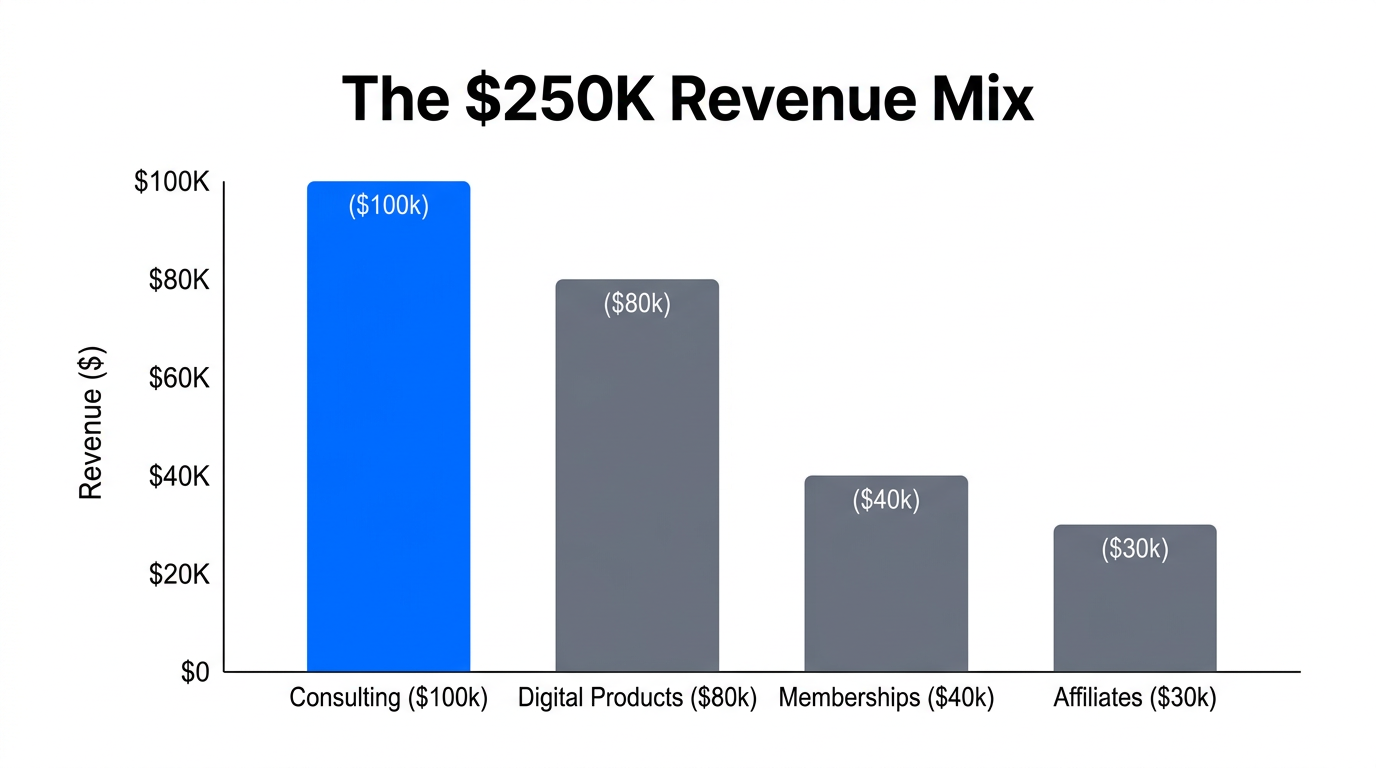
One of the biggest mistakes new creators make is relying on a single source of income. Millerd’s model is a masterclass in diversification. He doesn't just sell a book; he manages an ecosystem of high-margin products and services. His revenue currently flows from several distinct channels:
| Revenue Stream | Type | Scalability | Current Performance |
|---|---|---|---|
| The Pathless Path (Book) | Product | High | 50% of total income ($75k in 5 months) |
| StrategyU | Online Course | High | Built from consulting expertise |
| Corporate Workshops | Service | Medium | High-ticket, low-volume training |
| Freelancing/Coaching | Service | Low | Used as a 'bridge' during transitions |
This mix allows for stability. When book sales fluctuate, workshops or courses like those found on StrategyU provide a floor. For founders looking to emulate this, the goal is to move from active income (freelancing) to passive or semi-passive income (products and courses) over time.
Self-Publishing vs. Traditional: A Strategic Choice
A pivotal moment in Millerd's story was turning down a deal with Penguin Random House, one of the world's largest publishers. While a traditional deal offers prestige and wider distribution, it often comes at the cost of creative control and profit margins. For a creator focused on long-term sustainability, the math for self-publishing on Amazon Kindle Direct Publishing (KDP) is often superior.
Millerd earns about $7 per paperback and $8 per hardcover sold. In contrast, a traditional publisher might only offer $2 per hardback (10% of list price). By maintaining control, he turned his book into a significant asset that has generated over $130,000 in profit to date.
To achieve professional quality without a publisher, he invested roughly $6,000 in production, including $3,900 for a developmental editor and $742 for a cover design from 99designs. He used tools like Reedsy for formatting, ensuring the final product matched the quality of any New York bestseller.
"I'm willing to light it all on fire, go broke, and decrease my earnings to keep doing work that matters to me."The Solopreneur Go-to-Market Strategy
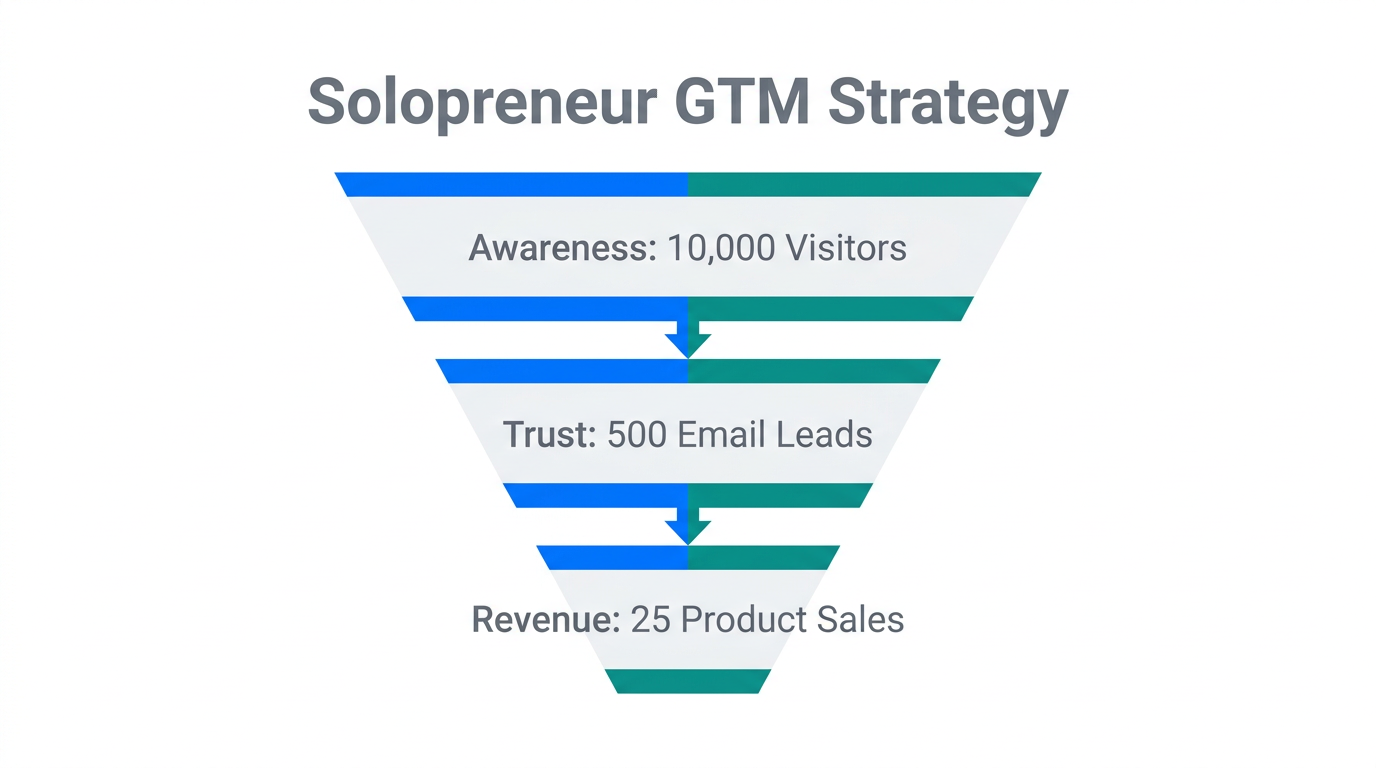
How do you market a book or a personal brand without a massive advertising budget? Millerd’s go-to-market strategy for creators relies on permissionless networking and content flywheels. Instead of traditional PR, he focused on:
- Podcast Guesting: Sharing his story on shows to reach established audiences.
- Gifting: Using the low cost of self-published author copies to send his book to influencers and peers.
- Daily Writing: Building an audience on Beehiiv or similar newsletter platforms to maintain a direct connection with readers.
As you scale this outreach, managing relationships becomes a bottleneck. This is where tools like Stormy AI become invaluable for creators. Rather than manually hunting for podcast hosts or influencers who align with your niche, you can use AI-powered search to find the perfect collaborators and automate personalized outreach, allowing you to focus on the "Real Work" of creating content.
Transitioning from Service-Based Freelancing to Product-Led Growth
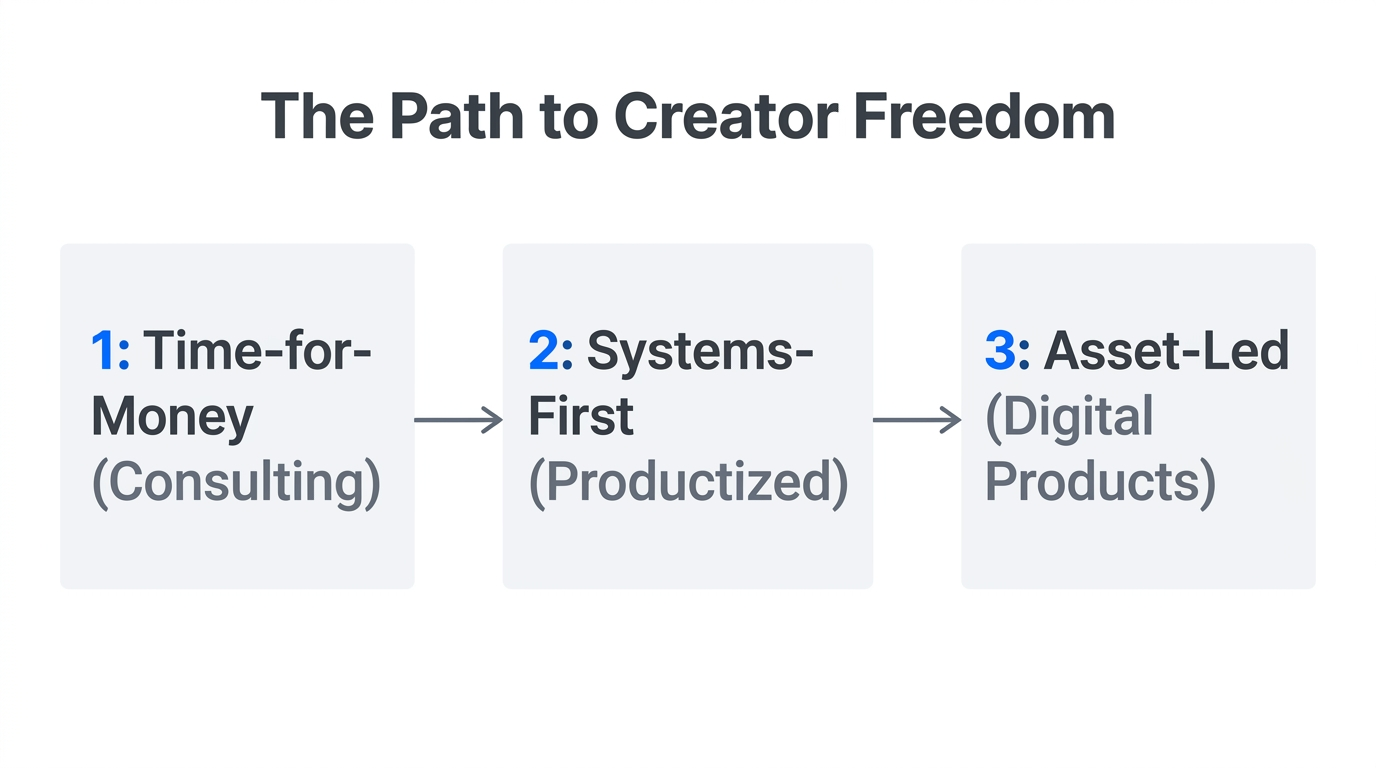
The final stage of the solopreneurship strategy is moving from selling time to selling products. Millerd started as a freelancer, taking on consulting gigs to pay the bills. However, he slowly packaged that expertise into StrategyU and his book. This is the essence of Product-Led Growth (PLG) for individuals.
To transition successfully, you must build a content engine that works while you sleep. Millerd's book breakdown shows that 50% of his sales are ebooks, 29% are print, and 21% are audio. This multi-format approach ensures he captures every segment of the market. He even handles his own audiobook production, costing about $1,280, to keep his margins high.
For modern creators, platforms like Stormy AI can help source and manage UGC creators at scale, which is a powerful way to generate social proof for a book or course launch. By identifying creators who already talk about career transitions or the creator economy, you can build a fleet of advocates that drive sales without you having to be "on" 24/7.
Conclusion: Trusting the Uncertain Path
Paul Millerd’s success isn't just about writing a book; it's about a fundamental shift in how we view creator economy business models. By rejecting the "Default Path," he built a $250K business that allows him to spend time with his daughter and work only a few hours a day. His journey proves that if you invest in your own skills, manage your risks with a savings buffer, and diversify your income, the "Pathless Path" can lead to more security than a corporate job ever could.
If you're ready to start your own transition, begin by creating space. Stop the 9-to-5 grind long enough to remember what you’re actually good at. Whether you’re launching a book on IngramSpark or building a newsletter, the first step is to trust yourself and the value of your own unique perspective. The adventure is in the uncertainty.