The End of Subscriptions? Building Apps as Lead Magnets for the 2026 Service Economy
Is the subscription model dying? Discover why app founders in 2026 are shifting toward lead magnets, AI services, and 100M follower brands to drive massive revenue.
In 2026, the 'SaaS' model as we knew it is facing its first true identity crisis. For a decade, the playbook was simple: build a utility, put it behind a recurring paywall, and arbitrage user acquisition costs against lifetime value. But as we move deeper into this year, that paradigm is collapsing. With the cost of software production trending toward zero thanks to 'vibe coding' and autonomous AI agents, digital access is no longer a premium commodity.
Forward-thinking founders are realizing that the real revenue isn't in the $9.99/month subscription—it’s in the high-ticket services, physical goods, and massive social influence that the app facilitates. We are entering the era of the App-as-a-Lead-Magnet. This strategy isn't just about making a million dollars; it's about scaling to $100M ARR by treating software as the top-of-funnel for a much larger service economy.
The Commodity of Code: Why Subscriptions are Dying
Kobe discusses how software is becoming a commodity in the new economy.
The barrier to entry for building a mobile application has effectively vanished. In 2026, we’ve moved past simple ChatGPT wrappers into a world where computers are talking to themselves to spit out full-stack software. As Kobe Conrad, founder of the sobriety app Sunflower, points out, the slope of change is becoming steeper every day. When a 19-year-old can 'vibe code' a functional clone of a top-tier utility in a weekend, the perceived value of a digital subscription plummets.
To survive, apps must solve a "core job to be done" that extends beyond the screen. For Sunflower, that meant moving from zero to a $1 million annualized run rate in just 10 months by helping users quit addictions—ranging from alcohol to gambling. But the software itself—the sobriety timer and the AI companion—is increasingly seen as the gateway, not the destination. When software is easy to produce, attention and trust become the only defensible moats.
"Great software is becoming basically like having a really great article or a great podcast episode. It’s useful, but its real purpose is to sell the core product deeper in the funnel."
The 'Freemium-to-Service' Funnel: AI as the Hook
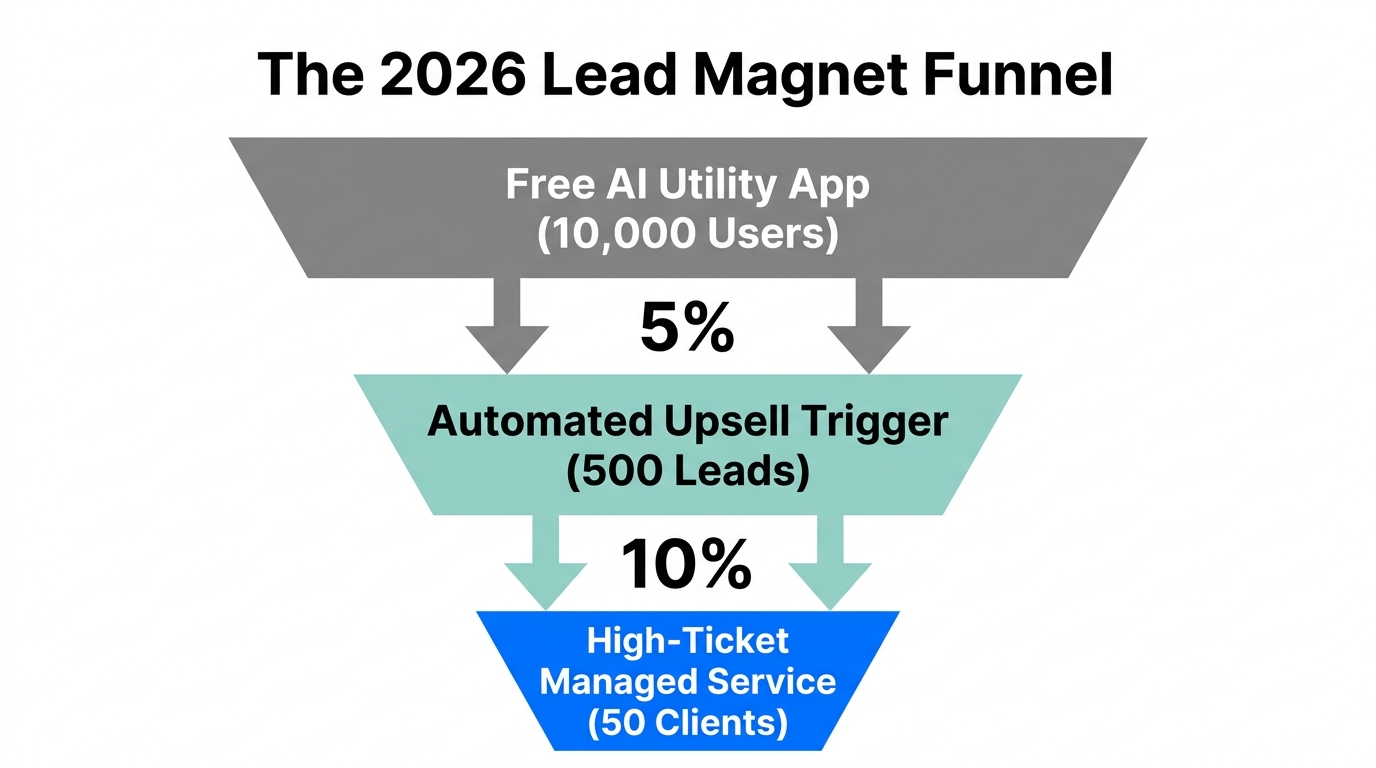
The most successful apps this year are using AI not just as a feature, but as a triage tool for high-ticket human services. Sunflower’s AI sponsor, Sam, has handled over 4 million messages in the last year—more than a human therapist could manage in a lifetime. By providing an infinitely scalable, 200-IQ entity in the user's pocket, the app builds intense brand loyalty and data-driven insights that a traditional therapist simply can't match [Source: Nature Human Behaviour].
However, the endgame isn't just the AI chat. The real revenue lies in the teletherapy clinic. By using the app to track relapse data, loneliness scores, and sobriety milestones, founders can identify exactly when a user needs a human intervention. This "App-as-a-Platform" model allows brands to sell high-margin behavioral health services to the 90% of people who currently receive no care at all. This transition from a digital tool to a full-scale healthcare provider is how you scale from a million-dollar app to a billion-dollar generational brand.
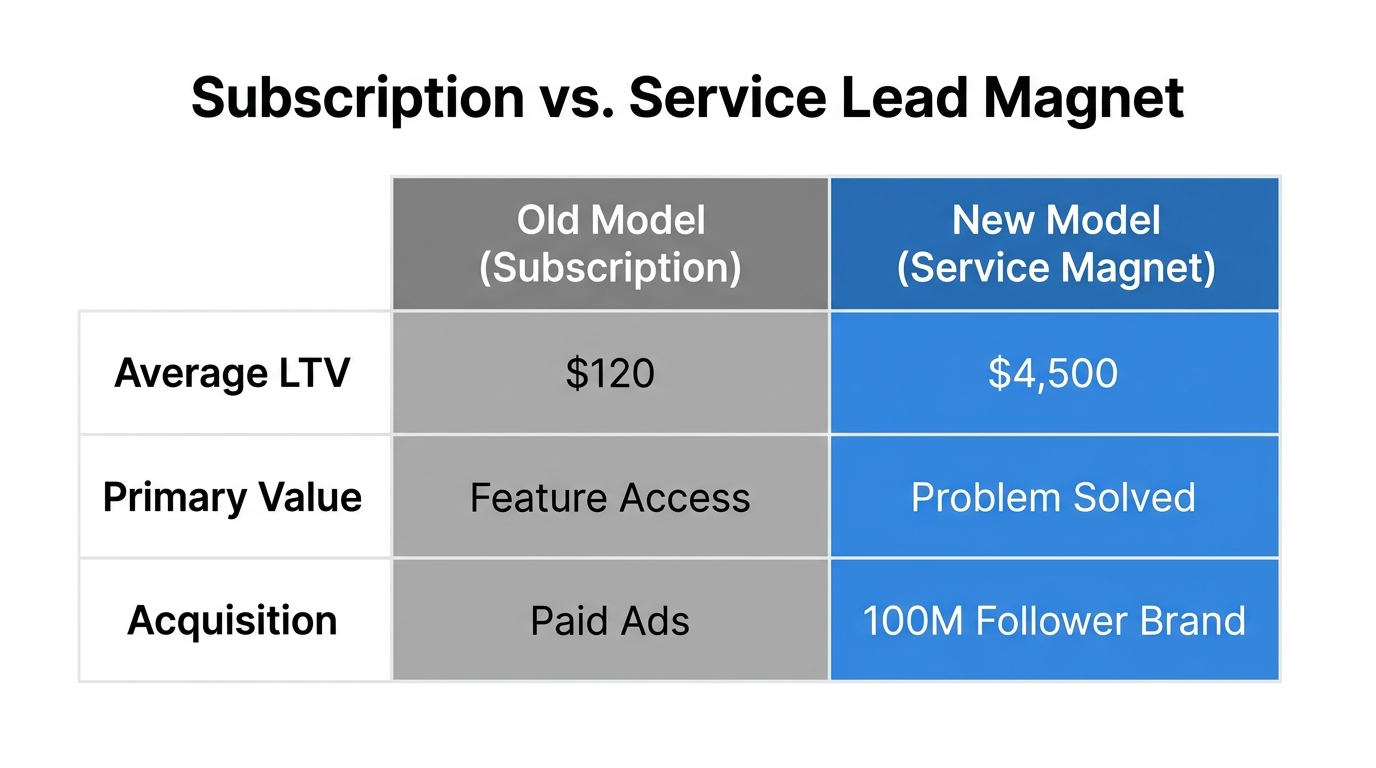
| Feature | Legacy Subscription Model | 2026 Lead Magnet Model |
|---|---|---|
| Software | The Product | The Lead Magnet |
| AI Role | Gimmick / Basic Chat | 24/7 Triage & Data Collection |
| Monetization | Monthly Recurring Revenue (MRR) | High-Ticket Services & Physical Goods |
| Success Metric | Churn Rate | LTV of Service Up-sell |
Monetizing the 'Core Job': Physical Goods and Collectibles
If you are building in the consumer space, don't overlook the power of physical reality. While digital goods have zero marginal cost, they also often have lower emotional resonance. In the sobriety space, physical milestones like AA coins have been a staple for decades. Kobe Conrad suggests that selling high-quality, "cute" physical pins or tools associated with milestones could easily out-earn subscription revenue.
When you solve a core human problem—like addiction, fitness, or career growth—users want a physical manifestation of their progress. Integrating a commerce layer via Shopify or Stripe directly into the app journey allows founders to capture revenue from users who might be price-sensitive toward a subscription but are willing to pay for a tangible reward. This is about capturing the emotional value of the user's journey.
The 100M Follower Moat: Hiring Influencers as Employees
The old way of doing influencer marketing—negotiating a dollar-per-post fee with 30 different micro-influencers—is dead. It's inefficient and lacks depth. In 2026, the winning strategy is to identify the 'Godfather' of your niche and hire them as an employee.
Sunflower did exactly this by recruiting "Mr. Impulsive" (Eric), the leading influencer in the sobriety space, as their VP of Sobriety. Eric generates 50 to 100 million views per month on platforms like Facebook and TikTok. By bringing him in-house with salary and equity, the company secured 50,000 to 100,000 monthly clicks with zero incremental ad spend.
To find these "category-killing" creators, brands are turning to AI-powered discovery tools. Platforms like Stormy AI allow founders to search across TikTok, YouTube, and Instagram using natural language to find the one creator who can define their brand's voice. Unlike legacy tools, Stormy AI enables you to vet audience quality and automate the outreach process, making it possible to secure these high-level partnerships before your competitors even know they exist.
"Don't try to spin up 30 influencers. Go find the biggest player, get them on your team, and do whatever you need to get them on board. It’s 10x more effective than tracking CPMs."
Pitching the 'App-as-a-Platform' to VCs in 2026
A look at how pitching VCs has changed for software startups today.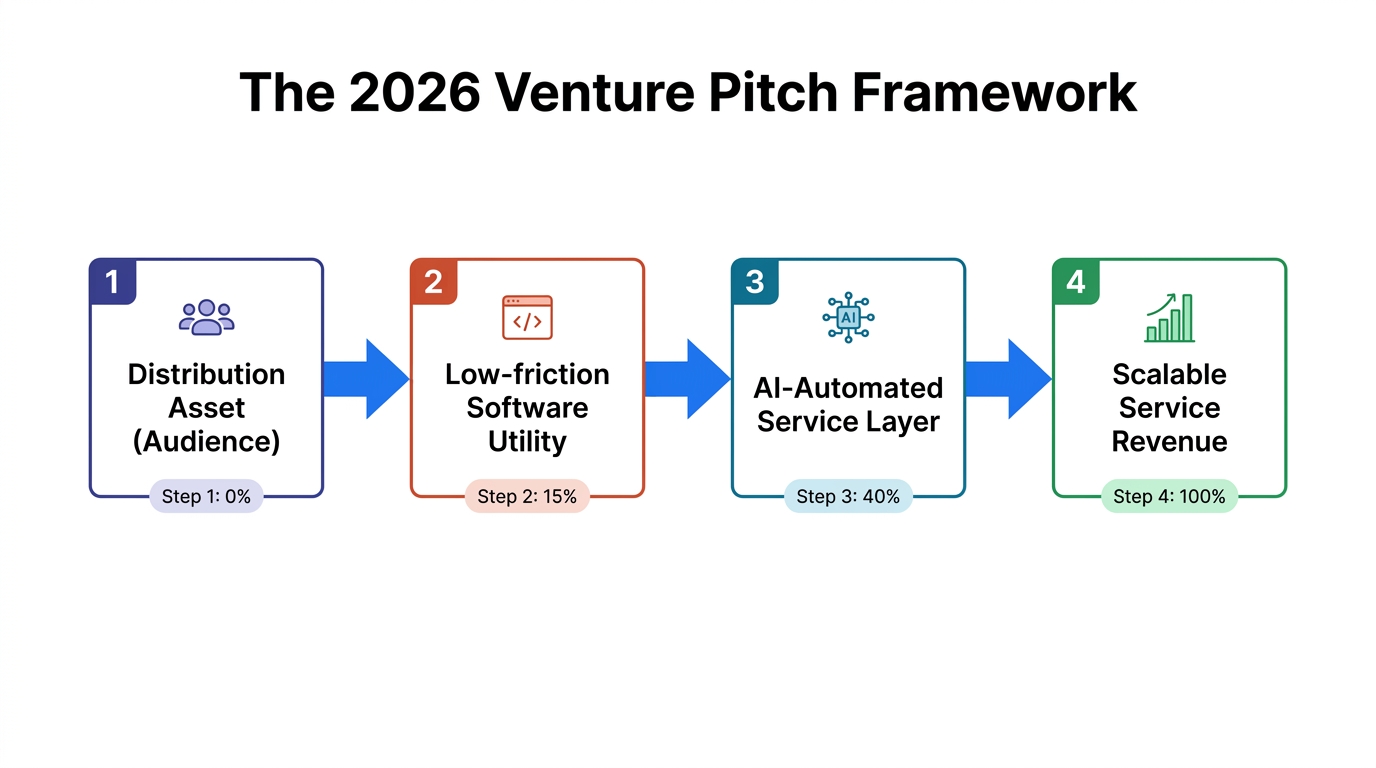
If you're seeking Series A or B funding this year, your pitch deck cannot rely on 2024 playbooks. Investors no longer care about "usage" alone; they want to see a path to generational impact and massive revenue. Kobe Conrad’s experience raising $6.5 million from firms like a16z and Y Combinator proves that the "future" is the only thing worth selling.
Your pitch should focus on:
- The Unfair Distribution Advantage: Show how your in-house influencer or massive social reach (aiming for 100M+ followers) makes your CAC effectively zero.
- Data-Driven Outcomes: Prove that your AI isn't just a wrapper, but a system that tracks real-world results (e.g., sobriety days, health markers).
- Legislative/Policy Influence: Explain how 30 million followers gives you the leverage to influence state and government policy, turning your app into a regulatory powerhouse.
- The Service Upsell: Clearly outline how the free or low-cost app leads into a multi-billion dollar service market (like behavioral health or specialized fintech).
The Tactical Playbook: Trial Reminders and Pricing Experiments
Proven optimization and AB testing strategies to scale software products effectively.While the long-term vision is key, the short-term survival of your app still depends on ruthless optimization. Even in the lead-magnet model, capturing initial revenue helps fund the mission. Data from Superwall and Paywall Experiments shows that small UX changes can lead to massive revenue swings.
Step 1: Eliminate Trial Anxiety
One of the most significant levers in 2026 is the trial reminder. Sunflower saw a 48% increase in revenue simply by adding a notification that promised to remind users before their trial ended. This small act of transparency reduced friction and encouraged more users to opt into annual subscriptions.
Step 2: Default to Annual
Stop making monthly subscriptions the default. If you want to maximize cash flow to reinvest in your AI or influencer team, make the annual no-trial subscription your primary option. Use tools like RevenueCat to manage these entitlements and track which cohorts are most likely to convert to your high-ticket services later.
Step 3: Dopamine-Driven Design
Every screen of your app should trigger reward pathways. Using "cute" mascots, progress flowers, and celebratory graphics isn't just about aesthetics—it's about associating your brand with positive reinforcement. This makes the eventual 'ask' for money feel like a partnership rather than a transaction.
"We're not in the app-building game; we're in the self-improvement game. Your design should reflect the dopamine hit of the user's progress."
Conclusion: The Road to 100M ARR
The transition from "subscription utility" to "service lead magnet" is the defining shift of 2026. Founders who continue to hide behind paywalls without offering deeper value will be disrupted by AI-generated alternatives. However, those who use apps to build massive trust, collect proprietary data, and facilitate real-world services will build the next generation of decicorns.
Whether you are helping people quit addictions or manage their wealth, remember that the software is just the beginning of the conversation. Use platforms like Stormy AI to find the voices that will carry your message to millions, and use tools like Superwall to ensure your funnel is airtight. The million-dollar app is the new baseline; the hundred-million-dollar brand is the new goal.