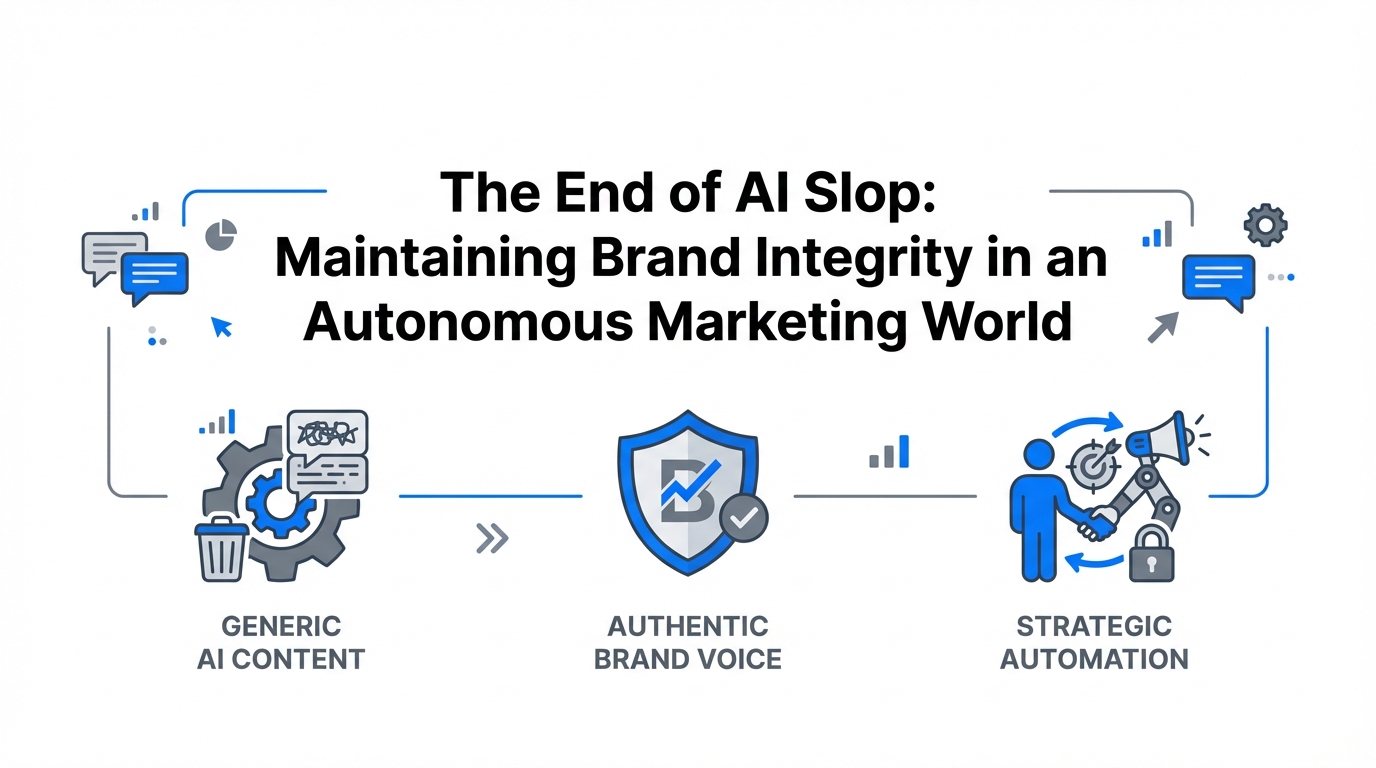
We have officially moved past the era of "Chat AI" where marketers simply asked for a catchy headline. According to Anthropic, 79% of Claude Code interactions are now classified as "automation" rather than "augmentation." This shift into "Action AI" means we are delegating entire tasks—campaign deployments, SEO audits, and even CRM management—to autonomous agents. However, this velocity comes with a massive risk: "AI slop." Without a rigorous governance framework for agentic AI, brands risk diluting their identity through repetitive, context-free, and low-quality output that damages consumer trust.
The Shift to Agentic Marketing: From Copilots to Agents
The marketing landscape is undergoing a fundamental transformation. Snowflake’s 2026 predictions highlight a move from "Copilots" to "Agentic AI," where humans are increasingly "hands off the keyboard" for end-to-end campaign deployment. This isn't just about speed; it is about scale. The AI in marketing market is projected to reach $107.5 billion by 2028, growing at a CAGR of 26.7%, according to the Digital Marketing Institute.
"Agentic AI marks the 'end of channel-based marketing,' shifting the focus toward hyper-personalized, autonomous engagement spanning sales, marketing, and support."As Emily Weiss, Senior Principal Researcher at Gartner, notes, the goal is no longer just helping a human do a job—it is about agents managing the job itself. To succeed, marketing teams must stop treating AI as a chatbot and start treating it as a specialized workforce that requires strict management and clear instructions.
| Feature | Chat AI (2023-2024) | Agentic AI (2025-2026) |
|---|---|---|
| Action Model | Text generation / Assistance | Autonomous task execution |
| Context | Single prompt/session | Persistent local file access |
| Workflow | Linear (Input -> Output) | Iterative (Loop -> Audit -> Correct) |
| Data Connection | Static uploads | Live API/MCP connections |
Solving the 'Context Death Spiral'
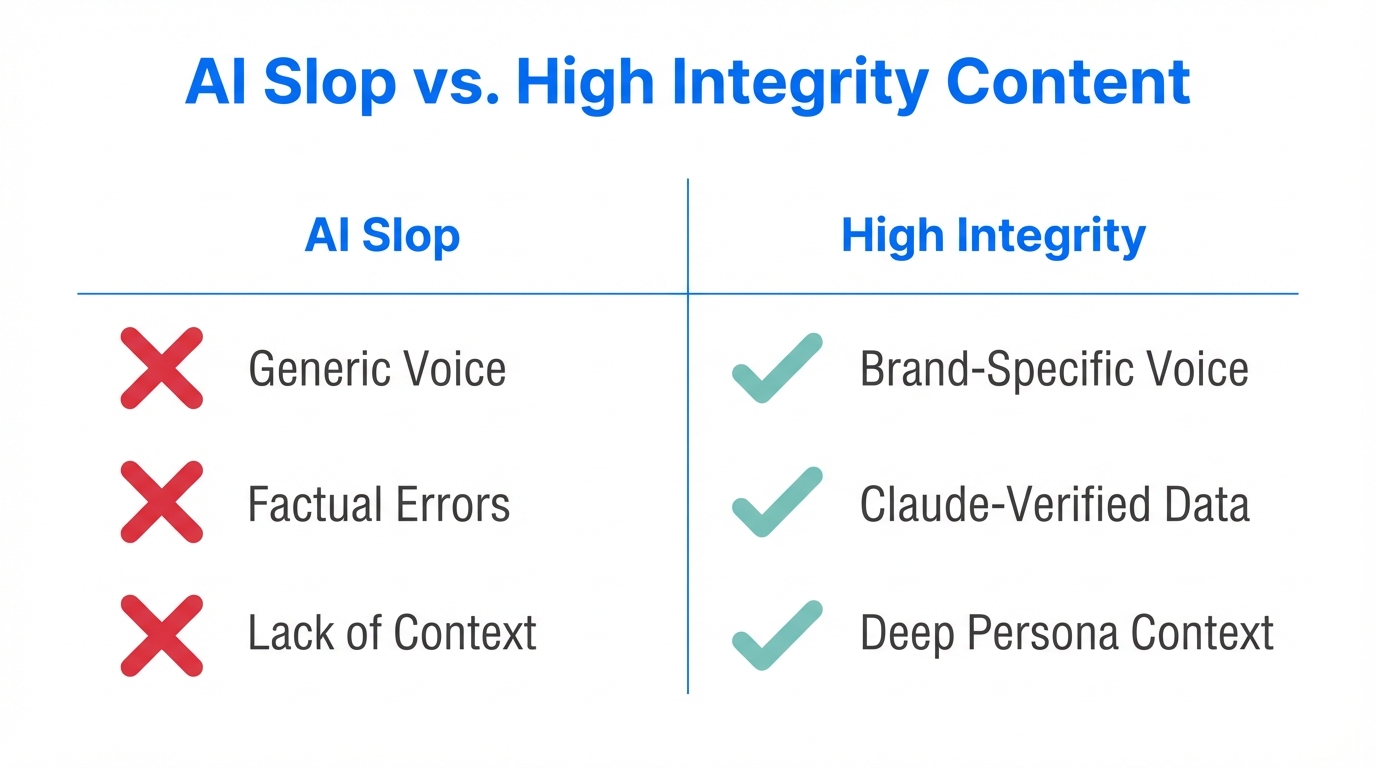
One of the most common AI marketing mistakes is the "Context Death Spiral." This occurs when marketers repeatedly copy-paste brand guidelines, tone-of-voice documents, and SEO checklists into new chat tabs. This is inefficient and leads to inconsistent results. The solution lies in moving toward persistent local context using tools like VS Code and Claude Code.
By establishing a "CLAUDE.md" source of truth within your marketing project folders, you provide the agent with a permanent anchor. This file should include:
- Brand Voice Guidelines: Specific do's and don'ts for your writing style.
- Target Personas: Deep data on who you are talking to.
- Slash Commands: Custom triggers like
/rsato generate Google Ads responsive search assets instantly.
When your AI agent has direct access to these files, it no longer "guesses" your brand voice. It operates within a bounded creative environment, significantly reducing the likelihood of generating "AI slop."
The Human-in-the-Loop (HITL) Framework
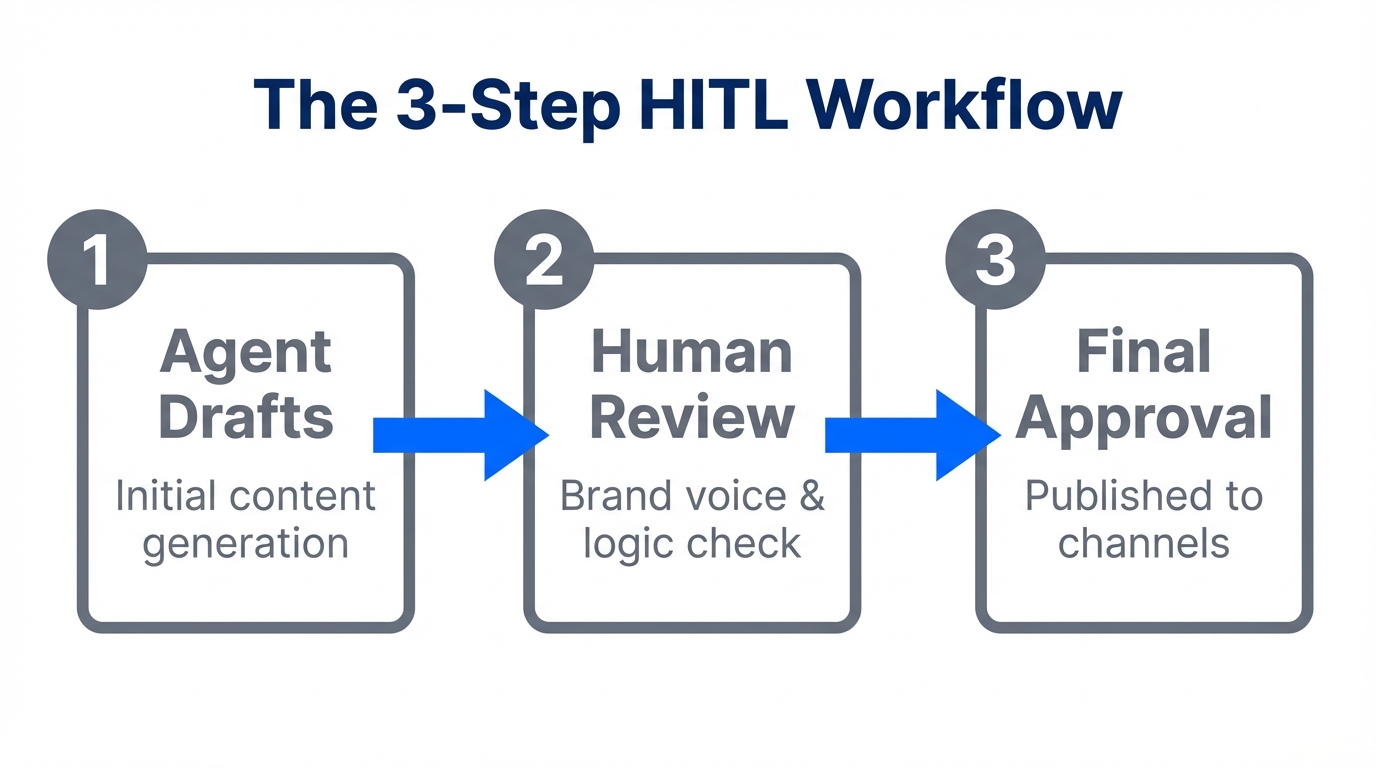
While automation provides marketing brand building at scale, oversight is the only way to avoid damaging brand trust. Over-automation without oversight leads to generic, robotic content that savvy consumers can spot a mile away. The solution is the Human-in-the-Loop (HITL) framework.
Instead of letting an agent publish directly to TikTok Ads Manager or your blog, set up an "Agentic Loop." A popular method is the Ralph Wiggum Technique, pioneered by independent developers and documented on platforms like GitHub. This philosophy treats marketing funnels like codebases: you force the AI to iterate until it meets a specific success criterion.
"Better to fail predictably than succeed unpredictably. Use loops that iterate until success criteria—like a 90+ SEO score—are met."For example, you can command Claude to generate a landing page on Framer, run an automated SEO audit via Apify, and if the score is below your threshold, rewrite the content and repeat until the goal is achieved. Only then does the human step in for the final 5%—the emotional nuance and creative spark that AI cannot yet replicate.
Identifying High-ROI Automation Targets
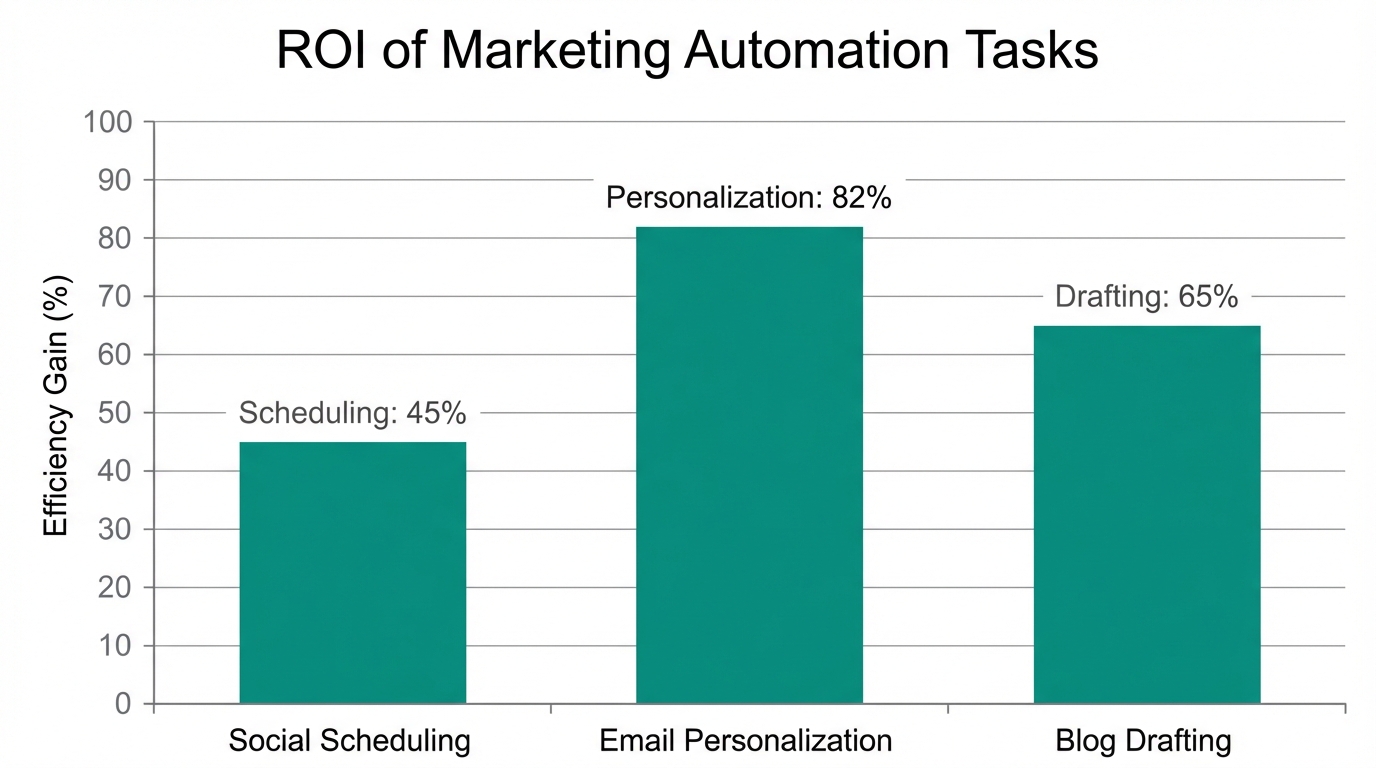
Many teams fail because they try to automate the wrong things. To maintain AI content quality, you should focus on tasks that are high-frequency and high-friction. These are the areas where AI excels and humans are prone to error. Austin Lau, a growth marketer at Anthropic, used Claude Code to cut ad creative generation from 30 minutes to 30 seconds by automating routine variations.
High-ROI Tasks for Marketing Agents:
- Character Count Validation: Ensuring ad copy fits within strict Meta Ads Manager limits.
- CRM Data Entry: Using Model Context Protocol (MCP) connections to query and update lead data based on real-time interactions.
- Influencer Audits: Platforms like Stormy AI use Claude Code sub-agents to reduce 8-hour manual influencer audits to 2-hour automated workflows, ensuring that creators align with brand safety standards without burning hundreds of staff hours.
- Competitive Research: Using Apify for real-time web scraping to track competitor pricing or messaging shifts.
By automating these "plumbing" tasks, you free up your creative team to focus on marketing brand building and high-level strategy. This is the new "edge" in growth marketing—leverage over hustle.
Unified Data: The Fuel for Brand Voice Automation
An AI agent is only as good as the context you provide. If your data is siloed across Klaviyo, Shopify, and various internal databases, your agent will produce fragmented, inconsistent messaging. To achieve true brand voice automation, you must unify your data.
Tools like Syncari provide data unification and agentic master data management. When you connect Claude to a unified data stream via the Model Context Protocol (MCP), the agent understands the full customer journey. It can draft a personalized email based on a customer's recent Stripe payment history, their latest Zapier-triggered support ticket, and their engagement on LinkedIn.
This level of integration prevents the "hallucinations" that occur when AI lacks specific data. When the agent knows exactly what a customer has bought and what problems they've faced, the output shifts from generic "slop" to highly relevant, brand-aligned communication.
"The move to 'Vibe Marketing' means treating your entire marketing funnel as a codebase that can be iterated and optimized autonomously."Governance for Growth: Establishing Protocols
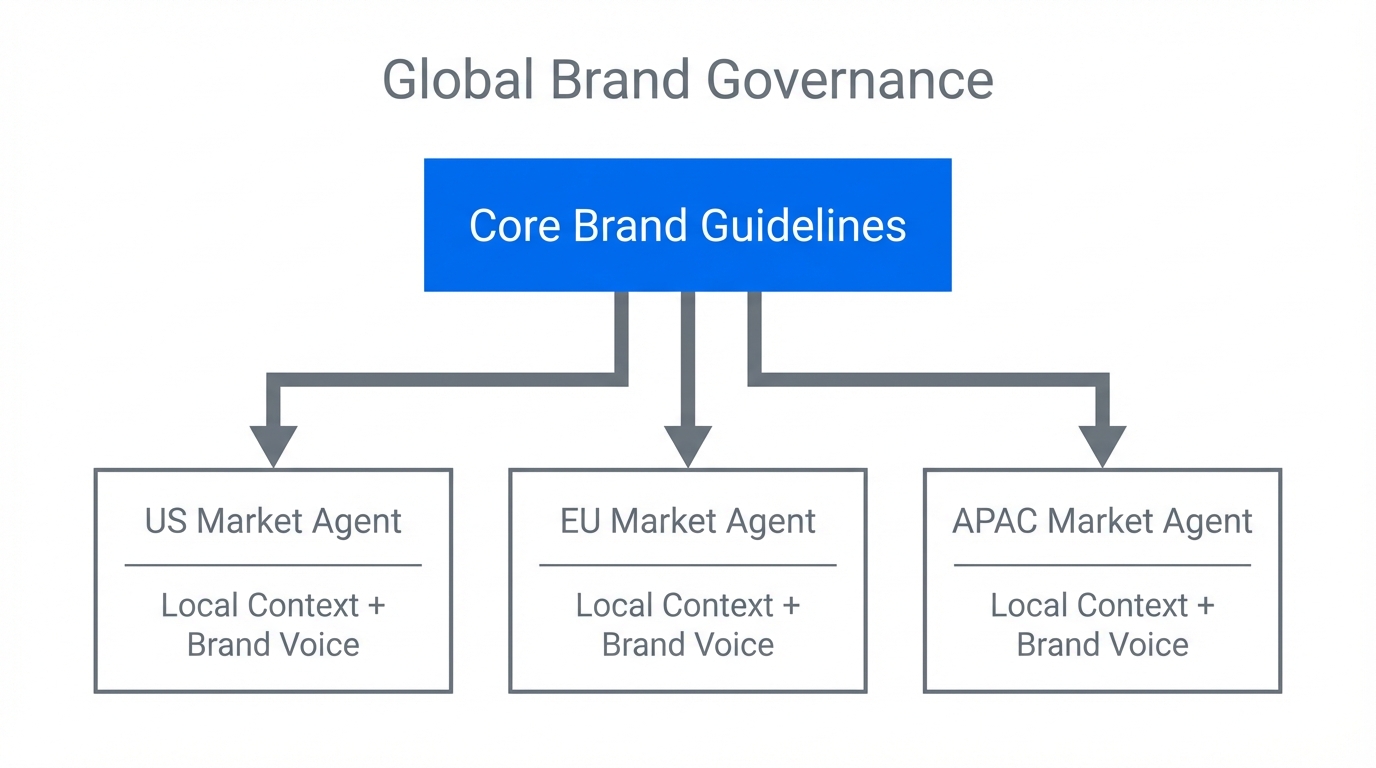
As organizations scale, maintaining AI marketing governance becomes critical. TELUS, for example, built over 13,000 internal AI tools using Claude, saving 500,000 staff hours. This level of scale is only possible with strict protocols. Global marketing divisions must operate from the same playbook to ensure that an agentic campaign in Tokyo feels like the same brand as one in New York.
Effective governance includes:
- Access Control: Managing who can deploy agents to live platforms like Google Ads.
- Audit Logs: Tracking every change made by an AI agent to ensure accountability.
- Quality Scoring: Implementing automated "judges"—other AI agents trained specifically to grade content against brand guidelines.
By treating AI as a software deployment rather than just a writing tool, you ensure that your brand integrity remains intact even at high velocity. Platforms like Stormy AI assist in this process by providing a centralized hub for managing creator relationships and campaign performance, ensuring that even as you scale your influencer outreach via AI, every interaction is tracked and vetted in a dedicated CRM.
Conclusion: Building a Future-Proof Brand
The end of "AI slop" doesn't mean less AI—it means smarter AI. By solving the context death spiral with local files, implementing a Human-in-the-Loop framework, and unifying your data through protocols like MCP and Syncari, you can harness the power of autonomous agents without sacrificing the soul of your brand. Marketing brand building in 2026 is no longer about who can write the best prompt, but who can build the best autonomous systems to represent their brand. Start small, automate the friction, and never take your eyes off the quality control loop.