
In the high-speed economy of 2026, the most successful entrepreneurs aren't necessarily the ones with the most original ideas; they are the ones who have trained their eyes to see what everyone else ignores. While most founders are busy chasing the latest AI hype cycle, the true 'billion-dollar' niches are often hiding in plain sight, buried under layers of institutional friction and outdated business models. The secret to a winning go-to-market strategy 2026 isn't just about building something new—it’s about identifying market opportunities where the current solution is a lazy, 'one-size-fits-all' patch on a complex problem.
The Spidey-Sense for Friction: Entrepreneurial Problem Solving in Action
Most people experience business annoyances and move on. Great entrepreneurs, however, treat friction like a North Star. When Elon Musk interviews potential hires, he doesn't just scan a resume; he interrogates a specific problem to see if the candidate actually 'chewed the glass' themselves. This level of entrepreneurial problem solving requires diving deep into the 'why' until you hit the root cause. If you can’t describe the problem in three sentences—what’s happening, why it’s happening, and what the solution is—you don't understand the market well enough to disrupt it.
To spot your next niche, you must develop a 'Spidey-sense' for where systems are breaking down. This often starts with 'mystery shopping' your own industry. Whether you are using Meta Ads Manager to test a funnel or physically walking into a retail store, the goal is to see 'ground-floor truth.' At Tesla, this meant realizing that 9,000 customers had taken test drives but never received a follow-up call. The friction wasn't in the product; it was in an incentive structure that rewarded 'order-taking' rather than 'selling.'
"The most powerful analytics you have as a leader are your two eyes and your two ears. Use them, because you will get insights faster than data can ever deliver."
The 'One-Size-Fits-All' Filter: Spotting Mispriced Risk
Examining the cyber security industry to identify hidden market gaps and structural inefficiencies.
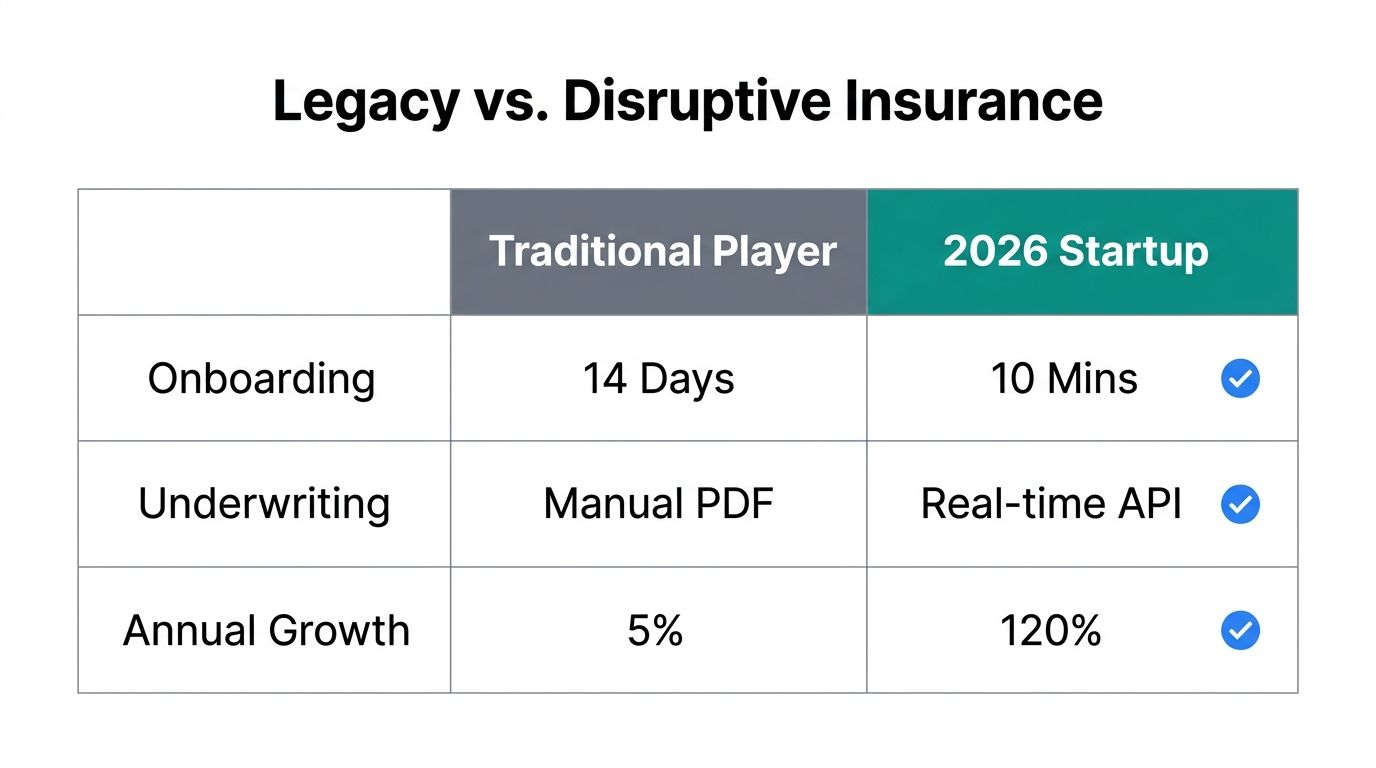
One of the most effective niche market growth tactics for 2026 is identifying industries where pricing is 'flat' despite wildly different risk profiles. A classic example is the cyber insurance market. Consider two different companies: a major retailer like Lululemon and a high-growth tech platform like Lyft. Historically, both might have spent $7 million on cyber insurance because the industry used a 'one-size-fits-all' model based on revenue rather than actual data risk.
When you see a multi-billion dollar industry treating every customer the same, you’ve found a niche. In 2026, we see this in how software is sold to Small and Medium-sized Businesses (SMBs) versus the enterprise. Most security platforms are built for the cloud, leaving the trillions of dollars in the SMB sector—law firms, accountancies, and local manufacturers—with zero tailored options. By splitting a 'one-size-fits-all' market, you create a category where the competition simply doesn't exist.
| Market Characteristic | The 'One-Size-Fits-All' Model (Legacy) | The 2026 Niche Model (Disruptor) |
|---|---|---|
| Pricing | Flat, revenue-based | Variable, risk-adjusted |
| Targeting | Broad, 'horizontal' | Vertical-specific (e.g., SMB vs Enterprise) |
| Efficiency | Low (subsidizes bad actors) | High (rewards efficiency/safety) |
| Incentives | Static | Dynamic & Performance-based |
Differentiating Cycle Time vs. Touch Time
How to measure success by analyzing average cycle time and throughput in your workflow.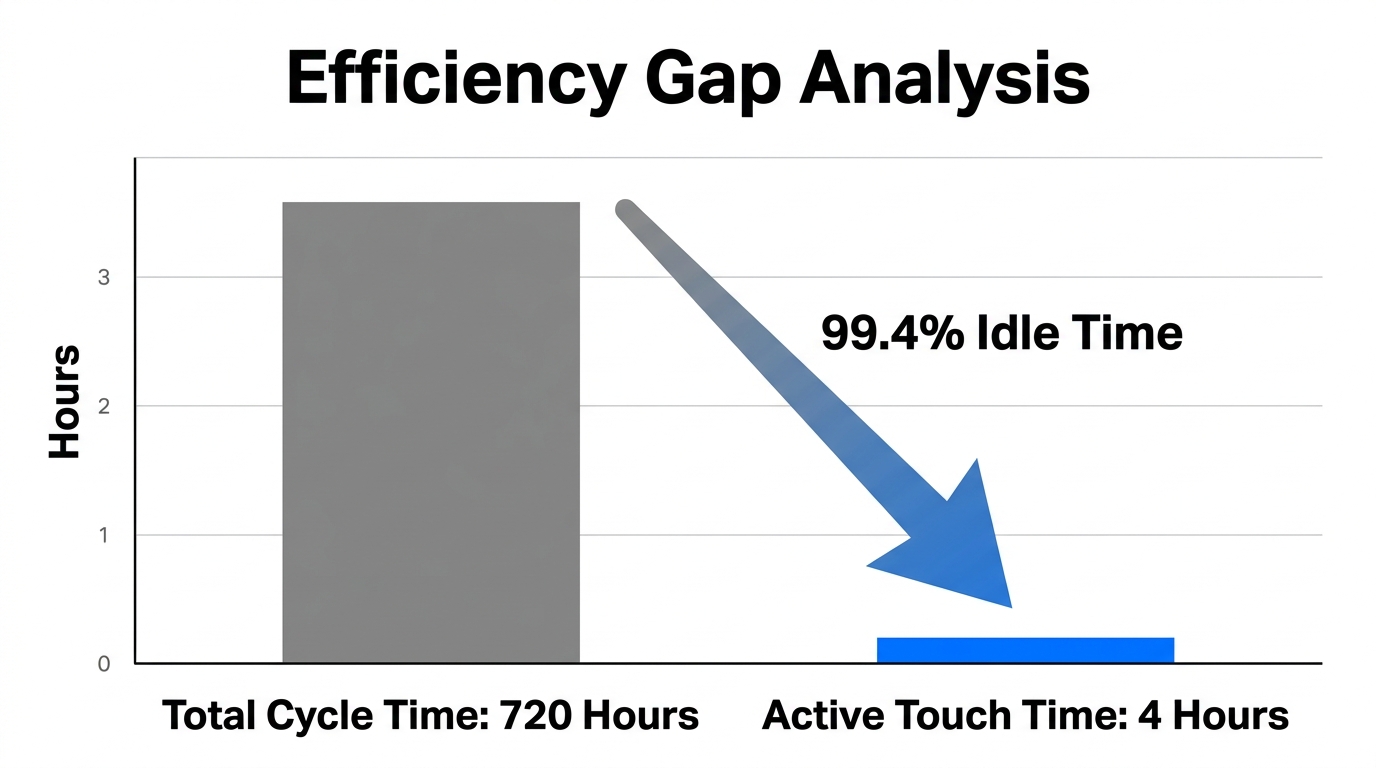
In service industries, inefficiency is often hidden behind the 'Hair Salon' model. In a hair salon, a stylist has two chairs (bays); they work on one person while the other waits. This is a commission-based system where the worker doesn't care about how fast the 'car' (or customer) moves through the system, only how much they bill per hour. This is the death of scale.
To find a billion-dollar niche, you must analyze the difference between Cycle Time (the total time from order to delivery) and Touch Time (the actual time spent working on the product). In collision repair, for instance, the industry average cycle time was 18 days, but the actual touch time was only 6 to 8 hours. When the gap between cycle and touch time is that massive, the industry is broken. By applying an 'assembly line' mindset to a 'hair salon' industry, you can turn an 18-day process into a 1-day process, effectively capturing the entire market overnight.
The 'Follow the Customer Home' Method
Data tells you what is happening, but observation tells you why. A famous tactic used by founders of companies like Intuit is the 'Follow Me Home' method. This involves literally watching a customer use your product in their natural environment. This is how the Swiffer was invented; Proctor & Gamble researchers watched moms struggle with mops and realized the mop wasn't just dirty—it was fundamentally 'janky' in its workflow.
In 2026, this applies to digital workflows too. If you're using Shopify to run an e-commerce brand, don't just look at conversion rates in Google Analytics. Watch a user try to navigate your site. If it takes 64 clicks to buy a product, but Domino's can do it in 10, your 'religion' of customization is actually a bottleneck. Simplify the choices, and you'll see a 20x improvement in sales without changing the product itself.
"If you want to solve a problem, go to where the inventory is stacked up. That is where the bottleneck lives. Stop speculating and start watching."
Stack-Ranking Constraints for 2026 Growth
A deep dive into prioritizing business bottlenecks and ranking problems by their overall impact.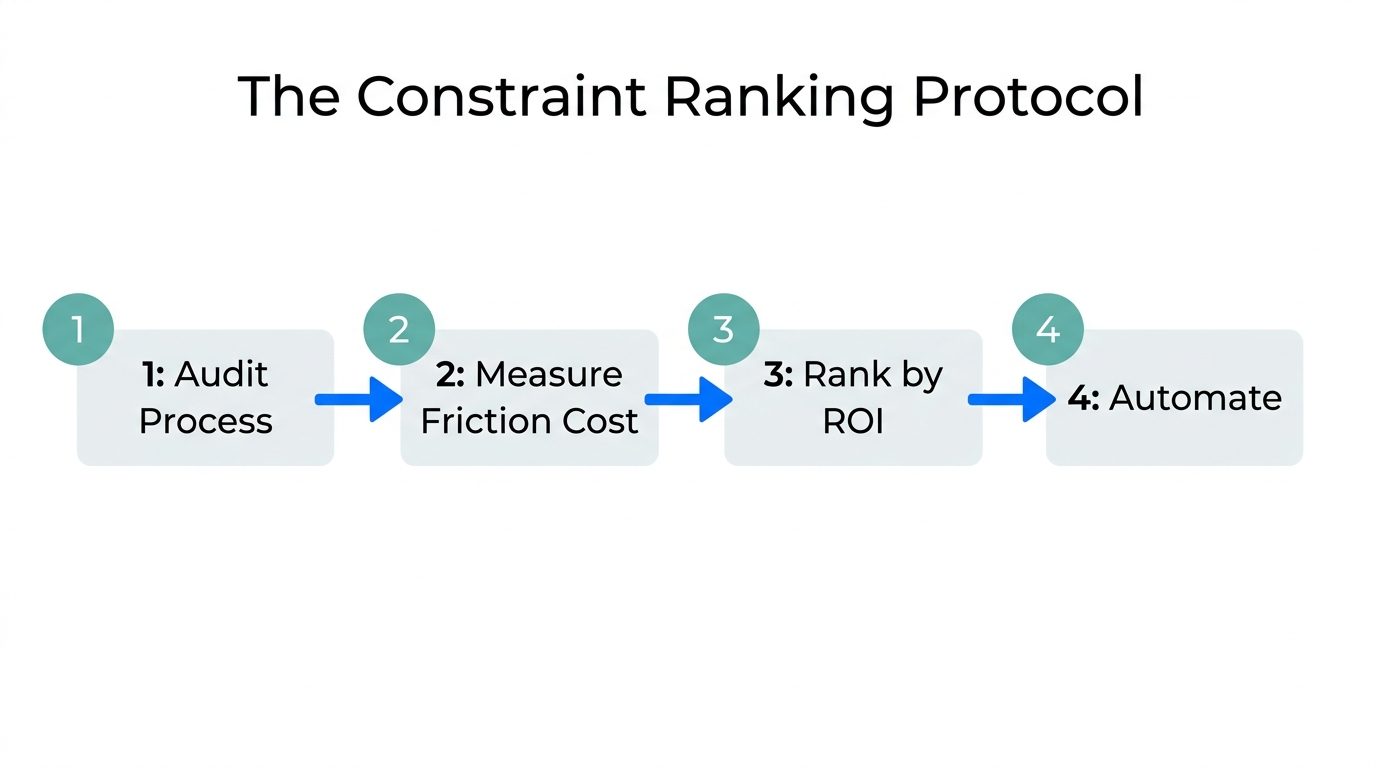
Your job as a leader in 2026 is to stack-rank the problems constraining your business and pull the biggest one off the top of the pile every single morning. This requires a level of 'ruthless prioritization' that most organizations lack. Often, the bottleneck isn't talent or capital—it's a business model you've fallen in love with that no longer serves the customer.
For example, if you are scaling a mobile app and your go-to-market strategy 2026 relies on influencer marketing, your bottleneck might be the sheer volume of manual outreach. Instead of hiring ten more people to send emails, look for platforms like Stormy AI that use AI to automate discovery and outreach. By identifying where your team is 'touching' the process manually for 40 hours to get 2 hours of 'output,' you can automate the friction away and focus on high-level strategy.
Conclusion: The Algorithm for Success
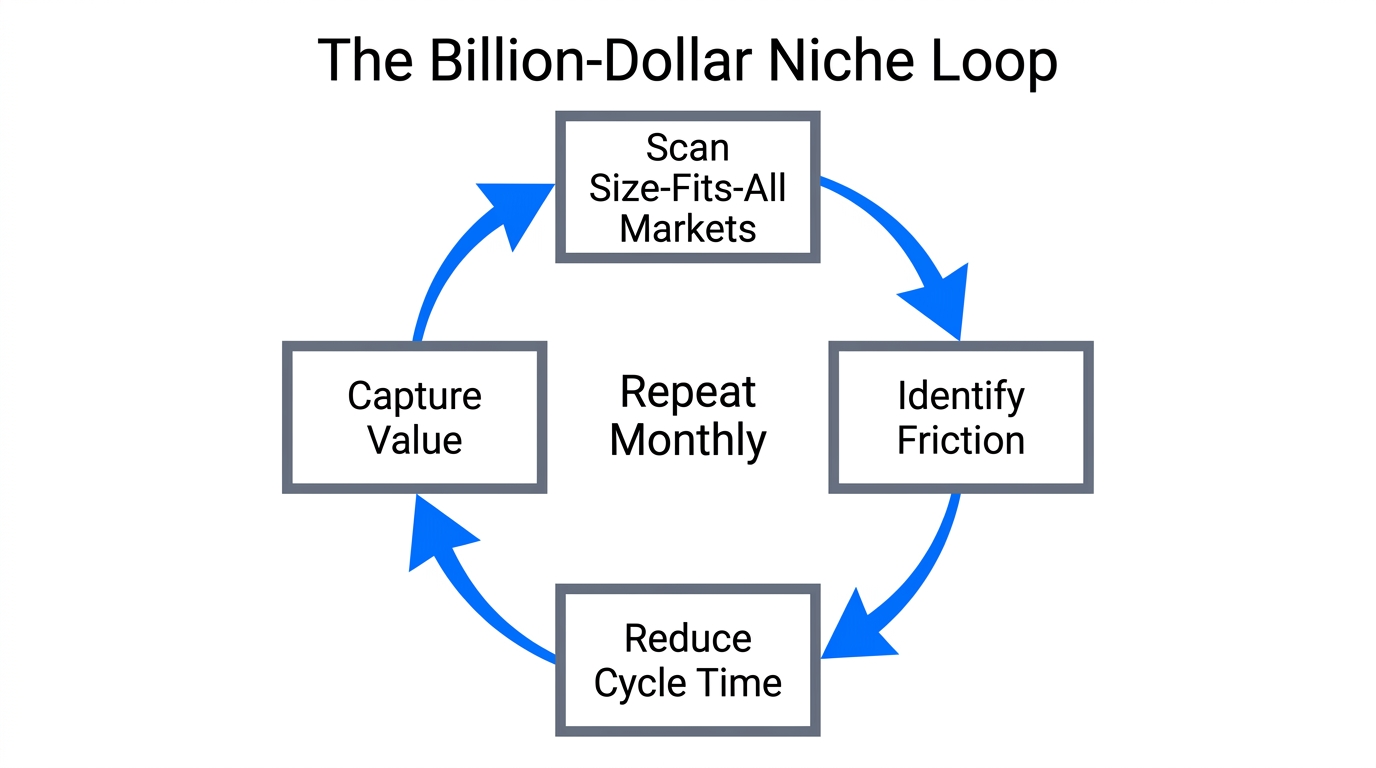
Finding a billion-dollar niche isn't about luck; it's about a repeatable algorithm of observation and interrogation. By applying the 'Elon Musk' filter to the world around you, you begin to see that most industries are just waiting for someone to stop treating every customer the same. In 2026, the winner is the one who eliminates the most friction for the most specific audience.
Start today by identifying one 'one-size-fits-all' model in your current industry. Mystery shop it. Measure the cycle time versus the touch time. Follow the customer home. If you can bridge that gap, you haven't just found a niche—you've found a future market leader. Whether you're managing complex supply chains or using Stormy AI to find your next fleet of creators, the principles remain the same: solve the friction, and the growth will follow.