In 2026, the marketing landscape has shifted from a battle of budgets to a battle of raw talent. With AI automating the mundane, the delta between an average marketer and a world-class growth driver has never been wider. Founders and CMOs are realizing that the standard recruitment playbook—scanning LinkedIn for fancy titles and vetting resumes—is fundamentally broken. If you want to build a category-defining company, you need to adopt a more rigorous method. You need to hiring like Elon Musk.
The "Elon Musk hiring framework" isn't about being mean or eccentric; it is a clinical, first-principles approach to identifying evidence of exceptional ability. At Tesla, Musk famously used an interrogation-style method to cut through the noise of corporate pedigrees. He wasn't looking for someone who had simply worked at a successful company; he was looking for the individual who actually drove the growth. As we navigate the complex digital ecosystems of 2026, from decentralized social platforms like Farcaster to TikTok Ads Manager strategies, this first-principles approach is the only way to ensure you aren't hiring a "wave rider."
The Death of the Marketing Resume in 2026
 5:40
5:40By 2026, the standard resume has become virtually useless. With generative AI tools like ChatGPT and Claude, every candidate can produce a perfectly polished summary of their achievements. Titles are inflated, and metrics are often borrowed from the collective success of a team rather than the individual’s contributions. If a candidate says they grew a brand from $1 million to $93 million, you can no longer take that at face value.
The signal in 2026 isn't what is on the page; it's the depth of the conversation. World-class talent can describe the "why" and the "how" of a problem at a granular level that a pretender simply cannot simulate. Musk’s method focuses on peeling the onion—asking for the most difficult problem the candidate solved and then diving into the technical, tactical, and psychological layers of that solution until the candidate is either proven or stumped.
"You could have a great resume, but if the conversation is not giving you 'wow, wow, wow' in the first 20 minutes, the talent probably isn't there. Trust the conversation, not the paper."
The 'Deep-Dive Interrogation': Peeling the Onion
14:27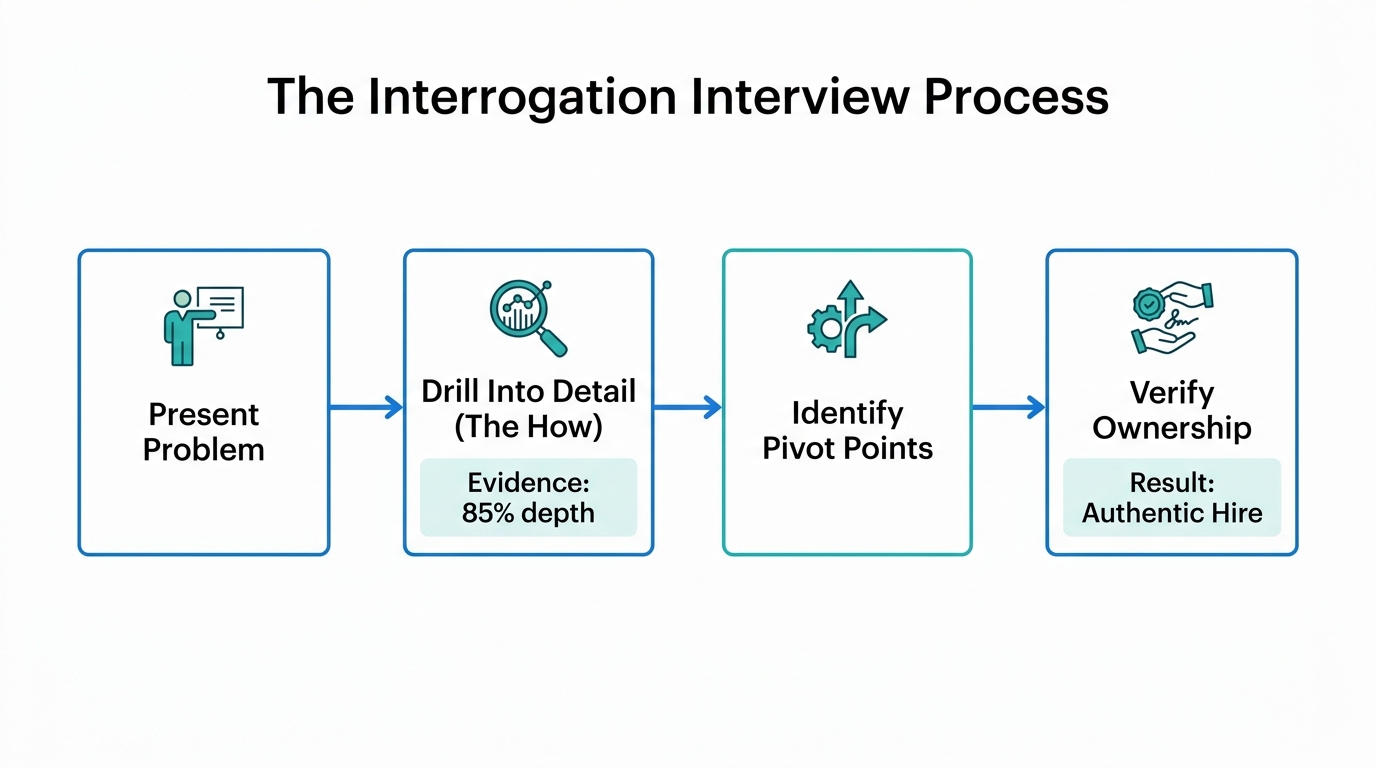
The core of the Elon Musk hiring framework is the interrogation. This isn't a friendly chat about culture fit; it's a technical audit of a candidate's past work. When interviewing a growth marketer, you should ask them to pick one campaign or growth engine they built. Then, start the descent. How many layers can this player get through before they are stumped?
If they claim to have mastered Apple Search Ads for a top-tier fintech app, don't ask about their ROI. Ask about the specific keyword bid adjustments they made during a market dip. Ask how they handled the attribution discrepancies between AppsFlyer and the internal database. Ask them to explain the root cause of a failure in that campaign. A world-class marketer will light up, describing the nuances of the algorithm or the creative friction point. An "order taker" will start to use vague, corporate buzzwords.
Identifying 'Hunters' vs. 'Order Takers'
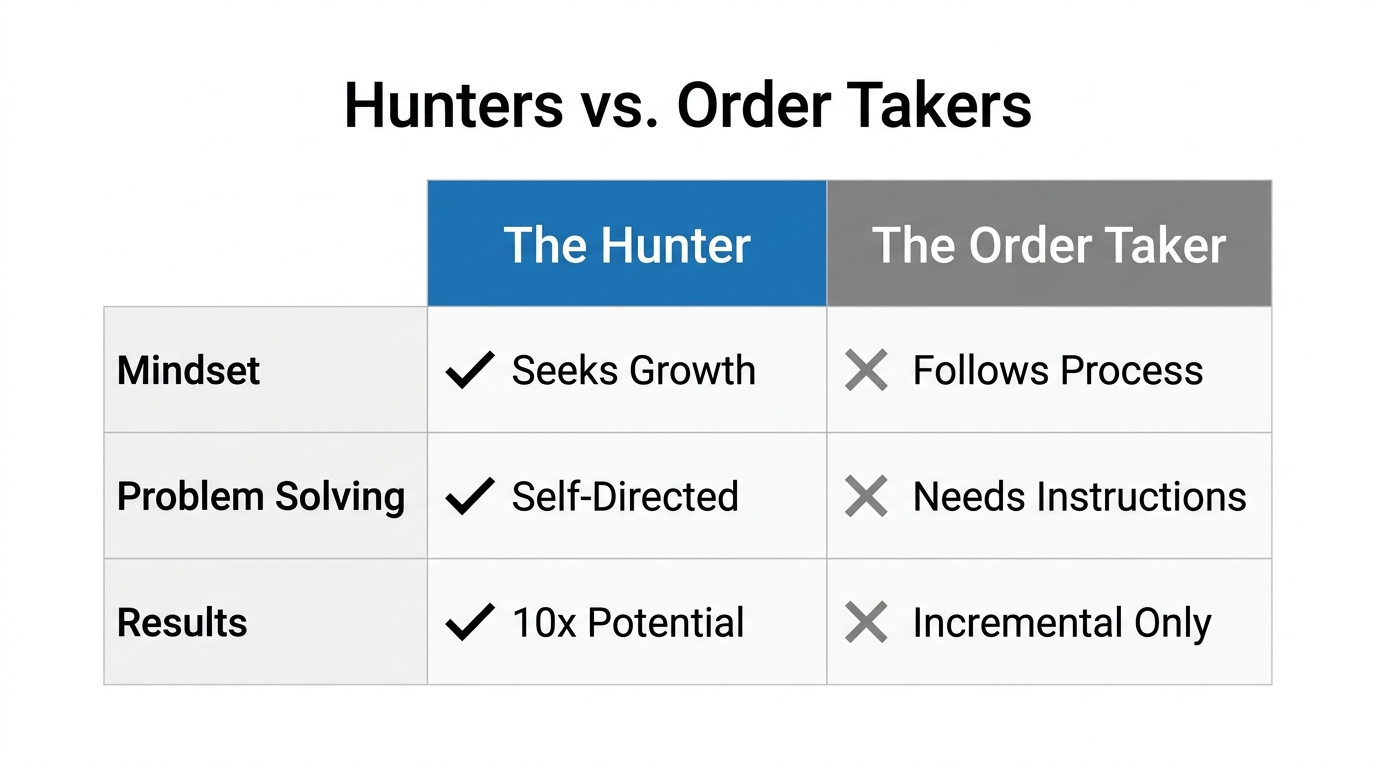
One of the most dangerous traps in hiring is being blinded by a "halo effect" from prestigious companies. Hiring a marketer from Nike or Google is risky because those organizations are heavily matrixed. In a matrixed environment, a marketer might have a very narrow, niche job. They've never had full P&L responsibility or had to build a distribution engine from scratch. They are often order takers—people who are handed a massive budget and a perfect product and simply keep the lights on.
To find the entrepreneurial hunters, look for people who succeeded in "hostile" environments. As the research suggests, if you want a great salesperson, don't hire the one from the Apple Store where the "fish are jumping in the boat." Hire the one from Microsoft who had to sell a struggling product against a superior competitor. In growth marketing, this means looking for the person who scaled a bootstrapped startup using creative influencer discovery tactics or unconventional Meta Ads strategies, rather than the person who just managed a $10M monthly spend for an established unicorn.
| Candidate Trait | The Order Taker | The Entrepreneurial Hunter |
|---|---|---|
| Background | Large, matrixed companies (Nike, Google). | Early-stage startups or "shitty" product environments. |
| Problem Solving | Waits for budget or agency input. | Dives into the data to find the root cause. |
| Communication | Lengthy reports and corporate jargon. | Clear, concise, and result-oriented. |
| Growth Mindset | Incremental (5-10% improvement). | Order of magnitude (10x-100x improvement). |
"Hire the people who know how to sell when the product isn't the hot one. If they can win with a Tier 3 product, they will dominate with a Tier 1 product."
The 'Wow Moment' Rule
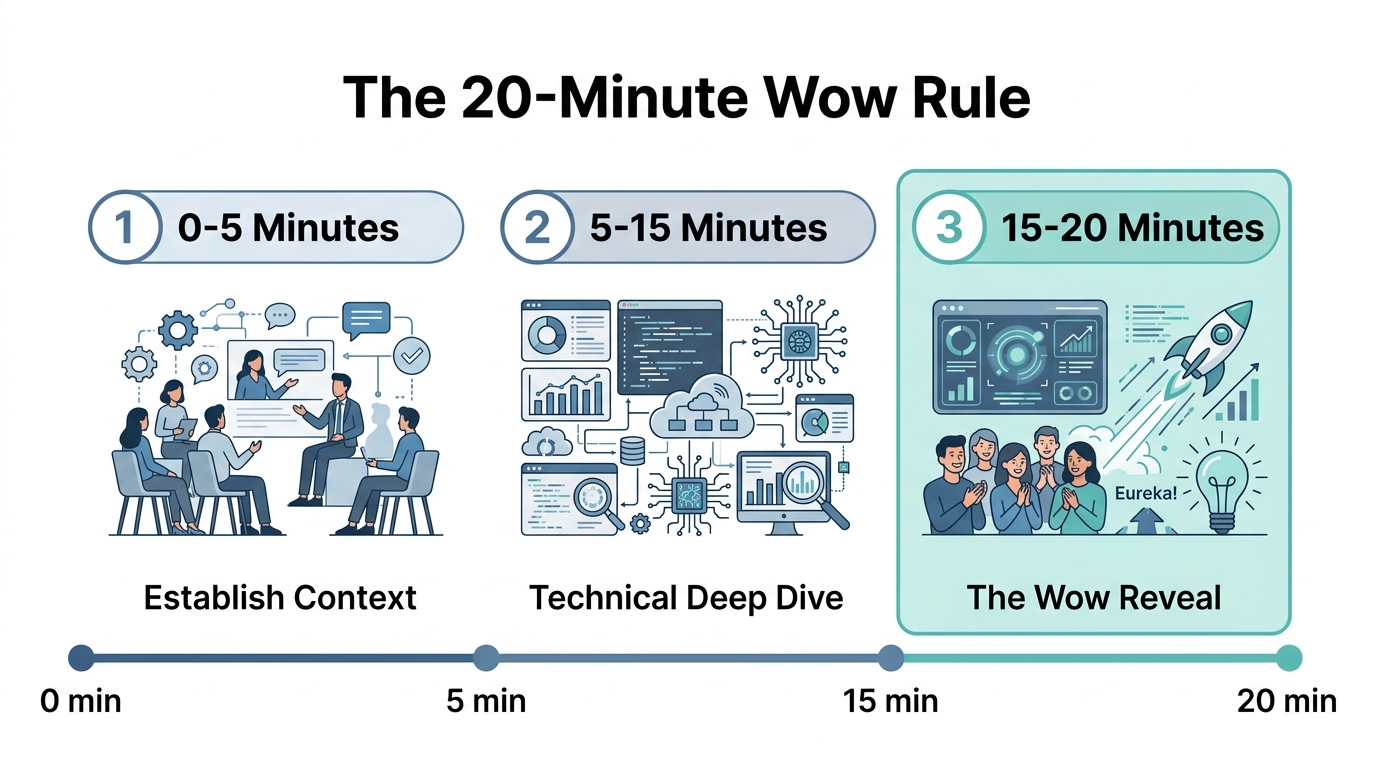
Musk’s philosophy suggests that if a candidate doesn't make you say "wow" within the first 20 minutes, they are likely not world-class. In the high-stakes world of 2026 growth marketing, this "wow" usually comes from a candidate demonstrating extreme curiosity or a unique insight that you hadn't considered. It’s not about them knowing everything; it’s about their ability to boil complex problems down to first principles.
If you're interviewing for a senior role, the candidate should be able to look at your current marketing stack—whether you're using an AI-powered Creator CRM or Klaviyo for automation—and identify a friction point immediately. They should be able to explain, within minutes, how they would simplify a 64-click conversion funnel into a 10-click experience, much like the famous Tesla vs. Domino's pizza comparison.
Flipping the Script: The Real-Time Friction Test
The most effective part of the Elon Musk hiring framework is the real-time problem-solving test. Instead of asking hypothetical questions, flip the table. Present the candidate with a current, live friction point in your business. This is exactly how Musk hired his president at Tesla—by presenting a manufacturing problem and spending two hours breaking it down together.
For a growth marketer in 2026, you might present a plateau in your user acquisition. Give them access to your Google Analytics or a summary of your latest TikTok Ads performance. Watch their process:
- Do they ask for more data to find the bottleneck?
- Do they use their "eyes and ears" to mystery shop your product during the interview?
- Do they suggest a radical, 10x shift rather than a 5% tweak?
- Can they explain their proposed solution in three sentences or less?
The three-sentence rule is a classic Musk-ism: What is the problem? What is the root cause? What is the proposed solution? If a marketer can't communicate with that level of efficiency, they will likely struggle to lead a high-velocity team.
Setting Order of Magnitude Goals
33:37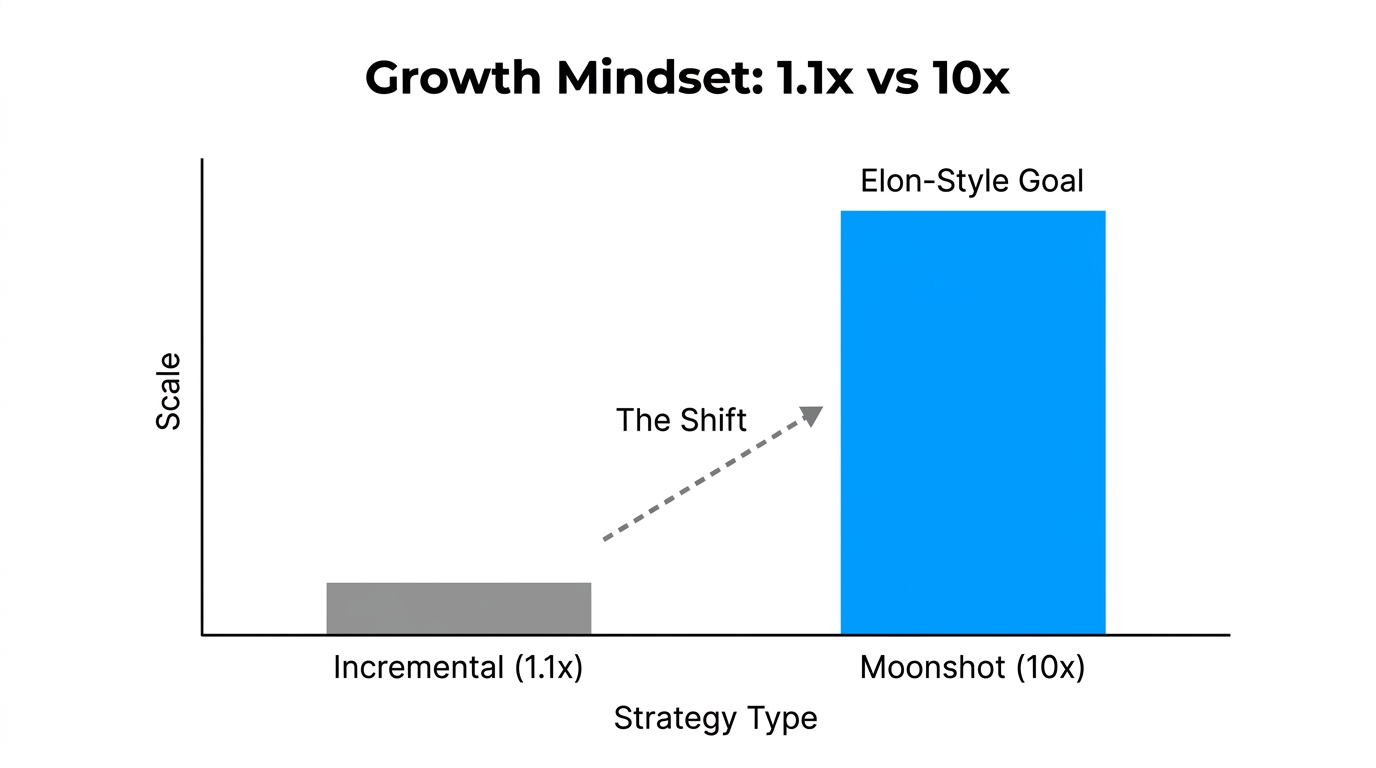
Finally, the framework requires you to set unreasonable goals. Musk didn't ask for a 10% increase in digital sales; he asked for 20x. When you set an order of magnitude goal (10x or 100x), it forces the candidate to abandon the status quo. You can't reach a 20x goal by tweaking a landing page on Framer or adjusting a few bids on Google Ads.
By presenting a "crazy" goal, you test the candidate's ambition and their ability to think laterally. A world-class marketer won't be intimidated; they will start questioning your business model. They might suggest chucking your current subscription tiers or moving entirely to a different distribution channel. This is the "epiphany" moment—the sudden realization that the current process is the constraint, and a radical shift is the only way forward.
"If you set a goal for 5% improvement, you'll get 3%. If you set a goal for 10x, you'll force your team to invent a new way of working."
Conclusion: Building Your 2026 Growth Team
61:39Recruiting world-class growth marketers in 2026 requires more than a talent for networking; it requires a commitment to technical interrogation and first-principles thinking. By adopting the Elon Musk hiring framework, you move away from the noise of AI-generated resumes and move toward a deep understanding of a candidate's actual capacity.
Remember to look for the hunters who have survived "shitty" products, test for the "wow" moment in the first 20 minutes, and never settle for someone who can't explain a complex solution in three simple sentences. In a world where AI handles the execution, your job is to find the humans who can stack-rank the problems and pull the biggest one off the pile every single day.