In the high-stakes world of social media marketing, brands often spend thousands of dollars on high-production creative, believing that sleek cinematography and professional lighting are the keys to virality. However, the data tells a different story. Over the last year, a platform called Noise, founded by Nick Weber, facilitated over 2.5 billion views for its users. The secret wasn't a bigger budget or a better camera; it was a phenomenon Weber calls the “Eggs Theory.”
This theory suggests that the difference between a video that flopping at 1,000 views and one that skyrocketing to 10 million views often boils down to a single, seemingly mundane visual detail. In the case of one particular campaign, that detail was literally a plate of eggs. By understanding the psychology of visual relatability and the science of micro-hooks, brands can move away from the “lottery system” of social media and toward a predictable distribution machine.
Defining the Eggs Theory: Why Mundane Items Create Instant Trust

The Eggs Theory originated when Weber’s team noticed a strange pattern in their data. When running slideshow ads for various apps, the images that consistently outperformed every other creative featured eggs—scrambled, hard-boiled, or poached. While it seemed random at first, deeper analysis revealed a powerful psychological trigger at play.
Eggs represent three core pillars of TikTok engagement: they are relatable, healthy, and achievable. Almost everyone has eggs in their kitchen. They are a universal symbol of clean eating that doesn’t feel elitist or expensive. Unlike a high-end smoothie bowl that requires fifteen exotic ingredients and a $500 blender, eggs are cheap and accessible. This visual shorthand creates an immediate sense of trust with the viewer.
“It’s instantly visually understandable. Not only are they a whole food and healthy, but they’re also super affordable. Everybody knows what an egg is. You see over and over that putting hard-boiled eggs or scrambled eggs in these first hook images was a rocket ship in terms of viewership.” — Nick Weber
When a user scrolls past a image of eggs, their brain doesn’t register “advertisement.” Instead, it registers a shared human experience. This relatability lowers the viewer’s guard, making them significantly more likely to engage with the slides that follow. In a digital landscape saturated with “hustle culture” and luxury aesthetics, the humble egg acts as a grounding anchor that signals authenticity.
The 2-Second Hook: The Difference Between 1,000 and 10 Million Views
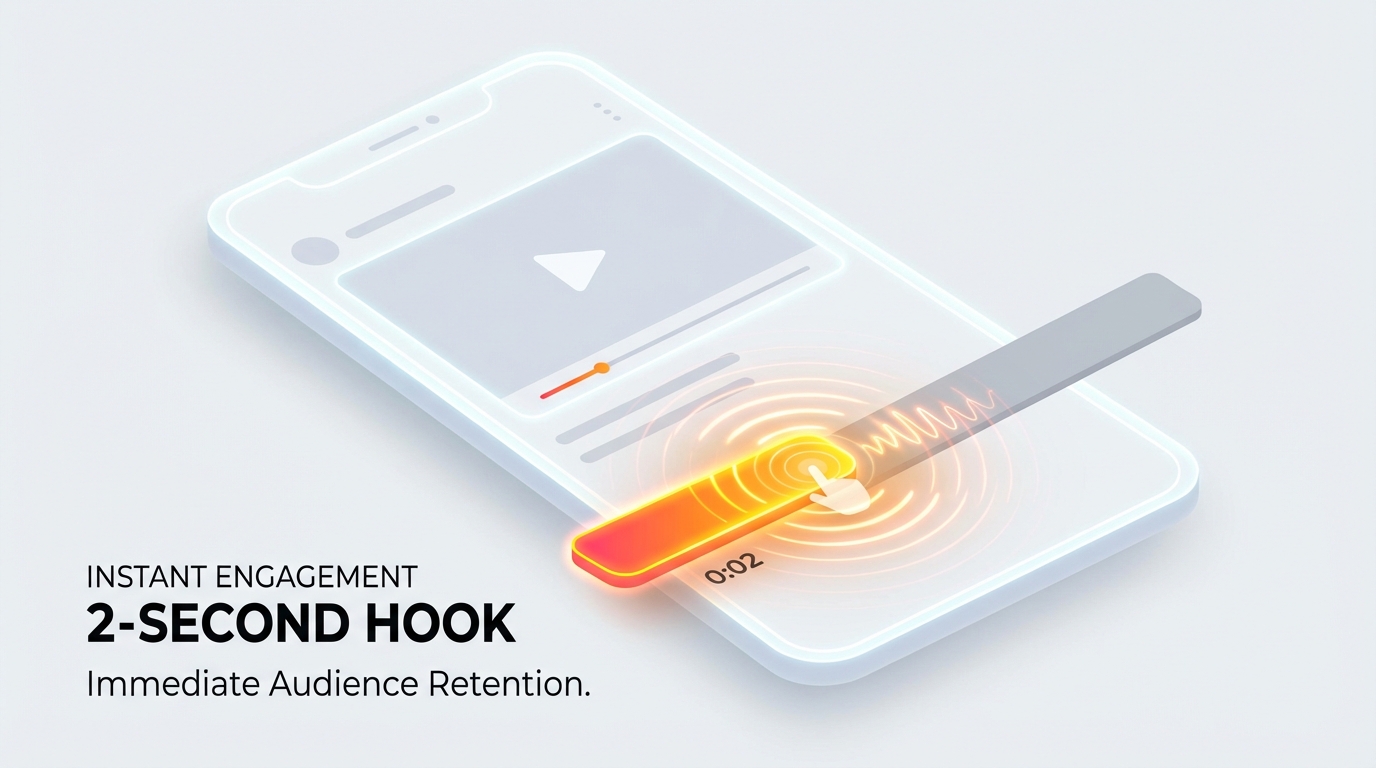
In short-form video, you don’t have minutes to explain your value proposition; you have about two seconds before the thumb swipes upward. The Eggs Theory is essentially a visual hook, but it must be paired with a verbal or textual hook that aligns with the viewer’s psychology. Weber discovered that even the slightest variation in phrasing can have a catastrophic impact on reach.
The Power of Negative Hooks
One of the most revealing experiments Weber conducted involved two nearly identical videos. The first video started with the text: “Everybody needs a side hustle.” It flopped. The second video started with: “Don’t get a second job.” It went viral, driving eight-cent installs for the Noise app and pushing it to number seven in its category.
Why did this work? The first hook makes an assumption and gives a directive—it feels like being lectured. The second hook, “Don’t get a second job,” offers relief. It acknowledges a pain point (the exhaustion of overworking) and provides a solution. It’s the same product being pitched, but the sentiment is entirely different. This is the “science” of virality: testing nuanced psychological triggers until you find the one that resonates with the collective consciousness of the algorithm.
Visual Language vs. Verbal Hooks: Why the First Frame Wins
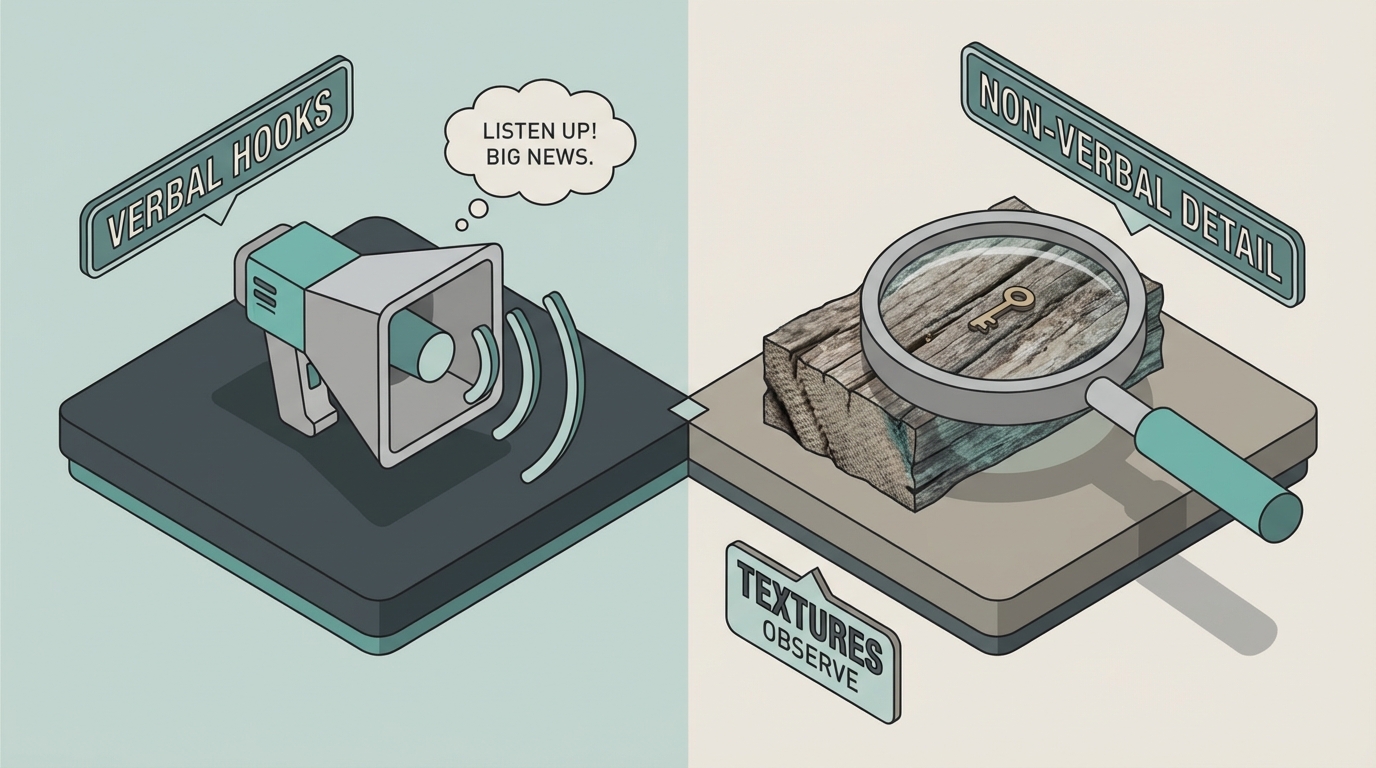
While the copy is important, the first frame of a TikTok or Reel dictates the algorithmic reach. The TikTok algorithm is essentially a recommendation engine that matches content to user interest. If the first frame is visually confusing or looks too much like a traditional commercial, the algorithm will likely categorize it as low-interest “ad-junk.”
Visual language is about more than just what is being shown; it’s about the vibe of the frame. Weber’s team found that “Pinterest-style” imagery—often AI-generated to look perfectly relatable—triggers the recommendation engine by mimicking organic content that users already love. These images aren’t high-production; they are “high-aesthetic” in a way that feels achievable. If a viewer has ever tried to eat healthy or organize their home, an AI-generated image of a clean kitchen or a simple breakfast hits a “nerve” that sends them to the next slide.
The “Shots on Goal” Strategy
To find these winning visual and verbal combinations, Weber utilizes a “shots on goal” effect. Instead of hiring five creators to post twice a day, his platform allows 50,000 creators to post content simultaneously. By flooding the platform with subtle variations of the same concept—changing the hook image from a cup of coffee to someone washing dishes—they can identify the “outlier” video that gets 20 million views and then double down on that format.
The Two-Pronged Playbook: Awareness and Retargeting
A common mistake brands make is expecting every video to do both: go viral and convert at a high rate. Weber’s data suggests that virality and conversion often require two different types of content running in parallel.
- High-Effort UGC (The Awareness Driver): These are videos designed to go viral. They usually feature a “soft” call-to-action (CTA) that barely mentions the product. The goal is to spark curiosity and get millions of people asking, “What app is that?” in the comments.
- Mass Slideshows (The Retargeting Driver): These are thousands of simple, programmatic slideshows with a “hard” CTA. These videos rarely get millions of views individually—often hovering around 500 to 2,000 views—but because they are shown to the same audience that saw the viral UGC, they function as an organic retargeting ad.
Weber’s theory is that TikTok has a “daily views budget” for certain niches. If you can fill that budget with your content—both the viral hits and the high-conversion slideshows—you create an ecosystem where a user sees your brand multiple times in different formats. This “shotgun effect” ensures that even if a video only gets 500 views, those 500 views are highly relevant and likely to convert.
Practical Tips for Brands: How to Find Your Own “Egg”

You don’t have to be a creative genius to go viral; you just have to be a scientist. As Pablo Picasso famously said, “Great artists steal.” In the world of TikTok, this means identifying formats that are already working and slotting your product into them.
1. Use Reddit for Market Research
If you aren’t sure what your audience cares about, look at popular subreddits like “Roast Me” or niche communities related to your product. The popularity of a subreddit confirms that a specific type of content—like the “AI being mean to you” trend—already has an audience. Your job is simply to translate that sentiment into a video format.
2. Focus on Achievable Aesthetics
Avoid the “Instagram-perfect” look of 2016. Today’s viewers want “Pinterest-relatable.” Whether it’s an image of a messy desk, a simple meal, or someone doing a mundane task like vacuuming, choose visuals that the average person can see themselves in. If it looks like it cost $10,000 to film, the viewer will immediately feel a disconnect.
3. The “Grocery Store” Test
When choosing a visual anchor, ask yourself: Is this item at a local grocery store? Is it under $20? Does it evoke a positive, healthy, or common emotion? If the answer is yes, you may have found your version of “the egg.”
4. Comment Seeding and Distribution
Scaling reach isn’t just about the video itself; it’s about the conversation happening below it. Weber’s strategy involves “comment seeding,” where users who have actually used the app jump into the comments of a viral video to answer questions. This provides social proof and moves the user from the “curiosity” phase to the “download” phase.
Conclusion: Growth as a Science, Not an Art
The success of the Eggs Theory and the 2.5 billion views generated by Nick Weber’s platform prove that virality is no longer a lottery. By focusing on micro-details, testing hooks at scale, and prioritizing visual relatability over high-production value, any brand can build a distribution machine that rivals traditional ad platforms like Meta.
Stop trying to invent the next big thing. Instead, look for the “eggs” in your industry—the mundane, relatable details that anchor your audience’s attention—and build a system that allows you to take as many shots on goal as possible. In the age of short-form video, the scientist will always outperform the artist.
Ready to find your winning format? Start by analyzing your top-performing organic posts and identifying the common visual anchors. You might be surprised to find that your “egg” has been hiding in plain sight all along.