For modern e-commerce founders and CMOs, the dream of infinite scale often hits a ceiling of manual labor. As your product catalog grows from 50 to 500 items, the complexity of managing a Google Ads account grows exponentially. Traditionally, this meant hiring a small army of junior media buyers to manually build ad groups, write headlines, and audit landing pages. However, a fundamental shift is occurring in the industry. By moving toward ecommerce PPC automation through agentic workflows, brands are now deploying sophisticated intent-based ad groups (IBAGs) at a scale and speed previously unimaginable. The tool at the center of this revolution isn't just a chatbot; it is Claude Code, a terminal-based AI agent that acts as an AI engineer for your growth marketing stack.
The Automation Layering Concept: Beyond Platform-Native Tools
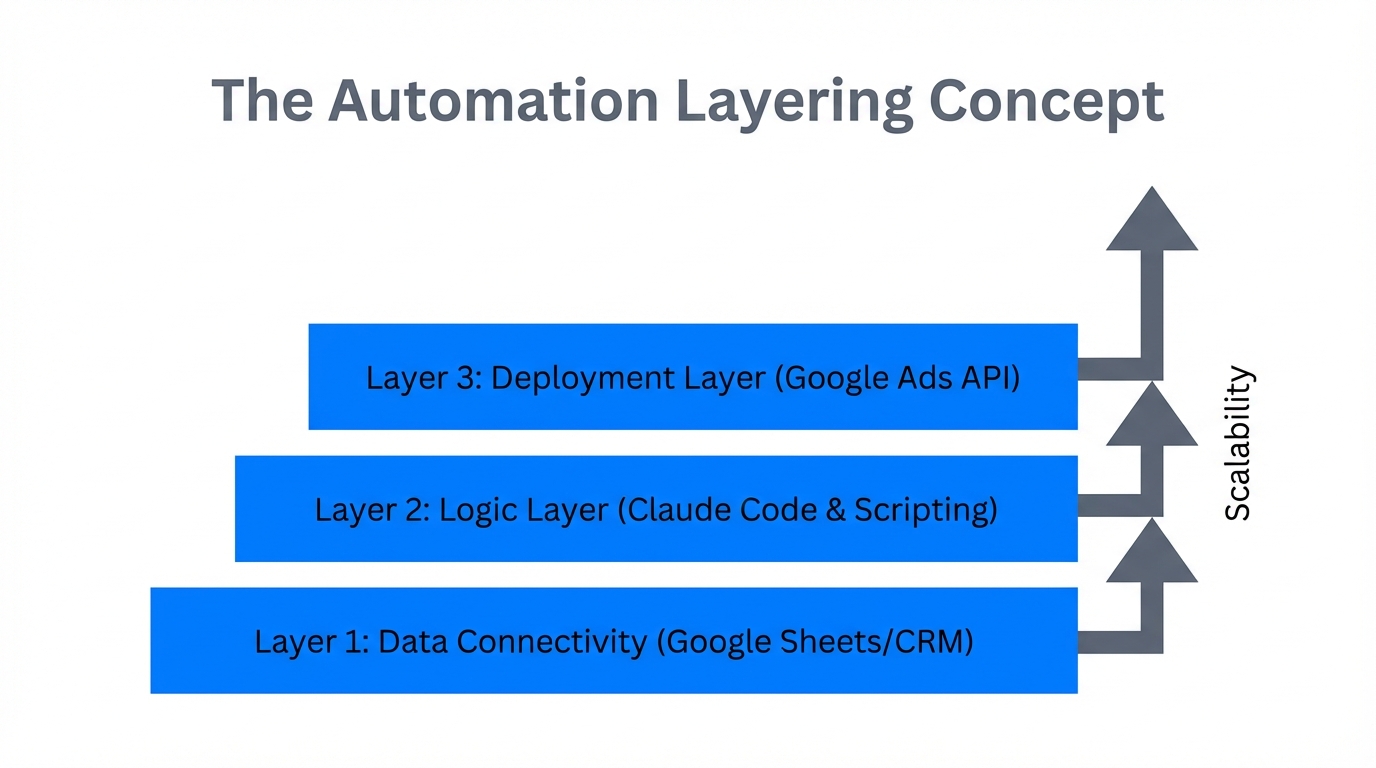
Many brands rely solely on Google's built-in automation, such as Performance Max or Smart Bidding. While these are powerful, they often lack the granular control needed for high-stakes execution. This is where the concept of "Automation Layering" comes in. As Frederick Vallaeys of Optmyzr suggests, the future of PPC involves using AI agents like Claude to oversee and optimize the platform-native automations provided by Google.
By layering Claude Code on top of your Google Ads account, you aren't just letting an algorithm spend your money; you are building a custom logic engine that ensures every dollar follows your specific brand guidelines. This approach allows marketing teams to scale Google Ads campaigns while maintaining the precision of manual management. In 2026, it is estimated that 80–85% of technical marketers are already using AI coding assistants like Cursor or Claude to manage these complex API workflows, turning marketing from a creative-only discipline into a software engineering one.
"The shift from AI assistants to AI engineers means marketing teams can now treat their campaign management like a software development pipeline."
Building a CI/CD Pipeline for Marketing: From Product URL to Live Ad
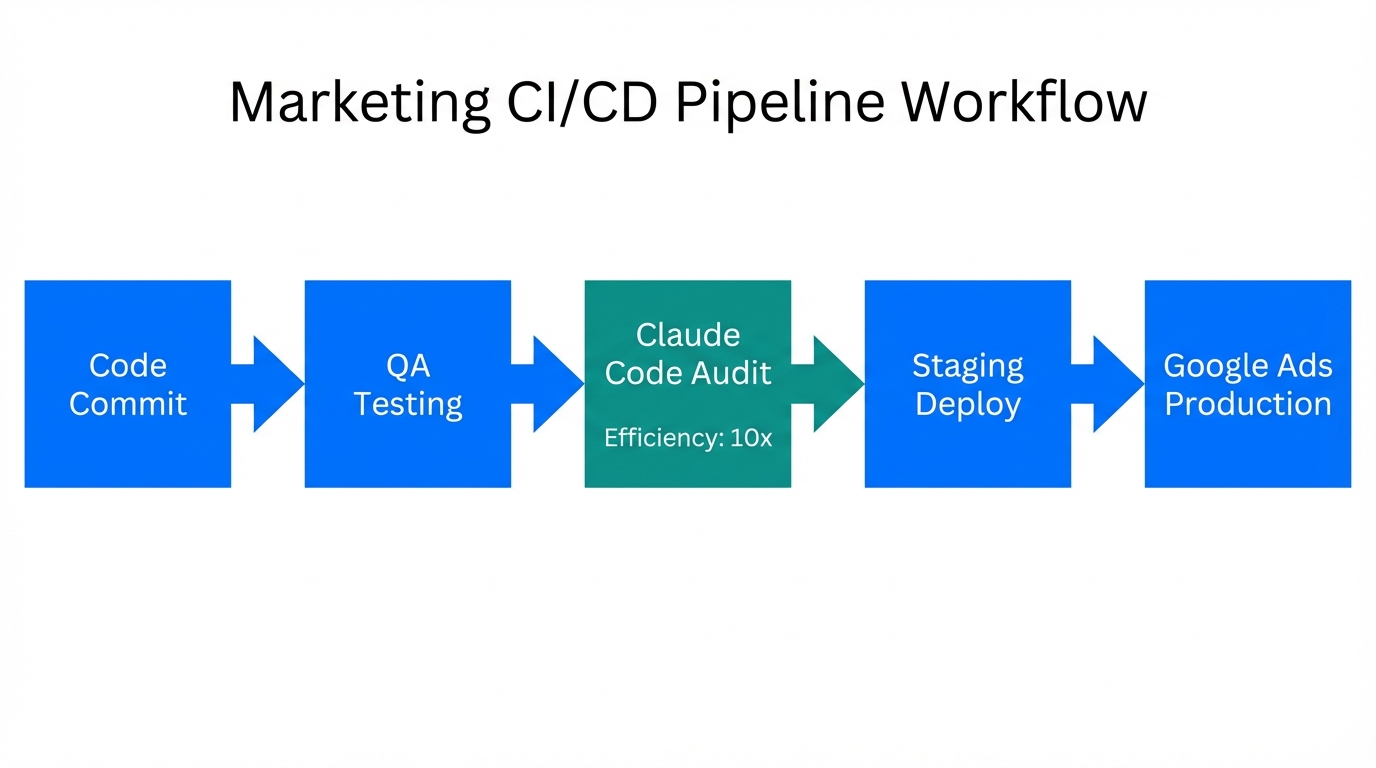
To truly achieve ppc management efficiency, e-commerce brands are adopting DevOps principles. This means creating a "Continuous Integration / Continuous Deployment" (CI/CD) pipeline for their marketing. Imagine a world where adding a new product to your Shopify store automatically triggers the creation of a high-converting ad campaign without a human lifting a finger.
This is now possible by integrating Claude Code into your GitHub actions or local development environment. When a new product URL is detected, the AI agent performs the following steps:
- Content Extraction: Claude uses the Playwright MCP to scrape the product page and understand its unique selling points.
- Keyword Mapping: It cross-references search volume data to generate an Intent-Based Ad Group (IBAG).
- Ad Copy Synthesis: It writes 15 headlines and 4 descriptions that are statistically likely to drive high CTR.
- Deployment: Using the Google Ads API, Claude pushes the campaign live.
This automated workflow has helped brands save 15+ hours per week on manual management, allowing their growth leads to focus on high-level strategy rather than spreadsheets. This is the ultimate form of marketing automation workflows for the modern era.
Optimizing the Three Pillars of Quality Score with AI
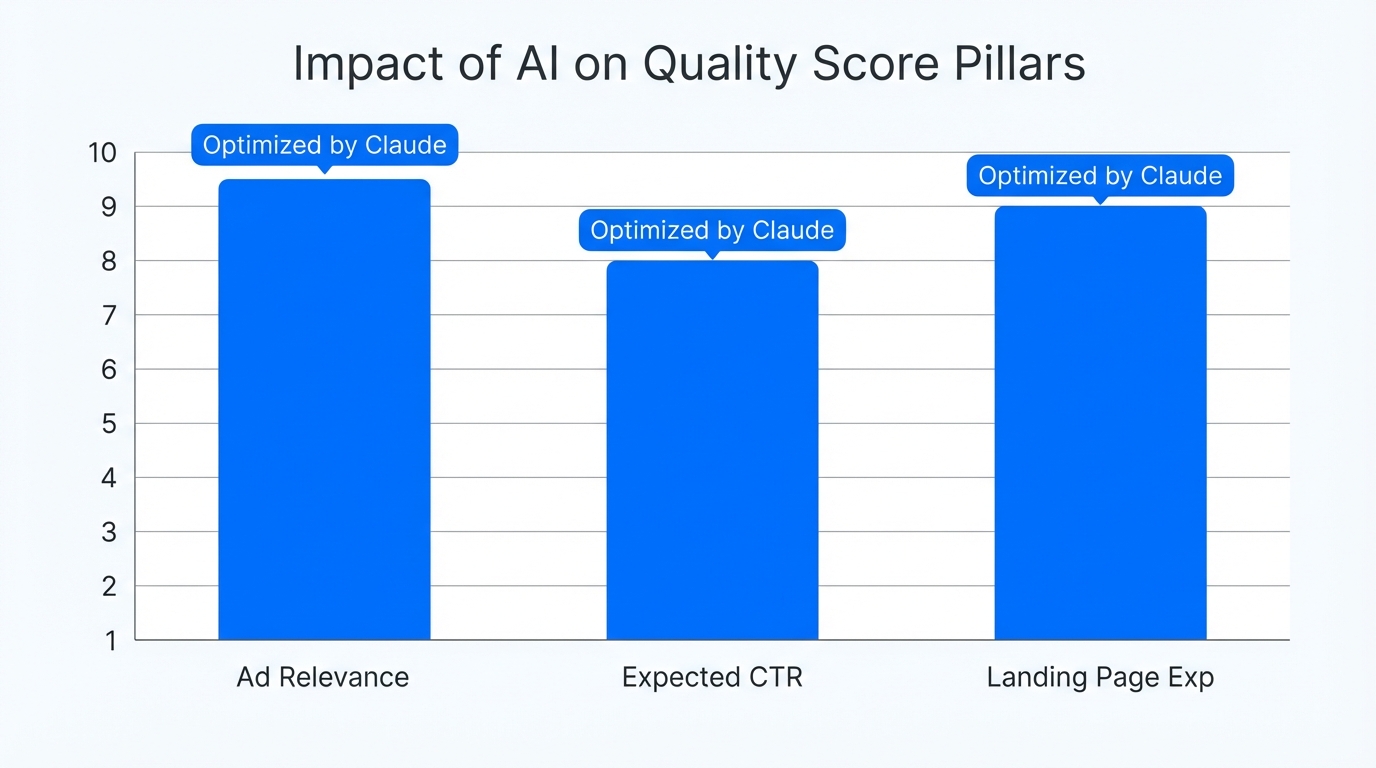
Efficiency is useless if your ads don't perform. In the Google Ads ecosystem, Performance is dictated by Quality Score (QS). Improving your QS from 6/10 to 8/10 can reduce your Cost-Per-Click by 33%. High-quality ads (QS 10) can even pay up to 50% less than the average advertiser. Claude Code allows you to automate the optimization of all three QS components:
| QS Component | Traditional Method | Claude Code Automation |
|---|---|---|
| Ad Relevance | Manual keyword-to-copy matching. | Automated rewriting of RSAs using GAQL scripts. |
| Expected CTR | Reactive A/B testing over months. | Predictive testing and negative keyword conflict detection. |
| Landing Page Exp. | Human audit of speed and layout. | Playwright MCP visual audits and Core Web Vitals checks. |
Maximizing Ad Relevance
By using tools like TrueClicks GAQL.app, you can provide Claude with secure tokens to query your live data. You can then prompt the agent: "Analyze my keywords.csv and update any ad groups where relevance is 'Below Average' with headlines that specifically include the target search intent." This ensures your ads are always perfectly aligned with what the user is searching for.
Enhancing Landing Page Experience
The Playwright MCP Server allows Claude to actually "see" your mobile landing page. It can take screenshots and identify if your H1 tag matches the keyword 'high-performance running shoes'. If there is a mismatch, the agent can flag it or even suggest a Framer or Webflow change, ensuring your ai for growth marketing strategy is holistic, covering both the ad and the destination.
"Moving a Quality Score from 6 to 8 isn't just a metric—it's a 33% instant raise for your marketing budget."
Integrating the Marketing Skills Repository
One common mistake founders make is assuming an AI understands their specific brand voice or industry expertise out of the box. To solve this, technical marketers are using the Marketing Skills Repository. This is a collection of markdown files that give Claude "expert" domain knowledge in specific niches like SaaS, e-commerce, or lead gen.
When you provide Claude with these specific instruction sets, it stops behaving like a generalist and starts acting like a senior PPC director. For instance, when sourcing high-quality creative for these ads, teams often find that pairing automated management with human-centric content is key. Platforms like Stormy AI streamline creator sourcing and outreach, providing the visual assets that Claude then deploys across your automated campaign structure. This synergy between AI-powered discovery and automated execution is how mid-market brands are beginning to outcompete enterprise giants.
The Shift from 'AI Assistants' to 'AI Engineers'
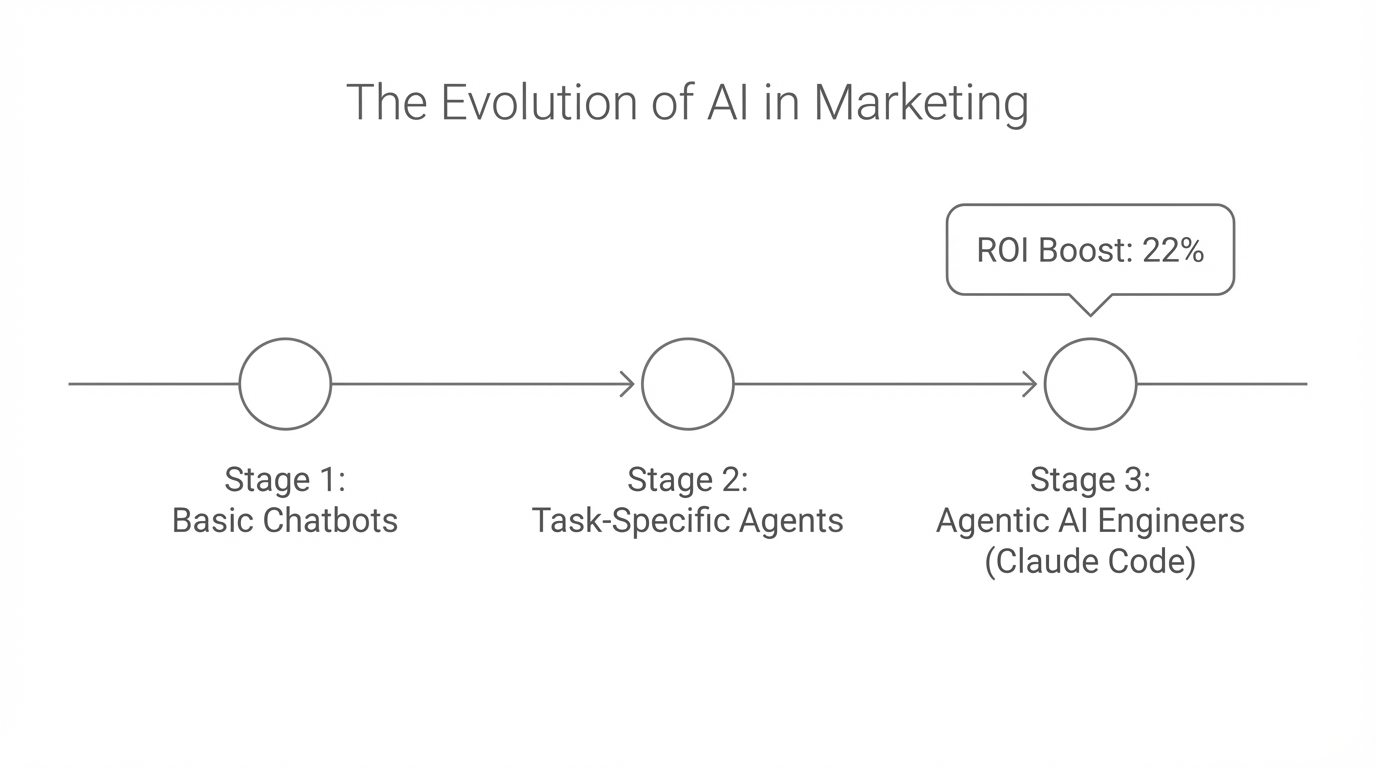
We are moving past the era of "chatting" with AI. Dario Amodei, CEO of Anthropic, emphasizes that tools like Claude Code are built for high-stakes execution. This means the AI understands the intent behind the code, not just the syntax. For a growth team, this means your next hire might not be a marketing manager, but a "Marketing Engineer" who can maintain the scripts that drive your ecommerce ppc automation.
Expert agencies using these agentic workflows report up to a 300x increase in output velocity. They aren't just doing things faster; they are doing things that were previously impossible, such as daily multi-landing page audits across thousands of product variations. This level of ppc management efficiency is what separates the winners in a crowded e-commerce landscape.
Common Mistakes to Avoid in Agentic Marketing
Despite the power of these tools, there are several pitfalls that can derail your automation efforts:
- Skipping 'Plan Mode': Jumping straight into editing code can result in broken scripts. Always ask Claude to "Plan" the logic in Thinking Mode before execution.
- Stateless Workflows: If you don't use a
.claude/rulesfile, the agent will forget your specific account constraints and brand voice. - Lack of Visual Verification: Don't assume an ad looks good just because the dashboard says relevance is high. Always use Playwright to visually verify the mobile experience for your users.
- Neglecting Creator Quality: Automated ads still need great creative. Using tools like Stormy AI to find and vet influencers ensures that your automated pipelines are fed with high-converting, authentic content.
Conclusion: The Future of Growth is Agentic
Scaling an e-commerce brand in 2026 requires more than just a large budget; it requires a superior marketing automation workflow. By leveraging Claude Code to handle the technical execution of your Google Ads, you can maintain Quality Scores of 9/10 across an unlimited catalog while saving your team dozens of hours every week. The transition from manual management to AI-engineered growth isn't just a luxury—it's the new standard for efficiency. Start small by automating your Quality Score audits, and eventually, build toward a full CI/CD pipeline that turns every new product launch into a high-performing ad campaign automatically.