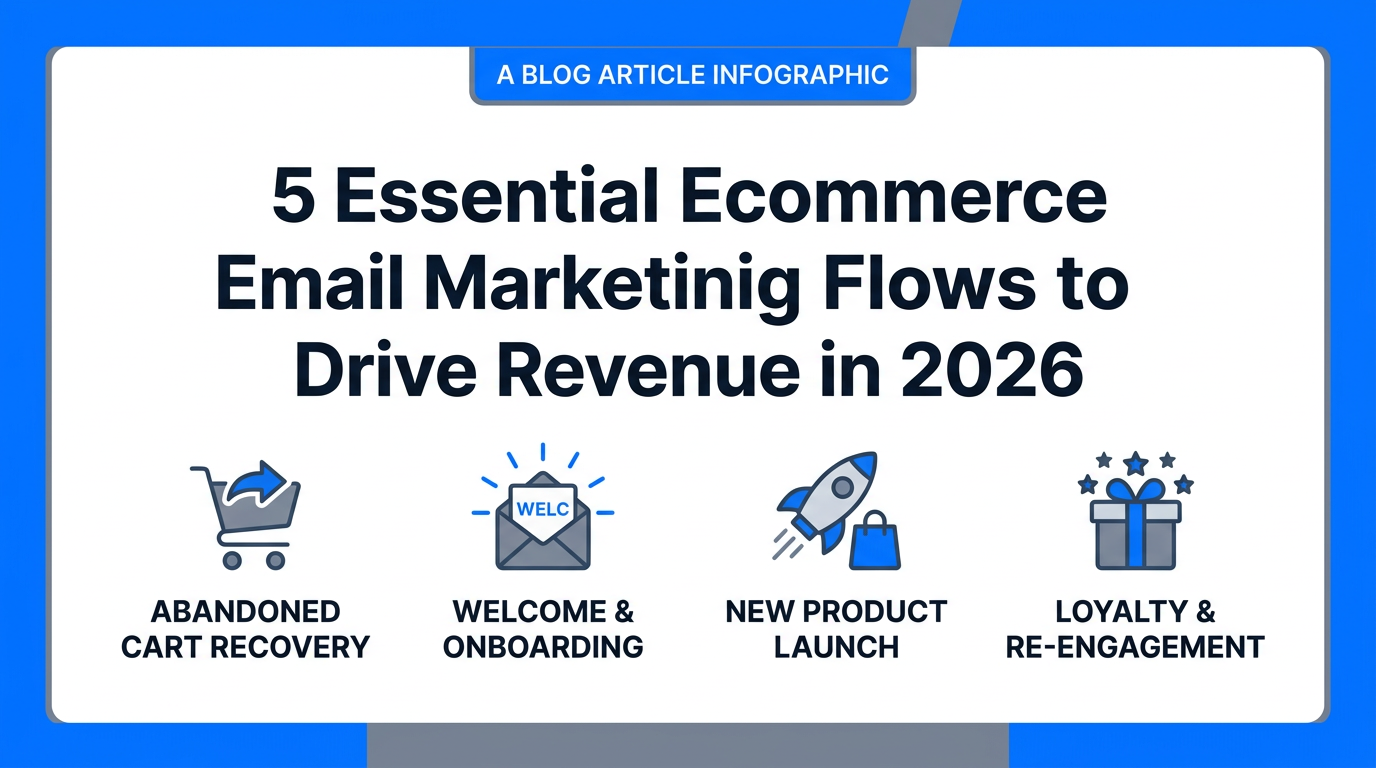
In the fast-paced landscape of 2026, the mantra for direct-to-consumer (DTC) brands has shifted from volume to precision. While social media algorithms fluctuate and ad costs climb on platforms like Meta Ads Manager, email remains the undisputed heavyweight of email marketing ROI. The reality for modern merchants is stark: manual newsletters are no longer enough. To thrive this year, your ecommerce email marketing flows must transition from static templates to hyper-personalized, behavior-triggered engines of growth.
According to the latest data from the Omnisend 2026 Report, automated sequences account for a mere 2% of total email volume, yet they are responsible for a staggering 30%–37% of total store revenue. If your automated email sequences aren't driving at least a third of your sales, you are leaving millions on the table. This guide provides a battle-tested playbook for the five foundational flows every brand needs to master in 2026.
The Economics of Automation: Why Flows Win in 2026
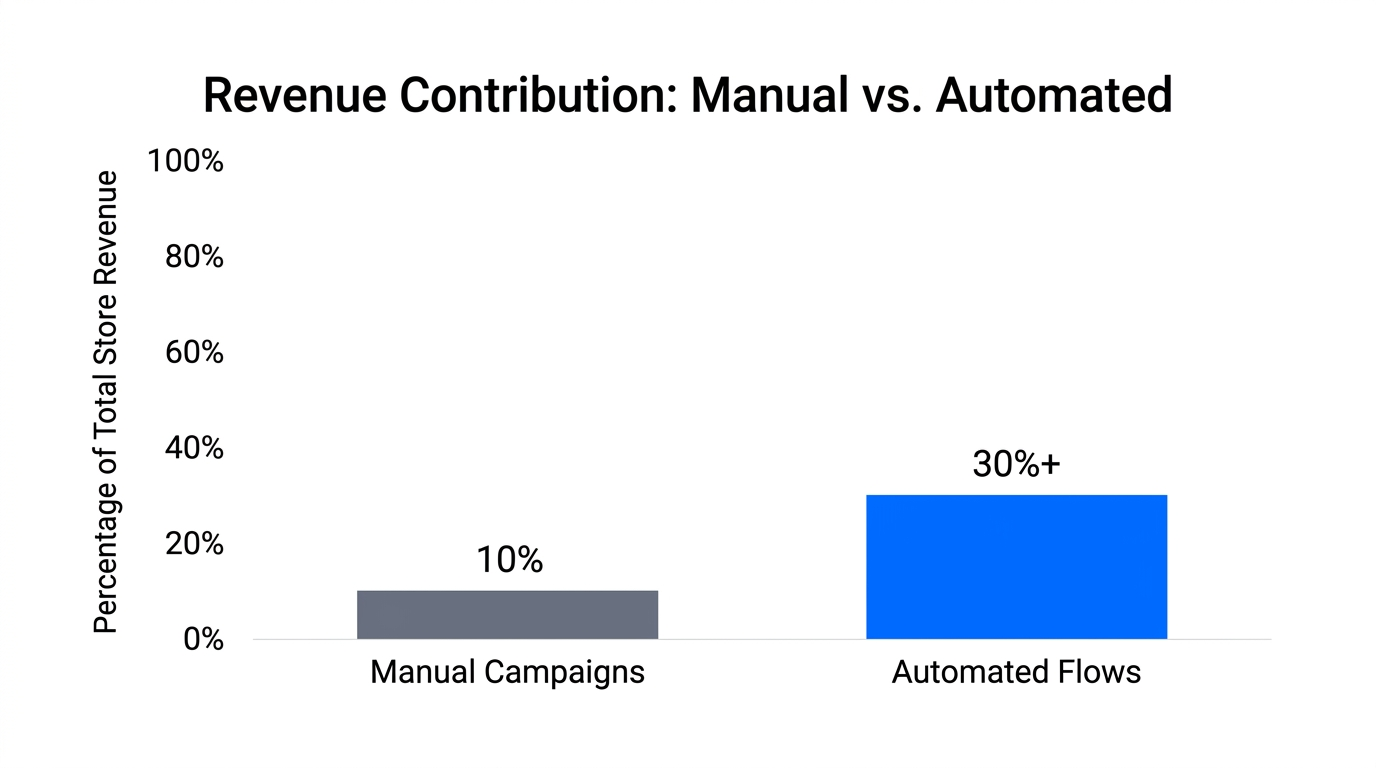
The efficiency of ecommerce email automation lies in its relevance. Unlike a batch-and-blast campaign that hits every subscriber regardless of their intent, a flow triggers based on a specific action—or lack thereof. This relevance translates directly into Revenue Per Recipient (RPR), a metric that has become the North Star for DTC marketers.
Recent benchmarks from Klaviyo 2026 Benchmarks highlight that the average conversion rate for automated emails sits between 3% and 5%. However, high-intent triggers like cart abandonment can skyrocket to 8.38%. In an era where 99% of users check their inbox daily, the goal is to be the most helpful, human-centric message they receive.
"Email remains the highest-ROI channel in 2026, yielding $36–$40 for every $1 spent. For top-performing brands, that ROI can surge to $76."
1. The Welcome Series: The Digital Handshake
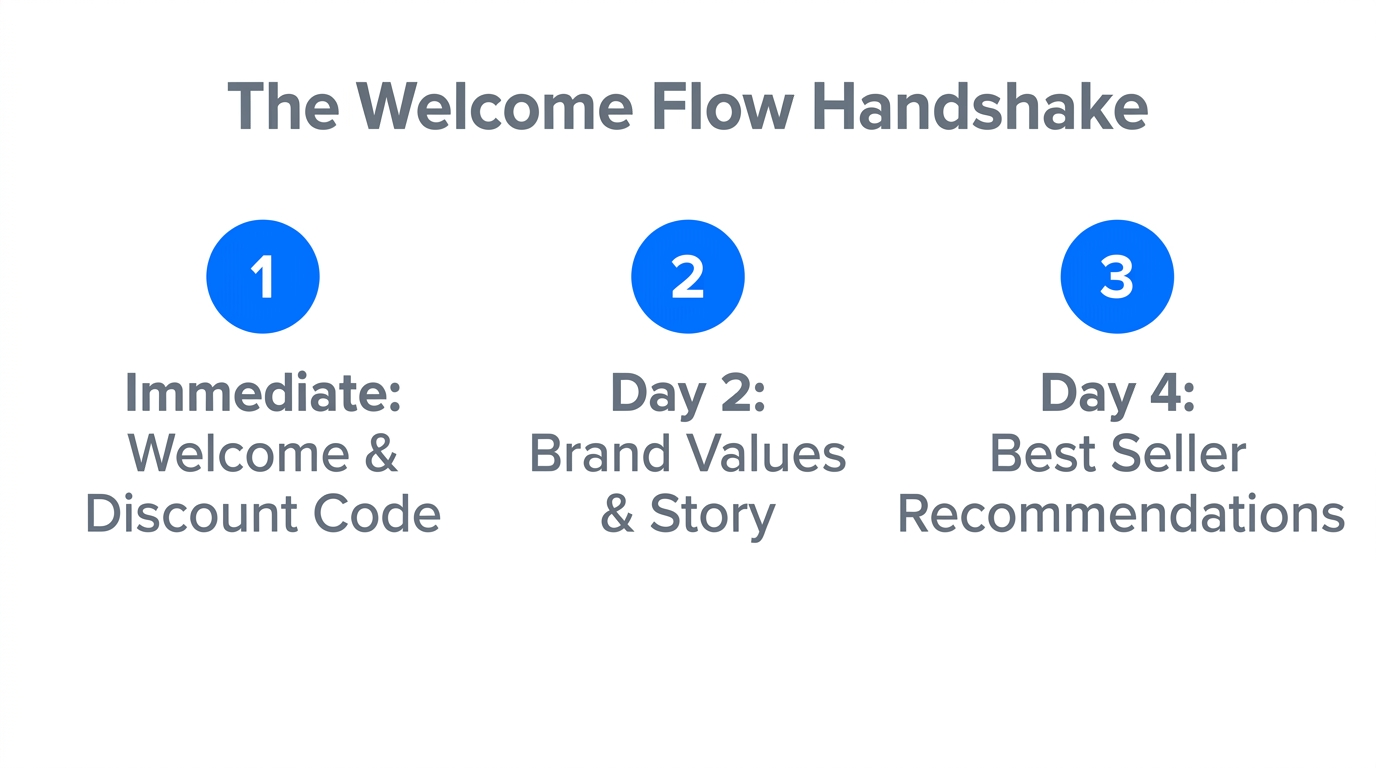
The Welcome Series is your first opportunity to turn a curious browser into a committed buyer. In 2026, this flow is no longer just about delivering a discount code; it’s about brand storytelling and setting the expectation for the relationship. A well-optimized welcome flow can generate massive immediate returns, as seen with Case Studies from Jubilee Scents, which generated over £5,500 in just six days by refining their initial sequence.
The 3-Step Welcome Blueprint
- Email 1 (Immediate): Deliver the lead magnet or discount code immediately. Keep the design clean and the CTA prominent. Do not let the customer wait—latency is the enemy of conversion.
- Email 2 (24 Hours Later): Introduce the brand's mission. Why do you exist? This is where you move beyond the product to the "Why."
- Email 3 (72 Hours Later): Show, don't just tell. Feature your best-sellers and incorporate social proof like customer reviews or UGC.
To make these emails stand out, many brands now integrate interactive experiences. Using tools like Stripo to build AMP-powered quizzes directly in the email allows subscribers to find their perfect product match without leaving the inbox, significantly reducing friction.
2. Abandoned Cart Flow: The Revenue Recoverer
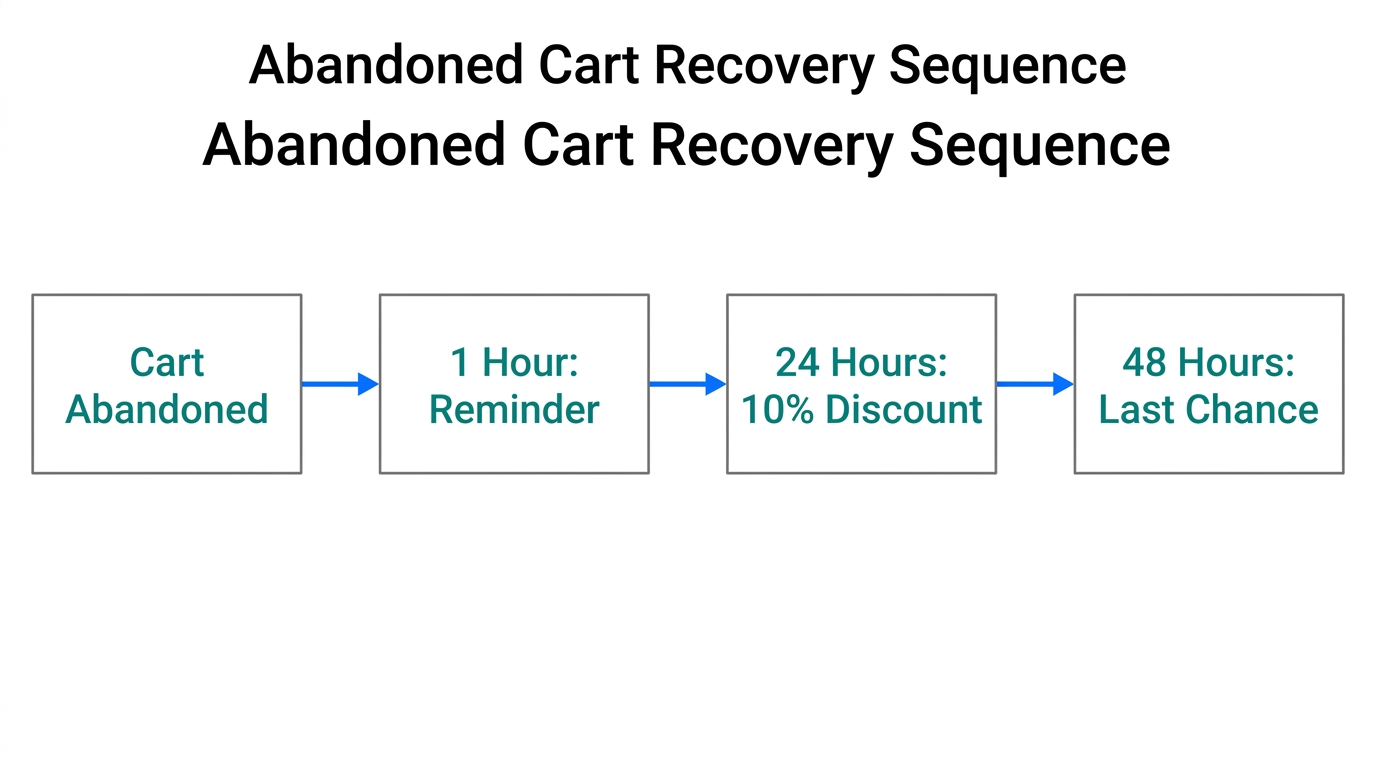
This is arguably the most critical component of any DTC marketing strategy 2026. These users have already added items to their cart; they are at the 1-yard line. Your job is to nudge them over the goal post. Expert ecommerce strategist Chase Dimond notes that having multiple abandoned cart emails results in 69% more orders than a single reminder.
| Email Sequence | Timing | Core Objective |
|---|---|---|
| Reminder | 1–2 Hours | Gentle nudge: "Did you forget something?" |
| Objection Handling | 24 Hours | Address shipping/returns and show reviews. |
| Urgency Incentive | 48 Hours | Limited-time 10% discount or free shipping. |
In 2026, the best brands aren't just relying on email for this. Omnichannel orchestration is the new standard. By integrating SMS via Omnisend or web push notifications, you can catch the customer on the device they are currently using. SMS click rates have doubled year-over-year, making it a perfect partner for high-intent email flows.
3. Browse Abandonment: The Window Shopper Nudge
Browse abandonment triggers when a customer views a specific product multiple times but never hits "Add to Cart." This flow requires a lighter touch than the cart recovery sequence. Instead of a hard sell, focus on helpfulness and education.
According to SaleCycle, browse abandonment emails often see higher open rates because they feel more personalized to the user's specific interest. Brands have seen success by offering customer support in these emails—asking the user if they have any questions about the product rather than just pushing for a transaction.
"The 2026 shopper values utility over urgency. If you can solve a problem or answer a question in their inbox, the sale will follow naturally."
4. Post-Purchase Nurture: The Retention Engine
The transaction doesn't end when the customer clicks "Buy." In fact, the post-purchase phase is where the most profitable brands are built. It is 5x cheaper to retain an existing customer than to acquire a new one via TikTok Ads Manager. This flow should focus on two things: customer delight and maximizing Lifetime Value (LTV).
Strategically placing an upsell in the post-purchase flow can increase profits by 30%. Tools like Yotpo allow you to include one-click complementary product offers based on what the customer just bought. Furthermore, providing educational content—such as a "How to Use" guide—reduces return rates and builds trust.
To keep these sequences fresh in 2026, many top-tier brands use Stormy AI to discover and manage UGC creators who provide authentic video reviews. These videos are then embedded in post-purchase emails to show the customer they made the right choice and to inspire their next purchase.
5. Win-Back Flow: The Churn Preventer
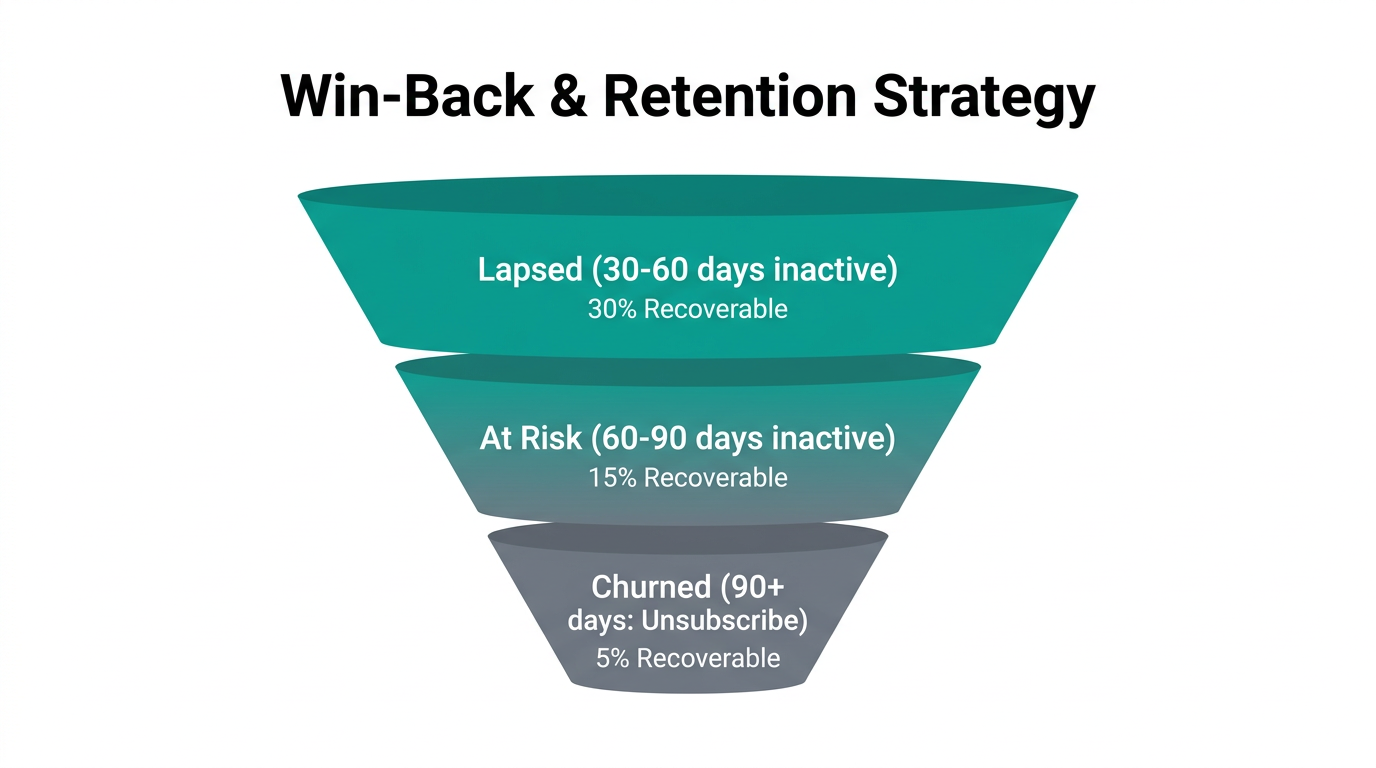
Every store has customers who drift away. The Win-Back flow is your automated safety net. By using RFM Analysis (Recency, Frequency, Monetary value), you can segment your customers and trigger specific re-engagement sequences before they churn for good.
In 2026, Predictive Churn Scoring powered by Klaviyo AI allows brands to identify at-risk customers before they stop opening emails. Your sequence should look like this:
- Email 1: "We miss you" + New arrivals tailored to their past purchases.
- Email 2: A significant "Welcome Back" gift (e.g., $20 off their next order).
- Email 3: The Sunset Email. A transparent message asking if they still want to hear from you. Cleaning your list is vital for maintaining deliverability.
Common Automation Mistakes to Avoid
Despite the high ROI of automated email sequences, many DTC founders fall into predictable traps. Avoid these to ensure your ecommerce email marketing flows remain effective:
- Over-Discounting: If every flow ends in a 20% off code, you train your customers to never pay full price. Use value-based content, like styling guides or founder notes, to drive conversions without eroding margins.
- Static Subject Lines: A/B testing isn't just for campaigns. You should constantly be testing subject lines and delay times in your flows to find the optimal window for your specific audience using tools like Litmus.
- Generic Copy: In the age of AI, robotic, B2B-style templates are a death sentence for engagement. Use a conversational, brand-specific voice that makes the reader feel like they are talking to a human.
- Ignoring Mobile Optimization: According to Shopify 2026 Stats, 70% of users will delete an email if it doesn't look good on their phone. Always design for mobile-first.
Conclusion: Building Your 2026 Revenue Engine
Mastering ecommerce email automation is no longer a luxury—it is the baseline for survival in a competitive DTC market. By implementing these five essential flows—Welcome, Abandoned Cart, Browse Abandonment, Post-Purchase, and Win-Back—you create a resilient revenue engine that works 24/7.
To truly excel this year, remember that personalization goes beyond just a first name. It's about delivering the right message, with the right content, at the exact moment the customer needs it. Whether you are using Klaviyo for orchestration or Stormy AI to source the UGC that brings your emails to life, the goal is consistent: building meaningful, long-term relationships with your customers.